NIS2 compliance in 2026: A practical playbook for EU security leaders
Across the EU, NIS2 compliance is no longer a roadmap—it’s a regulator’s expectation. In today’s Brussels briefing, officials reiterated that boards will be held personally accountable for cyber risk, incident reporting timelines are non‑negotiable, and supply‑chain security must be evidenced. For CISOs, DPOs, and counsel balancing GDPR, NIS2, and day‑to‑day threats, the path forward is clear: tighten fundamentals, reduce breach exposure, and operationalize privacy‑preserving workflows—especially when AI and document handling are in the mix.
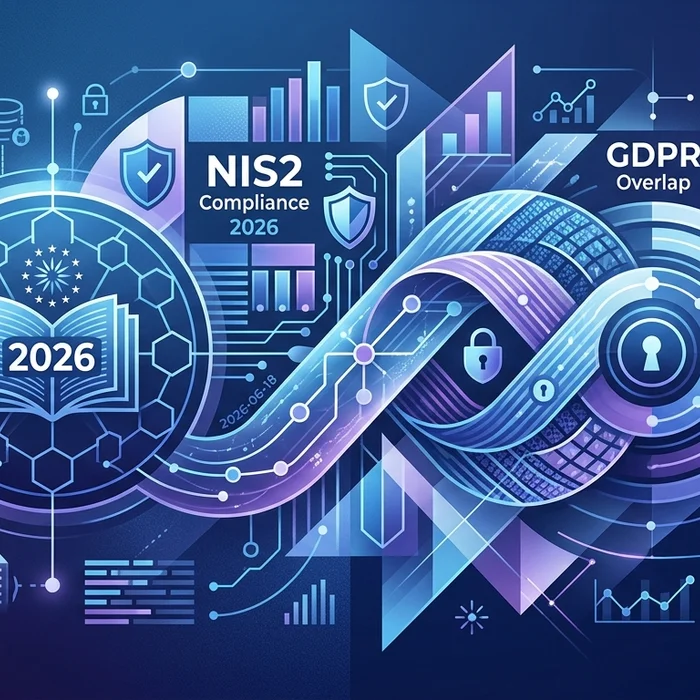
Why NIS2 compliance matters in 2026
- Scope expanded: NIS2 brings many more “essential” and “important” entities into scope—energy, transport, banking/fintech, health, drinking water, wastewater, digital infrastructure (DNS/TLD, data centers, CDNs), ICT service management (including MSPs/MSSPs), public administration, and more.
- Higher penalties: Member States set ceilings aligned to the Directive: up to €10 million or 2% of worldwide annual turnover for essential entities; up to €7 million or 1.4% for important entities, alongside management liability and possible supervisory measures.
- Board accountability: The management body must approve and oversee cybersecurity risk‑management measures and can be required to undergo training.
- Harmonized reporting: Early warning within 24 hours, incident notification within 72 hours, and a final report within one month for significant incidents.
EU regulators are explicit: demonstrate risk management, not just paperwork. A CISO I interviewed this spring put it bluntly: “The ransomware crews winning today aren’t magical—they’re disciplined. They exploit unpatched systems, flat networks, weak credentials, and shadow IT.” That resonates with recent campaigns where attackers “master the basics” to land and expand. NIS2 turns those basics into obligations—asset visibility, patching, segmentation, identity security, monitoring, and supplier controls.
NIS2 compliance: What regulators expect from day one
- Governance and policy: Board‑approved security strategy, defined risk appetite, named accountable owners, and regular reporting.
- Technical and organizational measures: Vulnerability management, secure development, multi‑factor authentication, least privilege, backup and recovery, logging and monitoring, incident response exercises, and business continuity.
- Supply‑chain security: Due diligence on critical suppliers and MSPs, contractual security clauses, and plans for dependency failures.
- Incident reporting: 24h early warning, 72h notification, and one‑month final reporting with causes, impact, and mitigations.
- Resilience testing: Periodic security audits, penetration testing where risk‑appropriate, and remediation tracking.
In parallel, GDPR continues to govern personal data processing—lawful bases, data minimization, DPIAs for high‑risk processing, and breach notification to authorities and individuals. The result: security leaders must show both operational resilience (NIS2) and lawful, proportionate processing (GDPR).
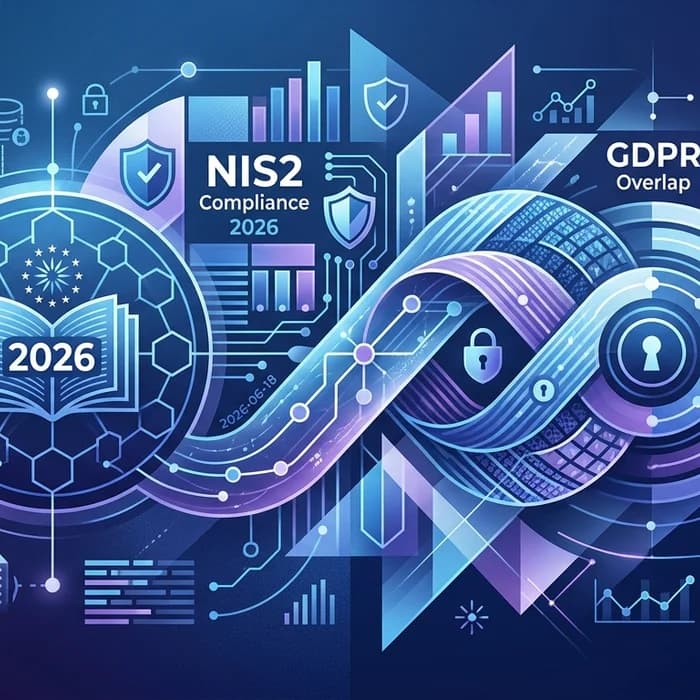
GDPR vs NIS2: What’s the difference—and where they overlap
| Topic | GDPR | NIS2 | Overlap / Practical Tip |
|---|---|---|---|
| Primary focus | Personal data protection and privacy rights | Network and information systems security and resilience | Both expect risk‑based controls and evidence of governance |
| Who is in scope | Controllers and processors handling personal data | Essential and important entities across critical sectors | Many organizations must comply with both simultaneously |
| Incident reporting timelines | Notify authority within 72h of personal data breach awareness | 24h early warning; 72h incident notification; one‑month final report | Build a single playbook that can trigger both regimes |
| Fines and sanctions | Up to €20M or 4% of global turnover | Up to €10M/2% (essential) and €7M/1.4% (important) | Coordinate legal, risk, and comms early in an incident |
| Data handling | Minimization, anonymization/pseudonymization, DPIAs | Secure design, logging, access control, BCDR | Anonymize sensitive docs used in AI or workflows to reduce risk |
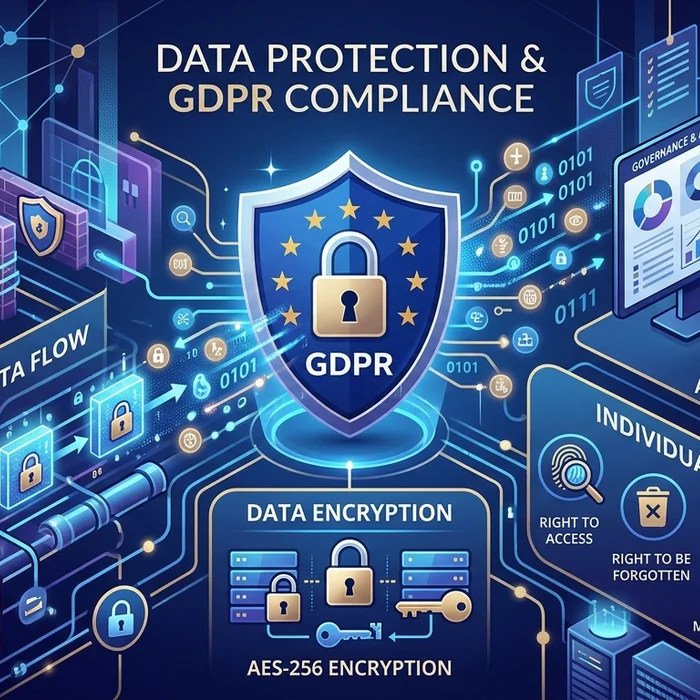
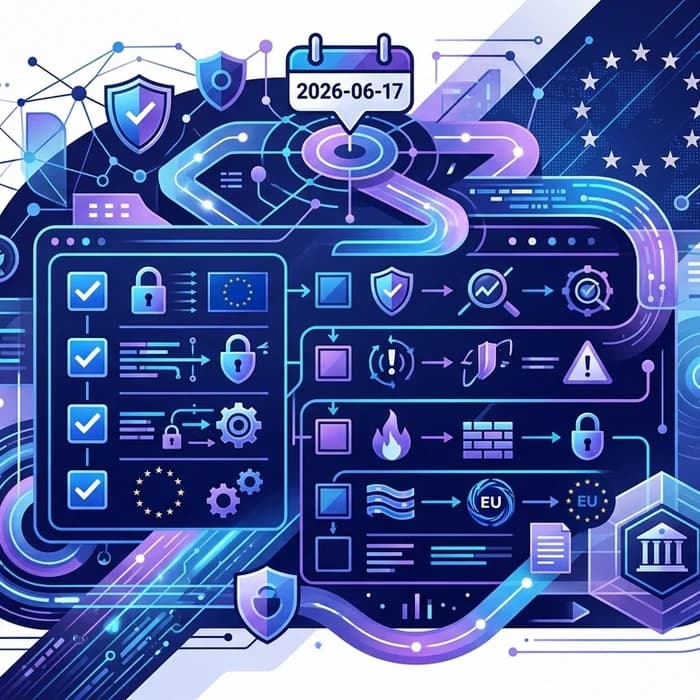
Practical steps: 30‑day NIS2 compliance checklist
- Map scope and criticality: Identify systems and services that are “essential” or “important.” Inventory assets, data flows, and third‑party dependencies.
- Assign accountability: Confirm board oversight; document named owners for risk, incident response, and supplier security.
- Harden identity: Enforce MFA for admins and remote access, review privileged accounts, and disable stale credentials.
- Patch with purpose: Triage known exploited vulnerabilities; set SLAs and verify closure with scanning.
- Segment and back up: Isolate critical networks; implement tested, offline or immutable backups with restoration drills.
- Monitor and log: Centralize logging, define alert thresholds, and rehearse on‑call procedures.
- Supplier assurance: Review MSP/MSSP contracts for incident support, logging access, and breach notification duties.
- Incident playbook: Bake in 24h/72h/one‑month milestones, authority contacts, and internal escalation paths.
- Privacy‑by‑design: Minimize personal data in operational systems; run DPIAs for high‑risk processing.
- Safe AI workflows: Before sharing files with AI tools, remove names, identifiers, and sensitive fields via anonymization.
- Secure file handling: Centralize document uploads to reduce shadow IT and leakage risk.
Using AI safely: anonymize before you analyze
From law firms summarizing evidence to hospitals triaging intake notes, AI can accelerate compliance tasks—if handled safely. The two biggest risks I see in audits are (1) uncontrolled file sharing with external LLMs and (2) retention of sensitive personal data in prompts or attachments. A disciplined approach solves both: strip identifiers first, then process in a secure enclave.
Professionals avoid risk by using Cyrolo’s anonymization and secure document upload—a fast way to remove names, emails, IDs, and sensitive fields from PDFs, Word files, images, and scans before any review or AI‑assisted analysis. Try our secure document upload at www.cyrolo.eu — no sensitive data leaks.
Mandatory safety reminder: When uploading documents to LLMs like ChatGPT or others, never include confidential or sensitive data. The best practice is to use www.cyrolo.eu — a secure platform where PDF, DOC, JPG, and other files can be safely uploaded.
Costs of getting it wrong
- Financial impact: Between GDPR and NIS2, penalties can stack with remediation, legal, and downtime costs. Industry studies consistently peg average breach costs in the multi‑million‑euro range, with recovery timelines stretching months.
- Operational disruption: Recent ransomware waves show that attackers don’t need novel exploits—weak credentials, unpatched edge devices, and over‑privileged service accounts are enough to cripple operations for weeks.
- Regulatory scrutiny: Repeated outages or late incident reports can trigger audits and corrective measures.
- Reputation and trust: For banks, hospitals, and public bodies, public confidence is an asset—losing it is expensive.
Contrast this with the US, where telecom and critical infrastructure policy debates often hinge on market exit and legacy network decommissioning. In the EU, NIS2 forces a resilience‑first posture: continuity, security by design, and provable supplier assurance across the chain.
Who must comply—and by when
- Entity size: Most medium and large organizations in covered sectors (generally 50+ employees and €10M+ turnover) are in scope.
- Sector priority: Essential entities face the highest scrutiny (energy, transport, banking/financial market infrastructures, health, digital infrastructure, public administration). Important entities cover a wider ring of critical services and suppliers.
- Timing: The Directive’s transposition deadline has passed; national laws are in force across the EU in 2026. Late transposers are catching up, but regulators expect material progress now.
- Registration and reporting channels: Check your national CSIRT/competent authority for sector‑specific registration and reporting portals; build those contacts into your incident playbook.
How Cyrolo helps accelerate NIS2 compliance
- Data minimization by default: Automatically strip personal data and sensitive fields from files before sharing or AI analysis.
- Controlled file ingress: Centralize document uploads to reduce shadow channels (email attachments, personal drives) that create audit gaps.
- Evidence for audits: Demonstrate GDPR and NIS2 alignment with documented anonymization workflows and access controls.
- Low‑friction adoption: Works with PDFs, Office docs, and common image formats—teams keep moving, risk goes down.
Professionals avoid risk by using Cyrolo’s anonymizer at www.cyrolo.eu. It’s a practical win for GDPR data protection and NIS2 supply‑chain hygiene alike.
FAQ: NIS2 compliance, answered
What is NIS2 compliance and who does it apply to?
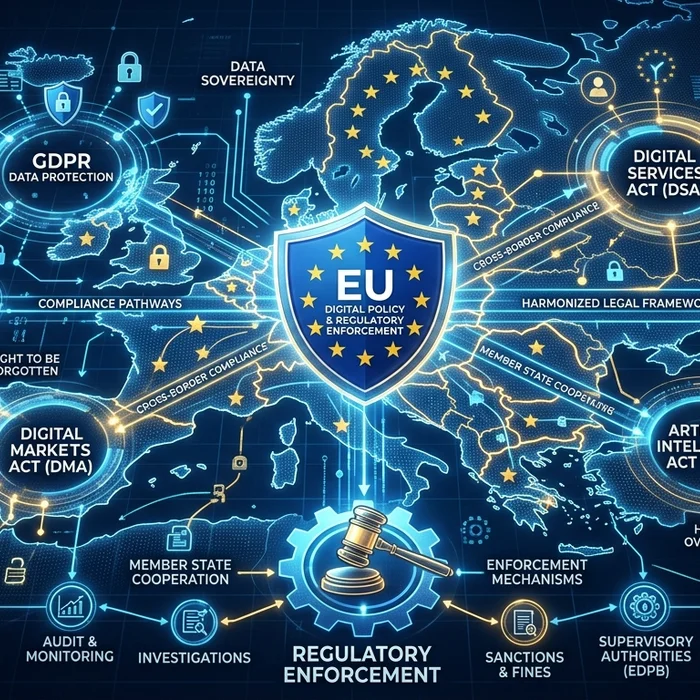
NIS2 compliance means meeting the EU’s updated cybersecurity obligations for essential and important entities across critical sectors. It covers governance, technical controls, supply‑chain security, and incident reporting. Many organizations will be subject to both NIS2 and GDPR simultaneously.
What are the NIS2 incident reporting timelines?
Submit an early warning within 24 hours of becoming aware of a significant incident, a more detailed notification within 72 hours, and a final report within one month. Align your playbook so it can satisfy GDPR breach reporting when personal data is implicated.
How do GDPR and NIS2 interact in practice?
GDPR is about lawful, fair, and secure personal data processing; NIS2 is about operational resilience of networks and information systems. They overlap on security measures and breach handling. Use anonymization to reduce personal data exposure while improving operational visibility.
What are the fines for NIS2 violations?
Member States provide for significant administrative fines, with ceilings commonly up to €10 million or 2% of worldwide turnover for essential entities and up to €7 million or 1.4% for important entities, plus management accountability measures.
How can I use AI tools without risking data leaks?
Strip identifiers before analysis and keep files in a secure environment. Use anonymization and secure document uploads to control exposure. And remember: When uploading documents to LLMs like ChatGPT or others, never include confidential or sensitive data. The best practice is to use www.cyrolo.eu — a secure platform where PDF, DOC, JPG, and other files can be safely uploaded.
Conclusion: NIS2 compliance is achievable—start with the basics and prove them
NIS2 compliance rewards teams that execute fundamentals with discipline: identity security, patching, segmentation, supplier assurance, and airtight incident response. Pair that with GDPR‑grade data protection—especially anonymization and controlled file flows—and you’ll satisfy auditors while cutting real risk. If you need a fast, defensible way to minimize data exposure and standardize file handling, try Cyrolo at www.cyrolo.eu for anonymization and secure document uploads today.
Sources & References
- 1California says AT&T lied to FCC in attempt to shut off old phone networkArs Technica Policy · 2026-06-17T20:07:40.000Z
- 2INC Ransomware Thrives by Mastering the BasicsDark Reading · 2026-06-17T19:46:25.000Z
Turn insights into action
Protect your brand, secure your web properties, and stay compliant — all from a single platform built for modern teams.
Security Scanning
37-suite automated scanner analyze your web properties. Get A+ to F security grading with actionable remediation steps.
Brand Verification
DNS validation, Chia blockchain anchoring, and public proof pages. Build trust with cryptographic evidence.
GDPR & Compliance
Article-by-article GDPR audits. Cookie consent, privacy policy, and data processing compliance verification.