NIS2 Compliance Checklist: How EU Businesses Secure Operations in 2026
In today’s Brussels briefing, several MEPs flagged that supervisory authorities are shifting from guidance to enforcement—exactly why an up-to-date NIS2 compliance checklist belongs at the center of your 2026 security plan. With GDPR fines continuing to bite and NIS2 now embedded in national law, EU regulators expect documented risk management, rapid incident reporting, and provable security controls across essential and important entities. Meanwhile, fresh exploit chains, AI-agent hijacks, and ransomware that spreads like a worm are compressing detection-and-response windows from days to hours.

Why NIS2 compliance matters now
Since NIS2 took effect across Member States, regulators can levy administrative fines as high as €10 million or 2% of worldwide annual turnover (whichever is higher in national transpositions) and issue binding security-improvement orders. Sectors reach well beyond traditional critical infrastructure to include providers in digital infrastructure, financial services, healthcare, waste and water, postal and courier services, manufacturing, and more. Expect cross-border supervisory cooperation and heightened scrutiny of third-party risk, vulnerability handling, and business continuity planning.
From my recent interviews with CISOs at a regional bank, a hospital group, and a fintech scale-up, three pain points dominate: breach reporting clocks that start the minute an incident is suspected; evidence requirements during security audits; and safe workflows for sharing logs, contracts, and incident dossiers with counsel, regulators, and vendors—without leaking personal data or trade secrets.
EU vs US: Different paths, same pressure
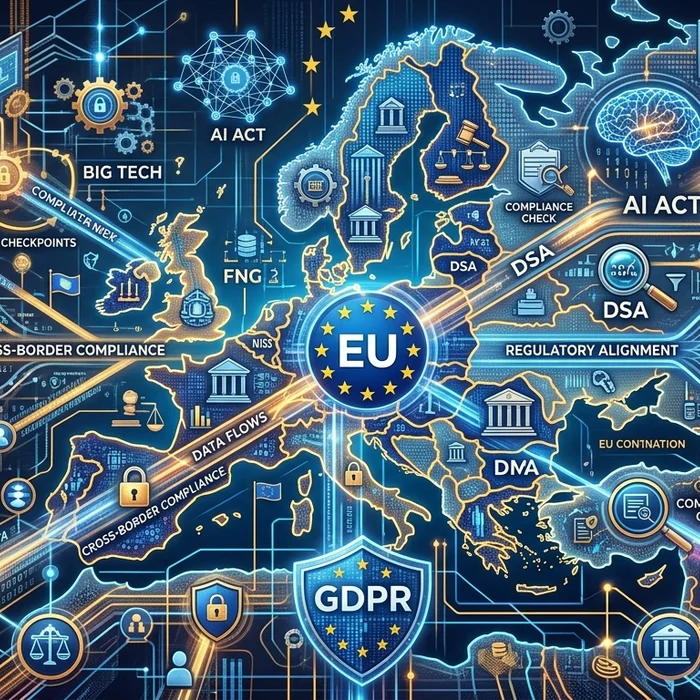
While US debates around platform governance grab headlines, the EU is already enforcing a thick stack of obligations (GDPR, NIS2, DORA for finance, the AI Act phase-in). The net effect for EU operations is practical: boards are accountable; CISOs must show risk-based controls; and DPOs/Legal need defensible documentation chains. The jurisdictional nuances are real, but the direction of travel is the same—fewer excuses, more proof.
NIS2 Compliance Checklist: 12 Priority Actions
- Board accountability in writing: Record who owns cybersecurity risk, with regular briefings and decisions minuted.
- Risk management framework: Maintain a current risk register covering assets, suppliers, OT/IT interdependencies, and AI/LLM usage.
- Security controls baseline: Documented policies and technical measures—MFA everywhere, patch SLAs, EDR, segmentation, backups, and tested recovery.
- Vulnerability handling: Formal intake, triage, and remediation timelines; participation in coordinated vulnerability disclosure where relevant.
- Incident response runbooks: Defined roles, legal review paths, regulator notification templates, and 24/7 contact points.
- 72-hour reporting readiness: Pre-drafted report forms aligned to national CSIRTs/competent authorities; evidence collection checklists.
- Supply-chain security: Due diligence for critical vendors, contract clauses on incident reporting, and proof of controls (SOC 2/ISO 27001 or equivalent).
- Operational resilience: Tested disaster recovery and continuity plans, including ransomware isolation and immutable backups.
- Data protection by design: Pseudonymization/anonymization for logs, tickets, and documents shared with third parties and regulators.
- Training and drills: Annual mandatory training; live-fire exercises that include Legal, PR, and executive leadership.
- Metrics and audits: KRIs/KPIs on patch latency, phishing rates, MTTD/MTTR; internal audits mapped to NIS2 articles.
- Documentation hygiene: Central, access-controlled repository for policies, risk decisions, DPIAs, DPAs, incident records, and regulator correspondence.
Professionals avoid risk by using Cyrolo’s AI anonymizer to strip personal data and secrets from evidence packs before sharing. Try our secure document upload at www.cyrolo.eu—no sensitive data leaks.
GDPR vs NIS2: What changes for CISOs and DPOs
| Topic | GDPR | NIS2 |
|---|---|---|
| Primary focus | Personal data protection and data subjects’ rights | Network and information systems security and service continuity |
| Scope | Any controller/processor handling EU personal data | “Essential” and “important” entities in specified sectors and sizes |
| Key obligations | Lawful basis, DPIAs, data minimization, breach notifications | Risk management, technical/organizational controls, incident reporting, supply-chain security |
| Incident reporting | Notify DPA without undue delay (typically 72h) if personal data breach likely risks rights/freedoms | Early warning within hours; detailed report timelines to national CSIRT/authority, even if no personal data |
| Fines | Up to 4% global turnover or €20m | Up to €10m or 2% global turnover (per national transposition; sector/entity class matters) |
| Evidence expectations | Records of processing, DPIAs, DPAs, breach logs | Policies, risk registers, control evidence, vulnerability handling, continuity testing, incident dossiers |
| Anonymization relevance | Strongly encouraged to reduce exposure of personal data in workflows | Supports safe sharing of technical artifacts/logs with authorities and vendors |
Real-world risk drivers: June 2026 lessons learned
- Agentic AI hijacks: Recent research showed prompt-injection and tool-use abuse can coerce AI agents into executing code and leaking secrets. Policy response: sandboxed tools, outbound request allowlists, and strict red-teaming for LLM-integrated workflows.
- Disk encryption bypasses: A new technique targeting recovery metadata highlighted that “encrypted” isn’t a panacea if keys or recovery paths are mishandled. Policy response: protect recovery mechanisms, enforce tamper protection, monitor for unusual boot-state changes.
- Edge appliance zero-days: A max-severity gateway flaw was exploited within 24 hours of disclosure. Policy response: pre-approved emergency patching windows, staged rollouts, and isolation of management planes.
- Ransomware with worm-like spread: Faster propagation collapses containment time. Policy response: network segmentation verified by testing, MFA for admin protocols, and backup isolation with routine restore drills.
Translation for NIS2: your documentation must show you anticipated these classes of failures, trained staff, and tested controls. A CISO I spoke with this week put it bluntly: “We don’t get graded on intentions; we get graded on evidence.”
Build privacy-by-design into AI and document workflows
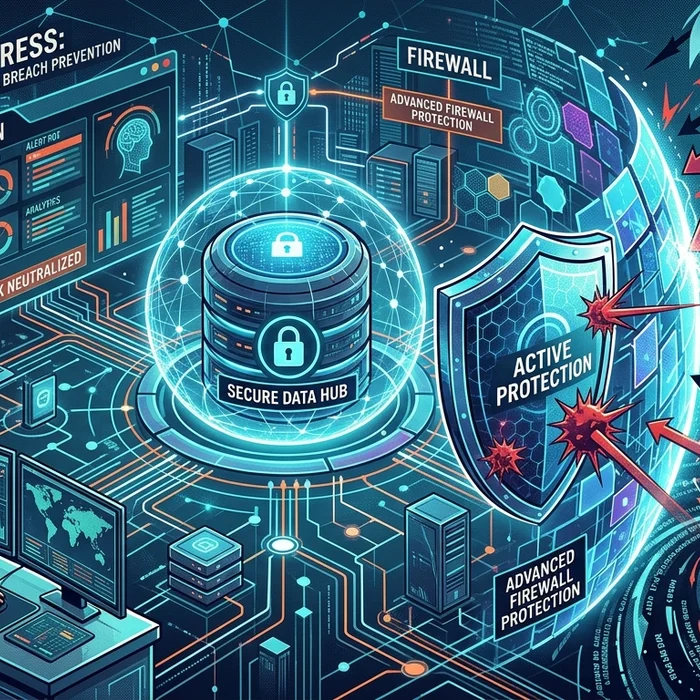
Security teams now exchange sensitive evidence with outside counsel, vendors, and regulators daily: packet captures, SIEM exports, HR tickets, even screenshots. That’s personal data, trade secrets, and security configurations mixed together—prime targets for privacy breaches if shared unfiltered. An AI anonymizer helps you remove names, emails, IDs, IBANs, access tokens, and other identifiers before a single file leaves your perimeter. For audit packs and discovery sets, use secure document upload to keep PDFs, DOCs, and images under tight control.
Compliance reminder: When uploading documents to LLMs like ChatGPT or others, never include confidential or sensitive data. The best practice is to use www.cyrolo.eu — a secure platform where PDF, DOC, JPG, and other files can be safely uploaded.
Professionals avoid risk by using Cyrolo’s anonymizer at www.cyrolo.eu and sharing only what regulators or counterparties truly need to see.
Audit-ready documentation: what supervisors ask for
- Named accountable senior manager and evidence of board briefings
- Risk register with supplier mapping and critical asset inventory
- Policies for patching, vulnerability disclosure, logging, and retention
- Incident playbooks, escalation trees, and notification templates
- Training records and outcomes of crisis exercises
- Change management and emergency patch approvals
- Proof of backups, restore tests, and RPO/RTO attainment
- Examples of sanitized evidence packs using anonymization
FAQ: NIS2 and cybersecurity compliance in practice
Who falls under NIS2 and how do I know my classification?
NIS2 applies to “essential” and “important” entities across specified sectors (e.g., energy, transport, digital infrastructure, finance, health, water, manufacturing). Classification depends on sector, size, and criticality under your Member State’s law. Check your national competent authority’s sector lists and thresholds; if in doubt, assume you must meet the baseline and prepare evidence now.
What are the NIS2 incident reporting timelines?
Expect an early alert within hours of becoming aware of a significant incident, followed by an initial report and then a final report once the situation stabilizes. Timings can vary by Member State, but the intent is rapid awareness, not polished forensics. Prepare templates so Legal and Technical can file within the clock.
How do I prove compliance during a security audit?
Bring policies, risk registers, logs of control operation, training records, and incident reports. Show how you track vulnerabilities and supplier risks. Demonstrate recovery testing and governance oversight. Wherever documents include personal data or secrets, present sanitized copies created via an AI anonymizer and share them via secure document upload for chain-of-custody control.
Is anonymization required by NIS2 or GDPR?
Both frameworks expect proportional controls and data protection by design. Pseudonymization/anonymization isn’t always mandatory, but it is a recognized way to reduce risk and demonstrate accountability—especially when sharing logs or tickets externally. It also minimizes the chance of secondary privacy breaches during investigations.
Can I upload evidence to LLMs to summarize incidents?
Only if it’s been sanitized and policy-approved. When uploading documents to LLMs like ChatGPT or others, never include confidential or sensitive data. The best practice is to use www.cyrolo.eu — a secure platform where PDF, DOC, JPG, and other files can be safely uploaded.
Conclusion: Make your NIS2 compliance checklist a living program
NIS2 is not a paperwork sprint; it is an operating model. Turn your NIS2 compliance checklist into a living program with accountable leadership, measurable controls, and safe evidence handling. Use an AI anonymizer and secure document upload to prevent accidental exposure while you collaborate with auditors, regulators, and partners. In 2026’s threat tempo, organizations that can prove—quickly—that they are secure by design will avoid fines, reduce breach impact, and win customer trust.
Sources & References
- 1Draft agenda - Wednesday, 24 June 2026 - Thursday, 25 June 2026 - PE789.931v01-00 - Committee on the Internal Market and Consumer ProtectionEU Parliament IMCO · 2026-06-11T15:20:01.000Z
- 2Briefing - Monthly Highlights: Research digest for committees - June 2026 - PE 760.341 - Committee on the Internal Market and Consumer Protection - Committee on Public Health - Committee on the Environment, Public Health and Food Safety - Committee on Economic and Monetary Affairs - Committee on Budgetary Control - Committee on DevelopmentEU Parliament IMCO · 2026-06-10T22:00:00.000Z
- 3New Attacks Trick OpenClaw AI Agent Into Running Code and Leaking SecretsThe Hacker News · 2026-06-11T17:46:32.000Z
- 4New GreatXML Exploit Bypasses Windows BitLocker via Recovery Partition XML FilesThe Hacker News · 2026-06-11T17:43:52.000Z
- 5The Gentlemen Ransomware Claims 478 Victims, Can Spread Like a WormThe Hacker News · 2026-06-11T16:50:47.000Z
- 6Ted Cruz and Ron Wyden try to fight censorship with bipartisan JAWBONE ActArs Technica Policy · 2026-06-11T19:31:37.000Z
- 7Max-Severity Ivanti Flaw Exploited 24 Hours After DisclosureDark Reading · 2026-06-11T18:43:57.000Z
- 8Segmentation Works for OT If Operators Are Paying AttentionDark Reading · 2026-06-11T14:51:48.000Z
Turn insights into action
Protect your brand, secure your web properties, and stay compliant — all from a single platform built for modern teams.
Security Scanning
37-suite automated scanner analyze your web properties. Get A+ to F security grading with actionable remediation steps.
Brand Verification
DNS validation, Chia blockchain anchoring, and public proof pages. Build trust with cryptographic evidence.
GDPR & Compliance
Article-by-article GDPR audits. Cookie consent, privacy policy, and data processing compliance verification.