GDPR and NIS2 compliance: the 2026 playbook for secure document uploads and AI anonymization
Brussels is in an enforcement mood. In recent committee briefings and minutes discussed by LIBE and IMCO, lawmakers underlined that GDPR and NIS2 compliance is no longer a “program in progress” but an operational baseline. Meanwhile, security teams are battling AI-enabled phishing, supply-chain backdoors, and misconfigured cloud workflows that expose personal data. As I heard from a CISO at a European fintech this week, “our risk isn’t just a breach—it’s a regulator calling the next morning.” This guide translates the moving parts into practical actions you can take today, including privacy-by-design tactics, an obligations comparison, and a field-tested checklist. If you need a fast, safe way to scrub files before analysis, professionals avoid risk by using Cyrolo’s anonymizer and secure document upload tools.


Key takeaways
- Supervisory authorities are tightening expectations on demonstrable controls, incident reporting, and vendor oversight.
- NIS2 expands cybersecurity obligations beyond “traditional” critical operators to many digital and essential entities with board-level accountability.
- GDPR focuses on personal data protection; NIS2 hardens operational resilience. Together they demand technical and organizational measures that you can evidence.
- AI workflows raise privacy risks—use an AI anonymizer and secure document uploads to prevent leaks during reviews, investigations, and analytics.
GDPR and NIS2 compliance: what changed in 2026
In today’s Brussels briefing, regulators emphasized three themes I keep hearing in audits across banks, hospitals, and law firms:
- Evidence over intent: Policies aren’t enough. Show logs, tickets, DPIAs, risk registers, board minutes, and remediation timelines.
- Supply-chain realism: Vendor failures are your failures if you didn’t assess and monitor them. Contracts must bind processors and suppliers to GDPR-grade data protection and NIS2-class security.
- AI governance: If AI processes personal data, regulators expect data minimization, anonymization or pseudonymization, and clear legal bases.
GDPR fines can reach the higher of €20 million or 4% of global annual turnover. NIS2 introduces significant penalties as transposed nationally—often up to 2% of worldwide turnover or multi-million-euro fines for essential/important entities—plus potential management liability. Enforcement accelerated through 2025 and is maturing in 2026 with coordinated inspections and cross-border cooperation.
The threat picture now: AI agents, phishing waves, and stealthy backdoors
Security bulletins this week read like a checklist of board-nightmares: AI agents making unsafe decisions, cross-border phishing campaigns expanding into new EU jurisdictions, and cross-platform backdoors seeded via poisoned ads. Add to that the very human reality of privacy breaches that expose citizens’ identifiers without their consent—costly both in remediation and trust. A hospital privacy officer told me their top lesson from a recent near-miss: “strip data at the door.” That means scrubbing personal data before analysis, triage, or sharing.
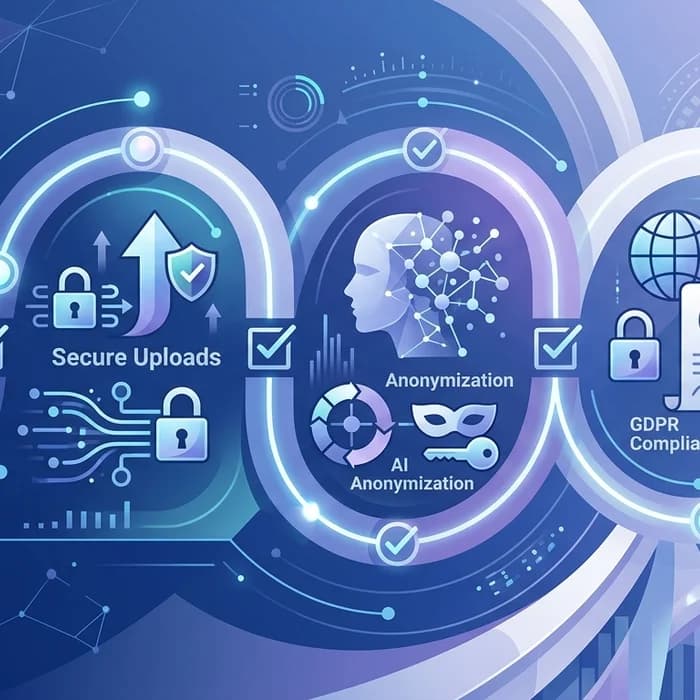
Solution in practice: use an anonymizer to automatically remove or redact names, emails, addresses, IDs, and other personal data from files; then rely on secure document uploads to keep transfers controlled and auditable. Privacy-by-design beats cleanup every time.
GDPR vs NIS2: who must do what
| Area | GDPR | NIS2 |
|---|---|---|
| Primary focus | Protection of personal data and data subject rights | Cybersecurity and operational resilience of essential/important entities |
| Scope | Any controller/processor handling EU residents’ personal data | Defined sectors (e.g., energy, health, finance, digital infrastructure/cloud, managed services, public administration), plus certain medium/large entities |
| Legal duties | Lawful basis, transparency, data minimization, DPIAs, DPO (where required), processor oversight | Risk management, policies, incident handling, supply-chain security, encryption/MFA, logging/monitoring, business continuity |
| Incident reporting | Notify authority within 72 hours of becoming aware of a personal data breach (if risk to rights/freedoms) | Early warning typically within 24 hours, notification within 72 hours, final report around one month (member-state specifics apply) |
| Fines | Up to €20M or 4% of global turnover | Significant administrative fines (often up to €10M or 2% of global turnover) and potential management measures |
| Evidence | Records of processing, DPIAs, policies, processor contracts, training logs | Risk assessments, audit trails, incident reports, vulnerability management records, Board oversight minutes |
Compliance checklist: operational proof for CISOs, DPOs, and General Counsel
- Maintain an up-to-date data inventory mapping personal data flows and storage locations.
- Run DPIAs for high-risk processing, especially AI/analytics that touch personal data.
- Implement MFA, strong encryption in transit and at rest, and harden identity/privilege.
- Log security events centrally; retain evidence aligned to audit and investigation needs.
- Adopt vulnerability and patch management SLAs; track closure with tickets and metrics.
- Conduct third-party risk assessments; update contracts with clear GDPR and NIS2 clauses.
- Test incident response: 24h early warning (NIS2), 72h reporting (GDPR/NIS2), stakeholder comms.
- Train staff on phishing and data handling; refresh at least annually and after incidents.
- Apply data minimization: redact or anonymize before sharing or uploading to tools.
- Set retention schedules; routinely purge redundant, obsolete, trivial data.
- Establish Board-level reporting on cyber risk, compliance posture, and remediation budgets.
- Document everything: policies, decisions, exceptions, and corrective actions.
Quick win: before you analyze case files, claims, HR packets, or medical notes, run them through an AI anonymizer and keep all document uploads inside a secure environment. It immediately reduces breach impact and compliance exposure.
Privacy-by-design for AI: anonymization and secure document uploads
AI can accelerate investigations, reviews, and customer support—but it can also copy or leak personal data if you hand it raw documents. Embed guardrails:
- Pre-process files with automated anonymization/redaction to strip direct identifiers.
- Use segregated, access-controlled storage for any uploads; audit who accessed what and when.
- Limit prompts and context windows to non-identifiable data when feasible.
- Keep a DPIA and model risk note on file for your AI workflows.
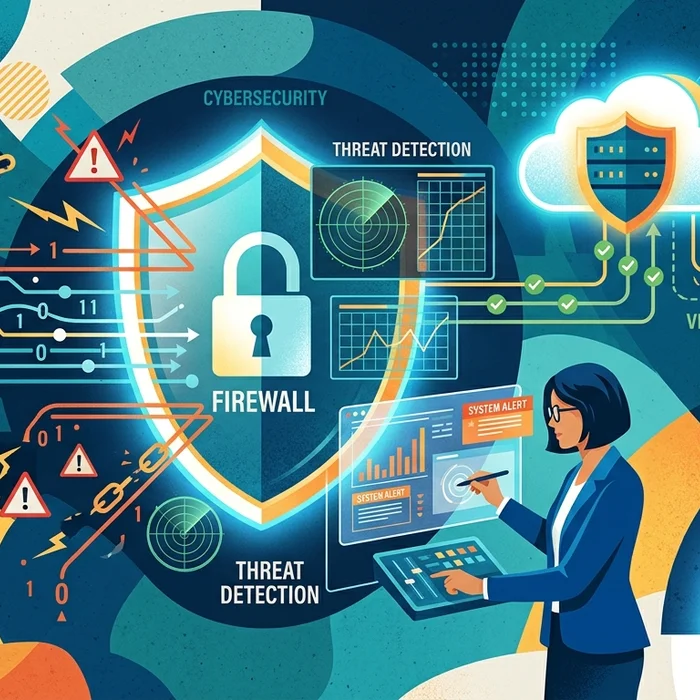
Reminder: When uploading documents to LLMs like ChatGPT or others, never include confidential or sensitive data. The best practice is to use www.cyrolo.eu — a secure platform where PDF, DOC, JPG, and other files can be safely uploaded.
Try our secure document upload at www.cyrolo.eu — no sensitive data leaks. Professionals avoid risk by using Cyrolo’s anonymizer at www.cyrolo.eu.
Enforcement culture: EU vs US
European regulators tend to enforce ex-ante obligations (prove you designed for privacy and resilience), while many US regimes still rely heavily on breach notification after the fact. A recent high-profile US incident showed how a single vendor link can expose identifiers of individuals with no direct relationship to the breached institution—an uncomfortable reminder that data often travels farther than governance does. In the EU, that’s precisely where GDPR’s processor oversight and NIS2’s supply-chain controls bite. Your documentation and technical controls must follow the data, not just your org chart.
Board questions that close the gap
- Can we evidence DPIAs and risk assessments for our top AI and analytics use cases?
- What percentage of third parties have signed updated GDPR/NIS2 clauses and passed due diligence?
- How fast can we produce an incident report that meets both GDPR and NIS2 clocks?
- Which datasets are anonymized by default before analysis or sharing?
- When was our last end-to-end tabletop covering personal data breach and critical service outage?
Budgets, timelines, and audits
With NIS2 transposed and active at national level, 2026 audits focus on operational proof. Budget smartly:
- People: DPO, security engineering, vendor risk management, and incident response bench depth.
- Platforms: centralized logging, vulnerability management, and privacy tooling (anonymization/redaction).
- Governance: external audits, penetration tests, policy refreshes, and counsel for cross-border cases.
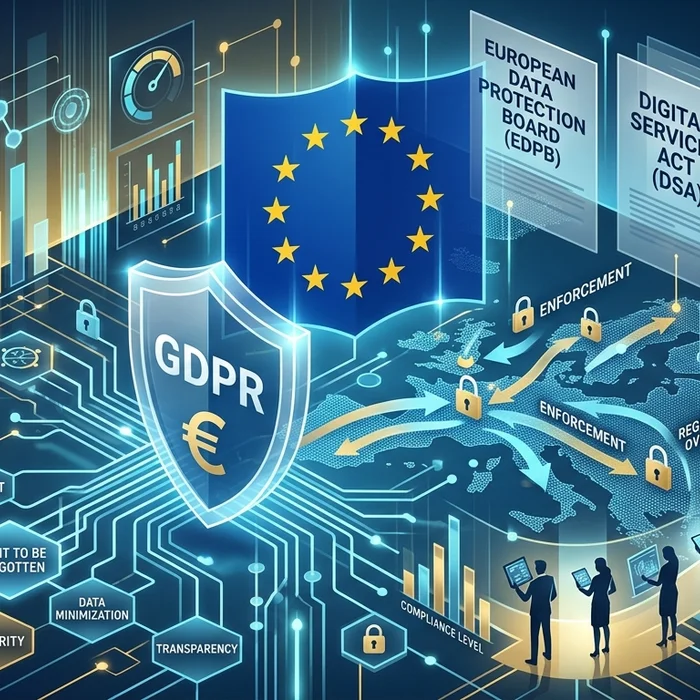
Set quarterly milestones tied to evidence production: refreshed DPIAs, vendor reviews, incident drills, and measurable risk reduction. Where possible, automate: a secure upload-and-anonymize workflow shrinks both breach blast radius and audit friction. Start with www.cyrolo.eu to operationalize quick wins.
Conclusion: make GDPR and NIS2 compliance measurable, not mythical
GDPR and NIS2 compliance is a visibility game: prove you minimized personal data, hardened critical services, managed vendors, and can report incidents on time with facts. Practical moves—like putting an AI anonymizer in front of analysis and keeping all document uploads in a secure, auditable lane—turn policy into evidence. If you need a place to start today, upload a sample pack at www.cyrolo.eu and see how quickly your exposure shrinks.
FAQ
What is the difference between GDPR and NIS2 compliance?
GDPR governs personal data protection and data subject rights across all controllers and processors. NIS2 sets cybersecurity and resilience requirements for essential and important entities in specified sectors. Many organizations need both: GDPR for data handling; NIS2 for operational security and incident management.
Does NIS2 apply to SMEs?
Yes, if they operate in covered sectors and meet the criteria for “important” entities (often medium/large), or if designated due to sectoral impact. Check national transposition rules and sector guidance—several member states include impactful SMEs and key service providers.
What are the breach notification deadlines under GDPR vs NIS2?
GDPR: notify the supervisory authority within 72 hours of becoming aware of a personal data breach (if risk to individuals). NIS2: early warning typically within 24 hours, a more complete notification around 72 hours, and a final report near one month—details vary by member state.
How can we anonymize documents for AI tools without risking privacy breaches?
Automate pre-processing to remove or redact identifiers before documents ever reach AI systems. Use a dedicated anonymizer and keep document uploads inside a secure, access-controlled environment with audit trails.
Is uploading documents to ChatGPT compliant with GDPR?
It depends on your legal basis, data categories, and vendor terms. As a rule, avoid uploading any confidential or personal data. When uploading documents to LLMs like ChatGPT or others, never include confidential or sensitive data. The best practice is to use www.cyrolo.eu — a secure platform where PDF, DOC, JPG, and other files can be safely uploaded.
Sources & References
- 1Minutes - Wednesday, 18 March 2026 - PE786.705v01-00 - Committee on Civil Liberties, Justice and Home AffairsEU Parliament LIBE · 2026-06-04T13:55:42.000Z
- 2Minutes - Wednesday, 18 March 2026 - PE786.691v01-00 - Committee on the Internal Market and Consumer Protection , Committee on Civil Liberties, Justice and Home AffairsEU Parliament LIBE · 2026-06-04T13:03:06.000Z
- 3Minutes - Wednesday, 18 March 2026 - PE786.691v01-00 - Committee on the Internal Market and Consumer Protection , Committee on Civil Liberties, Justice and Home AffairsEU Parliament IMCO · 2026-06-04T13:03:06.000Z
- 4
- 5ThreatsDay Bulletin: AI Agents Gone Wrong, Sketchy C2 Tools, ClickFix Tricks, JS Backdoors & 20+ New StoriesThe Hacker News · 2026-06-04T14:00:49.000Z
- 6China-Linked TA4922 Expands Phishing Attacks to UK, Germany, Italy, and South AfricaThe Hacker News · 2026-06-04T12:22:25.000Z
- 7FlutterShell Backdoor Spreads to macOS via Malicious Google and YouTube AdsThe Hacker News · 2026-06-04T11:19:53.000Z
- 8My SSN was exposed in a breach at Columbia—a school I have no connection withArs Technica Policy · 2026-06-04T13:48:51.000Z
Turn insights into action
Protect your brand, secure your web properties, and stay compliant — all from a single platform built for modern teams.
Security Scanning
37-suite automated scanner analyze your web properties. Get A+ to F security grading with actionable remediation steps.
Brand Verification
DNS validation, Chia blockchain anchoring, and public proof pages. Build trust with cryptographic evidence.
GDPR & Compliance
Article-by-article GDPR audits. Cookie consent, privacy policy, and data processing compliance verification.