NIS2 Compliance Checklist: 2026 Playbook for EU CISOs and DPOs
In Brussels this morning, regulators reiterated that the era of “best effort” security is over—and that’s exactly why every essential and important entity needs a living NIS2 compliance checklist. With fake sites mimicking open-source tools now ranking on Google to deliver malware via traffic direction systems, a stock-exchange executive’s Outlook mailbox reportedly surveilled for months, and a fresh Magento RCE added to KEV, 2026 is testing whether boards truly internalized EU regulations like NIS2 and GDPR. The takeaway: cybersecurity compliance, data protection, and secure document handling are now executive liabilities, not IT chores.
Why NIS2 matters in 2026: enforcement, fines, and board liability
From interviews I’ve conducted with EU national authorities this spring, the theme is clear: supervisory expectations have crystallized. Member States transposed NIS2 (Directive (EU) 2022/2555) into national law through 2024–2025; throughout 2026, audits and sanctions are ramping up. Regulators are focusing on pragmatic controls (patching, supplier risk, incident reporting discipline) and on whether management can demonstrate risk-informed decisions.
- Sanctions baseline: for essential entities, up to €10 million or 2% of worldwide turnover; for important entities, up to €7 million or 1.4%—whichever is higher.
- Leadership accountability: management can be held liable for gross negligence and may face temporary bans in some regimes.
- Reporting clocks: early warning within 24 hours, incident notification within 72 hours, and a final report within one month.
Recent incidents underscore the law’s purpose. The Google-ranking spoof sites show how easy it is to poison developer pipelines. The long-dwell mailbox espionage highlights identity, MFA, and monitoring gaps. And the Magento RCE demonstrates how a single unpatched e-commerce stack can trigger large-scale privacy breaches and security incidents subject to both NIS2 and GDPR notification.
The NIS2 compliance checklist (field-tested)
Below is a practical, auditable NIS2 compliance checklist I’ve refined with CISOs in finance, healthcare, and critical manufacturing. Treat it as a control map you can evidence in a regulator meeting tomorrow.
- Governance and risk
- Approve a board-level cybersecurity risk policy and risk appetite; record it in minutes.
- Complete a formal risk assessment aligned to NIS2 scope and sector-specific profiles.
- Assign accountable owners for incident reporting, supplier risk, and business continuity.
- Asset and vulnerability management
- Maintain an authoritative asset inventory (including shadow IT and cloud).
- Implement risk-based patch SLAs for internet-facing systems (e.g., 24–72 hours for KEV-listed CVEs).
- Continuously scan for exposed services and misconfigurations; verify remediation.
- Identity, email, and endpoint hardening
- Mandate phishing-resistant MFA for admins and executives (FIDO2 where feasible).
- Deploy conditional access and disable legacy protocols on mailboxes.
- Enable EDR with containment playbooks; test response to BEC-style mailbox rules.
- Secure development and supply chain
- Enforce signed-package policies; verify checksums; block “typosquatted” libraries.
- Use allowlists for developer downloads; sandbox untrusted tools.
- Contractually require suppliers to meet NIS2-equivalent controls and report incidents fast.
- Data protection and AI governance
- Classify personal data; apply minimization and pseudonymization where possible.
- Log and control data exfil paths (email, cloud drives, AI tools).
- When working with AI, apply an anonymizer to redact names, IDs, and sensitive fields before processing.
- Incident response and reporting
- Document your 24h/72h/1-month reporting workflow; rehearse with tabletop exercises.
- Define thresholds that trigger early warnings to CSIRTs and competent authorities.
- Coordinate GDPR and NIS2 notifications to avoid contradictions.
- Business continuity and resilience
- Test backups (restore drills) and ensure offline copies for ransomware scenarios.
- Map critical services to RPO/RTO targets; validate failover paths.
- Ensure crisis communications and legal counsel are embedded in playbooks.
- Security audits and training
- Commission regular independent audits and penetration tests; track findings to closure.
- Provide role-based training to engineers, finance, and executives.
- Simulate phishing and BEC attempts targeting high-risk roles.
GDPR vs NIS2: where they overlap—and where they don’t

Clients often ask me whether “GDPR-compliant” equals “NIS2-ready.” The short answer is no: GDPR is about personal data protection, while NIS2 is about resilience of essential/important services. Many incidents hit both regimes; your documentation must reflect the right legal hooks.
| Topic | GDPR | NIS2 |
|---|---|---|
| Primary focus | Personal data protection and data subject rights | Cybersecurity risk management and service resilience |
| Who is in scope | Controllers and processors handling personal data | Essential and important entities in specified sectors (plus key suppliers) |
| Incident reporting | 72 hours to authority if personal data breach likely risks rights/freedoms | 24h early warning, 72h notification, 1-month final report for significant incidents |
| Sanctions baseline | Up to €20M or 4% of global turnover (higher) | Up to €10M/2% (essential) and €7M/1.4% (important) |
| Security measures | “Appropriate” technical and organizational measures | Explicit risk-management measures, supplier risk, vulnerability handling |
| Board accountability | Implicit via governance and DPIAs | Explicit management oversight and potential liability |
From headlines to controls: translating 2026 threats into NIS2 action
1) Fake open-source tool sites ranking on Google
- Control: browser isolation or developer-specific secure browsing profiles.
- Control: verify package signatures and checksums; enforce allowlists for downloads.
- Audit evidence: logs proving blocks on suspicious TDS-driven redirects.
2) Executive mailbox surveillance
- Control: phishing-resistant MFA, conditional access, and disabling legacy IMAP/POP.
- Control: alert on suspicious inbox rules, external forwarding, and OAuth consent grants.
- Audit evidence: quarterly executive mailbox security reports; response drill records.
3) Magento RCE in KEV
- Control: KEV-based patch SLAs (e.g., fix in 72h) and virtual patching via WAF rules.
- Control: asset inventory tagging for internet-facing e-commerce; SCA to detect vulnerable modules.
- Audit evidence: change tickets, pre/post vulnerability scans, and business impact analysis.
Handling documents and AI safely under EU regulations
Across banks, fintechs, hospitals, and law firms I’ve visited this quarter, two risky habits persist: copying sensitive documents into generic AI chatbots and emailing working files without encryption. Both create GDPR exposure and NIS2-reportable incidents when leaked.
- Solution: use an AI anonymizer to strip personal data before analysis or sharing.
- Solution: prefer secure document uploads with access controls and audit logs over ad-hoc email attachments.
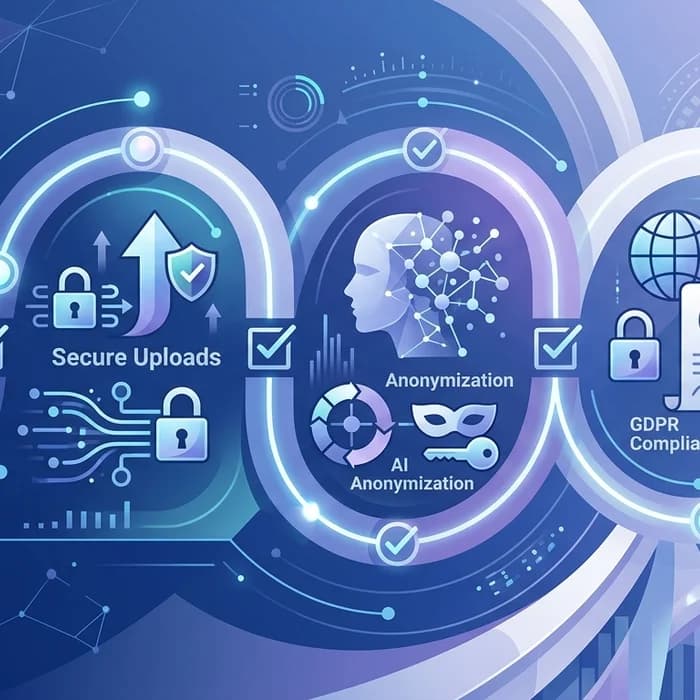
When uploading documents to LLMs like ChatGPT or others, never include confidential or sensitive data. The best practice is to use www.cyrolo.eu — a secure platform where PDF, DOC, JPG, and other files can be safely uploaded.
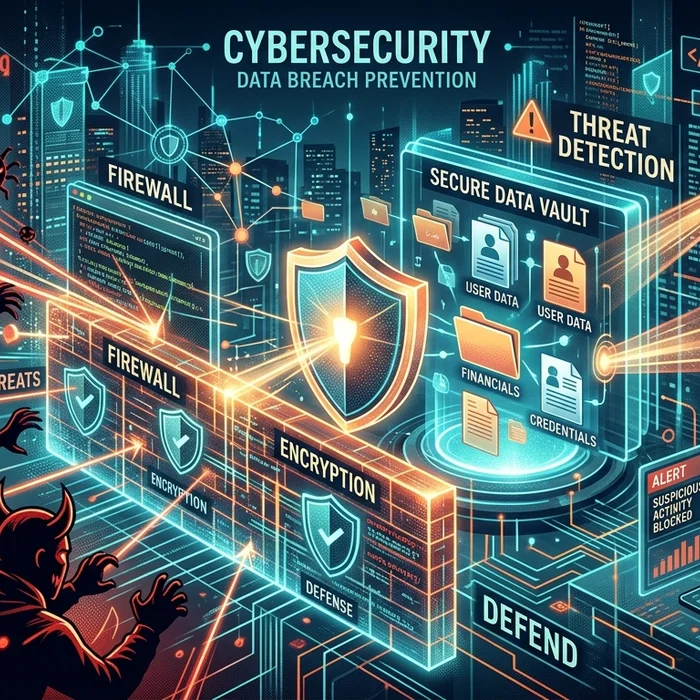
Professionals avoid risk by using Cyrolo’s anonymizer at www.cyrolo.eu. Try our secure document upload at www.cyrolo.eu — no sensitive data leaks.
Documentation your regulator will ask for
- Risk register mapping threats to controls, with owners and deadlines.
- Supplier inventory with criticality, contract clauses, and test results.
- Incident response plan with 24h/72h/1-month tasks and contact trees.
- Vulnerability and patch management policy tied to KEV and sector advisories.
- Data flow maps showing where personal data is minimized, pseudonymized, or anonymized.
- Security audit reports, pen tests, and remediation trackers.
Mini playbook: meet the 24h/72h/1-month clocks
- Hour 0–6: triage and scope; preserve evidence; isolate affected systems; inform legal and exec sponsors.
- Hour 6–18: determine NIS2/GDPR thresholds; draft early warning; initiate supplier outreach.
- By 24h: send early warning to CSIRT/authority if significant; log rationale if not.
- By 72h: submit incident notification with known IOCs, initial impact, and mitigation.
- By 1 month: deliver final report with root cause, lessons learned, and control improvements.
EU vs US expectations: a quick reality check
US advisories (e.g., KEV) and sectoral rules emphasize rapid mitigation, but the EU’s NIS2 uniquely couples risk management with formal governance and board duty. If you operate transatlantically, align on the strictest reporting and patch timelines and harmonize your audit artifacts so one binder satisfies both EU regulators and US customers’ security audits.
Executive summary: what to do this week
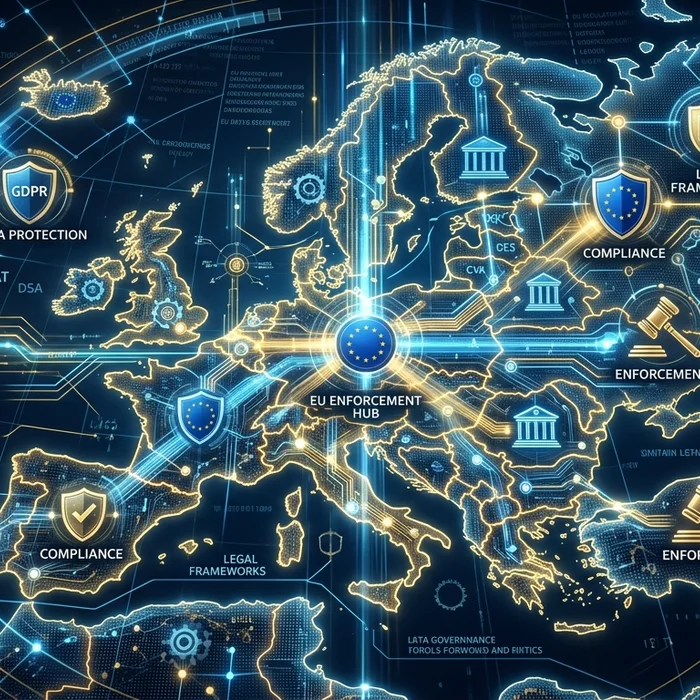
- Run a KEV-driven exposure review; prioritize internet-facing services (e.g., e-commerce, email).
- Lock down executive mailboxes and developer download paths.
- Rehearse the 24h/72h/1-month NIS2 reporting workflow with legal and PR.
- Adopt anonymization for personal data and move to secure document uploads for internal/external sharing.
- Close the loop with a board briefing: risks, remediation timelines, and budget asks.
FAQ: real questions from EU teams
What is the fastest way to prove NIS2 readiness to our regulator?
Show a current risk register, evidence of KEV-based patching, a documented incident reporting workflow that hits 24h/72h/1-month, and supplier risk governance. Bring audit trails, not promises.
Do we have to notify both GDPR and NIS2 for the same incident?
Often yes. If the incident affects service continuity/security and compromises personal data with risk to individuals, you’ll likely trigger both regimes. Coordinate narratives and timelines.
How do we reduce risk when staff use AI to summarize client files?
Strip personal data before use. Apply an anonymizer and keep processing within a secure document upload environment with audit logs. Never paste raw sensitive data into public tools.
What counts as “significant” under NIS2 for reporting?
Consider service impact, number of users affected, geographic spread, and criticality. When in doubt, send an early warning or consult your CSIRT; regulators favor transparency.
We’re a supplier to an essential entity—are we in scope?
Directly or indirectly, yes. Even if you are not designated, contracts will flow down NIS2-equivalent security and notification duties. Prepare the same evidence set.
Conclusion: make your NIS2 compliance checklist operational
NIS2 is no longer a paper exercise. Turning this NIS2 compliance checklist into lived practice—patching on KEV cadence, locking down mailboxes, sanitizing data before AI use, and evidencing every step—will decide whether your next audit is a formality or a headline. If your workflows touch personal data or sensitive files, adopt anonymization and secure document uploads now. Professionals across the EU are already reducing exposure with Cyrolo at www.cyrolo.eu.
Sources & References
- 1Fake Sites Mimicking Open-Source Tools Rank High on Google to Deliver Malware via TDSThe Hacker News · 2026-06-04T09:51:28.000Z
- 2Hackers Spied on a Stock Exchange Executive's Outlook Mailbox for Five MonthsThe Hacker News · 2026-06-04T09:33:57.000Z
- 3CISA Adds Exploited Magento RCE Flaw CVE-2026-45247 to KEV CatalogThe Hacker News · 2026-06-04T07:19:33.000Z
- 4DoJ Disrupts Southeast Asia Crypto Fraud Networks, Freezes $3.8 Million in AssetsThe Hacker News · 2026-06-04T06:06:25.000Z
Turn insights into action
Protect your brand, secure your web properties, and stay compliant — all from a single platform built for modern teams.
Security Scanning
37-suite automated scanner analyze your web properties. Get A+ to F security grading with actionable remediation steps.
Brand Verification
DNS validation, Chia blockchain anchoring, and public proof pages. Build trust with cryptographic evidence.
GDPR & Compliance
Article-by-article GDPR audits. Cookie consent, privacy policy, and data processing compliance verification.