AI anonymizer: The 2026 EU compliance playbook for GDPR and NIS2
In today’s Brussels briefing, regulators emphasized one message: if you put personal data into AI or cloud workflows without an AI anonymizer and strict controls, you are inviting fines and reputational harm. With NIS2 audits ramping up across Member States and GDPR enforcement showing no signs of slowing, the compliance bar is rising. Add fresh headlines about cloud credential theft and biometric surveillance controversies, and the direction of travel is unmistakable—de-risk data before it ever touches external systems and document the controls you run.
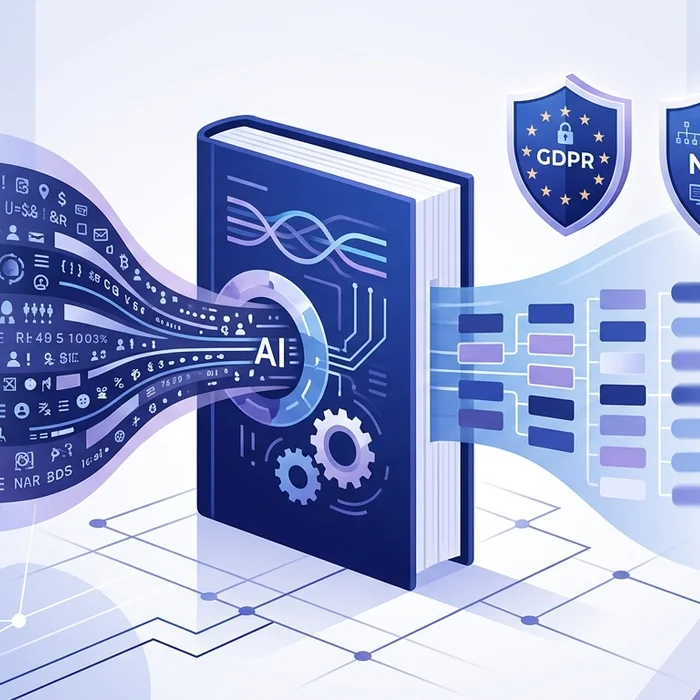
Why an AI anonymizer is now mission‑critical in the EU
EU authorities are converging on a simple expectation: sensitive data should never be exposed when it doesn’t have to be. In Brussels, a senior regulator told me this week that “data minimization and provable anonymization are going to be the practical dividing line between safe AI pilots and sanctionable violations.”
- GDPR enforcers are pursuing multi‑million‑euro penalties for unlawful processing and cross‑border transfers.
- NIS2 designates more organizations as “essential” or “important,” with supervisory powers and significant fines where security of network and information systems fails.
- Public sensitivity around biometrics is surging—look no further than transatlantic disputes over DNA collection and surveillance to see why European regulators insist on necessity, proportionality, and safeguards.
On the cyber front, a CISO I interviewed warned that the latest cloud‑focused malware strains quietly siphon secrets—API keys, tokens, and credentials. If your anonymization and secure document upload workflows aren’t airtight, adversaries won’t just steal data; they’ll exfiltrate the very keys that guard it.
Practical takeaway: Before documents, logs, or datasets enter model pipelines or third‑party tools, strip direct and indirect identifiers, redact confidential content, and keep a verifiable record of what was removed. Professionals avoid risk by using AI anonymizer workflows that are fast, consistent, and logged.
GDPR vs NIS2: What regulators expect in 2026
GDPR and NIS2 overlap but are not interchangeable. Here’s how obligations compare—and where an anonymization layer fits.
| Area | GDPR | NIS2 | What it means for you |
|---|---|---|---|
| Scope | Personal data processing by controllers/processors in the EU or targeting EU residents | Security of network and information systems for essential/important entities across critical sectors | Most mid‑ to large‑organizations now fall under at least one regime |
| Data types | Personal data, incl. special categories (health, biometrics) | All data insofar as it affects service continuity and resilience | Anonymize or pseudonymize personal data; harden all systems |
| Core duties | Lawful basis, transparency, minimization, rights, DPIAs for high risk | Risk management, incident response, supply‑chain security, governance | Run DPIAs for AI use; map suppliers; enforce controls |
| Security measures | “Appropriate” technical and organizational measures (e.g., encryption, access controls) | State‑of‑the‑art security, policies, testing, and monitoring | Standardize anonymization, key management, logging, and audits |
| Incident reporting | Notify SA within 72 hours if personal data breach likely risks rights/freedoms | Tight timelines to notify CSIRTs/authorities of significant incidents | Practice cross‑functional breach drills, incl. privacy + SOC |
| Third‑party risk | Processor due diligence, DPAs, transfer safeguards | Supplier security oversight and cascading obligations | Assess AI vendors and LLM tools like any other high‑risk supplier |
| Fines | Up to €20m or 4% of global turnover | Up to at least €10m or 2% (essential) and €7m or 1.4% (important) | Board‑level visibility and budget are non‑negotiable |
| AI angle | High‑risk processing requires DPIAs; special categories need extra safeguards | AI systems that impact service resilience must be secured and monitored | Use an anonymization layer before model ingestion or sharing |
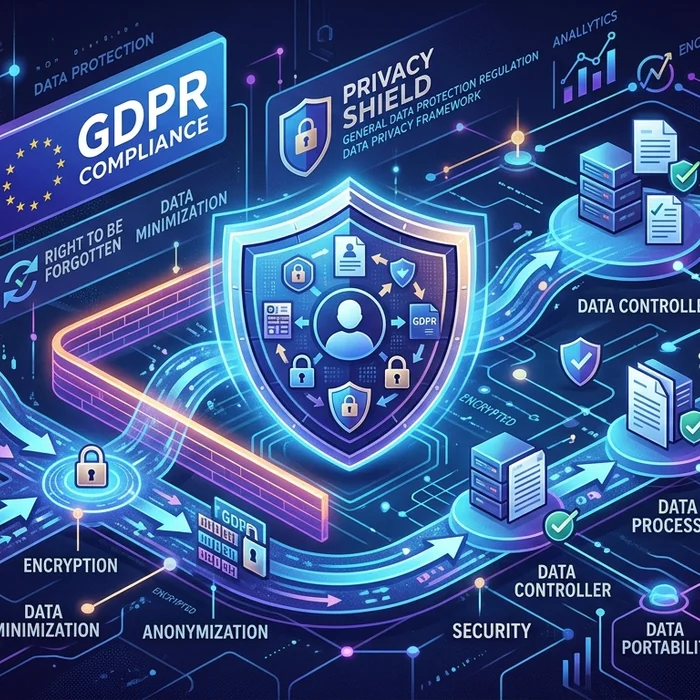
From cloud secrets to privacy leaks: The breach pattern we keep seeing
After a European e‑commerce platform suffered a credential‑stuffing incident last quarter, attackers discovered developer tokens in a build system. Those tokens opened a storage bucket that contained customer support transcripts, complete with emails and order details. The transcripts had been exported to “test an AI summarizer.” The summarizer worked. The controls didn’t.
- Direct identifiers were never removed—basic email redaction would have slashed risk.
- No policy existed for how staff should handle AI tools; uploads happened ad hoc.
- Audit trails were incomplete; the firm couldn’t prove what data went where.
Incidents like this echo recent reports of cloud‑targeting malware that hunts for secrets first and data second. It’s why security teams are now pairing credential hygiene with an AI anonymizer step at the edge of every knowledge workflow—before any file or note leaves the corporate boundary.
Compliance note: When uploading documents to LLMs like ChatGPT or others, never include confidential or sensitive data. The best practice is to use www.cyrolo.eu — a secure platform where PDF, DOC, JPG, and other files can be safely uploaded.
How to operationalize anonymization and secure document uploads
The fastest way to cut breach impact and audit exposure is to remove sensitive content before transfer. Here’s a pragmatic rollout model I see working with EU teams:
- Classify documents by sensitivity on arrival (customer, HR, legal, R&D).
- Automate redaction of direct/indirect identifiers with a policy‑driven AI anonymizer (names, emails, MRNs, IBANs, locations, rare diagnoses, free‑text PII).
- Gate external sharing and LLM access through a secure document upload portal that enforces encryption, access controls, and logging.
- Verify results with spot checks; keep a signed record of transformations for auditors.
- Train staff with short, scenario‑based drills: “Would you upload this?”
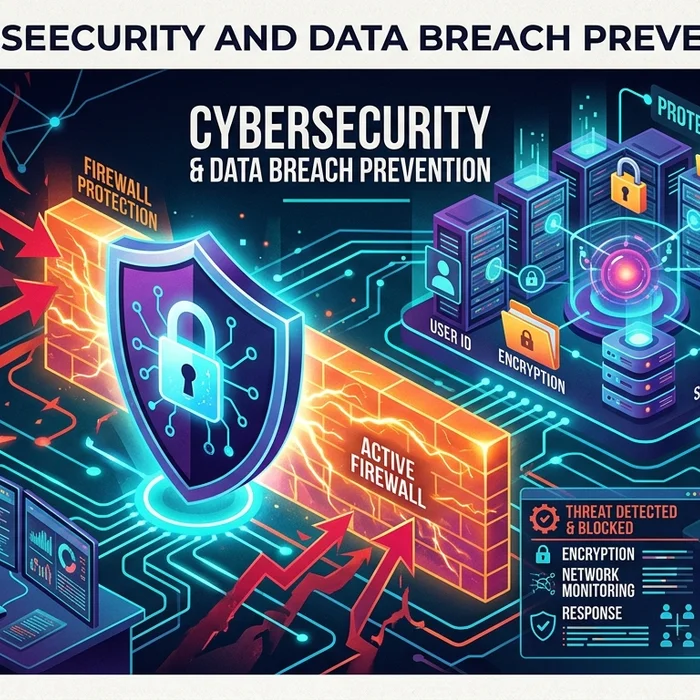
Try our secure document upload at www.cyrolo.eu — no sensitive data leaks. Professionals avoid risk by using Cyrolo’s anonymizer at www.cyrolo.eu.
Compliance checklist: Pass 2026 GDPR/NIS2 reviews
- DPIAs cover all AI/LLM use cases with clear purposes, risks, and mitigations.
- Documented policy bans uploading raw personal or confidential data to external tools.
- Automated anonymization/redaction runs before any external processing or sharing.
- Processor agreements include security and deletion standards for AI vendors.
- Access controls and key management protect storage, pipelines, and logs.
- Incident response integrates privacy and SOC; drills include AI/data‑leak scenarios.
- Proof of controls: transformation logs, hashing/signing, and sample artifacts for auditors.
- Board‑level reporting on NIS2 risks, supplier exposure, and remediation timelines.
Who needs this most: Sector snapshots
- Banks/fintechs: Chat logs and tickets contain account numbers, IBANs, device IDs. Anonymize before triage, then push summaries to models for faster fraud analysis.
- Hospitals/biotech: Special‑category data demands stringent safeguards. Automate PHI redaction in imaging notes and lab reports before AI‑assisted coding or research aggregation.
- Law firms: Matter files mix personal data with trade secrets. Use policy‑based redaction on exhibits and memos before external counsel or tool sharing.
- Manufacturing/OT: Maintenance logs may include worker identifiers and plant layouts. Remove personal and sensitive facility data before vendor troubleshooting.
- Public sector: Citizen records plus procurement data equal high stakes. Template‑driven anonymization prevents accidental disclosure while enabling transparency.
Pricing the risk: What non‑compliance costs in 2026
GDPR fines have crossed billions cumulatively, with individual cases topping €100m for repeated or willful failures. NIS2 now adds sectoral oversight, on‑site inspections, and corrective measures that can include orders to implement specific controls—at your expense. Meanwhile, typical breach costs (forensics, legal, notifications, churn) hover in the multi‑million range even for midsize firms.
Unintended consequences matter, too. Over‑collecting “for AI” can violate minimization; under‑documenting anonymization can sink a DPIA; and letting staff test external tools without a guardrail invites both data protection and cyber failures. US‑style surveillance debates around biometrics and DNA also spill into the EU press cycle—raising public expectations and political pressure. You need the receipts that prove you removed what you didn’t need and secured what you kept.
FAQ: AI anonymizer for GDPR and NIS2
Is anonymized data still “personal data” under GDPR?
Truly anonymized data—where individuals are no longer identifiable by any reasonably likely means—is outside GDPR. But pseudonymized data (e.g., tokenized with a key) is still personal data. Document your method and show why re‑identification risk is negligible.
Does NIS2 require anonymization?
NIS2 doesn’t prescribe anonymization per se, but it demands proportionate technical and organizational measures and rigorous supplier controls. An anonymization layer reduces both breach impact and reportable incidents—making it a practical way to meet NIS2’s risk‑reduction aims.
Can we upload case files to ChatGPT if we remove names?
Not safely by default. Names are only a fraction of identifiers. You must address emails, numbers, locations, free‑text clues, and confidential business content. Use a policy‑driven AI anonymizer and a secure document upload gateway, then retain audit logs.
What’s the difference between anonymization and pseudonymization?
Anonymization is irreversible and puts data outside GDPR; pseudonymization is reversible with additional information (a key or mapping) and remains within GDPR. Many analytics use cases can rely on anonymization plus aggregation; model fine‑tuning often needs strong pseudonymization with strict key custody.
What do auditors actually look for in 2026?
Evidence. DPIAs that name the AI tools in use, data flows with transformation points, signed logs of redactions/anonymization, DPA clauses with vendors, and proof of staff training. If you can show repeatable controls and outcomes, reviews go faster—and fines get rarer.
Conclusion: Make the AI anonymizer your default gate
The safest way to adopt AI in 2026 is simple: make an AI anonymizer the mandatory first step for any dataset leaving your core systems, pair it with a secure upload path, and keep tamper‑evident logs. That approach aligns with GDPR’s minimization and NIS2’s resilience mandates—and it keeps real people out of real harm’s way. If you’re ready to turn policy into practice, start with Cyrolo’s anonymization and secure document workflows at www.cyrolo.eu.
Sources & References
- 1DHS can’t create vast DNA database to track ICE critics, lawsuit saysArs Technica Policy · 2026-05-07T21:35:01.000Z
- 2After Replacing TeamPCP Malware, 'PCPJack' Steals Cloud SecretsDark Reading · 2026-05-07T20:43:30.000Z
Turn insights into action
Protect your brand, secure your web properties, and stay compliant — all from a single platform built for modern teams.
Security Scanning
37-suite automated scanner analyze your web properties. Get A+ to F security grading with actionable remediation steps.
Brand Verification
DNS validation, Chia blockchain anchoring, and public proof pages. Build trust with cryptographic evidence.
GDPR & Compliance
Article-by-article GDPR audits. Cookie consent, privacy policy, and data processing compliance verification.