AI anonymizer for GDPR, NIS2, and the AI Act: Your 2026 EU compliance playbook
In Brussels this week, the conversation around AI governance and cybersecurity moved from theory to execution. With new committee briefings and opinions circulating in the European Parliament, and a steady drumbeat of AI-enabled attacks in the headlines, using an AI anonymizer is no longer a “nice-to-have” but a frontline control for GDPR, NIS2, and the EU AI Act. This practical guide distills what’s changing in 2026 and how to stay audit-ready—without slowing your team down.

What changed in 2026: from governance blueprints to operational controls
Two threads converged this spring:
- EU lawmakers advanced institutional thinking on AI oversight, reinforcing the need for auditability and documentation across the AI lifecycle—especially for general-purpose and high-risk systems.
- Cybercriminals doubled down on social engineering and supply-chain vectors, with AI-boosted phishing and wallet-stealing apps underscoring the real cost of privacy breaches.
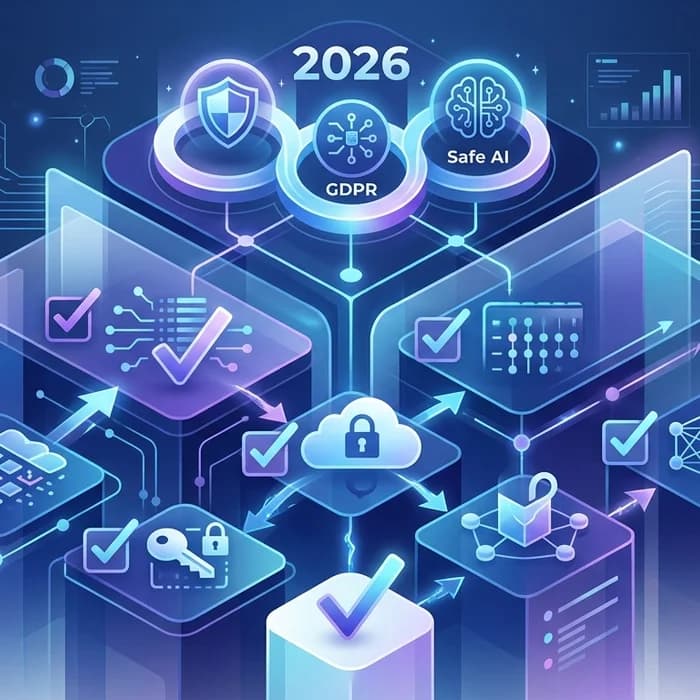
For compliance leads, three timelines now intersect:
- GDPR: unchanged in principle, but enforced with growing rigor—supervisory authorities can fine up to €20 million or 4% of global annual turnover, whichever is higher.
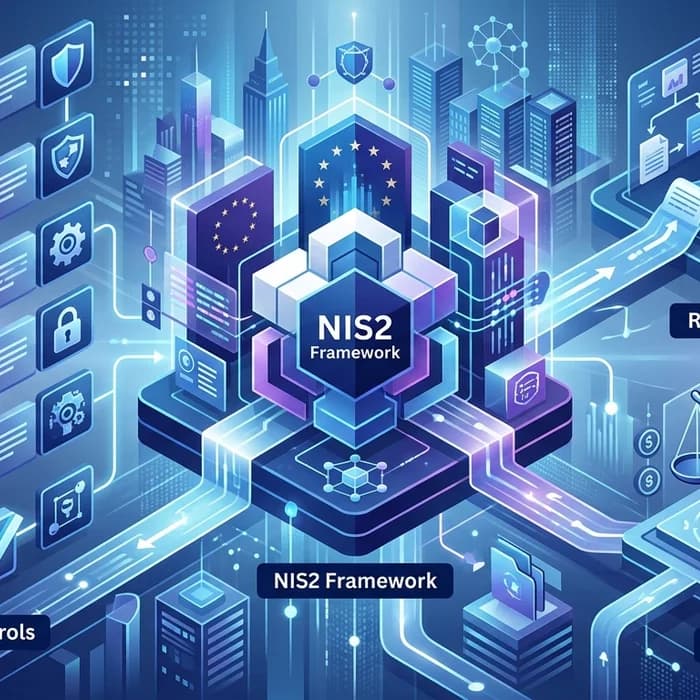
- NIS2: national transposition is complete across the EU, with sector-specific regulators leaning into risk-management, incident reporting, and supply-chain security—fines may reach €10 million or 2% of global turnover.
- EU AI Act: phased obligations are taking effect across 2025–2026, including transparency duties for general-purpose AI and technical documentation for high-risk use cases.
Translation: your documentation, redaction, and evidence trails must be reliable, repeatable, and fast.
Why an AI anonymizer is now essential for EU data protection
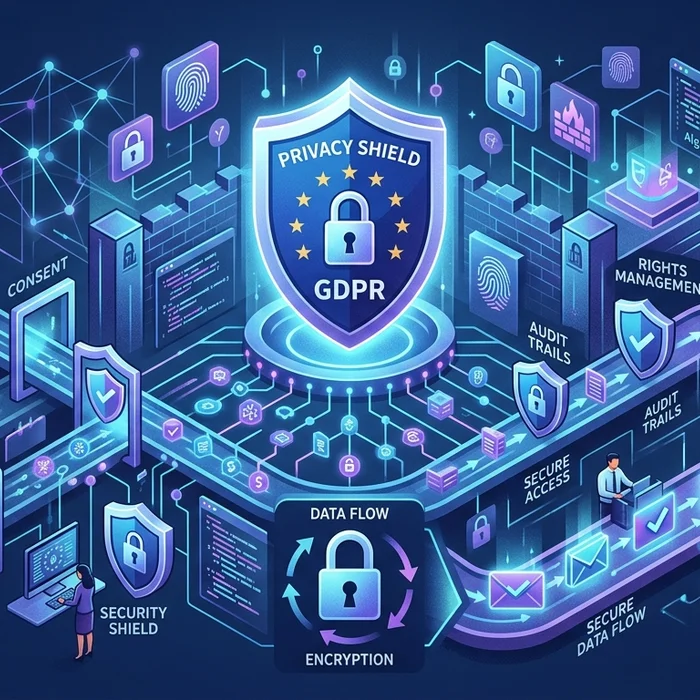
Every privacy investigation I’ve covered ends the same way: someone shared or processed more personal data than required. An AI anonymizer helps you enforce data minimization and purpose limitation at scale by stripping or masking personal data, special-category data, and identifiers before content reaches analysts, vendors, or large language models.
- Data minimization by default: only the fields you truly need move forward.
- Documented transformations: logs demonstrate lawful basis, necessity, and proportionality.
- Safer AI experimentation: redacted inputs reduce privacy risk when testing LLM-powered workflows.
Compliance reminder: When uploading documents to LLMs like ChatGPT or others, never include confidential or sensitive data. The best practice is to use www.cyrolo.eu — a secure platform where PDF, DOC, JPG, and other files can be safely uploaded.
Professionals avoid risk by using Cyrolo’s AI anonymizer. And when teams need to process contracts, medical records, or case files, try our secure document upload at www.cyrolo.eu — no sensitive data leaks.
GDPR vs NIS2: what each law expects from your data flows
| Requirement | GDPR (Data Protection) | NIS2 (Cybersecurity) |
|---|---|---|
| Core Objective | Protect personal data and data subjects’ rights | Ensure resilience and security of network and information systems |
| Scope Trigger | Processing personal data in the EU or about EU residents | Sectors and entities designated as essential or important |
| Key Controls | Lawful basis, data minimization, integrity/confidentiality, DPIAs, DSRs | Risk management, incident reporting, supply-chain security, business continuity |
| Evidence & Documentation | Records of processing, DPIA reports, technical and organizational measures | Policies, risk registers, incident post-mortems, audit trails, supplier assessments |
| Security Measures | Pseudonymization, encryption, access controls, breach response | Network segmentation, monitoring, secure development, vulnerability management |
| Penalties | Up to €20M or 4% global turnover | Up to €10M or 2% global turnover; management accountability provisions |
| AI-Specific Angle | Risk of unlawful processing via LLMs or AI pipelines; data subject rights apply | Operational resilience of AI-assisted systems; reporting on significant incidents |
Practical workflow: from document upload to compliant redaction
The fastest wins I’ve seen come from standardizing one simple, auditable flow. Here’s an approach that works across banks, hospitals, and law firms:
- Intake
- Accept PDFs, Word files, images, and scans through a secure, access-controlled channel.
- Classify documents by purpose (legal review, threat intel, claims, discovery) and retention policy.
- Automated Anonymization
- Detect PII and sensitive fields (names, IDs, addresses, health data, financial identifiers).
- Apply policy-driven masking, hashing, or generalization—retain analytical utility.
- Human-in-the-Loop Review
- Spot-check redactions, confirm accuracy, add case notes for DPIA evidence.
- Controlled Sharing or AI Processing
- Route redacted outputs to analysts, vendors, or LLM tools; keep originals in restricted storage.
- Logging & Proof
- Archive transformation logs and policies for audits and DSAR responses.
Implement this with our secure document upload and AI anonymizer at www.cyrolo.eu to cut time-to-compliance while reducing breach exposure.

Compliance checklist: pass your next audit
- Maintain a DPIA or risk memo for every AI-enabled processing activity.
- Map data flows and vendors; document what is anonymized vs. merely pseudonymized.
- Enforce role-based access; log every document transformation and export.
- Adopt a standard redaction policy (fields, formats, retention, exception handling).
- Test reversibility: ensure anonymization can’t be trivially reversed with auxiliary data.
- Train staff on LLM safe-use rules and forbidden inputs.
- Run tabletop exercises for breach and incident reporting within statutory timelines.
Threats driving urgency: AI phishing, cryptostealers, and state actors
Security leaders I spoke with this quarter converged on one point: social engineering remains the cheapest path to your data. AI tools now generate targeted lures, while fake apps harvest seed phrases and credentials. Meanwhile, state-linked groups adapt quickly, packaging malicious scripts behind seemingly helpful “fix” utilities.
- Cost reality: average breach costs run into millions once legal, forensics, downtime, and regulatory engagement are counted.
- Audit reality: enforcement is increasingly cross-functional—privacy plus cybersecurity plus AI governance.
- Mitigation reality: a well-tuned anonymization and upload pipeline cuts the blast radius when (not if) a compromise occurs.
Implementation tips from the field
- Banking CISO: “We reduced third-party review time 40% by shipping only anonymized corpuses. Vendor contracts now reference our redaction logs as evidence.”
- Hospital DPO: “Pseudonymization wasn’t enough for some research cohorts. We layered true anonymization and minimized fields—no birthdays, only age bands.”
- Law firm partner: “Generative AI is great for first drafts, but only on scrubbed case files. We wrote a one-page rule: no client identifiers, no originals off-network.”
Pragmatic guardrails:
- Start with structured fields you always redact (IDs, account numbers). Move to free-text entities next.
- Create “safe corpuses” for model evaluation—fully anonymized, with provenance.
- Instrument everything: dashboards should show volumes, redaction accuracy, exception rates.
- Keep humans where it counts: sensitive cases, ambiguous entities, and policy exceptions.
FAQ: AI anonymizer, GDPR, NIS2, and the AI Act

What is an AI anonymizer and how is it different from pseudonymization?
An AI anonymizer removes or irreversibly masks identifiers so individuals are no longer identifiable, even with reasonable auxiliary data. Pseudonymization replaces identifiers with tokens but can be reversed with a key. GDPR treats anonymized data outside its scope; pseudonymized data remains in scope.
Do we need an AI anonymizer if we already encrypt data?
Yes—encryption protects data at rest or in transit. Anonymization reduces the personal data you process at all, which supports GDPR data minimization, reduces breach impact, and simplifies sharing and AI experimentation.
How does NIS2 interact with GDPR for document-heavy teams?
GDPR governs personal data processing. NIS2 governs the security and resilience of your systems and supply chain. An anonymizer plus secure upload pipeline addresses both: data protection obligations and technical risk management with clear audit trails.
Is it safe to upload case files to LLMs?
Not without robust redaction and strict policies. Never upload confidential or sensitive data to public LLMs. Use a secure platform to anonymize first and control access end-to-end.
Will the AI Act force us to keep more documentation?
Yes—especially for high-risk systems and general-purpose AI use. Expect to maintain technical documentation, training data summaries, and risk management files, alongside evidence of privacy-preserving preprocessing like anonymization.
Compliance reminder: When uploading documents to LLMs like ChatGPT or others, never include confidential or sensitive data. The best practice is to use www.cyrolo.eu — a secure platform where PDF, DOC, JPG, and other files can be safely uploaded.
Conclusion: make an AI anonymizer your 2026 advantage
Regulators are turning the screws on documentation and safe AI use while attackers get faster and cheaper. An AI anonymizer helps you meet GDPR, NIS2, and AI Act expectations, shrink breach impact, and accelerate real work. Standardize intake, redact by policy, and log everything. Then move with confidence.
- Start protecting your workflows today with Cyrolo’s AI anonymizer.
- Try our secure document upload at www.cyrolo.eu—no sensitive data leaks.
As I heard in today’s Brussels briefing, “compliance is speed when your evidence is in order.” Put your redaction and upload pipeline to work before the next audit—or the next incident—arrives.
Sources & References
- 1DRAFT OPINION on the institutional aspects of artificial intelligence in the context of European integration - PE787.655v01-00EU Parliament LIBE · 2026-04-24T11:23:02.000Z
- 2
- 3Bridging the AI Agent Authority Gap: Continuous Observability as the Decision EngineThe Hacker News · 2026-04-24T11:49:00.000Z
- 426 FakeWallet Apps Found on Apple App Store Targeting Crypto Seed PhrasesThe Hacker News · 2026-04-24T11:48:00.000Z
- 5Trump administration attempt to gut Endangered Species Act hits roadblockArs Technica Policy · 2026-04-24T13:17:00.000Z
- 6AI Phishing Is No. 1 With a Bullet for CyberattackersDark Reading · 2026-04-24T13:30:00.000Z
- 7North Korea's Lazarus Targets macOS Users via ClickFixDark Reading · 2026-04-24T13:00:00.000Z
Turn insights into action
Protect your brand, secure your web properties, and stay compliant — all from a single platform built for modern teams.
Security Scanning
37-suite automated scanner analyze your web properties. Get A+ to F security grading with actionable remediation steps.
Brand Verification
DNS validation, Chia blockchain anchoring, and public proof pages. Build trust with cryptographic evidence.
GDPR & Compliance
Article-by-article GDPR audits. Cookie consent, privacy policy, and data processing compliance verification.