EU AI Act compliance: 2026 field guide for CISOs, DPOs, and product leaders
EU AI Act compliance is no longer a theoretical exercise—it’s operational reality in 2026. In today’s Brussels briefing, regulators emphasized that enforcement windows are opening while companies still mix personal data into prompts, leave model endpoints exposed, and under-document risk controls. If you’re already juggling GDPR and NIS2, the new obligations can feel overwhelming. This report translates the rules into concrete steps—and shows how data minimisation, anonymization, and secure document uploads can de-risk your AI stack fast.

What EU AI Act compliance means in 2026
After years of negotiation, the AI Act is here. MEPs in the Internal Market Committee (IMCO) spent this week grilling experts on practical risks—from prompt injection to model supply-chain exposures—because the next 12–18 months are decisive. Here’s the reality check for teams building or integrating AI:
- Scope: The Act applies to providers, deployers, importers, and distributors of AI systems placed on the EU market or used in the EU. General-purpose AI (GPAI) models have baseline transparency and risk management duties, with extra obligations for “systemic” models.
- High-risk AI: Systems used in areas like finance, employment, health, and critical infrastructure face strict conformity assessments, logging, human oversight, and post-market monitoring.
- Prohibited practices: Certain manipulative or exploitative AI uses are banned outright, with the earliest enforcement kicking in first.
- Penalties: Violations can draw fines up to 35 million EUR or 7% of global annual turnover for prohibited practices; up to 15 million EUR or 3% for other non-compliance.
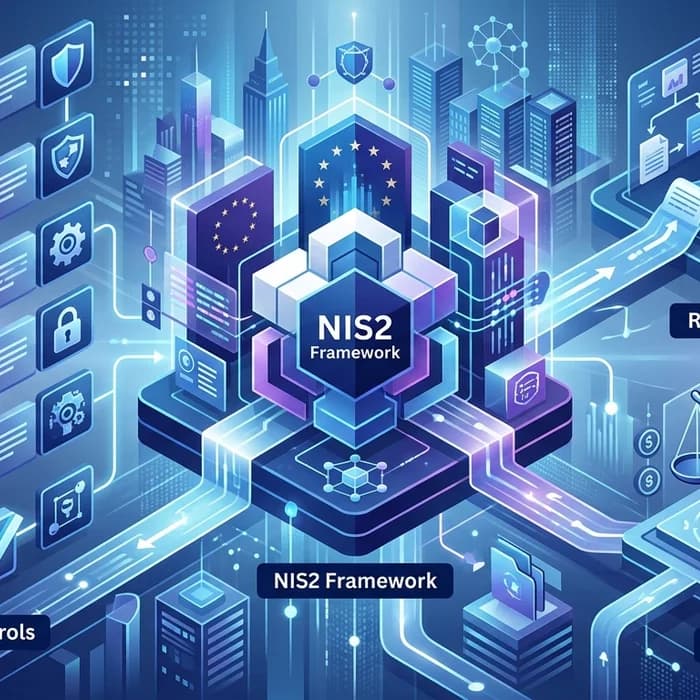
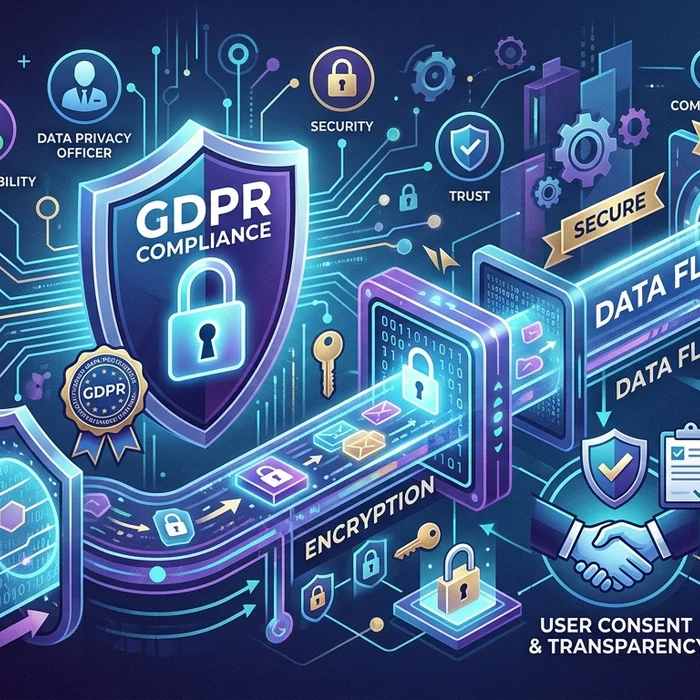
- Interplay: GDPR continues to govern personal data, while NIS2 drives cybersecurity risk management and reporting. The AI Act layers risk, transparency, and governance across the lifecycle.
Key 2025–2026 checkpoints
- Prohibitions apply early; plan deprecations or redesigns now.
- GPAI transparency and technical documentation requirements phase in before the full high-risk regime.
- High-risk obligations become enforceable on a rolling basis—your product roadmap must account for conformity assessments, logging, and post-market monitoring well before launch.
How AI Act duties align with GDPR and NIS2
Most EU teams aren’t starting from zero. If you run DPIAs, follow ISO 27001 or NIST controls, and meet NIS2 expectations, you already have structural scaffolding. But there are friction points—and auditors will look for integration, not parallel paperwork.
| Dimension | GDPR (Data Protection) | NIS2 (Cybersecurity) |
|---|---|---|
| Scope | Personal data processing and controllers/processors | Essential and important entities in key sectors, plus their supply chains |
| Primary focus | Lawful basis, data minimisation, rights, DPIAs | Risk management, incident response, reporting, resilience |
| Key obligations | DPIAs, records of processing, DPO, breach notification (72h) | Security measures, vulnerability handling, supplier risk, incident notification |
| Enforcement | Data Protection Authorities | National competent authorities and CSIRTs |
| Penalties | Up to 20M EUR or 4% global turnover | At least up to 10M EUR or 2% global turnover for essential entities (member state–specific) |
| AI touchpoints | Personal data in training/inference, rights, anonymisation/pseudonymisation | Model supply-chain security, secure development, monitoring, reporting |
Where the AI Act adds new duties
- Risk management across the AI lifecycle: hazard identification, testing, and mitigation before and after release.
- Data governance for training and testing datasets: representativeness, bias controls, data provenance, and documentation.
- Logging, traceability, and transparency to users, including appropriate human oversight.
- Technical documentation, CE marking for high-risk systems, and market surveillance.
The overlooked attack paths in AI systems
A CISO I interviewed last week put it bluntly: “We secure the app, but leave the model workshop unlocked.” That “workshop” now includes vector databases, prompt routers, model gateways, and data labeling pipelines. Recent research scanning one million exposed AI services found widespread misconfigurations—open dashboards, default credentials, and unauthenticated endpoints. Meanwhile:
- Supply-chain RCE: Fresh CMS and package vulnerabilities remind us that CI/CD for AI (model registries, feature stores, MLOps consoles) inherits classic web flaws. Attackers pivot fast from a minor web RCE to your model weights and secrets.
- Prompt and data poisoning: Shadow datasets and contractor uploads can poison training corpora; basic S3 hygiene and input validation often lag behind deployment speed.
- Token leakage: Pastebins, issue trackers, and demo notebooks still expose API keys for proprietary models and vector indices.
- Old-school vectors, new systems: A viral USB “pentest” story underlined that human curiosity hasn’t changed; getting MFA fatigue in front of an LLM operator works depressingly well.
- Government data requests: Cross-border orders—even via unexpected legal hooks—can complicate your data residency promises and risk assessments.
For the AI Act, this matters because risk management and post-market monitoring require you to anticipate and mitigate these angles, not just claim ISO compliance on paper.
Practical roadmap: a 90-day EU AI Act compliance sprint
- Map systems and roles: Identify provider vs deployer duties; list models (GPAI, fine-tuned, high-risk), data flows, and third parties.
- Classify risk: Determine if any systems are high-risk; run pre-release risk analysis aligned to AI Act, GDPR DPIAs, and NIS2 risk assessments.
- Data governance: Document dataset sources, consent/licensing, bias tests, and provenance. Strip personal data whenever feasible with an AI anonymizer.
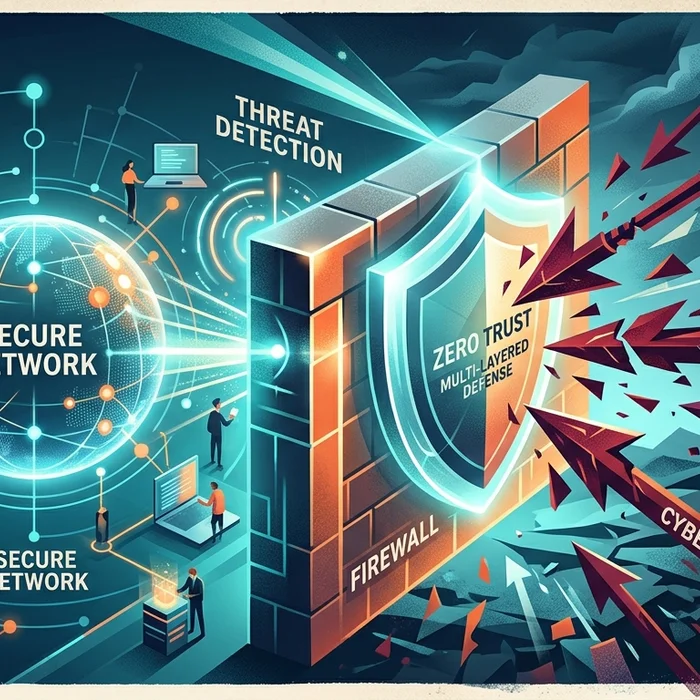
- Security controls: Lock down endpoints, rotate credentials, harden model gateways, and add runtime monitoring for prompt injection and exfiltration.
- Human oversight: Define when a human must review, override, or explain AI outputs; log those interventions.
- Technical documentation: Build living documentation—intended purpose, performance metrics, known risks, mitigations, testing, and change history.
- Transparency: Prepare user-facing disclosures and instructions for safe use, including known limitations.
- Post-market monitoring: Establish feedback loops, incident criteria, reporting channels, and retraining triggers.
- Supplier governance: Demand SBOMs, model cards, and security attestations from vendors; test their claims.
- Training: Run role-based training for developers, legal, and support; simulate incidents and regulator requests.
Data minimisation in practice: anonymization and secure document uploads
Personal data is where GDPR risk spikes and where AI training/inference leaks happen. Two low-friction wins:
- Anonymize source materials before any AI processing. Strip direct and indirect identifiers from PDFs, docs, and scans. Professionals avoid risk by using Cyrolo’s anonymizer at www.cyrolo.eu.
- Centralize uploads in a secured boundary with audit trails. Try our secure document upload at www.cyrolo.eu — no sensitive data leaks.
When uploading documents to LLMs like ChatGPT or others, never include confidential or sensitive data. The best practice is to use www.cyrolo.eu — a secure platform where PDF, DOC, JPG, and other files can be safely uploaded.
Documentation auditors will expect in 2026
- System inventory and role mapping (provider/deployer/distributor/importer)
- Risk classification rationale (including high-risk determinations)
- Dataset governance: sources, licenses, consent basis, de-identification reports
- Model cards and change logs; performance and robustness testing
- Security plan (aligned to NIS2): access control, vulnerability handling, incident runbooks
- Human oversight procedures and training records
- Transparency notices and user instructions
- Post-market monitoring plan and incident registers
EU vs US: what regulators actually expect
In the EU, expect structured documentation and provable controls. Market surveillance authorities will ask for technical files; DPAs will probe lawful basis, minimisation, and rights. Under NIS2, supervisors will expect risk-based security and timely incident reporting. In the US, there’s no comprehensive AI statute yet; instead, enforcement flows from sectoral laws and agencies (e.g., FTC on unfair practices) alongside frameworks like NIST AI RMF. If you build for EU AI Act compliance—with real data governance, security-by-design, and transparent documentation—you’ll meet or exceed US buyer expectations.
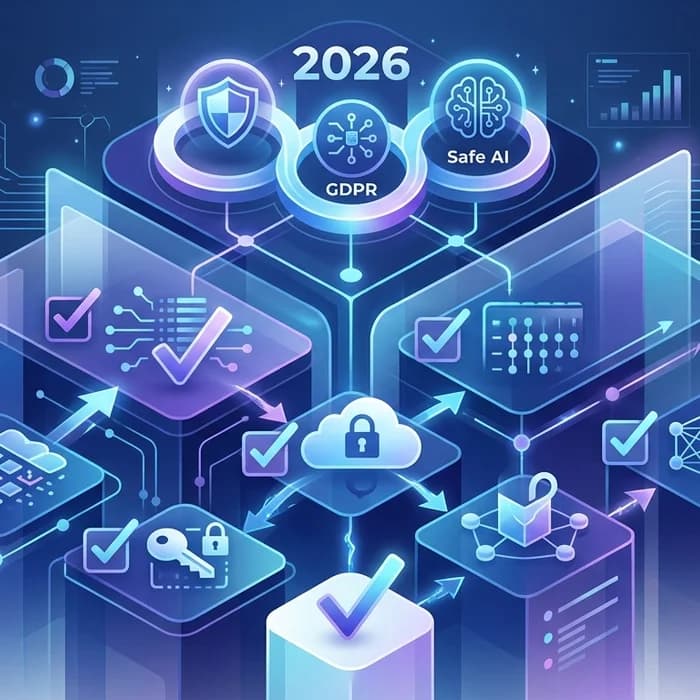
Compliance checklist: ship AI safely in 2026
- Decide system role(s): provider or deployer
- Confirm risk level; if high-risk, plan conformity assessment early
- Remove or anonymize personal data before training and prompts
- Harden AI infrastructure; scan for exposed endpoints and default creds
- Establish human-in-the-loop controls with clear escalation
- Generate and maintain technical documentation and model cards
- Prepare transparency notices and user instructions
- Set up post-market monitoring and incident reporting
- Contractually bind suppliers; verify their security and dataset claims
- Rehearse regulator inquiries and customer due diligence
FAQ: EU AI Act compliance, answered
What counts as “high-risk” under the AI Act?

High-risk systems include AI used in critical areas like employment, creditworthiness, essential services, medical devices, and critical infrastructure. Check annexes and sectoral rules, then document your risk determination. If in doubt, perform a conservative assessment and prepare controls.
Do I still need GDPR compliance if I’m AI Act compliant?
Yes. The AI Act does not replace GDPR. If your AI processes personal data, you must ensure a lawful basis, data minimisation, rights handling, and DPIAs where required. Using strong anonymisation upstream significantly reduces GDPR exposure.
How does NIS2 affect my AI security obligations?
NIS2 requires risk-based security, incident management, and supplier oversight for essential/important entities. For AI, that means hardening model endpoints, securing data pipelines, handling vulnerabilities quickly, and reporting significant incidents.
We fine-tune a GPAI model. Are we a provider or a deployer?
It can be both, depending on control and placement on the market. If you substantially modify a model or place it on the market, you may be a provider. If you integrate and use AI in your own services, you are a deployer. Map roles carefully; obligations differ.
What’s the fastest way to reduce compliance risk this quarter?
Start with data minimisation and boundary security: anonymize documents before any AI processing and centralize uploads with audit trails. Then lock down AI infrastructure and produce living technical documentation. You can do all three in 90 days.
Conclusion: the business case for EU AI Act compliance
EU AI Act compliance isn’t just about avoiding fines—it’s how you prove reliability to customers, regulators, and your board. In an era of exposed AI endpoints and escalating privacy breaches, the best differentiator is disciplined governance: strong anonymisation, secure pipelines, measurable risk controls, and transparent documentation. If you only do one thing today, reduce your data blast radius: anonymize first and centralize uploads. Try Cyrolo’s anonymizer and secure document upload at www.cyrolo.eu, and ship AI your legal team—and your customers—can trust.
Sources & References
- 1Highlights - How safe is AI? MEPs question experts on new risks and rules - Committee on the Internal Market and Consumer ProtectionEU Parliament IMCO · 2026-05-05T12:22:45.000Z
- 2The Back Door Attackers Know About — and Most Security Teams Still Haven’t ClosedThe Hacker News · 2026-05-05T11:58:00.000Z
- 3MetInfo CMS CVE-2026-29014 Exploited for Remote Code Execution AttacksThe Hacker News · 2026-05-05T11:56:00.000Z
- 4We Scanned 1 Million Exposed AI Services. Here's How Bad the Security Actually IsThe Hacker News · 2026-05-05T10:30:00.000Z
- 5DHS abuses 1930s customs law in attempt to get data on Canadian from GoogleArs Technica Policy · 2026-05-05T14:02:19.000Z
- 6How the Story of a USB Penetration Test Went ViralDark Reading · 2026-05-05T11:56:15.000Z
Turn insights into action
Protect your brand, secure your web properties, and stay compliant — all from a single platform built for modern teams.
Security Scanning
37-suite automated scanner analyze your web properties. Get A+ to F security grading with actionable remediation steps.
Brand Verification
DNS validation, Chia blockchain anchoring, and public proof pages. Build trust with cryptographic evidence.
GDPR & Compliance
Article-by-article GDPR audits. Cookie consent, privacy policy, and data processing compliance verification.