AI compliance in the EU: what 2026 means for GDPR, NIS2, and the AI Act
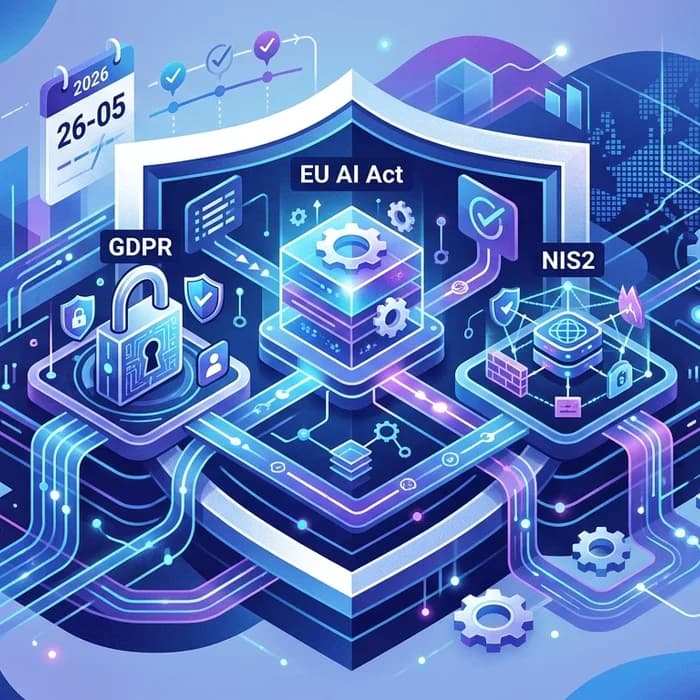
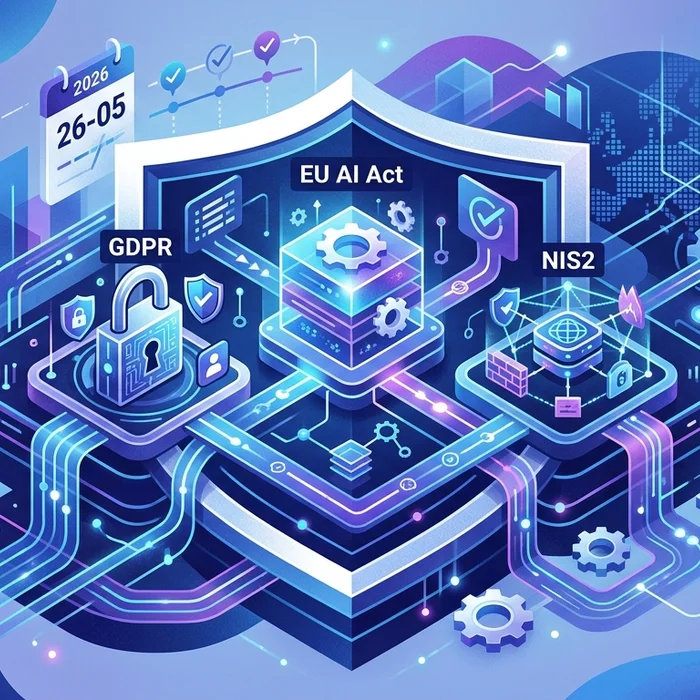
In today’s Brussels briefing, regulators and industry alike repeated a clear message: AI compliance in the EU is no longer optional or “in pilot.” It is operational. Between GDPR enforcement, NIS2 uptime-and-security duties, and the phased rollout of the EU AI Act, European organizations must harden data governance, lock down model inputs, and log everything. Even cultural moments—like Pope Leo’s call to “disarm” AI—reflect a public mood that rewards companies who can prove control over personal data and algorithmic risk.
Why AI compliance in the EU just got harder in 2026
Three forces converged this year:
- EU AI Act obligations begin phasing in across 2025–2026, with bans on prohibited uses first, transparency for general-purpose AI models next, and full high-risk system requirements following within two years of entry into force.
- GDPR enforcement is maturing: Data protection authorities have shown more consistent cross-border action, with fines up to 4% of global annual turnover for severe violations and orders to stop processing that can halt AI projects overnight.
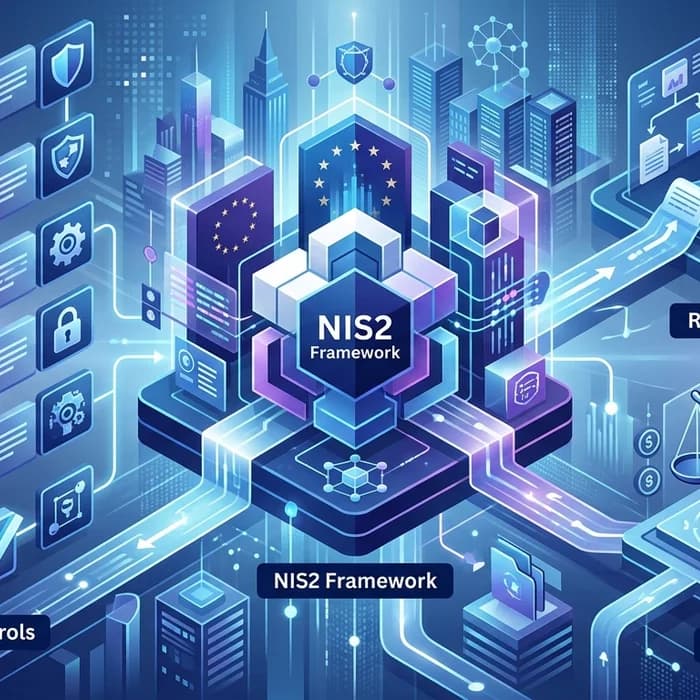
- NIS2 is now live at national level, expanding security and incident-reporting duties to thousands more “essential” and “important” entities—healthcare providers, financial services, digital infrastructure, managed services, and more.
As one CISO I interviewed put it: “We used to treat model prompts like whiteboard chatter. Today those prompts are regulated records—potentially personal data—and subject to breach reporting if they leak.”
GDPR vs NIS2: what changes for CISOs and DPOs
Security leaders often ask how GDPR’s privacy rules intersect with NIS2’s resilience focus. Here’s a quick comparison you can take to your next steering committee.
| Topic | GDPR | NIS2 |
|---|---|---|
| Scope | Processing of personal data by controllers/processors in or targeting the EU | Network and information systems of “essential” and “important” entities in listed sectors |
| Primary focus | Lawful, fair, transparent processing; data subject rights; transfers; DPIAs | Cyber risk management, business continuity, supply-chain security, incident reporting |
| Incident reporting | Without undue delay; to DPA; data breach notification to individuals when high risk | Early warning within 24 hours; incident notification within 72 hours; final report within 1 month |
| Fines | Up to €20M or 4% of global turnover (higher of the two) | Administrative fines up to at least €10M or 2% of global turnover (member-state specific ceilings) |
| AI relevance | Prompts, training data, outputs can be personal data; requires DPIAs, minimization, purpose limits | AI services are in-scope if they support essential operations; demands technical and organizational measures |
| Audits | DPAs can audit documentation, logs, DPIAs, and data flows | Competent authorities can require evidence of risk management, policies, and remediation |
The risk landscape: personal data, model prompts, and shadow AI
Real-world failure points I’m seeing on the ground:
- Prompts that contain personal data (CVs, medical notes, client identifiers) copied into public LLMs without legal basis or safeguards.
- “Silent” document uploads by staff—PDFs and DOCs with full names, account numbers, and health details—into web tools that retain data for training.
- Model outputs that re-identify individuals because training data wasn’t sufficiently anonymized or redacted.
- SaaS vendor sprawl with unclear sub-processors and data transfer locations, complicating GDPR and NIS2 supply-chain obligations.
Problem: every one of those scenarios can trigger GDPR duties and, if systems are disrupted or data is exfiltrated, NIS2 incident reporting. Solution: enforce a hardened input layer—automated redaction before any AI interaction—and a secure, governed workflow for file handling.
Professionals avoid risk by using Cyrolo’s anonymizer at www.cyrolo.eu to strip personal data before analysis. Try our secure document uploads at www.cyrolo.eu — no sensitive data leaks, just fast, compliant reading and search.
Compliance note: When uploading documents to LLMs like ChatGPT or others, never include confidential or sensitive data. The best practice is to use www.cyrolo.eu — a secure platform where PDF, DOC, JPG, and other files can be safely uploaded.
How to operationalize AI compliance in the EU without slowing teams
Here’s a pragmatic program that works across banks, fintechs, hospitals, and law firms:
- Map AI use cases and data classes. Identify which models and workflows touch personal data, special-category data, or trade secrets. Tie each to a legal basis and retention schedule.
- Apply “privacy by default” at the input layer. Set up automated anonymization/redaction before prompts or uploads reach any AI system. This measurably reduces GDPR exposure and downstream breach impact.
- Run DPIAs and risk assessments. For high-risk AI or profiling, document Data Protection Impact Assessments and technical safeguards; align with AI Act risk management and post-market monitoring concepts.
- Segment vendors and flows. For each AI/SaaS provider, record data residency, training policies, sub-processors, and transfer safeguards. Adopt DPA addenda and NIS2-oriented security clauses.
- Instrument logging and access controls. Capture prompt logs, redaction events, model versions, and administrator actions. Use least-privilege and SSO/MFA for any tool with sensitive data.
- Practice incident response to NIS2 timelines. Rehearse 24h early-warning and 72h notifications; keep templates and contact trees ready across legal, security, and communications.
- Educate, don’t just block. Train staff on acceptable use, and give them safe alternatives—like a governed document reader with built-in anonymization—so productivity doesn’t move to shadow tools.
EU vs US reality check
- EU: unified horizontal regimes (GDPR, NIS2, AI Act) plus sector laws like DORA for finance; strong fines and proactive audits.
- US: sectoral patchwork (HIPAA, GLBA, state privacy laws) with rising but uneven AI guidance; litigation and contractual controls loom larger.
The result: if you meet EU standards with auditable controls, you often exceed US expectations by default.
Practical workflows you can deploy this week
- Secure pre-processing via anonymization: Route all sensitive files through an AI anonymizer at www.cyrolo.eu to redact names, IDs, and health markers before any analysis. A hospital privacy lead told me this alone reduced breach triage by 40%.
- Governed document review: Use a safe reader for document uploads at www.cyrolo.eu that logs access, prevents data exfiltration, and keeps regulated artifacts for audits.
- Prompt hygiene rules: Automatically block patterns like full IBANs, MRNs, or national IDs; replace with tokens that allow analytics without exposure.
- Vendor guardrails: Default to no-training modes, EU-only data regions, and contractual deletion on demand; backstop with technical DLP.
AI compliance in the EU: your 12-point checklist
- Inventory all AI systems, data sources, and outputs; classify by risk.
- Define legal bases for processing; document purpose limitation and minimization.
- Implement automated anonymization/redaction for prompts and files.
- Complete DPIAs and, where needed, consultation with regulators before launch.
- Establish retention schedules and deletion workflows for prompts and outputs.
- Enforce access controls, MFA, and role-based permissions on AI tools.
- Log prompts, model versions, redaction events, and admin actions.
- Contractually bind vendors on data residency, sub-processors, and training.
- Run tabletop exercises for 24h/72h/1-month NIS2 reporting timelines.
- Prepare breach notification templates for DPAs and affected individuals.
- Train staff on safe usage; block risky patterns with guardrails.
- Continuously monitor for model drift, bias, and privacy leakage; document fixes.
Tooling that reduces breach exposure and audit pain
In interviews across finance and healthcare, the most reliable compliance wins came from two controls: an input-layer anonymizer and a secure document reader with audit-grade logging. Cyrolo provides both in one place. If your teams exchange HR files, claims, KYC packets, contracts, or case notes, put them through www.cyrolo.eu first—before any AI system sees them.
- Prevents privacy breaches by stripping personal data at the edge.
- Supports secure PDF, DOC, JPG, and other formats with consistent handling.
- Creates evidence for regulators: who accessed what, when, and how it was protected.
Try it today: Professionals avoid risk by using Cyrolo’s anonymizer at www.cyrolo.eu. Need to review large case files safely? Try our secure document upload at www.cyrolo.eu — no sensitive data leaks.
FAQ: real questions teams ask about EU AI and data protection
What is AI compliance in the EU?
It’s the combined obligation to run AI systems lawfully and safely under multiple regimes—GDPR (privacy and data rights), NIS2 (cyber resilience and incident reporting), and the EU AI Act (risk management, transparency, and, for high-risk systems, strict technical documentation and governance). In practice, it means strong data minimization, secure inputs, audit-ready logs, and rapid incident response.
Can we upload personal data into public LLMs if our policy permits it?
Not safely, and usually not lawfully without strong safeguards. Public LLMs may retain inputs, use them for training, or process them outside the EU. That can violate GDPR principles and trigger breach exposure. Best practice is to anonymize first and use a secure, governed layer—e.g., process files via www.cyrolo.eu to remove identifiers before any AI interaction.
How does NIS2 affect our AI projects?
If your organization falls under NIS2, AI services that support essential or important functions are in scope for risk management, access control, vulnerability handling, and incident reporting. You’ll need documented security measures, supplier oversight, and the ability to notify authorities within 24/72 hours for significant incidents.
Is anonymized data outside GDPR?
Truly anonymized data—where re-identification is not reasonably possible—is outside GDPR. However, pseudonymized data remains personal data. Use robust techniques (masking, tokenization, generalization) and keep de-identification logs to defend your position.
What EU AI Act timelines matter in 2026?
Prohibited AI uses face early bans; transparency rules for general-purpose AI arrive within roughly a year of entry into force; and high-risk system obligations apply around two years after. Many organizations will feel material obligations throughout 2025–2026, so build controls now.
Conclusion: make AI compliance in the EU a productivity upgrade, not a brake
The headlines will continue—leaders urging restraint, regulators tightening guardrails—but competitive teams will treat AI compliance in the EU as an enabler. By defaulting to anonymization at the input layer, governing document uploads through a secure reader, and aligning logs to audit expectations, you cut breach risk, simplify reporting, and keep innovation moving. Start today with Cyrolo’s anonymizer and secure document uploads at www.cyrolo.eu.
Final reminder: When uploading documents to LLMs like ChatGPT or others, never include confidential or sensitive data. The best practice is to use www.cyrolo.eu — a secure platform where PDF, DOC, JPG, and other files can be safely uploaded.
Sources & References
- 1Citing Gandalf, Pope Leo says we must "disarm" AIArs Technica Policy · 2026-05-25T21:07:42.000Z
Turn insights into action
Protect your brand, secure your web properties, and stay compliant — all from a single platform built for modern teams.
Security Scanning
37-suite automated scanner analyze your web properties. Get A+ to F security grading with actionable remediation steps.
Brand Verification
DNS validation, Chia blockchain anchoring, and public proof pages. Build trust with cryptographic evidence.
GDPR & Compliance
Article-by-article GDPR audits. Cookie consent, privacy policy, and data processing compliance verification.