NIS2 compliance in 2026: your practical EU playbook for cybersecurity, GDPR overlap, and safer AI document handling
Brussels is tightening the screws. As national laws implementing the EU’s NIS2 Directive bite in 2025–2026, boards and CISOs are scrambling to prove NIS2 compliance across risk management, incident reporting, and supply chain security—while still meeting GDPR’s data protection rules. In today’s Brussels briefing, regulators emphasized supply‑chain diligence and rapid incident notifications, citing a string of recent privacy and security scares—from misleading cookie banners being corrected under GDPR pressure to high‑profile source code exposures and critical CMS flaws. This guide distills what NIS2 compliance means right now, where it overlaps with GDPR, and how to reduce data‑leak risks during audits with secure document uploads and an AI anonymizer.
What NIS2 compliance actually requires in 2026
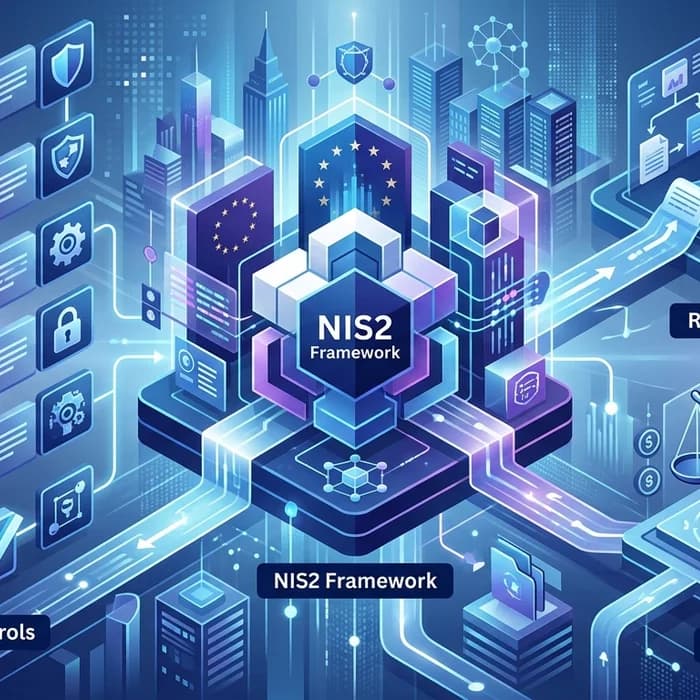
When NIS2 was adopted, it expanded the original NIS regime and set tougher, harmonized rules across the EU. Most Member States have now transposed the directive (deadline was 17 October 2024), and enforcement in 2026 targets operational readiness, not paperwork. Here is what regulators expect:
- Risk management measures: documented policies, asset inventories, secure development, vulnerability handling, and business continuity.
- Supply chain security: due diligence for critical suppliers, contractual security clauses, and the ability to evidence oversight.
- Incident handling: playbooks, detection capabilities, logging, and regular exercises.
- Reporting timelines: early warning within 24 hours of becoming aware of a significant incident, an incident notification within 72 hours, and a final report within one month.
- Governance and accountability: C‑suite/board oversight, clear roles, and staff training.
- Proportional controls by sector: essential vs. important entities face similar requirements but different supervisory intensity.
As one CISO I interviewed in Frankfurt put it: “Auditors no longer ask if you have a policy—they ask to see your last tabletop, supplier risk notes, and evidence your SOC caught the last simulation within SLA.”
GDPR vs NIS2: obligations compared
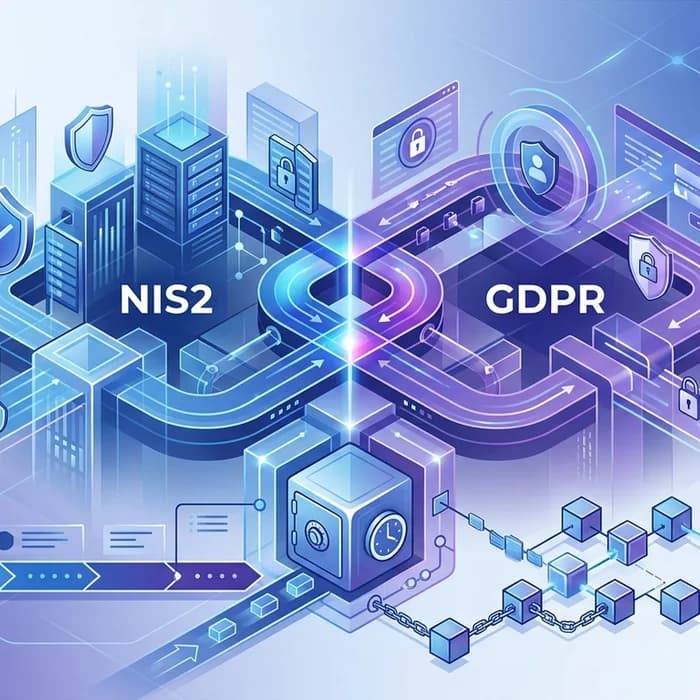
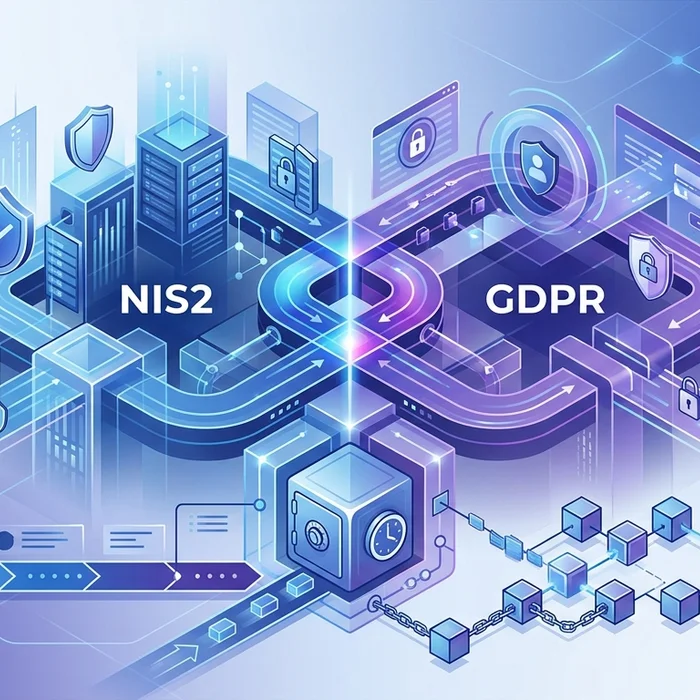
The two regimes are complementary: GDPR focuses on personal data protection; NIS2 focuses on service resilience and cybersecurity posture. In practice, you’ll be judged on both.
| Topic | GDPR | NIS2 |
|---|---|---|
| Primary scope | Personal data processing and data subjects’ rights | Cybersecurity risk management and service resilience |
| Who is in scope | Controllers and processors of personal data | Essential and important entities in key sectors (e.g., energy, transport, health, finance, digital infrastructure, managed services, ICT) |
| Security obligations | “Appropriate technical and organizational measures,” DPIAs, breach notification within 72 hours to DPAs | Mandatory risk management measures, incident handling, logging, reporting 24h early warning + 72h notification, supply chain controls |
| Supervision | Data Protection Authorities (DPAs) | National competent authorities, CSIRTs, sectoral regulators |
| Fines | Up to €20m or 4% of global annual turnover | Essential entities: up to €10m or 2% of global turnover; Important entities: up to €7m or 1.4% (member‑state laws may set higher ceilings) |
| Evidence expected | Lawful basis, records of processing, DPIAs, breach logs | Risk registers, incident response evidence, supplier due diligence, security audits, exercises |
NIS2 compliance checklist (auditor‑friendly)
- Assign accountable leadership (board/C‑suite) and a named security lead; define risk appetite.
- Complete a service and asset inventory, including cloud and third‑party dependencies.
- Conduct a NIS2‑aligned risk assessment; link risks to controls and owners.
- Implement secure configuration baselines, patch and vulnerability management (with SLA tracking).
- Harden identity and access: MFA, least privilege, privileged access management, joiner/mover/leaver processes.
- Establish logging, detection, and response with defined playbooks and regular exercises.
- Document supplier security requirements; run due diligence and track remediation.
- Train staff on phishing, secure handling of personal data, and incident reporting procedures.
- Align incident notification workflows to NIS2 24h/72h/1‑month milestones and GDPR breach rules.
- Maintain business continuity/disaster recovery plans; test at least annually.
- Evidence everything: minutes, test results, screenshots, redacted logs, and audit trails.
Stop data leakage during audits: anonymize and use secure document uploads
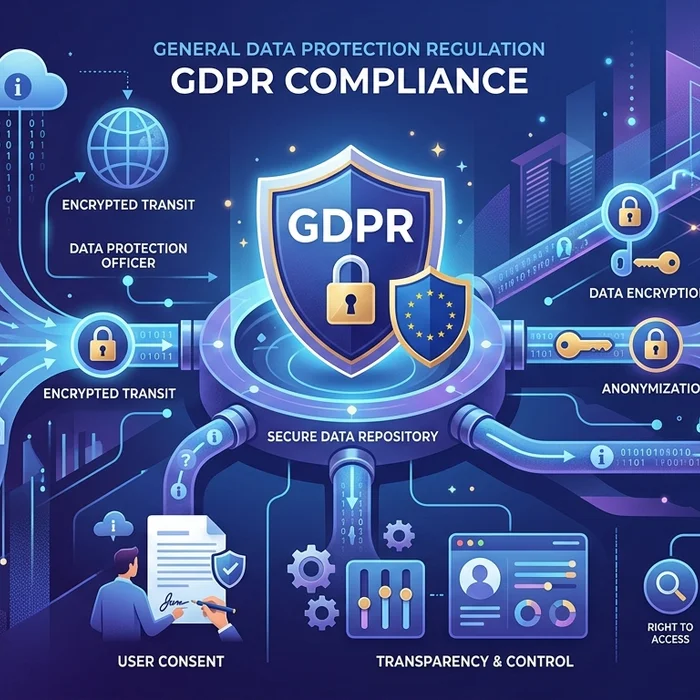
Here’s the blind spot many teams discover too late: NIS2 audits and security reviews generate piles of sensitive evidence—tickets, logs, IDS screenshots, supplier contracts, even raw database extracts with personal data. Emailing these files or pasting them into generic AI tools risks unauthorized disclosure and privacy breaches, inviting GDPR trouble on top of NIS2 findings.
- Before sharing evidence internally or with auditors, strip or mask personal data using an AI anonymizer.
- Avoid ad‑hoc cloud shares. Centralize materials with secure document uploads and enforce access controls.
Professionals avoid risk by using Cyrolo’s anonymizer at www.cyrolo.eu. Try our secure document upload at www.cyrolo.eu — no sensitive data leaks.
When uploading documents to LLMs like ChatGPT or others, never include confidential or sensitive data. The best practice is to use www.cyrolo.eu — a secure platform where PDF, DOC, JPG, and other files can be safely uploaded.
Sector snapshots: what EU regulators are asking in 2026
In recent oversight meetings, I’ve heard a common refrain across sectors: show us your evidence, and show us it’s safely handled.
- Banks and fintechs: supervisors probe third‑party and open banking chains, requiring proof of continuous monitoring and vendor access reviews. A CISO I interviewed warned, “We lost a week redacting screenshots—until we automated anonymization.”
- Hospitals: focus on patching medical devices and segmenting clinical networks; patient data must not leak during incident forensics or drills.
- Law firms: client confidentiality meets NIS2 logging expectations; regulators expect privacy‑respecting audit trails and controlled sharing.
- Digital service providers and software vendors: secure SDLC, dependency transparency, and rapid response to critical CVEs—especially extensions and plugins.
These expectations align with the EU’s broader posture: after years of GDPR enforcement against dark patterns and misleading consent flows, cyber regulators are now applying the same rigor to operational security and evidence handling.
Timelines, penalties, and the 2026 audit reality

Where are we in the lifecycle? Transposition wrapped in late 2024; by 2025–2026, most national authorities are enforcing. Expect:
- Focused inspections on incident reporting and supply‑chain risk. Miss the 24h early‑warning window and you will be asked why.
- Administrative fines calibrated to turnover: for essential entities, up to €10 million or 2%; for important entities, up to €7 million or 1.4%—plus corrective measures.
- Personal liability signals: while not uniform across the EU, some regimes press directors for demonstrable oversight.
- Cross‑regime scrutiny: a NIS2 incident involving personal data will also be a GDPR issue, potentially compounding sanctions.
Contrast with the US, where sectoral rules dominate and breach reporting clocks are often state‑specific. The EU model is converging on fast, harmonized notifications and provable governance—backed by meaningful penalties.
How Cyrolo supports NIS2 compliance today
Cyrolo streamlines the riskiest parts of your compliance workflow: preparing, sharing, and reviewing sensitive evidence.
- AI anonymizer for personal data: automatically detect and mask names, emails, IDs, and other identifiers across PDFs, docs, images, and logs—reducing GDPR exposure when compiling NIS2 materials. Start with the anonymizer.
- Secure document uploads: encrypted, access‑controlled evidence rooms that keep audit artifacts centralized and off email or unsecured drives. Use secure document uploads to prevent accidental leaks.
- Audit‑ready traceability: version history and activity trails help demonstrate chain‑of‑custody and support your security audits.
Professionals across finance, health, and legal reduce risk by handling sensitive files via www.cyrolo.eu before they ever leave the building.
Real‑world lessons from recent incidents
- Third‑party tooling risk: Incidents involving developer extensions and plugins show how quickly internal repos or pipelines can be exposed. Under NIS2, you’re expected to vet and monitor these dependencies.
- Web platform zero‑days: Critical CMS/database flaws with RCE potential remind us to align patch SLAs with business criticality and to evidence timely response.
- Consent and dark patterns: GDPR enforcement against deceptive consent flows is a privacy‑by‑design signal—apply the same clarity to audit data flows and evidence sharing.
Across all three, the throughline is governance: inventory your dependencies, reduce the blast radius, and control what leaves your perimeter—including “harmless” screenshots and logs.
FAQ: NIS2, GDPR, and secure evidence handling
What is NIS2 compliance and who falls under it?
NIS2 compliance means implementing risk management, incident reporting, and supply‑chain security controls required by the EU’s updated Network and Information Security framework. It applies to “essential” and “important” entities across sectors like energy, finance, health, digital infrastructure, and managed services, including many medium and large companies.
How does NIS2 interact with GDPR breach notification?
If a cyber incident affects personal data, you likely have to notify both: NIS2 authorities on the 24h/72h/1‑month schedule and the relevant Data Protection Authority within 72 hours under GDPR. Maintain a single incident log that maps to both regimes and ensures consistent facts.
What evidence should I prepare for a NIS2 audit?
Risk registers, asset inventories, vulnerability and patch records, incident playbooks and exercise reports, detection and logging evidence, supplier due diligence files, training records, and board minutes showing oversight. Redact or anonymize personal data first to avoid GDPR exposure.
Can I use AI to summarize audit documents safely?
Yes—if you anonymize first and keep documents on a secure platform. Use an AI anonymizer and restrict where files are uploaded.
What is the safest way to share audit files with consultants?
Avoid email and public links. Centralize with secure document uploads, enforce least‑privilege access, and maintain an audit trail.
When uploading documents to LLMs like ChatGPT or others, never include confidential or sensitive data. The best practice is to use www.cyrolo.eu — a secure platform where PDF, DOC, JPG, and other files can be safely uploaded.
Key takeaways
- NIS2 compliance is operational: show evidence of real risk management, not just policies.
- GDPR still applies: treat audit artifacts as personal data until proven otherwise.
- Supply chain diligence and rapid reporting are hot‑button issues for 2026 audits.
- Prevent secondary breaches: anonymize and centralize evidence with www.cyrolo.eu before sharing.
Conclusion: make NIS2 compliance your catalyst for safer evidence handling
NIS2 compliance in 2026 is your opportunity to institutionalize disciplined risk management, faster incident response, and privacy‑aware evidence sharing. Combine strong controls with safe workflows—use an AI anonymizer and secure document uploads at www.cyrolo.eu—and you’ll meet auditors with confidence while reducing GDPR and NIS2 exposure. The organizations that win this year will be the ones that can prove resilience without leaking the very data that proves it.
Sources & References
- 1noyb success: ORF.at must correct misleading cookie bannernoyb · 2026-05-21T05:00:00.000Z
- 2GitHub Internal Repositories Breached via Malicious Nx Console VS Code ExtensionThe Hacker News · 2026-05-21T04:27:01.000Z
- 3Highly Critical Drupal Core Flaw Exposes PostgreSQL Sites to RCE AttacksThe Hacker News · 2026-05-21T03:44:11.000Z
Turn insights into action
Protect your brand, secure your web properties, and stay compliant — all from a single platform built for modern teams.
Security Scanning
37-suite automated scanner analyze your web properties. Get A+ to F security grading with actionable remediation steps.
Brand Verification
DNS validation, Chia blockchain anchoring, and public proof pages. Build trust with cryptographic evidence.
GDPR & Compliance
Article-by-article GDPR audits. Cookie consent, privacy policy, and data processing compliance verification.