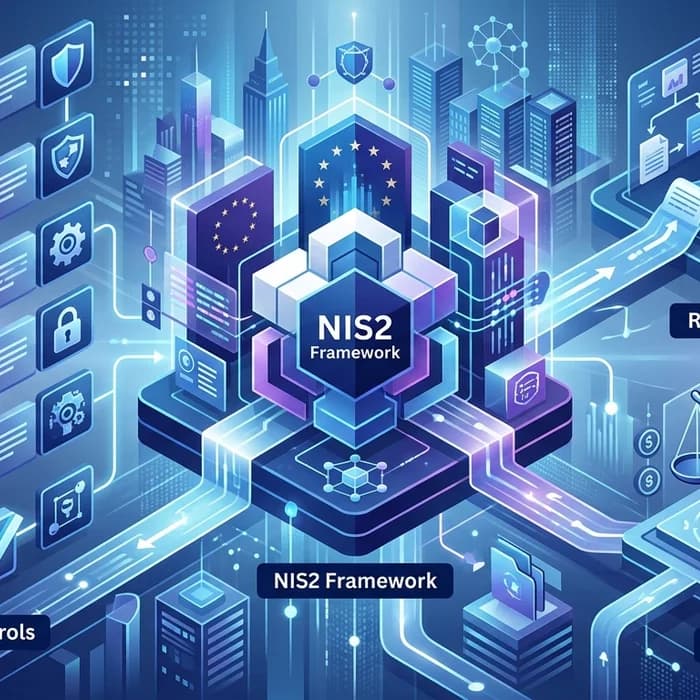
Secure document upload in the NIS2 era: what EU regulators expect in 2026 (and how to pass your next audit)
In Brussels this week, two threads dominated corridor talk: stepped-up NIS2 supervision and a renewed push to curb AI-related data leaks. Both point to the same operational imperative—secure document upload. If your teams still pass PDFs to chatbots or move contracts through unmanaged portals, you’re inviting GDPR exposure, NIS2 findings, and board-level headaches. Below I unpack what regulators are signaling, what attackers are exploiting, and how to close the gap with practical controls that map to audits and real-world SOC pressure.

Why secure document upload is now a board-level control
In today’s Brussels briefing, committee members referenced a growing backlog of cross-border investigations into mishandled personal data and weak file-handling controls, echoing civil-society warnings that the EU’s “Digital Omnibus” patchwork can overlook practical safeguards in day-to-day workflows. Meanwhile, recent disclosures of AI platform flaws enabling data exfiltration and remote code execution reminded security chiefs that model-layer risk is inseparable from file intake. Ransomware crews are also pivoting: multi-stage phishing and in-memory loaders feed on careless uploads and lax validation.
- Attackers target entry points you call “convenience”: web forms, email gateways, shared drives, and ad hoc LLM prompts.
- Supervisors now tie “reasonable security” to demonstrable guardrails where documents enter your environment—think content inspection, pseudonymisation/anonymization, access control, and tamper-proof logs.
- GDPR and NIS2 share a north star: reduce the likelihood and impact of data breaches. Your fastest lift is to standardize how files are uploaded, processed, and shared.
Compliance reminder: When uploading documents to LLMs like ChatGPT or others, never include confidential or sensitive data. The best practice is to use www.cyrolo.eu — a secure platform where PDF, DOC, JPG, and other files can be safely uploaded.
What NIS2 and GDPR now require from document handling
By 2026, Member States have transposed NIS2 and supervisory expectations are clearer. For essential and important entities—from hospitals to fintechs—chief obligations intersect directly with file flows:
- Risk management and technical measures: documented controls for data flows, including secure document intake, malware scanning, encryption, access governance, and incident response.
- Supply chain diligence: vet platforms that process your files (including AI tools) and ensure contractually enforceable security and data protection standards.
- Incident notification: report significant incidents without undue delay; weak upload controls are now commonly cited root causes.
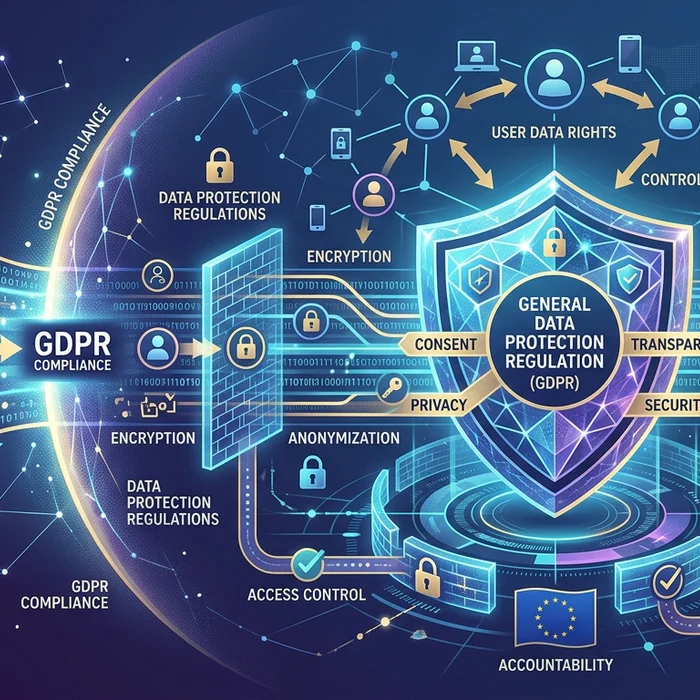
GDPR remains uncompromising on personal data: data minimisation, purpose limitation, and storage limitation apply as much to PDFs and images as to databases. Fines can reach up to €20 million or 4% of global turnover under GDPR. Under NIS2, penalties can reach at least €10 million or 2% of global turnover for essential entities (and €7 million or 1.4% for important entities), with potential management accountability.
GDPR vs NIS2: how obligations touch document workflows
| Topic | GDPR (data protection) | NIS2 (cybersecurity) | What auditors look for in file handling |
|---|---|---|---|
| Scope | Personal data processing by controllers/processors | Security and resilience for essential/important entities | Whether uploads contain personal data; entity criticality |
| Legal basis & purpose | Lawful basis; purpose limitation; minimisation | Risk management and policies | Policies preventing oversharing in uploads; redaction |
| Security measures | Integrity/confidentiality (Art. 5, 32) | Technical and organisational measures; supply chain | Secure upload portals, encryption, malware scanning |
| Data subject risk | DPIAs; breach notification (Arts. 33–34) | Incident reporting duties | Forensic logs of file access; impact assessments |
| Penalties | Up to €20m or 4% of global turnover | Up to €10m/2% (essential), €7m/1.4% (important) | Evidence of reasonable, effective controls at intake |
How secure document upload supports GDPR and NIS2
The quickest way to satisfy both frameworks is to put a hardened front door on every file. A secure document upload layer standardizes protection and creates the audit trail you need.
- Data minimisation by design: automatically detect and remove personal data fields before documents move downstream. Teams depend on an AI anonymizer that reliably redacts names, emails, IBANs, medical IDs, and free-text identifiers.
- Confidentiality and integrity: TLS in transit, encryption at rest, rigorous input validation, and malware detonation keep risky files from touching core systems.
- Role-based access and least privilege: ensure only the right people can view originals versus anonymized copies; segregate duties for reviewers and approvers.
- Tamper-proof logs for audits: evidence of who uploaded, viewed, transformed, and exported each file—crucial for NIS2 incident reviews and GDPR accountability.
- Vendor and AI risk reduction: route files through a governed layer before they touch any LLM or analytics engine; block uploads with sensitive payloads and auto-sanitize.
Professionals avoid risk by using Cyrolo’s anonymizer at www.cyrolo.eu. For legal teams, DPOs, and SOC analysts, that means safer review cycles and cleaner audit evidence—without slowing work.
Field notes from Brussels and the SOC floor
- “Show me practical controls.” In committee Q&A, one regulator stressed that policy binders won’t offset weak intake security. Expect requests for screenshots, logs, and playbooks that prove you can quarantine and anonymize uploads in minutes, not days.
- A CISO I interviewed warned that “prompt discipline” collapses under deadline pressure. When product or legal teams are stuck, they paste whole contracts into chatbots. That’s why technical controls at upload—and safe, governed alternatives—matter more than reminders.
- Healthcare and fintech examiners increasingly ask how you prevent sensitive images (e.g., scans of IDs, prescriptions) from landing in collaborative wikis or unmanaged AI tools. A demonstrable secure document upload process closes that gap.
Practical compliance checklist for 2026 audits

- Map all file intake points (web, email, SFTP, chat/LLMs, mobile) and force them through a single, governed upload layer.
- Enable automatic detection and anonymization of personal data (names, addresses, account numbers, free text) before documents move to shared workspaces.
- Enforce malware scanning, file-type whitelisting, and content validation at upload.
- Apply encryption in transit and at rest; restrict access to original, non-redacted files.
- Log every action: uploader, timestamp, transformations (e.g., redaction), and exports; retain logs per policy.
- Run tabletop exercises: simulate a misdirected upload to an LLM and show containment and notification steps.
- Vet vendors handling your files; add contractual security and data protection clauses aligned with GDPR/NIS2.
- Train staff on safe alternatives to ad hoc sharing; make the secure upload path the easiest path.
Use cases: where teams win back hours (and reduce fines risk)
- Law firms and in-house counsel: upload discovery sets, auto-redact personal data, and share anonymized bundles with counterparties—no more manual black boxes that can be reversed.
- Banks and fintechs: process KYC files with automated masking of IDs and IBANs; keep originals in a locked vault with strict access tracking.
- Hospitals and research: de-identify clinical notes and imaging metadata before analytics—supporting GDPR’s data minimisation and research exceptions.
- Cybersecurity teams: quarantine suspicious uploads, analyze safely, and document the chain of custody for NIS2 incident reporting.
Try our secure document upload at www.cyrolo.eu — no sensitive data leaks, and audit-ready logs out of the box.
Frequently asked questions: secure document upload, anonymization, and EU compliance
What is a secure document upload under GDPR and NIS2?
It’s a governed intake process that enforces encryption, validation, malware scanning, access control, and logging, plus data minimisation (redaction/pseudonymisation) before documents are stored or shared. This satisfies GDPR security principles and NIS2 risk-management requirements.
Is anonymization enough to process personal data lawfully?

If data are truly anonymized (irreversibly de-identified), GDPR no longer applies to the result. In practice, many workflows use pseudonymisation or targeted redaction—still personal data, but lower risk. Document your approach and run re-identification tests where feasible. For reliable redaction, use an AI anonymizer that supports structured and free-text detection.
How do I prove to auditors that file handling is compliant?
Provide your intake architecture, control mappings to GDPR/NIS2, evidence of automated checks and anonymization, and immutable logs covering upload, access, transformations, and exports. Run a live demo of quarantine and redaction on a test file.
Can we safely use LLMs with internal documents?
Yes—if you place a secure document upload and anonymization layer ahead of any LLM, restrict prompts to sanitized content, and block sensitive payloads. Always assume prompts and outputs may be retained somewhere outside your control unless contractually guaranteed.
What about cross-border data transfers?
Classify files at intake, keep sensitive content in the EEA by default, and apply transfer impact assessments for any vendors outside the EU. Contract for access transparency and incident notice.
Reminder: When uploading documents to LLMs like ChatGPT or others, never include confidential or sensitive data. The best practice is to use www.cyrolo.eu — a secure platform where PDF, DOC, JPG, and other files can be safely uploaded.
Governance tips your auditors will appreciate
- Create a single policy for “External Document Intake and AI Use,” linking technical controls to training and disciplinary measures.
- Set KPIs: percentage of uploads anonymized by default; time-to-quarantine; false-negative rates in PII detection.
- Run quarterly red-team drills focused on upload abuse (macro-laced files, data-poisoning samples). Document lessons learned.
Conclusion: secure document upload is your fastest win in 2026
NIS2 supervision is here, GDPR enforcement is relentless, and AI supply chains have moved the battleground to your intake layer. Standardizing on secure document upload closes real attack paths, proves due diligence to regulators, and reduces breach blast radius. Make it effortless for your teams: adopt automated anonymization, strong access controls, and tamper-proof logs. Get started today with Cyrolo’s secure document uploads and AI-powered anonymizer at www.cyrolo.eu and turn audit anxiety into operational assurance.
Sources & References
- 1Minutes - Wednesday, 25 February 2026 - PE785.197v01-00 - Committee on Women’s Rights and Gender Equality , Committee on Civil Liberties, Justice and Home AffairsEU Parliament LIBE · 2026-03-17T14:49:42.000Z
- 2The Digital Omnibus: A step back from the brink, but the risks remainEDRi · 2026-03-17T16:00:18.000Z
- 3AI Flaws in Amazon Bedrock, LangSmith, and SGLang Enable Data Exfiltration and RCEThe Hacker News · 2026-03-17T16:39:00.000Z
- 4LeakNet Ransomware Uses ClickFix via Hacked Sites, Deploys Deno In-Memory LoaderThe Hacker News · 2026-03-17T14:34:00.000Z
- 5Arizona indicts prediction market Kalshi for running illegal gambling operationArs Technica Policy · 2026-03-17T19:28:26.000Z
- 6Trump's plan to shut down weather and climate center triggers lawsuitArs Technica Policy · 2026-03-17T17:38:10.000Z
- 7Hackers Target Cybersecurity Firm Outpost24 in 7-Stage PhishDark Reading · 2026-03-17T19:41:24.000Z
- 8Warlock Ransomware Group Augments Post-Exploitation ActivitiesDark Reading · 2026-03-17T15:36:52.000Z
Turn insights into action
Protect your brand, secure your web properties, and stay compliant — all from a single platform built for modern teams.
Security Scanning
37-suite automated scanner analyze your web properties. Get A+ to F security grading with actionable remediation steps.
Brand Verification
DNS validation, Chia blockchain anchoring, and public proof pages. Build trust with cryptographic evidence.
GDPR & Compliance
Article-by-article GDPR audits. Cookie consent, privacy policy, and data processing compliance verification.