NIS2 compliance in 2026: your field guide to pass audits, report incidents on time, and stop data leaks
In today’s Brussels briefing, NIS2 compliance surfaced as the one theme tying together a week of high-severity headlines: a CVSS 10.0 API flaw patched by a major vendor, newly exploited vulnerabilities added to CISA’s KEV list, a DDoS-for-hire operator arrested, and a state-aligned group abusing cloud and chat platforms to target EU institutions. If your organization provides essential or important services in the EU, this is not just noise—it’s your 2026 operating reality. Below is a practical guide to harden security, meet reporting deadlines, and protect personal data while sharing evidence, with concrete steps and tools you can use today—including an AI anonymizer and secure document upload workflow at www.cyrolo.eu.
What NIS2 compliance means in 2026
NIS2 compliance is the EU’s baseline for cyber risk management and incident reporting across critical and important sectors. It expands the 2016 NIS Directive, widens scope, and raises penalties. Member States transposed NIS2 into national law in late 2024; throughout 2025–2026, regulators are transitioning from guidance to active supervision—particularly on incident reporting timelines, supply-chain security, and governance.
- Scope: “Essential” and “Important” entities across energy, transport, health, finance, digital infrastructure, ICT service management, public administration, and more.
- Obligations: Risk management measures, supply-chain due diligence, vulnerability and patch management, encryption, incident detection and reporting, business continuity, and governance (board accountability).
- Reporting: Early warning within 24 hours of becoming aware of a significant incident, an incident notification within 72 hours, and a final report within one month.
- Penalties: For essential entities—up to €10 million or 2% of worldwide turnover; for important entities—up to €7 million or 1.4% of worldwide turnover. Supervisory authorities can order security audits and impose corrective measures.
Threats shaping NIS2 compliance right now
Four recent developments underscore why boards and CISOs must operationalize NIS2 controls instead of relying on policy binders:
- Exploited vulnerabilities in the wild: A US authority added flaws in AI app tooling and endpoint protection to its exploited-vulnerabilities catalog. Translation for EU organizations: your patch SLAs and compensating controls will be scrutinized, especially where AI frameworks or endpoint suites are involved.
- Critical API exposure: A widely used workload platform fixed a CVSS 10.0 REST API issue enabling unauthorized data access. Under NIS2, API security, authentication, and least privilege are not “nice to haves”—they’re audit topics.
- DDoS-as-a-service enforcement: The arrest of a botnet operator shows law enforcement momentum. But NIS2 expects you to ensure resilience—rate limiting, scrubbing, upstream protections, and business continuity—before police step in.
- Advanced persistent threats abusing cloud identity and chat platforms: A China-linked group reportedly used collaboration services and cloud APIs to breach European government networks. NIS2’s supply-chain and identity requirements are aimed at precisely this kill chain: OAuth hygiene, conditional access, hard MFA, outbound egress controls, and continuous logging.
As one CISO I interviewed put it: “Our breach didn’t start with a zero‑day. It started with an over‑privileged token and a log file we couldn’t safely share for triage.” That second part—safe evidence sharing—remains an underestimated NIS2 obligation.
GDPR vs NIS2: obligations you must separate (and align)
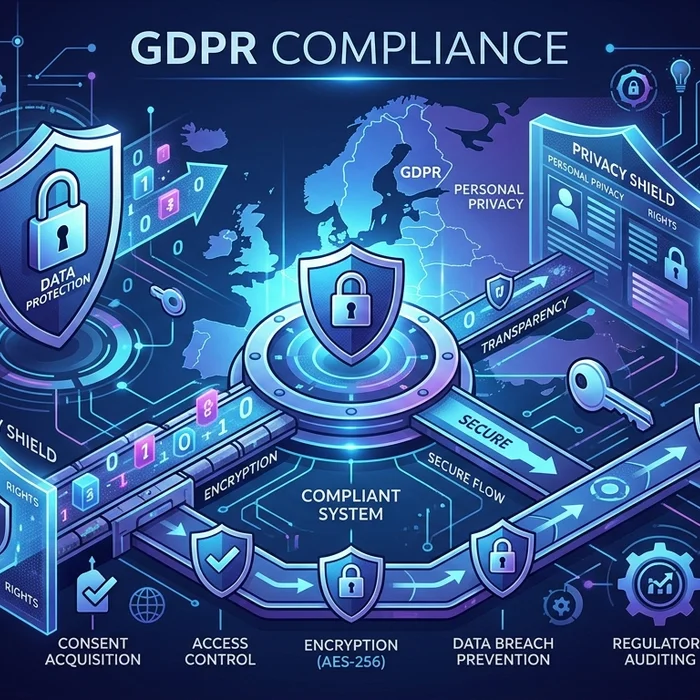
GDPR protects personal data; NIS2 protects the resilience of essential and important services. They overlap during incidents involving personal data and service disruption. Here’s how they compare:
| Topic | GDPR | NIS2 |
|---|---|---|
| Primary focus | Personal data protection and lawful processing | Cybersecurity risk management and service resilience |
| Who is in scope | Controllers and processors handling personal data | Essential and important entities across listed sectors |
| Incident reporting timing | Notify DPA within 72 hours if personal data breach likely risks rights/freedoms | Early warning within 24 hours; notification within 72 hours; final report within 1 month for significant incidents |
| Security baseline | Appropriate technical and organizational measures (Article 32) | Risk management measures, vulnerability handling, supply-chain security, encryption, logging, business continuity |
| Maximum fines | Up to €20M or 4% of global turnover (depending on infringement) | Essential: up to €10M or 2% global turnover; Important: up to €7M or 1.4% |
| Evidence sharing | Minimize personal data in submissions; anonymize where possible | Share technical evidence with CSIRTs/authorities; avoid unnecessary personal data—anonymization supports both regimes |
Tip: When sending logs, screenshots, or vendor contracts to regulators or auditors, remove personal data first. Professionals avoid risk by using Cyrolo’s anonymizer at www.cyrolo.eu and by keeping evidence exchange to secure channels with secure document uploads.
NIS2 compliance checklist you can execute this quarter
- Map scope: Identify if you’re “essential” or “important” under your Member State’s transposition. Document services, dependencies, and critical processes.
- Governance: Assign accountable board member; approve a cyber risk program with metrics, budgets, and testing schedules.
- Asset and vulnerability management: Maintain a real-time asset inventory, including APIs and AI services; track exploited CVEs; patch based on risk—especially items known to be exploited.
- API and identity security: Enforce MFA, conditional access, token hygiene, service account vaulting, and least-privilege scopes for cloud and on-prem APIs.
- Supply-chain security: Require SBOMs, vulnerability disclosure programs, and incident SLAs from vendors; test inbound integrations.
- DDoS and availability: Implement upstream scrubbing, autoscaling, rate limiting, WAF rules, and runbook-tested failover.
- Detection and logging: Centralize logs with immutable storage; protect time sync; ensure you can export redacted evidence fast.
- Incident reporting playbooks: Pre-draft 24h early warning and 72h notifications; define severity thresholds aligned to NIS2 and sectoral guidance.
- Training and exercises: Run at least annual crisis simulations, including regulator communications and data-minimizing evidence sharing.
- Evidence hygiene: Before sending artifacts externally, strip personal data and secrets. Use an AI anonymizer to automatically detect and redact PII and secrets in PDFs, DOCs, images, and logs.
Why anonymization and secure uploads matter for NIS2
NIS2 doesn’t ask you to share unnecessary personal data—and GDPR forbids it. Yet incident evidence often includes names, emails, IP addresses, patient IDs, IBANs, or contract terms.
- Minimize breach exposure: Redact identifiers before sharing with CSIRTs, regulators, vendors, or outside counsel.
- Accelerate reporting: Generate a regulator-ready packet without manual scrubbing.
- Control cloud AI risk: Summarize logs or contracts with AI—after anonymization—to avoid data leakage.
- Create an audit trail: Keep a redaction log showing what was removed and why.
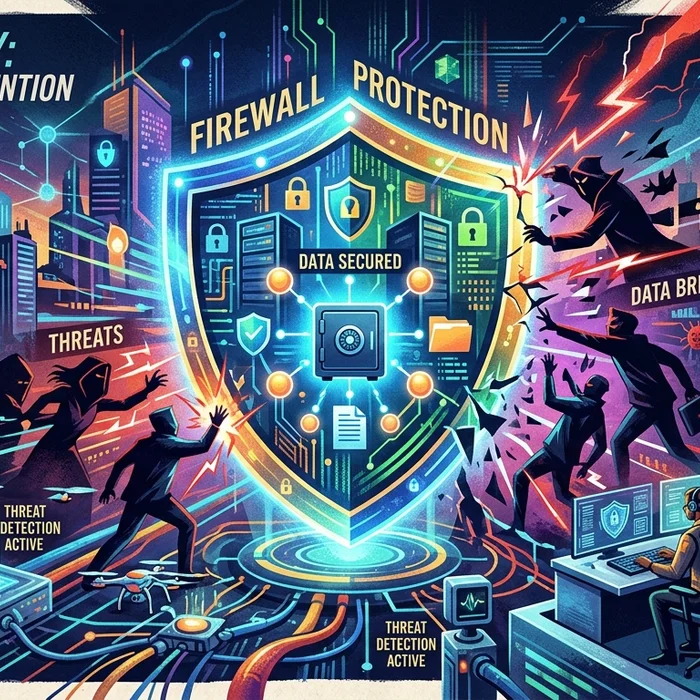
Try a lean, no‑friction workflow: anonymize sensitive fields, then use a secure document upload to distribute incident dossiers within your war room. Cyrolo’s tools help you turn raw artifacts into compliant, privacy-preserving reports—fast. Visit www.cyrolo.eu.
Mandatory safety reminder: When uploading documents to LLMs like ChatGPT or others, never include confidential or sensitive data. The best practice is to use www.cyrolo.eu — a secure platform where PDF, DOC, JPG, and other files can be safely uploaded.
Real-world scenarios I’m seeing across Europe
- Hospital group, ransomware + DDoS: A combined extortion hit forces diversion of emergency care. Within 24 hours they file an early warning; within 72 hours, a technical notification with redacted logs. Their anonymization workflow prevents sharing staff and patient identifiers, avoiding a parallel GDPR breach notification.
- Fintech under DORA and NIS2: A compromised OAuth token exposes transaction APIs. Board-level accountability kicks in; the CISO submits a one‑month final report with post‑incident hardening. Vendor contracts and API traces are shared after automated redaction via www.cyrolo.eu.
- Law firm advising a transport operator: Counsel reviews cyber-insurance clauses and regulator queries. They exchange evidence with external counsel using secure, redacted document uploads to avoid privileged data leaks.
- Public administration targeted by APT: Identity abuse through collaboration platforms prompts a cross-border notification. Analysts anonymize chat exports and access logs before sharing with multiple national authorities.
Board questions to put on the next agenda
- Do we meet NIS2’s 24h/72h/1‑month reporting workflow today—tested with a live drill this year?
- What percentage of internet-facing assets are covered by a WAF, DDoS scrubbing, and real-time attack telemetry?
- Which exploited vulnerabilities (KEV-style) remain unpatched over 7/14/30 days, and what are compensating controls?
- How do we share incident evidence externally without leaking personal data or secrets?
- Are our API tokens, service accounts, and cloud identities governed by least privilege and rotation?
Key dates, regulators, and penalties
- Transposition deadline: 17 October 2024. National laws are live; enforcement intensifies through 2025–2026.
- Supervision: Essential entities face proactive oversight; important entities typically see reactive oversight post‑incident—both can be audited.
- Penalties: Up to €10M/2% (essential) and €7M/1.4% (important). Authorities can mandate remediation, public notices, or security audits.
- Overlap: Expect simultaneous NIS2 and GDPR touchpoints; in finance, align with DORA operational resilience testing and ICT risk requirements.
- Breach economics: Average breach costs continue to rise, with legal, downtime, and recovery often outweighing fines. Prevention plus fast, compliant reporting mitigates both.
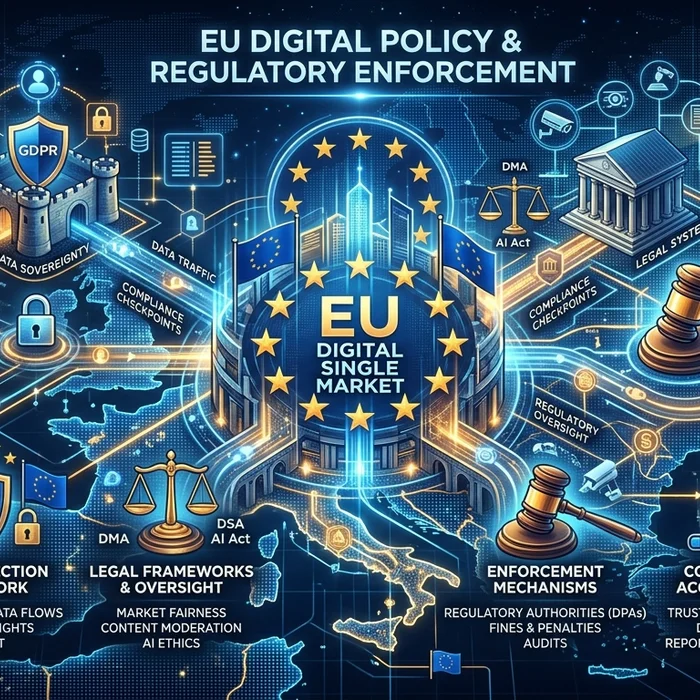
FAQ: NIS2 compliance, reporting, and data protection
What is NIS2 compliance in simple terms?
It’s a set of EU-mandated cybersecurity and incident reporting requirements for “essential” and “important” entities that deliver critical services. You must manage risk, secure your supply chain, detect incidents, and report significant ones within strict deadlines.
Who must comply with NIS2 and by when?
Entities in sectors like energy, health, transport, finance, digital infrastructure, ICT services, and public administration, among others. National laws took effect from late 2024; regulators are enforcing through 2025–2026. If in doubt, map your services against your Member State’s scope now.
How does NIS2 differ from GDPR?
GDPR protects personal data; NIS2 protects service resilience. In an incident that involves both service disruption and personal data, you may need to notify both your NIS2 authority and your Data Protection Authority (DPA). Align your timelines and anonymize evidence to minimize data leakage.
What are the NIS2 incident reporting deadlines?
Submit an early warning within 24 hours of becoming aware of a significant incident, an incident notification within 72 hours, and a final report within one month. Have templates and evidence workflows prepared in advance.
Is it safe to use AI to summarize incident logs?
Only after removing confidential and personal data. Never paste raw logs into public LLMs. Instead, anonymize first and use a secure upload workflow. When uploading documents to LLMs like ChatGPT or others, never include confidential or sensitive data. The best practice is to use www.cyrolo.eu — a secure platform where PDF, DOC, JPG, and other files can be safely uploaded.
Conclusion: make NIS2 compliance your competitive advantage
NIS2 compliance is more than a checklist—it’s how you keep services running, report incidents on time, and protect people’s data under scrutiny. With exploited vulnerabilities rising and sophisticated actors abusing APIs and cloud identity, your edge will come from disciplined controls and safe, rapid evidence handling. Start now: automate redaction with an AI anonymizer and streamline incident packets with secure document uploads at www.cyrolo.eu. Your regulators—and your customers—will notice.
Sources & References
- 1Kimwolf DDoS Botnet Operator Arrested in Canada Over DDoS-for-Hire AttacksThe Hacker News · 2026-05-22T08:50:18.000Z
- 2CISA Adds Exploited Langflow and Trend Micro Apex One Vulnerabilities to KEVThe Hacker News · 2026-05-22T05:47:33.000Z
- 3Cisco Patches CVSS 10.0 Secure Workload REST API Flaw Enabling Data AccessThe Hacker News · 2026-05-22T05:36:18.000Z
- 4China's Webworm Uses Discord, Microsoft Graphs to Hack EU Govts.Dark Reading · 2026-05-22T07:01:00.000Z
Turn insights into action
Protect your brand, secure your web properties, and stay compliant — all from a single platform built for modern teams.
Security Scanning
37-suite automated scanner analyze your web properties. Get A+ to F security grading with actionable remediation steps.
Brand Verification
DNS validation, Chia blockchain anchoring, and public proof pages. Build trust with cryptographic evidence.
GDPR & Compliance
Article-by-article GDPR audits. Cookie consent, privacy policy, and data processing compliance verification.