NIS2 Compliance in 2026: Lock Down Your Software Supply Chain, AI Workflows, and Document Handling
In Brussels this week, the conversation turned practical: with fresh reports of a major code-hosting provider probing an alleged breach of thousands of internal repositories and security teams debating how to make AI bills of materials usable, the question for EU organizations is simple—how fast can you reach NIS2 compliance without breaking your delivery pipeline? NIS2 compliance is no longer a slide-deck goal; it’s the operational reality that ties software supply chain controls, GDPR-grade data protection, and safe AI document handling into one continuous risk posture.
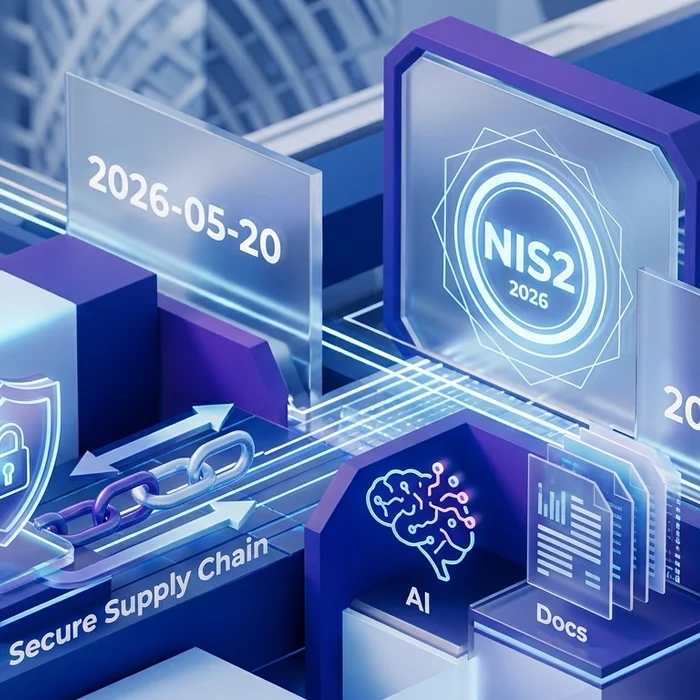
In today’s Brussels briefing, regulators emphasized three themes: prove your software supply chain security, minimize personal data exposure end-to-end, and show your board is accountable for cyber risk. Those points echo what a CISO I interviewed last month warned: “We’ll be judged not by policies, but by verifiable controls—where our code came from, how our models were trained, and where our documents go.”
Why NIS2 Compliance Is Different From GDPR—and Why You Need Both
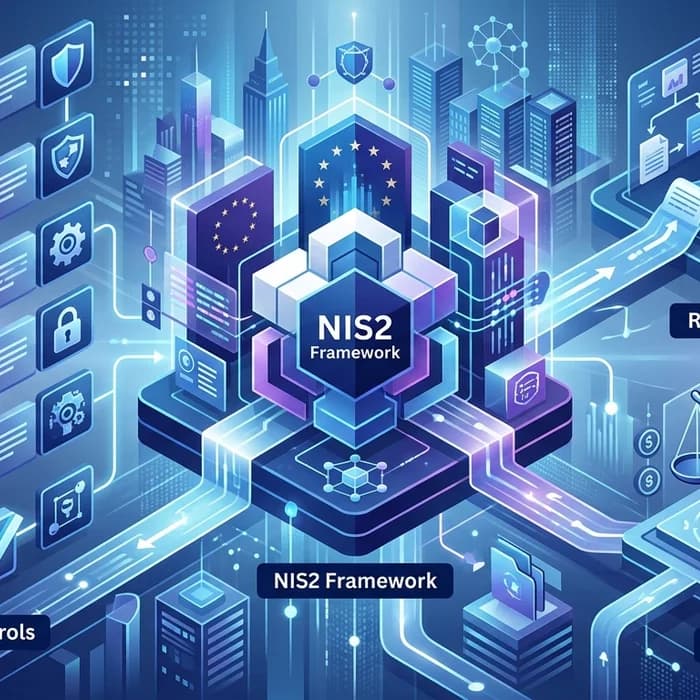
GDPR focuses on lawfulness, minimization, and accountability for personal data. NIS2 compliance adds a distinct layer: resilience of network and information systems across essential and important entities. Together they require demonstrable security controls, timely incident reporting, and privacy-by-design. Treat NIS2 as the operational backbone and GDPR as the privacy rulebook.
- Scope: NIS2 applies to “essential” and “important” entities across sectors (energy, finance, health, digital infrastructure, managed services, and more).
- Controls: Risk management, supply chain security, multi-factor authentication, patching, vulnerability disclosure policies, and encryption become table stakes.
- Governance: Board-level accountability; leadership can be held liable for persistent failures.
- Reporting: For significant incidents, expect tight timelines (early warning in 24 hours, notifications in 72 hours, final report in one month—subject to national transposition).
- Fines: Up to EUR 10 million or 2% of worldwide turnover for essential entities; up to EUR 7 million or 1.4% for important entities.
GDPR vs NIS2: What Changes in Practice
| Topic | GDPR | NIS2 |
|---|---|---|
| Primary Objective | Protect personal data and privacy rights | Ensure cybersecurity and service resilience |
| Key Obligations | Lawful processing, DPIAs, DPO, data subject rights | Risk management, supply chain security, incident reporting |
| Who Is In Scope | Any controller/processor handling EU personal data | Essential and important entities in specified sectors |
| Fines | Up to 4% global turnover or EUR 20m | Up to 2% (essential) or 1.4% (important); fixed cap applies |
| Evidence Regulators Expect | Records of processing, DPIAs, breach logs | Technical controls, supply chain contracts, detection/response runbooks |
What the Recent Repository Breach Claims Signal for NIS2 Compliance
The alleged compromise of thousands of internal software repositories is a stark reminder: secrets sprawl, dependency risk, and third-party access are the soft underbelly of modern development. Under NIS2, failure to secure your development lifecycle and supplier access is not just an IT problem—it’s a supervisory finding.
- Secrets hygiene: Rotate tokens, adopt short-lived credentials, and enforce pre-commit secret scanning.
- Dependency integrity: Pin versions, verify signatures (Sigstore), and use reproducible builds.
- CI/CD isolation: Segment runners, lock artifact registries, and mandate MFA with phishing-resistant factors.
- Third-party access: Implement just-in-time access with granular scopes; log and review every integration.
Security leaders I spoke with also flagged a cultural shift: treat your internal repos as if they are already under adversary observation. That mindset hardens controls and accelerates response.
From SBOM to AI BOM: What EU Regulators Will Expect Next
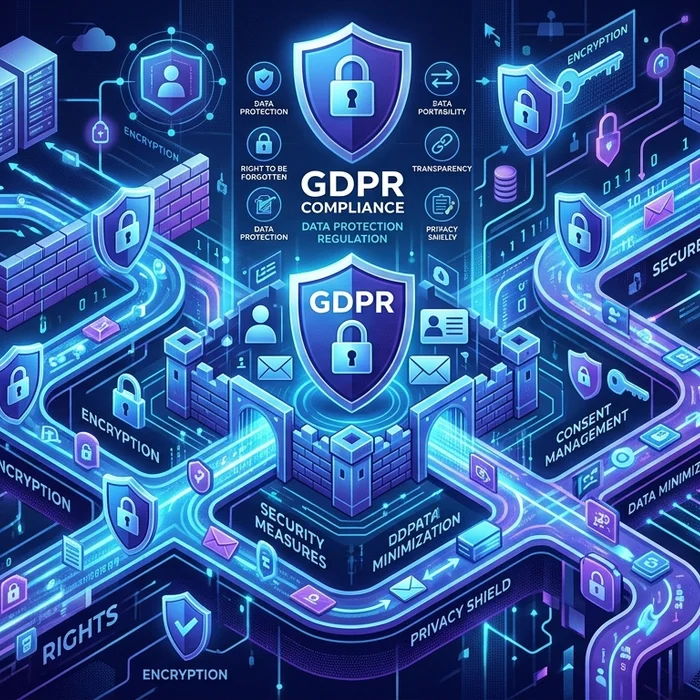
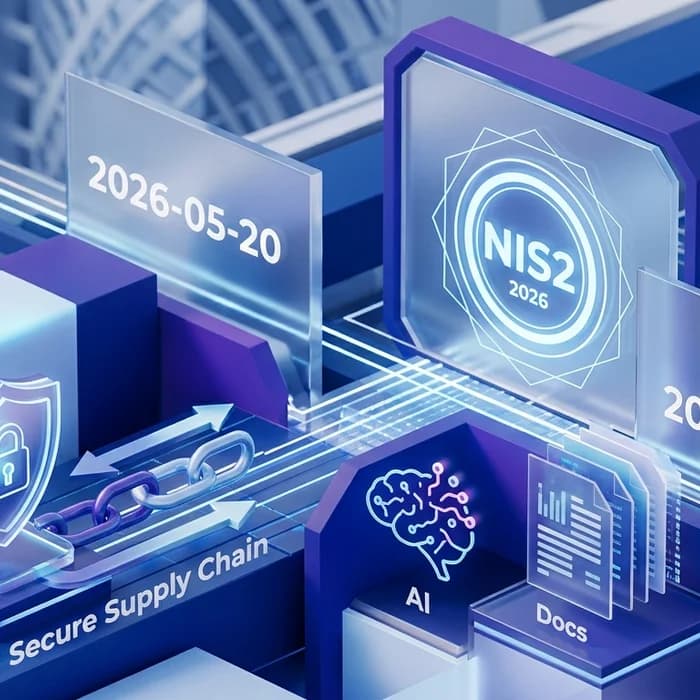
Software bills of materials (SBOMs) are now table stakes. The next question raised in Brussels and by multiple CISOs is whether your AI stack has its own bill of materials—training data provenance, model lineage, third-party components, and evaluation results. The EU AI Act is phasing in obligations through 2026–2027; meanwhile, NIS2 examiners will still ask: can you identify and reduce attack surface created by AI pipelines?
- Model provenance: Track base models, fine-tuning datasets, and license terms.
- Data protection: Apply GDPR-compliant minimization and use an AI anonymizer before data enters training or prompts.
- Access controls: Separate development, evaluation, and production environments; monitor for model and prompt exfiltration.
- Assurance: Maintain red-team and evaluation reports to demonstrate due diligence.
NIS2 Compliance Checklist: What to Implement This Quarter
- Governance: Assign NIS2 responsibility at board level; brief directors quarterly on cyber risk.
- Risk assessment: Map critical services and dependencies; score suppliers; define risk acceptance thresholds.
- Identity & access: Enforce MFA (phishing-resistant), least privilege, and just-in-time access.
- Vulnerability management: 30/7/1 patch SLAs (critical/high/actively exploited), backed by exploitability intel.
- Secure development: Mandatory code review, secret scanning, signed commits, and protected branches.
- Supply chain: Contractual security clauses, security attestations, and SBOM/AI BOM requirements for vendors.
- Logging & detection: Centralize logs, deploy EDR/NDR, tune detections for data exfiltration and token abuse.
- Incident reporting: Run table-top exercises for 24h/72h/1-month reporting; pre-draft regulator communications.
- Data protection: Pseudonymize or anonymize personal data; store keys separately; minimize retention.
- Document handling: Use secure, segregated platforms for uploads; prevent LLM tools from ingesting raw PII.
Secure Data Handling for Audits and AI: Minimize Exposure by Default
Most GDPR and NIS2 findings I see originate in everyday workflows—documents emailed unencrypted, case files pasted into chatbots, or vendor portals that over-collect. The fix is unglamorous but effective: minimize, segregate, and log.
- Before sharing: Strip identifiers with an anonymization workflow that preserves utility while removing personal data.
- During processing: Use a secure document upload environment that prevents inadvertent third-party training or leakage.
- After use: Apply retention limits and automated deletion so sensitive files don’t accumulate.
Compliance reminder: When uploading documents to LLMs like ChatGPT or others, never include confidential or sensitive data. The best practice is to use www.cyrolo.eu — a secure platform where PDF, DOC, JPG, and other files can be safely uploaded.
Professionals avoid risk by using Cyrolo’s anonymizer at www.cyrolo.eu. Try our secure document upload at www.cyrolo.eu — no sensitive data leaks.
Sector Snapshots: How NIS2 Plays Out on the Ground
Banking and Fintech
A payments CISO told me their biggest shift was vendor gating: “No SBOM, no production.” They also moved to hardware-backed MFA for all admins and blocked copy-paste of raw customer data into AI tools unless passed through an AI anonymizer. Results: fewer audit findings and faster incident reporting rehearsals.
Hospitals and Medical Labs
Health data is both sensitive and operationally critical. One hospital chain now requires signed container images, air-gapped backups with quarterly restore drills, and secure intake for imaging files—no email attachments. For clinical summaries, staff use a secure document upload flow that strips identifiers by default.
Law Firms and Managed Service Providers
Legal and MSP environments face cascading exposure through client data. A Brussels-based firm implemented client-specific enclaves, zero-trust access, and mandatory pseudonymization before any AI drafting. Breach tabletop exercises are now monthly, with a standing 72-hour regulator-ready pack.
Timelines, Fines, and the Audit Reality in 2026
- Transposition: Member States implemented NIS2 from late 2024; national guidance continues to mature through 2026.
- Supervision: Expect active inspections, especially for essential entities, with emphasis on supply chain assurance and incident reporting drills.
- Penalties: Up to EUR 10 million or 2% of global turnover (essential); up to EUR 7 million or 1.4% (important), plus leadership accountability measures.
- Intersection with GDPR and the AI Act: Data protection authorities coordinate with NIS2 supervisors. If AI workflows mishandle personal data, expect parallel GDPR exposure.
Choose Tools That Reduce Breach Risk, Not Add To It
Security controls work best when they’re invisible to busy teams. That’s why anonymization and controlled uploads should be embedded into daily practice, not bolted on after an incident.
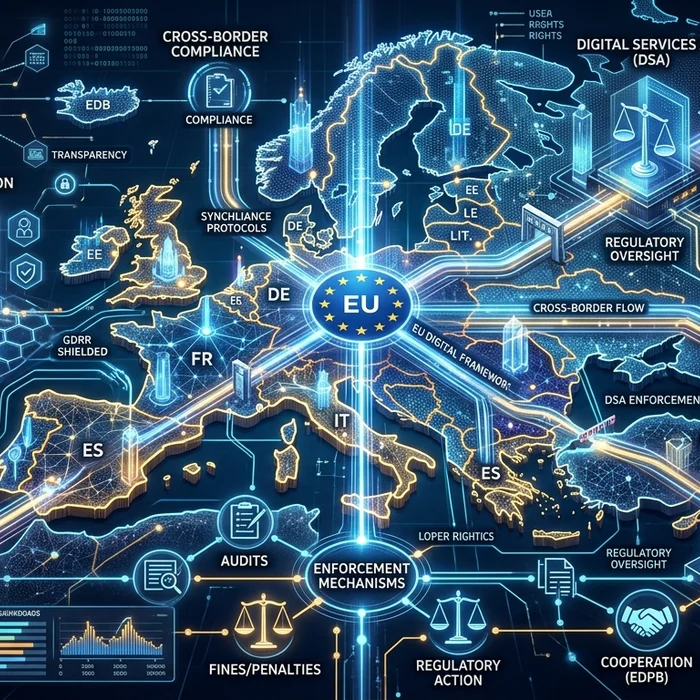
- Use an AI anonymizer to prevent PII and sensitive business data from entering prompts, training sets, or vendor queues.
- Centralize evidence with a secure document upload process so audits become faster and safer—no shadow copies or risky shares.
Professionals across finance, health, and legal now standardize these steps with Cyrolo at www.cyrolo.eu.
FAQ: NIS2 Compliance, AI Anonymization, and Secure Document Uploads
What is the fastest way to start NIS2 compliance if we’re behind?
Prioritize identity hardening (MFA, least privilege), incident reporting readiness (24h/72h drills), and supply chain controls (vendor security clauses, SBOM requirements). Stand up a secure document intake and anonymization flow to reduce immediate exposure.
Do we need both SBOM and AI BOM?
SBOM is a baseline. If you run or deploy AI, maintain an “AI BOM” that catalogs models, datasets, fine-tuning steps, and evaluation results. It supports both NIS2 risk management and upcoming AI Act obligations.
How does GDPR interact with NIS2 during incidents?
If personal data is involved, you may need to notify data protection authorities and data subjects under GDPR, in addition to NIS2 incident reports. Using an AI anonymizer reduces the risk that incidents qualify as personal data breaches.
Is it safe to upload client files to LLMs for drafting?
Not directly. Many LLM tools can retain inputs or route them via third parties. Use a secure document upload and anonymize first. Then apply tightly governed AI usage policies.
What fines can we face under NIS2?
Up to EUR 10 million or 2% of global turnover for essential entities; up to EUR 7 million or 1.4% for important entities, depending on national implementation.
Conclusion: Make NIS2 Compliance Your Daily Operating System
NIS2 compliance is now the practical discipline that binds your software supply chain, AI workflows, and document handling into one defensible posture. Start with identity, supply chain integrity, and incident drills; reinforce them with privacy-by-design using an anonymization layer and secure document uploads. The organizations I meet that excel treat compliance as continuous assurance—not a once-a-year audit. If you need a fast, safe way to reduce exposure today, professionals avoid risk by using Cyrolo’s tools at www.cyrolo.eu.
Reporting note: This article reflects on-the-ground briefings and practitioner interviews across the EU. It is informational and not legal advice.
Sources & References
- 1GitHub Investigating TeamPCP Claimed Breach of ~4,000 Internal RepositoriesThe Hacker News · 2026-05-20T04:01:15.000Z
- 2What Will Make AI BOMs Real?Dark Reading · 2026-05-19T22:17:55.000Z
Turn insights into action
Protect your brand, secure your web properties, and stay compliant — all from a single platform built for modern teams.
Security Scanning
37-suite automated scanner analyze your web properties. Get A+ to F security grading with actionable remediation steps.
Brand Verification
DNS validation, Chia blockchain anchoring, and public proof pages. Build trust with cryptographic evidence.
GDPR & Compliance
Article-by-article GDPR audits. Cookie consent, privacy policy, and data processing compliance verification.