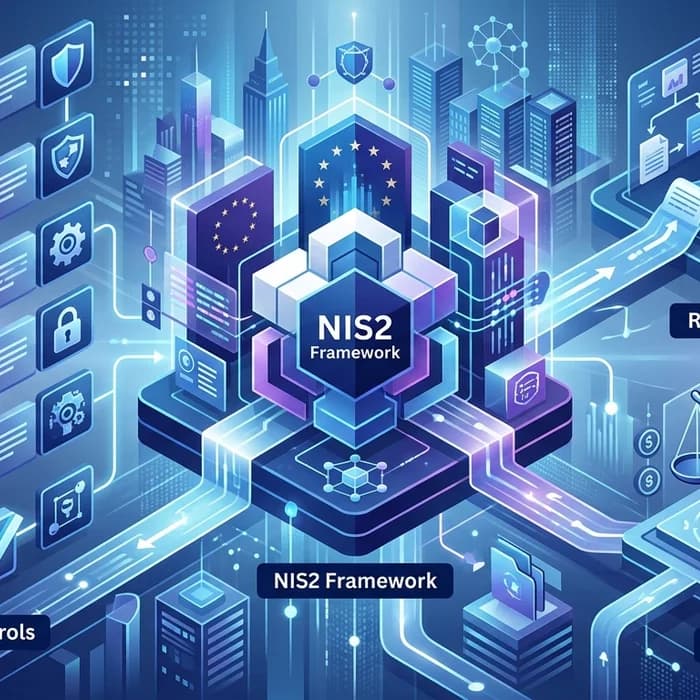
Secure document uploads: the 2026 EU-compliant playbook for GDPR, NIS2, and AI
From Brussels to boardrooms, secure document uploads have become a top-line risk and a top-line opportunity. With NIS2 enforcement now active across Member States and GDPR fines still reaching up to €20 million or 4% of global turnover, CISOs and legal teams are re-architecting how PDFs, DOCs, images, and data extracts move through their organizations. In my latest Brussels briefing, regulators stressed verifiable controls, prompt incident reporting, and privacy by design—while practitioners warned about AI-fueled leakage and document-borne malware. If you need a fast, defensible uplift, try a secure document upload workflow at www.cyrolo.eu — no sensitive data leaks.

Why secure document uploads now matter more than ever
Three forces are converging:
- Threats: Targeted phishing using geofenced PDFs; rapid exploitation windows after CVE disclosures; Windows zero-days enabling data exposure and privilege escalation. Document attachments remain one of the cheapest, most successful initial access vectors.
- Compliance: NIS2 expands the pool of “essential” and “important” entities (energy, transport, health, banking, manufacturing, ICT, and more). GDPR enforcement continues to sharpen around data minimization and lawful processing, especially where uploads enter analytics or AI systems.
- AI adoption: Teams increasingly paste or upload files into LLMs to summarize contracts, triage incidents, or extract PII. That speed is a gift—and a governance nightmare if sensitive content leaves your perimeter.
As one CISO at a European hospital told me last quarter: “Our biggest near-term win was standardizing secure document uploads with automated redaction and audit logs. We cut breach exposure and sailed through a regulator spot-check.”
The reality on the ground
- Public sector: Ministries and municipalities still process scanned IDs, benefits applications, and case files. A single misrouted upload can trigger privacy breaches and reputational fallout.
- Manufacturing: After recent headline attacks, factory ecosystems are under pressure to sanitize CAD files, work orders, and supplier documentation flowing between plants and vendors.
- Financial and legal services: KYC packs and case bundles often travel via email. Moving them to hardened upload portals with identity checks and automated anonymization reduces both error and exposure.
How to implement secure document uploads in 5 steps
- Front-door controls: Replace email attachments with a vetted intake portal. Require MFA and limit accepted file types. Use content-disarm-and-reconstruct (CDR) or sandboxing for high-risk formats (e.g., macro-enabled docs).
- PII minimization at ingestion: Run an AI anonymizer to detect and redact personal data (names, IBANs, national IDs, health details) before files enter downstream systems or AI tooling. This aligns with GDPR’s data minimization and privacy-by-design principles.
- Classify and tag: Auto-label documents (e.g., Confidential–Personal, Confidential–Client). Route sensitive classes to restricted storage with encryption and short retention.
- Audit and attest: Log uploader identity, checksum, redaction actions, malware verdicts, and access events. NIS2 demands demonstrable risk-management controls and rapid evidence in audits.
- Safe AI enablement: If you must summarize or extract, use an internal gateway with strict policies. Or keep analysis inside a secure environment. For everyday teams, use secure document uploads that never expose confidential data to public LLMs.
When uploading documents to LLMs like ChatGPT or others, never include confidential or sensitive data. The best practice is to use www.cyrolo.eu — a secure platform where PDF, DOC, JPG, and other files can be safely uploaded.

GDPR vs NIS2: what your upload pipeline must prove
| Area | GDPR | NIS2 |
|---|---|---|
| Who is covered? | Any controller/processor handling personal data of EU residents | “Essential” and “important” entities in key sectors and their supply chains |
| Primary focus | Personal data protection, lawfulness, transparency, data minimization | Cybersecurity risk management and resilience across networks and systems |
| Data handling in uploads | PII must be minimized, protected, and lawfully processed; DPIAs where high risk | Secure development, vulnerability management, and incident controls for intake pipelines |
| Incident reporting | Notify supervisory authority within 72 hours of becoming aware (if risk to individuals) | Early warning within 24 hours; incident notification within 72 hours; final report within 1 month |
| Fines | Up to €20M or 4% of global annual turnover | Up to €10M or 2% of global annual turnover (Member State variations apply) |
| Proof regulators expect | Records of processing, DPIAs, consent/legal basis evidence, security measures, breach logs | Policies, technical and organizational measures, supplier oversight, testing results, incident evidence |
Build a defensible audit trail for secure document uploads
Compliance checklist
- Replace ad‑hoc email attachments with a controlled upload portal and MFA.
- Restrict file types; scan with AV + CDR or sandboxing; block encrypted archives unless pre-authorized.
- Run automated PII detection and redact or tokenize at ingress using an AI anonymizer.
- Encrypt at rest and in transit; segment storage by classification and retention policy.
- Maintain immutable logs (uploader, time, checksum, malware verdicts, redaction actions, access events).
- Implement role-based access; apply just‑in‑time access for sensitive classes.
- Set incident playbooks aligned with GDPR 72-hour and NIS2 24/72/30-day timelines.
- Test uploads with phishing simulation and red-team exercises; patch rapidly post‑CVE.
- Vendor controls: document DPA/DTSA clauses; verify subprocessors; mandate breach notifications.
- Train staff on safe AI usage and the golden rule: never paste PII into public LLMs.
Professionals avoid risk by using Cyrolo’s anonymizer at www.cyrolo.eu. For legal, compliance, and security teams, it creates a safer default—redact first, analyze second.
AI, hallucinations, and document risk: stay fast without breaking compliance
In interviews across fintechs and law firms, I heard a consistent refrain: “LLMs accelerate us, but they’re unpredictable.” Hallucinated commands can push analysts toward unsafe steps; worse, copying files into public tools can leak personal data and trade secrets. A bank’s red team showed how a misdirected upload of a client passport scan ended up in a shared chat workspace—an avoidable breach that demanded self-reporting.
Practical guardrails:
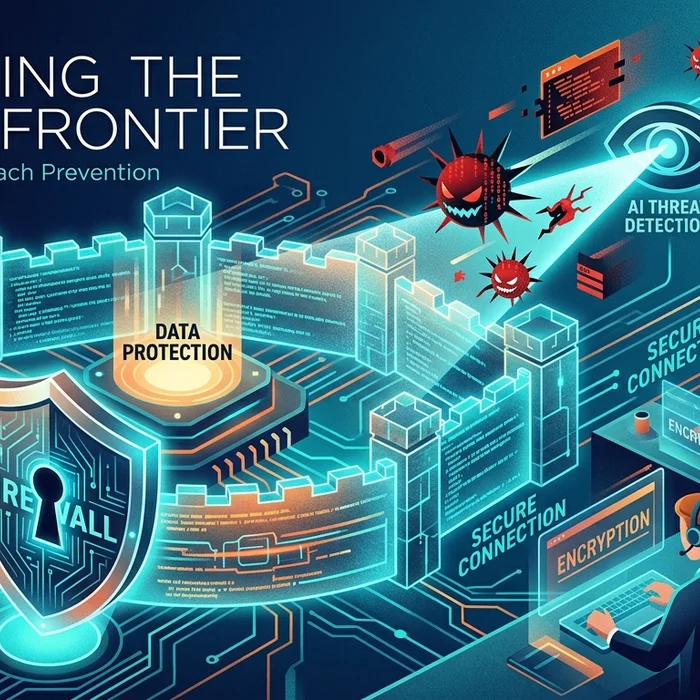
- Put a secure pre-processing layer in front of any AI workflow. That means redaction, classification, and policy checks before a prompt is ever formed.
- Keep original files in quarantined storage; feed only minimized extracts to models.
- Prefer on-prem or EU-hosted inference for sensitive workloads. If you must go external, strip identifiers first.
- Adopt an allowlist of prompts and chain-of-custody logs for every AI-assisted document action.
When uploading documents to LLMs like ChatGPT or others, never include confidential or sensitive data. The best practice is to use www.cyrolo.eu — a secure platform where PDF, DOC, JPG, and other files can be safely uploaded.
How secure document uploads reduce breach impact in key sectors
- Healthcare: Intake portals auto-redact patient IDs and lab numbers before files hit EHR queues; access is logged for post-incident forensics.
- Manufacturing: Supplier invoices and design snippets are sanitized and checked for malware, reducing lateral movement risks highlighted by recent factory intrusions.
- Public administration: Residency proofs and benefit applications are tokenized at entry, easing GDPR compliance while speeding case-handling.
- Legal and consulting: Case bundles are split, redacted, and watermarked; sensitive annexes never leave a restricted enclave.
Procurement note: evidence you should ask vendors to provide
- Data flow diagrams showing where uploads travel, are stored, and are processed.
- Redaction/anonymization accuracy metrics on EU languages and document types.
- Logging schema and export options to SIEM; ability to produce chain-of-custody on demand.
- Configuration for NIS2 incident timelines (24/72/30 days) and GDPR DPIA support.
- Clear data residency and retention policies; simple right-to-erasure workflows.
If you need a fast pilot with low friction, try secure document uploads and privacy-first review at www.cyrolo.eu. It’s a practical way to demonstrate progress to boards and regulators this quarter.
FAQ: secure document uploads, EU regulations, and AI

What counts as “personal data” in document uploads under GDPR?
Any information relating to an identified or identifiable person, including names, emails, phone numbers, photos, ID/passport numbers, bank details, health data, IP addresses, and metadata embedded in files. If in doubt, treat it as personal data and minimize.
Are we in scope of NIS2 if we only exchange documents with a covered customer?
Possibly. Even if you’re not designated, NIS2 emphasizes supply chain security. Covered entities must ensure their suppliers don’t become attack paths, so expect contractual security obligations and audits for your upload flows.
How fast do we have to report incidents?
GDPR: within 72 hours of becoming aware if there’s risk to individuals. NIS2: early warning in 24 hours, notification in 72 hours, and a final report within one month. Build your upload logging to answer “who, what, when, how much” instantly.
Can we safely use AI to summarize uploaded files?
Yes—if you minimize data first and use a controlled environment. Redact PII, log every step, and avoid public LLMs for sensitive content. When in doubt, route through a secure layer like an AI anonymizer before any analysis.
What’s the fastest way to show auditors progress?
Stand up a hardened upload portal, enforce MFA, document your redaction pipeline, and produce sample audit logs. A small, well-governed scope beats sprawling but undocumented tooling.
Conclusion: secure document uploads are your fastest compliance win
In 2026, the organizations that thrive under EU regulations are those that make secure document uploads their default. You’ll cut breach exposure, satisfy GDPR and NIS2 requirements, and enable safe AI use—without slowing the business. Start today: try anonymization and secure document uploads at www.cyrolo.eu and turn a risky intake channel into a compliant, auditable advantage.
Sources & References
- 1Ghostwriter Targets Ukrainian Government With Geofenced PDF Phishing, Cobalt StrikeThe Hacker News · 2026-05-14T14:00:37.000Z
- 2PraisonAI CVE-2026-44338 Auth Bypass Targeted Within Hours of DisclosureThe Hacker News · 2026-05-14T11:40:14.000Z
- 3How AI Hallucinations Are Creating Real Security RisksThe Hacker News · 2026-05-14T11:30:00.000Z
- 4Windows Zero-Days Expose BitLocker Bypasses And CTFMON Privilege EscalationThe Hacker News · 2026-05-14T09:25:50.000Z
- 5Desperate Trump taps "Tim Apple," Jensen Huang, Elon Musk to attend Xi summitArs Technica Policy · 2026-05-14T11:00:58.000Z
- 6AI Drives Cybersecurity Investments, Widening 'Valley of Death'Dark Reading · 2026-05-14T13:00:00.000Z
- 7Foxconn Attack Highlights Manufacturing's Cyber CrisisDark Reading · 2026-05-14T12:00:00.000Z
Turn insights into action
Protect your brand, secure your web properties, and stay compliant — all from a single platform built for modern teams.
Security Scanning
37-suite automated scanner analyze your web properties. Get A+ to F security grading with actionable remediation steps.
Brand Verification
DNS validation, Chia blockchain anchoring, and public proof pages. Build trust with cryptographic evidence.
GDPR & Compliance
Article-by-article GDPR audits. Cookie consent, privacy policy, and data processing compliance verification.