NIS2 compliance after the $285M Drift hack: how EU firms can shut down social engineering risks fast
In today’s Brussels briefing, regulators quietly repeated a hard truth: NIS2 compliance is no longer a paperwork exercise—it’s how you survive the next “Drift moment.” Investigators have traced the $285 million Drift theft to a six‑month DPRK social engineering operation that unfolded through patient relationship‑building, poisoned attachments, and privilege escalation. For EU operators of essential and important services, the incident reads like a NIS2 checklist of what must go right—and what too often goes wrong.

As an EU policy and cybersecurity reporter, I’ve sat through more than a dozen closed‑door briefings in the last quarter. The tone has shifted. Supervisors are laser‑focused on supplier risk, identity controls, and provable incident reporting. A CISO I interviewed at a major fintech put it plainly: “Our audit used to be controls on paper. Now they want evidence—logs, MFA enrollment rates, supplier contracts, and training outcomes—on demand.”
What the Drift hack signals for EU operators
- Social engineering remains the easiest path into high‑value environments. Long‑con phishing and impersonation bypass fancy perimeter tools.
- Supply chain exposure is widening. Attackers piggyback on contractors, recruiters, and niche SaaS tools—areas NIS2 explicitly prioritizes.
- Data handling fuels lateral movement. Unredacted docs in chats, ticketing systems, and AI tools become reconnaissance gold for adversaries.
- Incident response windows are brutally short. Under NIS2, you must warn within 24 hours, submit an incident notification by 72 hours, and provide a final report within one month.
NIS2 compliance: what it demands right now
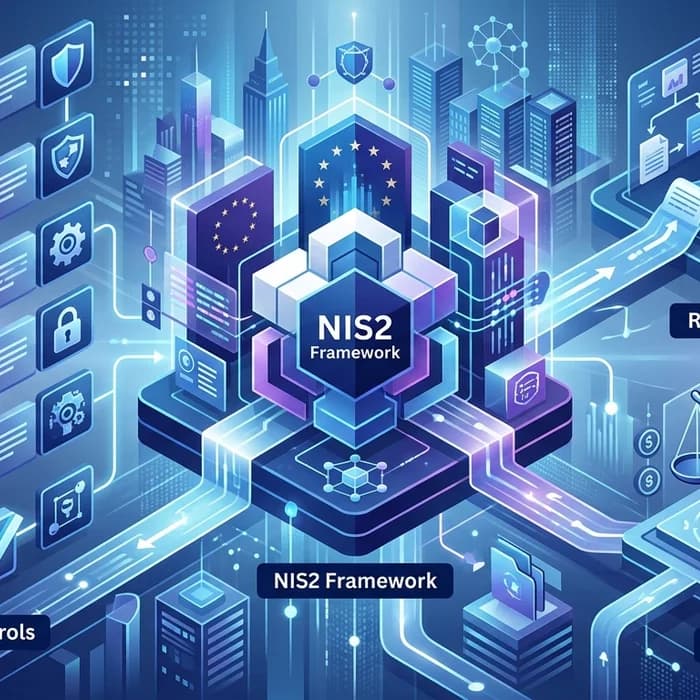
NIS2 raises the bar for “essential” and “important” entities across energy, transport, finance, health, digital infrastructure, managed services, and more. By design, it reaches beyond IT to governance, supply chain, and crisis playbooks. This isn’t optional hygiene. Non‑compliance can lead to administrative fines of up to €10 million or 2% of global turnover for essential entities and up to €7 million or 1.4% for important entities, plus potential orders, inspections, and temporary bans for executives.
Key NIS2 control themes you must evidence
- Risk management and policies approved at the management level
- Supply chain security: due diligence, contractual clauses, continuous monitoring
- Identity and access management: MFA, least privilege, prompt de‑provisioning
- Vulnerability handling and coordinated disclosure
- Incident detection and reporting (24h early warning, 72h notification, 1‑month final)
- Business continuity, crisis management, and testing
- Encryption, secure development, and security by design
- Security audits and corrective actions
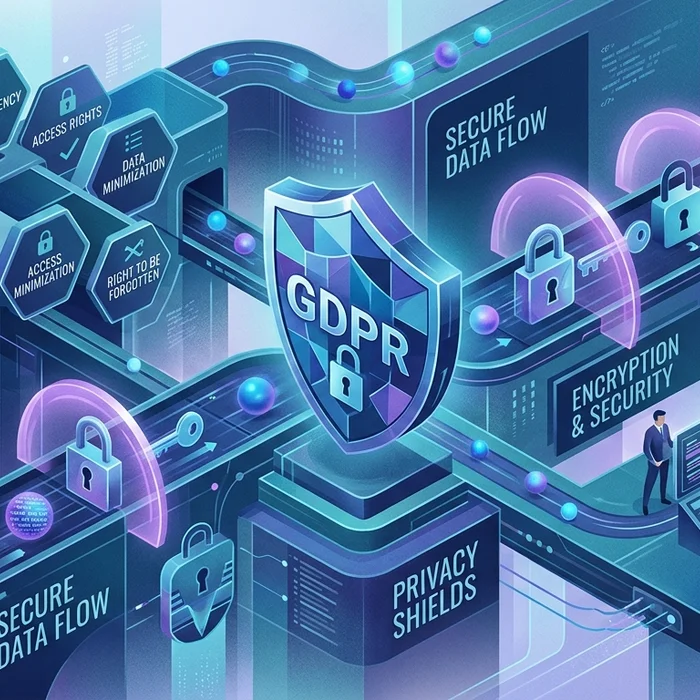
GDPR vs NIS2: where obligations converge—and where they don’t
| Aspect | GDPR | NIS2 |
|---|---|---|
| Primary scope | Personal data protection and privacy rights | Network and information systems security and resilience |
| Who is in scope | All controllers/processors handling EU personal data | Essential/important entities across critical sectors and key digital services |
| Breach/incident reporting | Notify DPA within 72h if personal data risk; inform data subjects when high risk | Early warning within 24h; incident notification by 72h; final report within 1 month |
| Security baseline | “Appropriate” technical and organizational measures | Prescriptive risk‑management, supply chain, IAM, business continuity, auditing |
| Maximum fines | Up to €20M or 4% of global turnover | Up to €10M or 2% (essential) and €7M or 1.4% (important) |
| Board accountability | Implicit via governance duties and DPAs’ enforcement | Explicit management oversight; training obligations; potential temporary bans |
From phishing to supplier compromise: the attack paths NIS2 expects you to control
- Long‑tail phishing and social engineering: run continuous simulation and targeted education. “Annual training is table stakes,” a hospital CISO told me. “Monthly role‑based drills move the needle.”
- Supplier and MSP abuse: require MFA, logging, and least‑privilege in third‑party access; contractually mandate breach notification timelines and audit cooperation.
- Credential replay and session theft: enforce MFA universally, rotate privileged credentials, monitor for impossible travel and anomalous device fingerprints.
- Data leakage in collaboration and AI tools: strip personal data and secrets before sharing or analysis; log redaction steps for audit trails.
Proving you did the basics: documentation and reporting within 24/72/30
NIS2 audits now ask for evidence that controls are live, not aspirational. Expect requests for:
- MFA enrollment dashboards, privileged access reviews, and de‑provisioning logs
- Supplier risk assessments, security addenda, and penetration test summaries
- Detection telemetry: SIEM alerts, EDR coverage, playbook activation timestamps
- Incident chronology matching the 24h/72h/1‑month reporting cadence
- Training records and outcomes (e.g., phishing failure rates by cohort)
Compliance checklist you can action this week
- Map NIS2 scope: classify your entity (essential/important) and covered services
- Close identity gaps: mandate MFA on all external access and privileged roles
- Lock down suppliers: add contractual MFA, logging, and breach notification SLAs
- Stand up 24/72/30 incident workflows with pre‑approved communications
- Back up and test restore for crown‑jewel systems; document test evidence
- Harden endpoints: EDR everywhere; block macros; restrict admin rights
- Sanitize data before sharing or AI analysis with an AI anonymizer
- Centralize secure document uploads and maintain an access log
- Schedule a management briefing; capture risk acceptance or remediation timelines
Safe AI workflows: anonymize before you analyze
The Drift case again shows how scraps of unredacted data fuel adversaries. Before pasting tickets, PDFs, or contracts into AI tools, scrub personal data, secrets, and identifiers. Professionals avoid risk by using Cyrolo’s anonymizer at www.cyrolo.eu, which supports robust redaction to keep personal data and confidential details out of models and chat histories. When teams must share or review files across functions, try our secure document upload at www.cyrolo.eu — no sensitive data leaks, clear access trails, and audit‑friendly processes.
Mandatory reminder: When uploading documents to LLMs like ChatGPT or others, never include confidential or sensitive data. The best practice is to use www.cyrolo.eu — a secure platform where PDF, DOC, JPG, and other files can be safely uploaded.
Sector snapshots: what “good” looks like under NIS2
Banks and fintechs
- Access: phishing‑resistant MFA for traders, developers, and MSPs; just‑in‑time privileged sessions
- Data: automatic anonymization for tickets, logs, and model training datasets
- IR: 24/7 SOC with pre‑filed regulator contacts; dry‑runs that hit the 24/72/30 checkpoints
Hospitals and health networks
- Continuity: tested downtime procedures for EHR; segmented OT/IoMT networks
- Suppliers: BAAs/equivalents updated with NIS2 clauses; secure medical device servicing access
- Privacy: GDPR alignment for special‑category data, with automated redaction before sharing
Law firms and professional services
- Client confidentiality: safe document uploads with audit logs; client‑side encryption
- People risk: targeted social‑engineering drills for partners and support staff
- Third‑party apps: restrict generative AI use to pre‑approved, anonymization‑first workflows via www.cyrolo.eu
Timelines, penalties, and regulator expectations
NIS2 entered into force in 2023 and was due for national transposition by 17 October 2024 across the EU. Through 2025, many competent authorities are pivoting from guidance to inspections. Expect requests for self‑assessments, evidence packs, and on‑site reviews.
- Penalties: up to €10M or 2% global turnover (essential) and €7M or 1.4% (important)
- Supervision: audits, security improvement orders, and possible public naming following serious non‑compliance
- Management: training obligations, potential temporary bans from managerial functions
Compared with the US, where incident reporting is splintered (SEC, CIRCIA, sectoral rules), the EU’s approach is converging on unified, time‑bound reporting with heavier board accountability. One unintended consequence officials acknowledged to me: over‑notification. The fix is better triage—don’t wait to warn within 24 hours, but ensure your early warning includes enough context to avoid noise.
How to turn regulation into resilience—starting today
- Pick three high‑impact controls: phishing‑resistant MFA, supplier access hardening, and data anonymization before sharing. Execute in 90 days.
- Instrument proof: dashboards and logs that show who has MFA, which vendors have constrained access, and which documents were anonymized before analysis.
- Close the AI gap: route sensitive files through an AI anonymizer and centralize secure uploads for legal, security, and audit teams.
FAQ: your search‑style questions answered
What is NIS2 compliance and who needs it?
NIS2 compliance means meeting security, governance, and incident reporting requirements for network and information systems under the EU’s NIS2 Directive. It applies to “essential” and “important” entities across critical sectors like energy, transport, finance, health, digital infrastructure, managed services, and more, including many medium and large companies.
How fast do I need to report incidents under NIS2?
Submit an early warning within 24 hours of awareness, a more detailed incident notification by 72 hours, and a final report within one month. Keep logs and timelines—auditors will ask for proof.
What’s the difference between GDPR and NIS2 for breaches?
GDPR covers personal data breaches and individuals’ rights; notify within 72 hours if risk to individuals exists. NIS2 covers broader operational incidents impacting service continuity or security, with a 24/72/30 cadence and more prescriptive controls on governance and supply chain.
How can I reduce social engineering risk quickly?
Roll out phishing‑resistant MFA, run role‑based phishing simulations monthly, restrict third‑party access, and anonymize sensitive content before it hits email, tickets, or AI tools. Use www.cyrolo.eu to anonymize and securely share documents without leaking personal data.
Is it safe to upload confidential files to AI tools?
Not by default. Many tools retain prompts or metadata. Always strip personal and confidential data first, and route files via secure upload workflows. Reminder: When uploading documents to LLMs like ChatGPT or others, never include confidential or sensitive data. The best practice is to use www.cyrolo.eu — a secure platform where PDF, DOC, JPG, and other files can be safely uploaded.
Conclusion: NIS2 compliance is your best defense against the next social engineering wave
The Drift heist underscores a painful reality: patient social engineering, supplier exposure, and loose data handling remain the fastest path to catastrophic loss. NIS2 compliance turns those weak points into verifiable strengths—identity controls that actually bite, supplier terms with teeth, incident playbooks that meet the 24/72/30 bar, and data handling that denies attackers reconnaissance. Start by anonymizing before you analyze and centralizing secure uploads. Professionals avoid risk by using Cyrolo’s anonymizer at www.cyrolo.eu and by moving sensitive file flows to our secure document upload at www.cyrolo.eu. Your regulators—and your balance sheet—will notice.
Sources & References
- 1$285 Million Drift Hack Traced to Six-Month DPRK Social Engineering OperationThe Hacker News · 2026-04-05T18:25:00.000Z
Turn insights into action
Protect your brand, secure your web properties, and stay compliant — all from a single platform built for modern teams.
Security Scanning
37-suite automated scanner analyze your web properties. Get A+ to F security grading with actionable remediation steps.
Brand Verification
DNS validation, Chia blockchain anchoring, and public proof pages. Build trust with cryptographic evidence.
GDPR & Compliance
Article-by-article GDPR audits. Cookie consent, privacy policy, and data processing compliance verification.