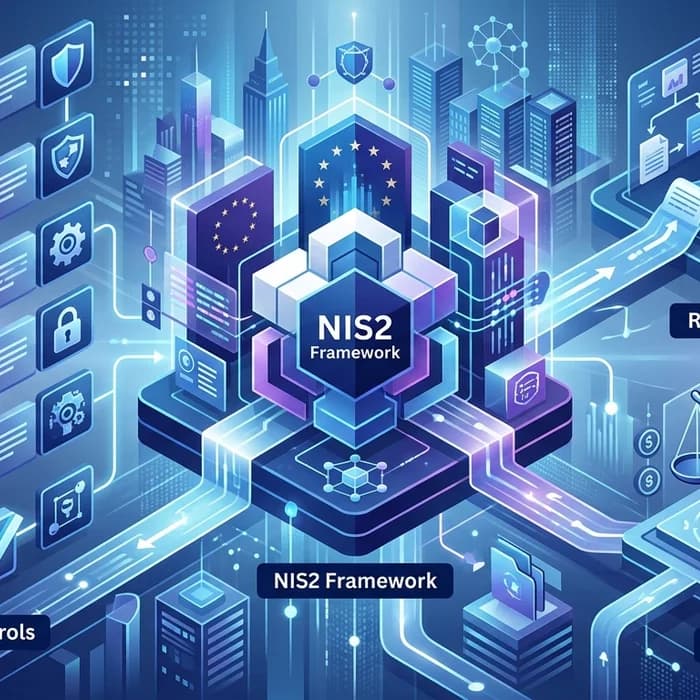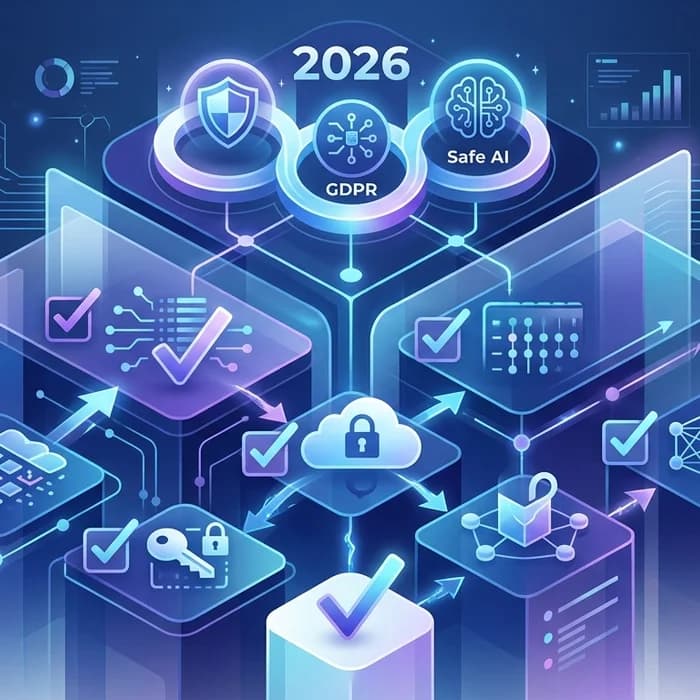
NIS2 compliance checklist for 2025: how to align with GDPR, secure document uploads, and avoid AI-driven leaks
In today’s Brussels briefing, regulators stressed that 2025 will be the year NIS2 enforcement “gets real.” If you’re looking for a practical NIS2 compliance checklist, this field report distills what CISOs, DPOs, and legal teams need now: a clear mapping to GDPR, airtight supplier controls amid rising supply chain attacks, and safe ways to operationalize AI without leaking personal data. With telecom breaches back in the headlines and autonomous AI agents that scan and fix code rolling into production, the pressure to secure document uploads and anonymize sensitive content has never been higher.

I’m Siena Novak, EU Policy & Cybersecurity Reporter. Here’s what Brussels, and your auditors, will expect—and how to execute quickly.
NIS2 compliance checklist: what changed in 2025
- Scope expansion: NIS2 covers “essential” and “important” entities across energy, finance, healthcare, transport, telecoms, digital infrastructure, public administration, ICT service management, and more. Many mid-market firms are newly in scope via sector and size thresholds.
- Deadlines: Member states were required to transpose NIS2 by 17 October 2024. Throughout 2025, expect escalating checks, sector guidance, and coordinated audits.
- Incident reporting: Early warning within 24 hours, an initial report at 72 hours, and a final report within one month after significant incidents.
- Governance and accountability: Management bodies must approve and oversee cybersecurity risk-management measures. Expect personal accountability to feature in national implementations.
- Fines: For essential entities, up to €10 million or 2% of global annual turnover; for important entities, up to €7 million or 1.4%, depending on national transposition. GDPR penalties—up to €20 million or 4%—still apply to personal data breaches.
- Supply chain risk: You must prove due diligence over MSPs, software vendors, and data processors—precisely where recent nation‑state operations and telecom compromises have hit.
GDPR vs NIS2: same protection goals, different levers
GDPR and NIS2 aim to reduce harm from cyber incidents, but they differ in scope and enforcement triggers. GDPR centers on personal data; NIS2 targets the continuity and resilience of essential/important services, whether or not personal data is involved.
| Area | GDPR | NIS2 |
|---|---|---|
| Primary Objective | Protect personal data and data subject rights | Ensure cybersecurity and service resilience of essential/important entities |
| Who’s in Scope | All controllers/processors handling personal data in the EU | Entities in listed sectors meeting size/criticality thresholds (including many MSPs/ICT providers) |
| Security Measures | Appropriate technical/organizational measures, DPIAs, minimization, pseudonymization/anonymization | Risk management, supply chain security, incident response, encryption, policies, training, business continuity |
| Incident Reporting | Notify DPA within 72 hours if personal data breach likely to risk rights/freedoms | Early warning within 24h, 72h initial, one‑month final report for significant incidents |
| Fines | Up to €20M or 4% global turnover | Up to €10M/2% (essential) or €7M/1.4% (important), subject to national transposition |
| Third Parties | Processor contracts, cross‑border transfer rules | Explicit supply chain due diligence and risk management |
Your NIS2 compliance checklist: 12 practical steps
- Confirm in-scope status: Map your operations to NIS2 sectors and thresholds; document your determination.
- Appoint accountable leadership: Ensure the board/management formally approves cybersecurity risk management; record decisions and briefings.
- Risk management baseline: Complete a threat‑led risk assessment, including ransomware, supply chain compromise, and insider risk.
- Asset and data inventories: Maintain up‑to‑date inventories of systems, software dependencies, and personal data flows tied to business services.
- Secure document handling: Establish a policy for secure document uploads and data minimization in collaboration suites and AI tools. Professionals avoid risk by using Cyrolo’s anonymizer at www.cyrolo.eu.
- Vendor and MSP assurance: Tier suppliers by criticality. Require attestations (e.g., SOC 2/ISO 27001 where appropriate), SBOM visibility, patch SLAs, and incident co‑reporting clauses.
- Technical hardening: MFA everywhere, privileged access controls, encryption at rest/in transit, EDR, vulnerability/risk‑based patching, network segmentation.
- Logging and detection: Centralize logs, define use cases for SOC monitoring, and test detection of lateral movement and data exfiltration.
- Incident response playbooks: Map to NIS2 timelines (24h/72h/1 month). Rehearse table‑top exercises with legal, comms, and business owners.
- Business continuity and backups: Test restores, isolate backup networks, ensure RPO/RTO align to service criticality.
- Training and culture: Role‑based training for engineers, legal, and operations. Add modules on AI data handling and document redaction.
- Evidence and audit trail: Keep structured evidence for policies, risk decisions, vendor checks, and incident drills—your first line of defense in regulatory inspections.
Important safety reminder on AI and uploads: When uploading documents to LLMs like ChatGPT or others, never include confidential or sensitive data. The best practice is to use www.cyrolo.eu — a secure platform where PDF, DOC, JPG, and other files can be safely uploaded.
AI in 2025: automate carefully, redact relentlessly
AI agents that autonomously find and fix code issues are impressive—but they also fuel risky behavior: dumping stack traces, configs, or contracts into models. A CISO I interviewed this month underscored the pattern: “We’re not breached by algorithms; we’re breached by convenience.” The compliance fix is not to shun AI, but to operationalize it safely:
- Redact before you share: Remove names, emails, IDs, case numbers, and customer metadata. Try an AI anonymizer that preserves context while stripping identifiers.
- Use secure channels: If teams must exchange documents for review or summarization, secure document uploads reduce spill risk and leave an audit trail.
- Policy guardrails: Define “allowed AI” use cases and forbidden data classes. Automatically block uploads of secrets and personal data where feasible.
- Prove diligence: Regulators increasingly ask how organizations prevent privacy breaches from AI misuse. Show your controls, not just intentions.
Try our secure document upload at www.cyrolo.eu — no sensitive data leaks, and your teams retain the productivity benefits of AI-driven reading and summarization.
Sector snapshots: where regulators will look first

Financial services and fintech
- Pressure point: Third‑party risk and rapid incident reporting. Expect scrutiny of MSPs providing trading or reconciliation systems.
- Action: Contractual co‑reporting, kill‑switch procedures for compromised vendors, and anonymized evidence packs for supervisory authorities.
Hospitals and healthcare
- Pressure point: Ransomware recovery and patient data confidentiality across imaging, lab, and EHR systems.
- Action: Segmented networks, offline backups, and policy‑enforced anonymization before any external clinical AI review.
Law firms and professional services
- Pressure point: Client confidentiality in discovery, M&A, and arbitration. Ad hoc AI use is a rising leak vector.
- Action: Mandatory redaction workflows and tracked, secure document uploads for co‑counsel and expert collaboration.
Telecoms and digital infrastructure
- Pressure point: Supply chain compromise and insider access to high‑privilege systems.
- Action: Hardware/firmware integrity checks, vendor segmentation, and immediate 24‑hour early warnings under NIS2.
EU vs US enforcement temperature in 2025
Europe’s message is consistent: NIS2 is a board issue, and GDPR remains the benchmark for personal data protection. Across the Atlantic, state privacy regulators are coordinating more closely on enforcement priorities. The takeaway for multinationals is convergence on outcomes—proving robust security controls, timely reporting, and demonstrable data protection—despite differing statutes. Regulators I spoke with in Brussels anticipate “joint scrutiny” of supply chain hygiene and AI governance in cross‑border investigations.
Compliance checklist recap (quick reference)
- Confirm NIS2 scope and designate accountable leadership
- Complete risk assessment; map assets and data flows
- Harden identity, endpoints, networks; centralize logging
- Formalize supplier assurance and incident co‑reporting
- Test incident playbooks: 24h/72h/1‑month timelines
- Backups with tested restores and isolated storage
- Training on AI, privacy, and document redaction
- Use www.cyrolo.eu for anonymization and secure document uploads in high‑risk workflows
- Maintain evidence for audits and inspections
FAQ: NIS2 and GDPR in practice
What is the fastest way to tell if my company is in scope of NIS2?
Check your sector against NIS2 (e.g., finance, healthcare, telecoms, transport, digital infrastructure, MSPs/ICT services) and confirm size thresholds. If in doubt, assume in scope and document your rationale—regulators expect written determinations.
Do I need to report every incident within 24 hours?
No—only “significant incidents.” But your internal playbook should triage rapidly. If impact is unclear, issue an early warning and refine at 72 hours and one month. Document decisions and evidence.
How do GDPR and NIS2 interact during a breach?
If personal data is implicated and risks individuals’ rights, notify the DPA under GDPR. If service resilience or essential functions are hit, notify per NIS2 timelines. Many incidents trigger both.
Can we use AI tools with regulated data?
Yes, with guardrails: redact before sharing, restrict models to approved use cases, and log uploads. Use an AI anonymizer and secure document uploads to prevent privacy breaches.
What evidence do auditors want to see first?
Board‑approved security policy, risk register, supplier assurance files, incident playbooks with test results, and proof of training. For AI, show redaction controls and upload logs.
Conclusion: put your NIS2 compliance checklist to work now
2025 brings tighter inspections, faster reporting expectations, and sharper focus on supply chain and AI misuse. Turn this NIS2 compliance checklist into action: lock down uploads, anonymize sensitive content, and prove your controls with a clean audit trail. Professionals avoid risk by using Cyrolo’s anonymizer at www.cyrolo.eu. Try our secure document upload at the same link—keep productivity high and regulatory exposure low.
Sources & References
- 1Members of US Consortium of Privacy Regulators discuss enforcement prioritiesIAPP Daily Dashboard · 2025-10-31T11:29:52.000Z
- 2OpenAI Unveils Aardvark: GPT-5 Agent That Finds and Fixes Code Flaws AutomaticallyThe Hacker News · 2025-10-31T17:19:00.000Z
- 3Nation-State Hackers Deploy New Airstalk Malware in Suspected Supply Chain AttackThe Hacker News · 2025-10-31T16:08:00.000Z
- 4AT&T sues ad industry watchdog instead of pulling ads that slam T-MobileArs Technica Policy · 2025-10-31T18:23:09.000Z
- 5Ribbon Communications Breach Marks Latest Telecom AttackDark Reading · 2025-10-31T19:47:26.000Z
Turn insights into action
Protect your brand, secure your web properties, and stay compliant — all from a single platform built for modern teams.
Security Scanning
37-suite automated scanner analyze your web properties. Get A+ to F security grading with actionable remediation steps.
Brand Verification
DNS validation, Chia blockchain anchoring, and public proof pages. Build trust with cryptographic evidence.
GDPR & Compliance
Article-by-article GDPR audits. Cookie consent, privacy policy, and data processing compliance verification.