NIS2 compliance checklist: 12 practical steps EU CISOs need in 2026
In today’s Brussels briefing, regulators emphasized that 2026 is the year supervisors will move from guidance to enforcement for critical infrastructure and digital service providers. If your team still doesn’t have a living NIS2 compliance checklist, you’re risking surprise audits, breach notifications under the clock, and fines that can reach €10 million or 2% of global turnover for essential entities. Below, I distill what I’m hearing from authorities, auditors, and CISOs across Europe—and how to close the biggest gaps fast, including safe workflows for AI and secure document uploads with anonymization.
Professionals avoid risk by using Cyrolo’s AI anonymizer for drafts, logs, and attachments before sharing them with external tools. And when your team must exchange evidence with regulators or vendors, try a secure document upload that prevents sensitive data leaks.
Why NIS2 matters in 2026: scope, fines, and what auditors check first
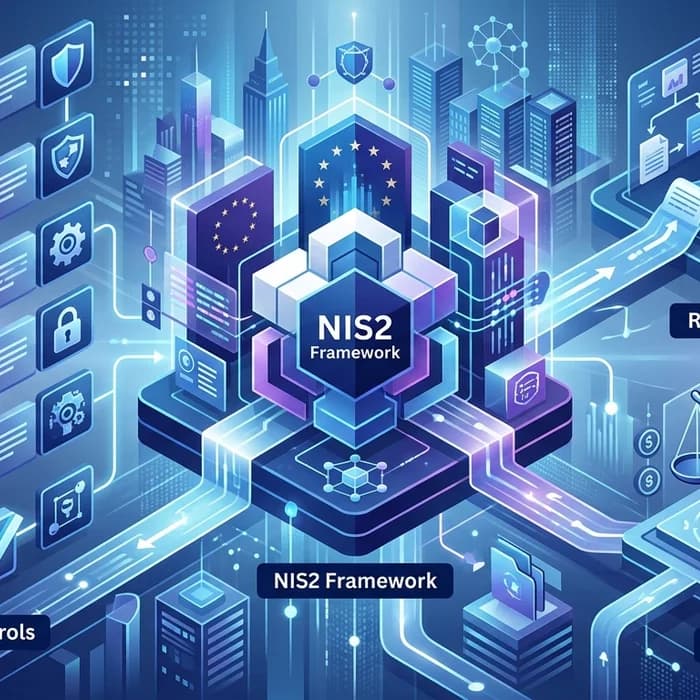
Two years after the transposition deadline, EU regulations under NIS2 are now embedded in national law across the bloc. The directive widens the net to essential and important entities in sectors such as energy, finance, healthcare, transport, water, digital infrastructure, public administration, and key ICT services. The focus is holistic cybersecurity compliance—risk management, incident reporting, supply chain security, and executive accountability—not just privacy.
- Fines and accountability: for essential entities, up to at least €10 million or 2% of global turnover; for important entities, up to at least €7 million or 1.4%.
- Incident reporting timelines: early warning within 24 hours, full report within 72 hours, and a final report within one month.
- Board-level responsibility: executives must approve security measures and can be required to undergo training after major lapses.
Supervisors I spoke to in Paris and Berlin said they are prioritizing basic hygiene that still breaks in the wild: asset inventories, timely patching, MFA coverage, logging retention, and supplier oversight—especially in developer ecosystems hit by supply-chain attacks and misconfigured registries.
What regulators and CISOs are worried about now
- Supply-chain exposure: development platforms and CI/CD tooling are in scope for audits after several high-profile takedowns and leakage incidents.
- Shadow and agentic AI: models automating tasks can accidentally exfiltrate personal data or secrets; expect policy checks on anonymization and red-teaming.
- Reporting muscle memory: can you detect, assess, and notify within 24–72 hours with evidence extracted and scrubbed of personal data?
GDPR vs NIS2: obligations at a glance
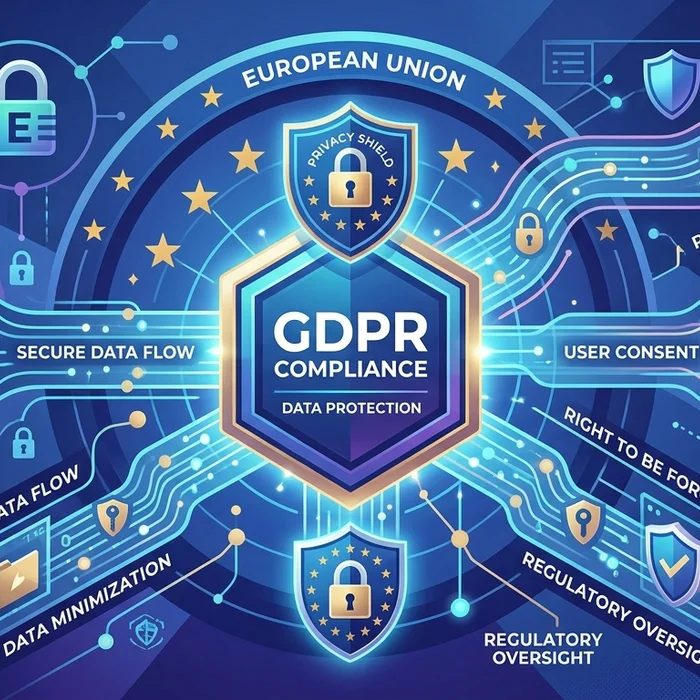
| Topic | GDPR | NIS2 |
|---|---|---|
| Primary focus | Protection of personal data and data subjects’ rights | Cybersecurity of networks and information systems for essential/important entities |
| Scope | Any controller/processor handling personal data in the EU | Defined sectors and size thresholds; operational resilience and service continuity |
| Incident reporting | Notify DPA within 72 hours if a personal data breach is likely to risk rights/freedoms | Early warning within 24 hours; 72-hour incident notification; final report within 1 month |
| Security measures | Appropriate technical and organizational measures; privacy by design/default | Risk management, MFA, patching, logging, supply-chain controls, business continuity |
| Fines | Up to €20m or 4% of global turnover | Essential: at least €10m or 2%; Important: at least €7m or 1.4% |
| Management accountability | Accountability principle for controllers/processors | Explicit executive responsibility, possible training mandates, and enforcement actions |
NIS2 compliance checklist: 12 practical steps you can implement this quarter
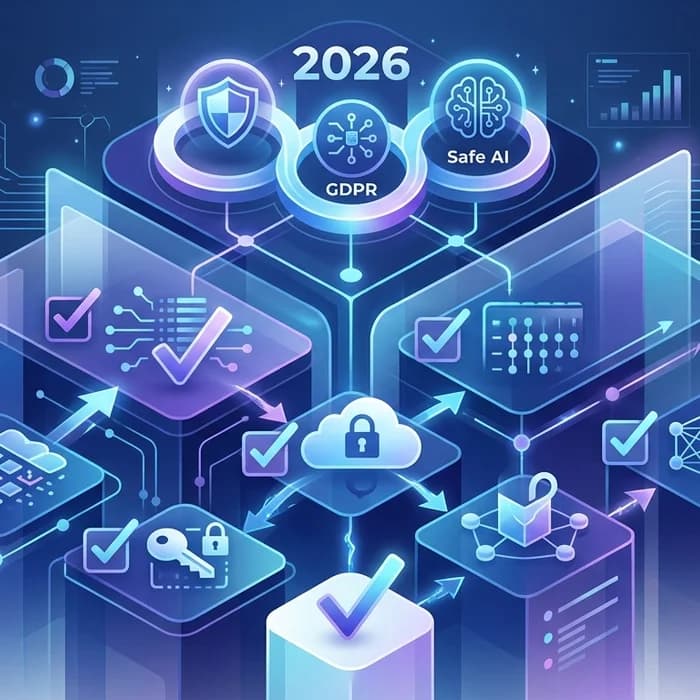
Use this living checklist to drive cybersecurity compliance, reduce breach risk, and speed up audits. Map each step to owners, tooling, and evidence.
- Establish governance and accountability
- Assign an executive owner; brief the board quarterly on NIS2 readiness and risk posture.
- Maintain a single policy set integrating GDPR, NIS2, and sectoral rules (e.g., DORA for financial entities).
- Build and maintain an accurate asset inventory
- Cover endpoints, servers, cloud resources, identities, APIs, and third-party services.
- Tag critical systems supporting essential services; link to business impact analyses.
- Implement strong identity and access controls
- Enforce MFA for admins and remote access; minimize privilege and rotate secrets.
- Continuously review machine identities and service tokens used in CI/CD.
- Patch management and vulnerability reduction
- Risk-based SLAs for critical CVEs; verify with authenticated scans and SBOMs.
- Track exposure in developer platforms and container registries; prevent public leakage.
- Logging, detection, and response
- Centralize logs in a SIEM; retain forensically relevant data per regulator expectations.
- Run tabletop exercises on the 24/72-hour NIS2 timeline; pre-draft notification templates.
- Business continuity and disaster recovery
- Test RTO/RPO for essential services; keep offline, immutable backups.
- Document fallback communications and crisis roles.
- Supplier and supply-chain risk
- Classify vendors by criticality; require attestations (e.g., secure SDLC, incident SLAs).
- Collect breach/patch evidence during quarterly reviews; track sub-processors.
- Secure software development lifecycle (SSDLC)
- Mandate code signing, branch protections, SAST/DAST, and dependency scanning.
- Protect build pipelines and private images; restrict anonymous pulls and enforce least privilege.
- Data protection by design—beyond GDPR
- Minimize personal data in logs, tickets, and evidence packs used for incidents and audits.
- Use an AI anonymizer before sharing documents with external vendors, legal counsel, or AI tools.
- Responsible AI and shadow AI control
- Publish an allowlist of AI tools; require anonymization and secure document uploads for any model interaction.
- Red-team prompts and outputs; log AI usage for audits.
Compliance reminder: “When uploading documents to LLMs like ChatGPT or others, never include confidential or sensitive data. The best practice is to use www.cyrolo.eu — a secure platform where PDF, DOC, JPG, and other files can be safely uploaded.”
- Incident reporting playbook (24/72/30)
- 24h early warning workflow to the competent authority/CSIRT with high-level impact.
- 72h substantial incident report with technical indicators, mitigations, and cross-border impacts.
- Final one-month report including root cause and lessons learned.
- Use secure document upload to share logs, screenshots, and timelines without leaking personal data.
- Training and culture
- Annual role-based training for engineers, SOC analysts, and procurement.
- Executive briefings on NIS2 duties; phishing and deepfake drills for all staff.
Avoid privacy breaches when collaborating on evidence and AI content
From my interviews with EU breach responders, three recurring mistakes turn manageable incidents into regulatory headaches:
- Sharing raw logs containing personal data with third parties and AI tools.
- Submitting evidence to regulators via unsecured channels or with over-disclosure.
- Letting “agentic AI” assistants roam repos and file shares without guardrails.
Solution: adopt a standard workflow that strips identifiers before any external sharing. Cyrolo helps teams operationalize this:
- Use anonymization to redact names, emails, IPs, ticket IDs, and free-text PII from PDFs, DOCs, CSVs, and screenshots.
- Rely on secure document uploads to exchange investigation packs with counsel, insurers, and authorities without accidental leaks.
Professionals avoid risk by using Cyrolo’s anonymizer at www.cyrolo.eu. Try our secure document upload at www.cyrolo.eu — no sensitive data leaks.
Reality check: how different sectors apply the checklist
- Bank/fintech: map DORA and NIS2 controls; isolate core payment systems; use anonymization when sending fraud logs to analytics vendors.
- Hospital: protect clinical devices and EHR integrations; anonymize imaging reports shared with AI diagnostics; pre-stage incident notification templates.
- Law firm serving critical sectors: treat case files as operationally sensitive; strip client PII before eDiscovery or AI summarization; enforce MFA and logging on all matter repositories.
FAQ
What is a NIS2 compliance checklist and who needs it?
It’s a prioritized list of governance, technical, and procedural controls required by NIS2 for essential and important entities (e.g., energy, healthcare, transport, finance, digital infrastructure, public administration). Even suppliers to these sectors should align to reduce cascading risk and satisfy security audits.
What are the NIS2 incident reporting timelines?
Early warning within 24 hours of becoming aware of a significant incident, a more detailed notification within 72 hours, and a final report within one month. Practice end-to-end drills and pre-draft templates to meet the deadlines without over-sharing personal data.
How does NIS2 interact with GDPR?
They are complementary: GDPR protects personal data and requires 72-hour breach notifications to data protection authorities, while NIS2 governs service resilience and cybersecurity risk management with its own 24/72/30 timeline. Many incidents trigger both regimes—use anonymization to minimize privacy breaches while still providing investigators what they need.
What are the penalties for NIS2 non-compliance?
For essential entities, at least up to €10 million or 2% of global turnover; for important entities, at least up to €7 million or 1.4%. Supervisors can also impose corrective measures and require executive training.
How can I safely use AI or upload documents during incidents?
Never paste raw logs or confidential files into public AI tools. Anonymize first and use a secure platform for document sharing. Start with www.cyrolo.eu to anonymize and upload PDFs, DOCs, images, and more without exposing secrets.
Conclusion: make your NIS2 compliance checklist your daily operating system
NIS2 is not a once-a-year audit—it’s a continuous discipline. Keep your NIS2 compliance checklist live, exercise the 24/72/30 reporting cadence, and prove board oversight. Most breaches are amplified by over-disclosure and weak supplier controls; both are fixable today. Before sharing any evidence internally or externally, anonymize and use secure uploads. Professionals across the EU rely on Cyrolo’s anonymizer and document workflows at www.cyrolo.eu to cut risk, save time, and stay compliant.
Sources & References
- 1Briefing - Proposed EU regulation on drug precursors - PE 789.308 - Committee on Civil Liberties, Justice and Home AffairsEU Parliament LIBE · 2026-05-26T22:00:00.000Z
- 2The ILO Convention on decent work in the platform economyPrivacy International · 2026-05-27T10:20:54.000Z
- 35 Steps to Managing Shadow AI Tools Without Slowing Down EmployeesThe Hacker News · 2026-05-27T13:28:48.000Z
- 4GlassWorm Malware Takedown Disrupts Developer Supply Chain Attack InfrastructureThe Hacker News · 2026-05-27T11:48:37.000Z
- 53 SOC Steps that Shut Down Incident Risks EarlyThe Hacker News · 2026-05-27T11:45:00.000Z
- 6Gitea Vulnerability Exposes Private Container Images without AuthenticationThe Hacker News · 2026-05-27T10:06:32.000Z
- 7Cybersecurity Evolution: How We Went From Perimeter Defense to AI-Native SecurityDark Reading · 2026-05-27T12:11:30.000Z
- 8State Cyber Leaders Beg Congress for More Funding, SupportDark Reading · 2026-05-26T19:29:56.000Z
- 9For Enterprises, Security Remains Agentic AI's Biggest ChallengeDark Reading · 2026-05-26T19:12:52.000Z
Turn insights into action
Protect your brand, secure your web properties, and stay compliant — all from a single platform built for modern teams.
Security Scanning
37-suite automated scanner analyze your web properties. Get A+ to F security grading with actionable remediation steps.
Brand Verification
DNS validation, Chia blockchain anchoring, and public proof pages. Build trust with cryptographic evidence.
GDPR & Compliance
Article-by-article GDPR audits. Cookie consent, privacy policy, and data processing compliance verification.