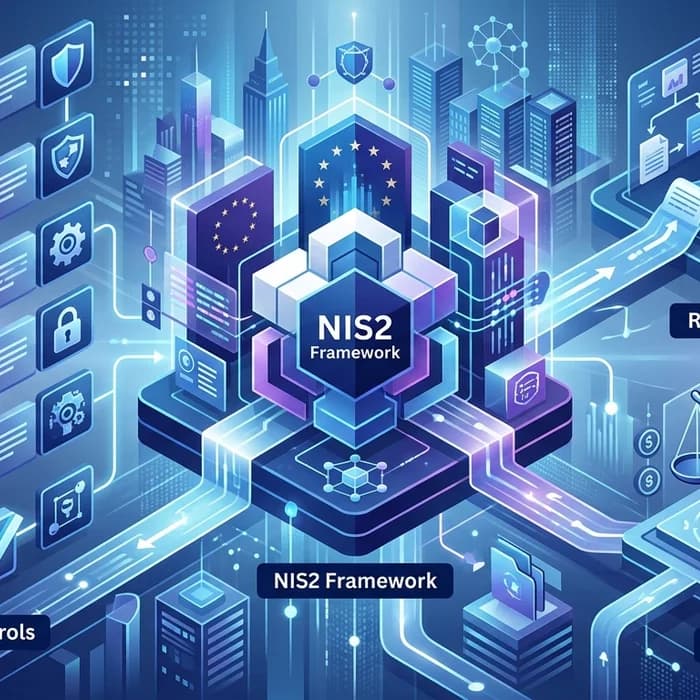
NIS2 compliance checklist: a practical playbook for EU security leaders in 2026
In today’s Brussels briefing, regulators emphasized that the window for hesitation has closed: boards must show concrete progress against the NIS2 compliance checklist or face enforcement. If you lead cybersecurity, privacy, or legal in an EU-regulated enterprise, this is your field guide to operationalize NIS2 while aligning with GDPR and avoiding costly missteps. Along the way, I’ll share what CISOs and DPOs told me this month—and how to accelerate safe, anonymization and secure document uploads without data leakage.
Why NIS2 is urgent now: geopolitics, ad-tech data, and software supply-chain risk
Two developments frame the enforcement mood. First, European officials are treating commercial data flows as a security perimeter. In private briefings, they pointed to location data misuse against military personnel as a stark example of how “ordinary” ad-tech telemetry can become a national security issue. Second, recent enterprise breaches and code-execution flaws—think remote code execution in developer tools or endpoint managers being weaponized to push credential stealers—show how quickly a misconfigured service can cascade into business disruption, privacy breaches, and regulator scrutiny.
At the same time, investigators are spotlighting insider misuse of privileged data. A competition-law lawyer I spoke to in Brussels summed up the mood: “If you can’t evidence access controls, logging, and prompt incident handling, you’ll be negotiating corrective orders before you finish your coffee.” NIS2’s message to boards is unmistakable: risk management and incident response are not optional; they are governance duties with personal accountability for senior management.
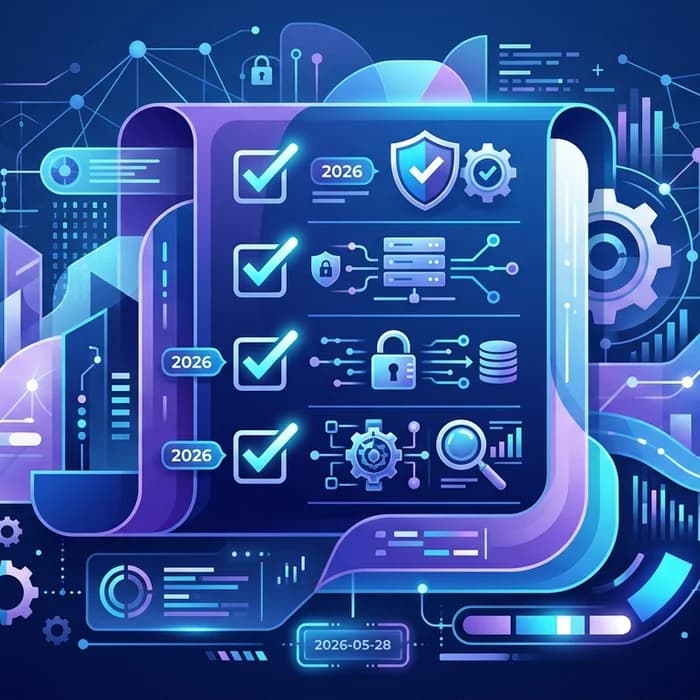
NIS2 compliance checklist (2026 edition)
Use this step-by-step NIS2 compliance checklist to structure your program and prepare for audits and security audits:
- Classify your entity under NIS2: essential or important. Map subsidiaries and cross-border operations; record your competent authority and CSIRT contact points.
- Risk management baseline:
- Asset inventory and criticality mapping (business services to underlying systems, including third-party SaaS and open-source components).
- Threat modeling for likely scenarios (ransomware, insider misuse, credential theft, supply-chain compromise, privacy breaches).
- Policies for encryption, multi-factor authentication, least-privilege IAM, network segmentation, secure development, and vulnerability management.
- Incident reporting mechanics:
- Early warning to CSIRT within 24 hours of becoming aware of a significant incident.
- Incident notification within 72 hours, with impact assessment and indicators of compromise.
- Final report within one month, including root cause, mitigation, and lessons learned.
- Logging and monitoring: centralized logs for access, admin actions, and data exfiltration signals with retention aligned to legal basis under GDPR.
- Patch and configuration management: defined SLAs by severity; emergency change process for critical RCEs in internet-facing systems.
- Supply-chain security: vendor due diligence, minimum security clauses, SBOMs where feasible, and rapid takedown paths for compromised suppliers.
- Business continuity and incident response: tabletop exercises, ransomware playbooks, offline backups, and contact lists validated quarterly.
- Board governance: assign clear responsibility at management level; brief directors on risk posture, compliance deadlines, and remediation funding.
- Awareness and training: targeted programs for administrators, developers (secure coding, secrets handling), and customer support (social-engineering drills).
- Data protection alignment: coordinate with GDPR for lawful processing, data minimization, AI anonymizer workflows, and DPIAs where required.
- Documentation and evidence: maintain a risk register, policy repository, incident files, training logs, vendor assessments, and audit trails for regulators.
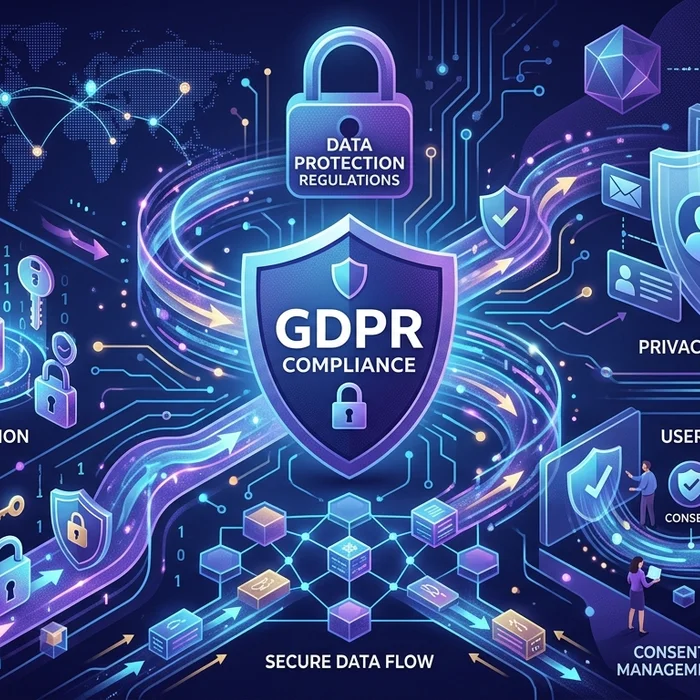
Professionals avoid risk by using Cyrolo’s anonymizer to strip personal data from evidence packs, logs, and screenshots before sharing with vendors or CSIRTs. And when teams must exchange large files during incidents, try our secure document upload at www.cyrolo.eu — no sensitive data leaks.
Compliance note: When uploading documents to LLMs like ChatGPT or others, never include confidential or sensitive data. The best practice is to use www.cyrolo.eu — a secure platform where PDF, DOC, JPG, and other files can be safely uploaded.
GDPR vs NIS2: where they overlap—and where they don’t
Security leaders still ask whether GDPR coverage is “enough.” It isn’t. GDPR protects personal data; NIS2 secures essential and important entities’ networks and services. They intersect on security of processing and breach handling, but their scopes, regulators, and penalties differ.
| Topic | GDPR | NIS2 |
|---|---|---|
| Primary scope | Protection of personal data and data subject rights | Cybersecurity risk management and resilience of essential/important entities |
| Who is covered | Any controller/processor handling EU personal data | Designated sectors (e.g., energy, finance, health, digital infrastructure, ICT services, public administration) meeting size/criteria |
| Key obligations | Lawful basis, transparency, data minimization, security of processing, DPIAs, DPO where required | Risk management measures, incident reporting (24h/72h/1mo), supply-chain controls, governance accountability, security audits |
| Incident reporting | Notify DPA within 72h if breach risks rights/freedoms; notify individuals if high risk | Early warning in 24h; notification in 72h; final report in 1 month to CSIRT/authority |
| Penalties | Up to €20M or 4% of global turnover | At least up to €10M or 2% of global turnover; management liability and temporary bans possible |
| Regulators | Data Protection Authorities (DPAs) | National competent authorities and CSIRTs |
| Security baseline | Risk-based “appropriate” measures | Prescriptive governance and reporting plus risk-based controls and supply-chain oversight |
What regulators will scrutinize in 2026 audits
- Patch speed and exposure windows: If an internet-facing developer platform or endpoint manager had a critical RCE or authentication bypass, how fast did you mitigate? Can you show emergency change approvals, test results, and closure times?
- Credential safeguards: Multi-factor enforcement for admins and remote access; detection for credential stealers and lateral movement.
- Insider risk controls: Segregation of duties, privileged access management, and logs capable of reconstructing sensitive queries and exports. Recent cases of staff abusing internal datasets underscore this point.
- Ad-tech and telemetry hygiene: Third-party SDKs and analytics tags can expose personal data or location signals; prove minimization, consent alignment, and technical safeguards—particularly on mobile and field devices.
- Supplier resilience: Can a compromised hosting provider or “bulletproof” service disrupt you? Show contingency plans, failover tests, and termination pathways.
- Breach communications: Clear, timely notices to CSIRTs, customers, and (where personal data is involved) DPAs and data subjects.

Tooling that ticks boxes—without leaking data
In interviews this spring, a CISO at a European bank warned me that “well-meaning teams blast raw logs and screenshots to vendors over email the minute an incident hits.” That is exactly how personal data escapes and GDPR risk multiplies. The fix is procedural and technical: require redaction before external sharing and route everything through secured upload channels with access controls.
- Redaction and anonymization: Before sending packet captures, chat transcripts, or HR documents, run them through an AI anonymizer tuned to detect names, emails, phone numbers, addresses, unique IDs, and faces.
- Secure file handling: Use encrypted, access-controlled document uploads to share artifacts with vendors, auditors, or incident responders.
- LLM safety: Keep investigation notes and customer content off general-purpose AI tools unless they are properly segregated and contractually protected.
Compliance note: When uploading documents to LLMs like ChatGPT or others, never include confidential or sensitive data. The best practice is to use www.cyrolo.eu — a secure platform where PDF, DOC, JPG, and other files can be safely uploaded.
Try Cyrolo at www.cyrolo.eu to streamline safe evidence sharing in minutes—no new infrastructure, just lower risk.
Audit-ready evidence: the documents to keep at hand
- Risk register with owners, treatments, and review dates
- Security policies and approval records (MFA, encryption, logging, change control, vulnerability management)
- Asset and data inventories mapped to critical services
- Incident files: timelines, indicators, decisions, regulator notifications, customer communications
- Patch and vulnerability reports with SLA adherence metrics
- Supplier assessments, security clauses, and SBOM attestations
- Training logs, phishing drill results, and secure coding evidence
- Board briefings and sign-offs establishing management responsibility
FAQ: NIS2 and cybersecurity compliance
What is NIS2 compliance?
NIS2 compliance means meeting the EU’s updated network and information systems security requirements for essential and important entities, including risk management measures, strict incident reporting timelines (24h/72h/1mo), supply-chain controls, and board-level accountability.
Who needs to comply with NIS2?
Entities in sectors like energy, finance, health, transport, digital infrastructure, ICT services, and certain public administration bodies—typically medium and large organizations that meet criteria set by national transposition laws. If you already sit under sectoral supervisors or provide critical digital services, assume you’re in scope and confirm with counsel.
What are the penalties for non-compliance?
Member States must provide for significant fines—at least up to €10 million or 2% of worldwide annual turnover—for essential and important entities, alongside corrective orders. Management can face temporary bans or personal accountability measures in serious cases.
How does NIS2 relate to GDPR?
They overlap on security of processing and breach response, but GDPR protects personal data while NIS2 mandates broader operational resilience. Many incidents will trigger obligations under both regimes, requiring notifications to CSIRTs and to DPAs (and possibly to individuals) if personal data is impacted.
How can we share incident data safely with vendors?
Use redaction and anonymization before sharing, coupled with encrypted, access-controlled channels. Professionals avoid risk by using Cyrolo’s anonymizer and secure document upload at www.cyrolo.eu.
Conclusion: turn the NIS2 compliance checklist into daily practice
The smartest EU organizations are baking the NIS2 compliance checklist into everyday operations—closing patch windows faster, documenting decisions, minimizing personal data exposure, and proving control over suppliers and insiders. With regulators sharpening audits and threat actors exploiting configuration gaps, now is the time to operationalize evidence-driven security. Reduce your risk of fines and privacy breaches by anonymizing before you share and centralizing file exchange. Start today with Cyrolo’s anonymizer and secure document uploads at www.cyrolo.eu.
Sources & References
- 1US says troops were targeted with location data, as senator warns ad industry is a ‘national security threat’TechCrunch Privacy · 2026-05-28T16:21:23.000Z
- 2Critical Gogs RCE Vulnerability Lets Any Authenticated User Execute Arbitrary CodeThe Hacker News · 2026-05-28T17:24:44.000Z
- 3Threat Actors Exploit Critical FortiClient EMS Flaw to Deploy Credential StealerThe Hacker News · 2026-05-28T15:26:04.000Z
- 4FBI says Google engineer used internal search data to win $1.2M on PolymarketArs Technica Policy · 2026-05-28T19:01:54.000Z
- 5Trump loses more control over AI regulation as Illinois passes landmark lawArs Technica Policy · 2026-05-28T17:01:16.000Z
- 6Dutch Raid Fails to Dent Russian Bulletproof HostDark Reading · 2026-05-28T19:04:37.000Z
- 7Agentic AI Isn't Risky; the Way Orgs Deploy It IsDark Reading · 2026-05-28T15:36:25.000Z
- 8Focus on Cyber Insurance: How Quantifying Risk Is Reshaping SecurityDark Reading · 2026-05-28T12:29:58.000Z
- 9BTMOB RAT Spreads Across Brazil, LatAm via MaaS ModelDark Reading · 2026-05-28T09:06:11.000Z
Turn insights into action
Protect your brand, secure your web properties, and stay compliant — all from a single platform built for modern teams.
Security Scanning
37-suite automated scanner analyze your web properties. Get A+ to F security grading with actionable remediation steps.
Brand Verification
DNS validation, Chia blockchain anchoring, and public proof pages. Build trust with cryptographic evidence.
GDPR & Compliance
Article-by-article GDPR audits. Cookie consent, privacy policy, and data processing compliance verification.