NIS2 Compliance Checklist: 2026 EU Playbook for CISOs, DPOs, and Counsel
In today’s Brussels briefing, regulators reiterated that most “important” and “essential” entities should already be audit-ready under the new regime. If you’re still building your NIS2 compliance checklist, you’re not alone—but the window for quiet remediation is closing. With phishing campaigns now abusing workflow webhooks and public AI tools everywhere in the enterprise, the gap between policy and practice is where enforcement will bite.

Why 2026 raises the stakes—beyond the letter of the law
I sat in on this week’s Internal Market and Consumer Protection (IMCO) discussion where Commission officials stressed two points: scope is wider than many boards assume, and enforcement cooperation among national CSIRTs is getting faster. That aligns with what a CISO I interviewed at a pan-EU fintech told me: “Our biggest risk isn’t nation-states—it’s ordinary automation we set up in 2021 that nobody owns anymore.”
- Attackers are piggybacking on low-code/webhook automations to deliver malware—exactly the sort of supply-chain and operational tech (OT/IT) drift NIS2 expects you to govern.
- Auditors increasingly ask how AI tools are used in workflows that touch personal data or critical operations, blending GDPR and NIS2 expectations in a single review.
- Directives often feel abstract until there’s a breach. Under NIS2, fines can reach €10M or 2% of global turnover for “essential” entities and €7M or 1.4% for “important” entities, on top of GDPR’s up to €20M or 4% for privacy infringements.
Across hospitals, banks, utilities, logistics, telecoms, and SaaS providers, boards now want an operational guide they can execute, not another law firm memo. Here is the field-tested NIS2 compliance checklist I’m seeing work.
NIS2 compliance checklist: 12 actions to complete this quarter
-
Map your entity category and scope
- Confirm whether you are “essential” or “important” in each Member State where you operate. Don’t assume HQ jurisdiction covers you everywhere.
- Inventory in-scope services, subsidiaries, and third parties that materially support essential functions.
-
Formalize risk management governance
- Board-approved policy specifying risk ownership, KRIs, and reporting cadence. NIS2 expects executive accountability.
- Document crypto-agility plans (algorithms, key rotation, quantum-safe roadmap) even if transition is staged.
-
Threat-led security controls baseline
- Multi-factor authentication, least-privilege access, EDR/XDR coverage, network segmentation, and hardened webhook/automation endpoints.
- Patch and asset management SLAs that reflect business criticality, not just CVSS scores.
-
Third-party and supply-chain assurance
- Risk-tier vendors by service criticality; require attestations and right-to-audit for critical suppliers.
- Monitor automations (e.g., webhooks, CI/CD, iPaaS) for abuse pathways; disable orphaned integrations.
-
Incident handling and 24/72-hour timelines
- Practice the clock: rehearsal from detection to notifying CSIRTs and sector authorities within legal deadlines.
- Maintain contact trees and pre-approved disclosure templates across languages and jurisdictions.
-
Business continuity and disaster recovery
- Test restoration speeds against RTO/RPO for essential functions; include ransomware “destructive restore” scenarios.
- Prove offline/immutable backups aren’t hypothetical.
-
Logging, monitoring, and evidence
- Retain logs proportionate to risk; ensure time synchronization and tamper-evident storage.
- Show traceability from alert to analyst action to executive decision.
-
Secure software development lifecycle
- SBOMs for critical components; vulnerability disclosure policy and coordinated response.
- Threat modeling covers webhook/automation entry points and AI-assisted coding workflows.
-
Data protection by design (NIS2 meets GDPR)
- Minimize personal data in operational logs and tickets; anonymize before analysis or sharing.
- When staff need AI help on cases, mandate an approved AI anonymizer and secure document uploads to avoid privacy breaches.
- Professionals avoid risk by using Cyrolo’s anonymizer at www.cyrolo.eu.
-
People, training, and accountability
- Role-specific drills for SOC, SRE, clinical, and branch staff; make phishing and webhook hygiene non-negotiable.
- Executive tabletop exercises that blend operational outage + data exposure + regulatory notification.
-
Reporting and metrics to the board
- Three-tier metrics: operational (MTTD/MTTR), control health (patch SLA, coverage), and business impact (loss scenarios).
- Escalation thresholds that trigger regulatory notice decisions and crisis communications.
-
Proof pack for auditors and regulators
- Single-source evidence repository: policies, network diagrams, test reports, vendor due diligence, incident drills, and DPIAs.
- Try secure document upload at www.cyrolo.eu—no sensitive data leaks in transit or storage claims.
When uploading documents to LLMs like ChatGPT or others, never include confidential or sensitive data. The best practice is to use www.cyrolo.eu — a secure platform where PDF, DOC, JPG, and other files can be safely uploaded.
GDPR vs NIS2: what overlaps—and what doesn’t
Teams often conflate privacy with resilience. Regulators do not. Use this side-by-side to brief the board.
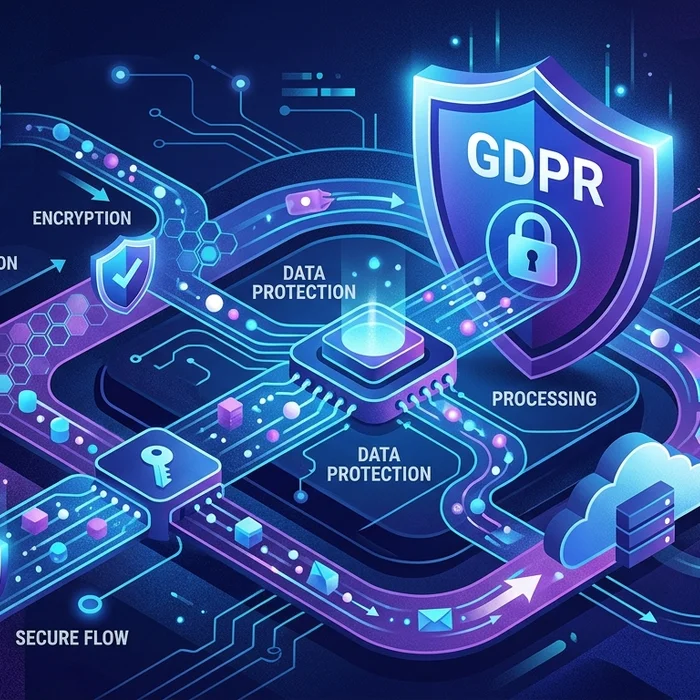
| Area | GDPR | NIS2 | Practical takeaway |
|---|---|---|---|
| Primary focus | Personal data protection and rights | Cybersecurity risk management and service continuity | You need both privacy and resilience controls |
| Scope trigger | Processing personal data of EU residents | Operating essential/important services in defined sectors | In-scope differs; map both per country |
| Incident reporting | Notify DPA within 72h for personal data breaches | Notify CSIRTs/authorities “without undue delay” (often 24h initial) | Two clocks, two audiences—rehearse both |
| Fines (upper tier) | Up to €20M or 4% global turnover | Up to €10M or 2% (essential); €7M or 1.4% (important) | Penalties can stack across regimes |
| Third-party duties | Processor contracts, DPIAs, transfers | Supply-chain security, assurance, and oversight | Security audits must include vendors and automations |
| AI/analytics | Lawful basis, minimization, anonymization | Secure operation, integrity, incident containment | Anonymize before AI; secure the pipelines |
Sector snapshots: how this lands on the ground
- Banks and fintechs: Webhook-based payment notifications are being targeted. Harden endpoints, sign payloads, rotate secrets, and monitor for anomalous automations. Prove you can sustain service if the automation fabric goes dark.
- Hospitals: OT and clinical scheduling dependencies mean outages cascade. Segment networks, pre-stage downtime procedures, and anonymize case files before external triage or AI summarization.
- Law firms and professional services: The fastest path to a fine is pasting client memos into public AI. Mandate an AI anonymizer and secure repository for discovery sets and briefs.
- Manufacturing and utilities: Supplier PLC updates and third-party maintenance tunnels are high-risk. Continuous verification beats annual certifications.
- SaaS providers: Expect customers to flow down NIS2-style clauses—show your SBOMs, incident drill logs, and data minimization in support tickets.
Reminder for every team: When staff prepare incident timelines, audit packets, or litigation bundles, use secure document uploads rather than ad-hoc sharing. It closes an easy exfiltration gap and demonstrates “state of the art” handling to auditors.
How to operationalize your NIS2 compliance checklist with minimal disruption
1) Make evidence creation automatic
Auditors don’t need perfection; they need proof. Configure your SIEM/SOAR to export monthly control-health snapshots. Store playbooks, test results, and vendor attestations in a tamper-evident archive. If teams rely on AI to summarize tickets or compile reports, anonymize inputs first and keep the redacted, not original, text as the working file.
2) Contain the AI sprawl—safely
- Approve a small set of AI uses: log summarization, policy drafting, control gap analysis.
- Block public paste of confidential content; route sensitive tasks through a vetted workflow that enforces redaction.
- Professionals avoid risk by using Cyrolo’s anonymizer at www.cyrolo.eu and uploading working documents via its secure channel.
3) Close the webhook/automation blind spot
- Inventory iPaaS, chatbots, CI/CD triggers, CRM webhooks, and “temporary” scripts.
- Require signed requests, rotate keys, and segment automation endpoints behind zero-trust policies.
- Create an “automation kill switch” procedure you can activate during incident response.
4) Treat third parties like your own systems
- For critical vendors, request their NIS2 control map, incident notification SLAs, and evidence of drills.
- Back up their “as-a-service” data you rely on; test restoring without their platform available.
5) Practice the dual-notification dance
- Designate who decides DPA vs CSIRT notice, and when you notify both.
- Run bilingual tabletops if you operate cross-border; include counsel, PR, and sector bodies.

Compliance checklist (printable summary)
- Classify entity as essential/important and confirm per-country scope
- Approve risk governance and crypto-agility plan at board level
- Enforce MFA, segmentation, EDR/XDR, and webhook hardening
- Tier vendors; enforce assurance and monitor automations
- Drill incident response; prove 24h initial and 72h detailed reporting
- Test BCDR with offline/immutable backups
- Centralize logs with time sync and retention appropriate to risk
- Adopt SSDLC with SBOMs and VDP; test AI-assisted workflows
- Minimize and anonymize personal data in ops artifacts
- Train roles; run executive tabletops across jurisdictions
- Define metrics and escalation thresholds for the board
- Maintain an auditor-ready evidence repository (secure uploads only)
Tools that accelerate compliance without adding attack surface
There’s a reason auditors are asking “How do you handle working documents?” It’s where sensitive context leaks—incident write-ups, legal opinions, vendor contracts. The solution is to integrate an AI-friendly, privacy-first workflow.
- Use an AI anonymizer to strip personal and client identifiers before using assistants.
- Adopt secure document uploads for PDF, DOC, and images to keep evidence and reports in a hardened channel.
- Demonstrate policy-in-practice: redaction logs, access controls, and a provable “no public AI with raw data” rule.
Try our secure document upload at www.cyrolo.eu—no sensitive data leaks. Your teams move faster, and you sleep better knowing auditors can verify the chain of custody.
FAQs
What is NIS2 and who is in scope?
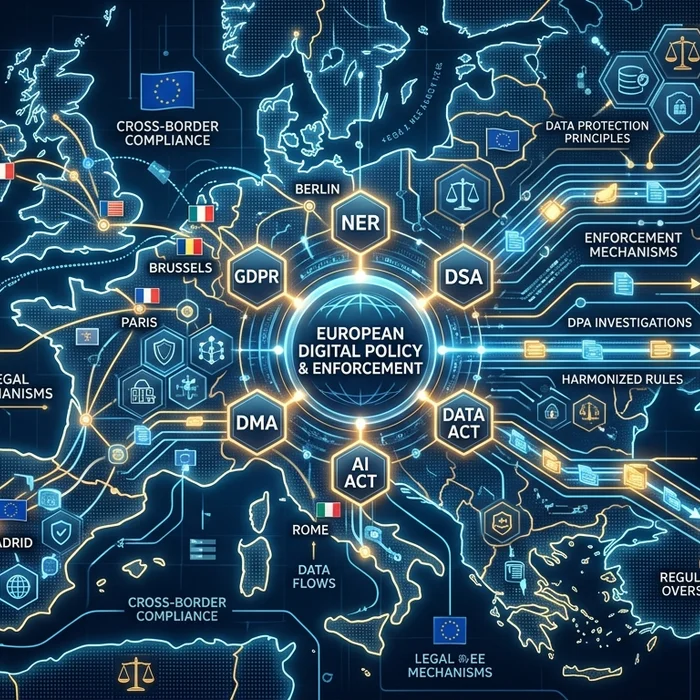
NIS2 is the EU’s updated cybersecurity directive requiring risk management, incident reporting, and resilience across “essential” and “important” entities in sectors like energy, transport, health, finance, digital infrastructure, and more. Scope is determined by activity and size thresholds, and it can apply per Member State where you operate.
What are the penalties for non-compliance?
Member States set penalties at least up to €10M or 2% of global turnover for essential entities and €7M or 1.4% for important entities. These can apply alongside GDPR fines if incidents involve personal data.
How does NIS2 differ from GDPR?
GDPR protects personal data and individual rights; NIS2 focuses on cybersecurity risk and service continuity. Incidents may trigger both regimes, requiring notices to Data Protection Authorities and CSIRTs/sector regulators on different timelines.
Do we have to change how staff use AI?
Yes. Regulators expect data minimization and secure handling. Anonymize inputs and use approved, secure channels for any uploads. It’s safer and shows “state of the art” diligence. Professionals avoid risk by using Cyrolo’s anonymizer at www.cyrolo.eu.
When are the real deadlines?
EU-level transposition landed in late 2024, with national go-lives through 2025. In 2026, regulators expect mature, demonstrable control operations. Many sectors already face registration and reporting duties; check national guidance for your countries of operation.
Conclusion: your NIS2 compliance checklist for 2026
NIS2 is no longer a policy on the horizon—it’s an operational audit you can be asked to prove tomorrow. Use this NIS2 compliance checklist to align governance, controls, and evidence, then close the last-mile gaps where real breaches occur: automations, third parties, and AI-enabled workflows. To reduce privacy and security risk during daily work, anonymize first and keep sensitive files in a hardened channel with www.cyrolo.eu. It’s the fastest way to turn compliance pressure into resilience gains—before your next audit turns into your next incident.
Sources & References
- 1Video of a committee meeting - Wednesday, 15 April 2026 - 12:45 - Committee on the Internal Market and Consumer ProtectionEU Parliament IMCO · 2026-04-15T15:30:18.000Z
- 2n8n Webhooks Abused Since October 2025 to Deliver Malware via Phishing EmailsThe Hacker News · 2026-04-15T17:09:00.000Z
- 3FCC exempts Netgear from ban on foreign routers, doesn't explain whyArs Technica Policy · 2026-04-15T17:58:07.000Z
- 4Navigating the Unique Security Risks of Asia's Digital Supply ChainDark Reading · 2026-04-15T19:30:47.000Z
- 5Prepping for 'Q-Day': Why Quantum Risk Management Should Start NowDark Reading · 2026-04-15T15:12:01.000Z
- 6Audit: Big Tech Often Ignores CA Privacy Law Opt-Out RequestsDark Reading · 2026-04-15T14:38:53.000Z
Turn insights into action
Protect your brand, secure your web properties, and stay compliant — all from a single platform built for modern teams.
Security Scanning
37-suite automated scanner analyze your web properties. Get A+ to F security grading with actionable remediation steps.
Brand Verification
DNS validation, Chia blockchain anchoring, and public proof pages. Build trust with cryptographic evidence.
GDPR & Compliance
Article-by-article GDPR audits. Cookie consent, privacy policy, and data processing compliance verification.