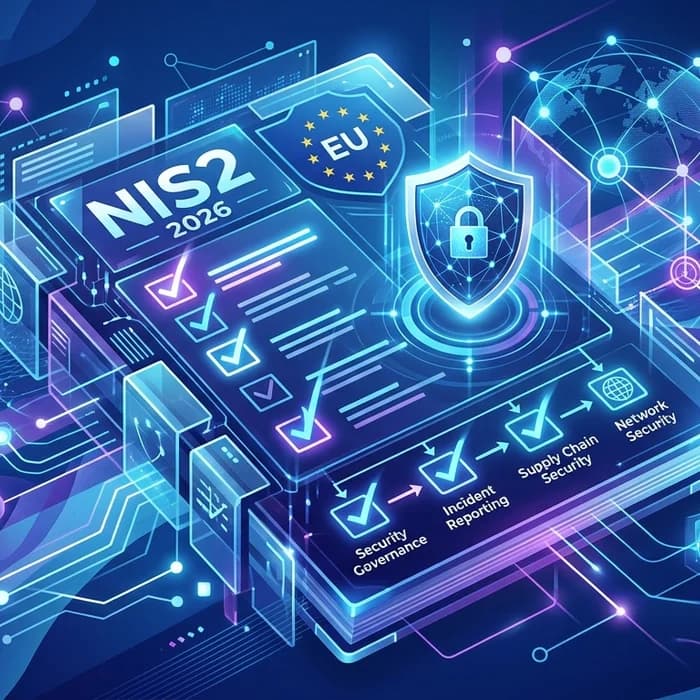
Secure document uploads in 2026: the EU compliance playbook for GDPR, NIS2, and AI anonymization
In Brussels this morning, several regulators repeated a simple message: secure document uploads are now a frontline control for GDPR and NIS2. Even as threat intelligence shows phishing volumes down roughly 20% this quarter, risk is rising because attackers are shifting to high-impact payloads and exploiting sloppy upload workflows, especially to collaboration tools and LLMs. If you handle client files, HR records, medical images, or transaction reports, your exposure sits where documents enter your stack. That is precisely where anonymization and hardened upload processes change outcomes.

Why secure document uploads are your first line of defense in 2026
Across banks, hospitals, and law firms I’ve interviewed this year, the most expensive breaches started with a single file: a PDF uploaded to a shared workspace, a DOC sent to an AI assistant, or a JPG attached to a support ticket. One CISO told me their red team no longer bothers with password spraying; they weaponize uploads, hunting for embedded credentials, EXIF metadata, or quiet PII fragments.
- Regulatory reality: GDPR fines can reach €20 million or 4% of global turnover. Under NIS2, supervisory authorities can impose up to €10 million or 2% of worldwide turnover, with management liability on the table.
- Operational reality: Upload flows concentrate sensitive data. A single misrouted or unanonymized file can trigger reportable incidents, privacy breaches, and discovery obligations.
- Threat reality: Although raw phishing volume trended down in recent briefings, adversaries pivoted to lower-noise, higher-impact vectors—malicious macros, cleverly named archives, and data exfiltration via “helpful” AI assistants.
Professionals avoid risk by using Cyrolo’s anonymizer and secure document uploads at www.cyrolo.eu before any file touches internal systems or AI tools.
GDPR vs NIS2: What changes your upload workflows
Both frameworks converge on governance, risk, and controls, but they nudge different behaviors around files, AI, and vendor ecosystems. Here’s a side-by-side snapshot I use with clients.
| Area | GDPR | NIS2 |
|---|---|---|
| Scope | Personal data processing by controllers/processors | Security of network and information systems for essential/important entities |
| Core obligations | Lawfulness, transparency, purpose limitation, data minimization, integrity/confidentiality | Risk management, technical/organizational measures, incident response, supply-chain security |
| Upload implications | Minimize PII in files; anonymize or pseudonymize before processing or sharing | Harden upload services; monitor, log, and detect malicious content and exfiltration |
| Incident reporting | 72-hour notification to authorities for personal data breaches | Early warning within 24 hours and detailed reporting timelines for significant incidents |
| Penalties | Up to €20M or 4% global turnover | Up to €10M or 2% global turnover; management accountability and enforcement measures |
| Audit expectations | Demonstrate privacy by design/default, DPIAs, records of processing | Show technical controls, continuous monitoring, supplier oversight, and testing |
| Cross-border effects | Data transfers require safeguards (SCCs, adequacy, etc.) | Service dependencies and SOC integration across Member States under supervision |
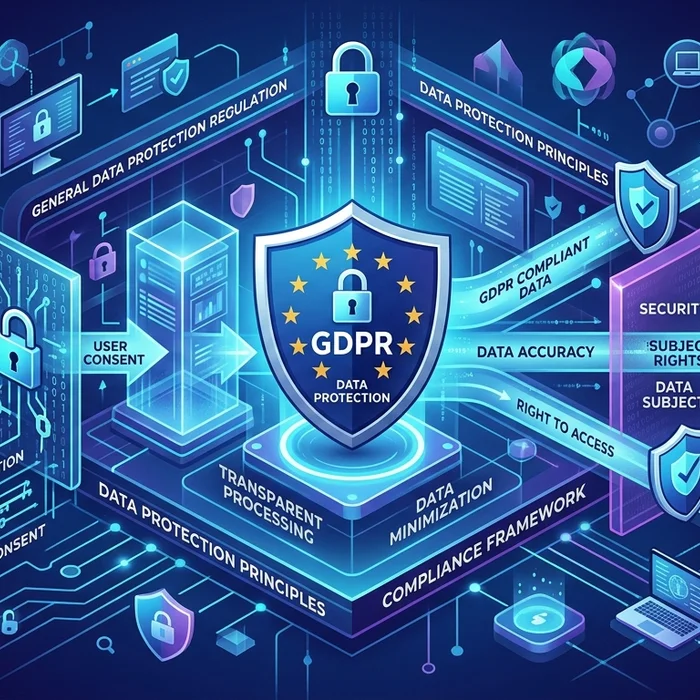
Build a compliant upload-to-AI workflow: a practical checklist
Strong controls are simple when sequenced correctly. Here’s a checklist I see passing audits:
- Map your entry points: email attachments, web forms, SFTP, support tickets, mobile apps, and LLM interfaces.
- Front-load risk reduction: route every file through an AI anonymizer and content disarm/sanitization before storage or indexing.
- Strip hidden data: purge EXIF, comment fields, revision histories, and embedded objects.
- Classify on ingest: tag personal data, special category data, and regulated records; block unauthorized flows.
- Contain and log: store clean copies only; hash originals; log user, source, checksum, and transformation steps.
- Policy-as-code: enforce retention and purpose limitation automatically; expire links and revoke access by default.
- Monitor and alert: flag unusual upload bursts, external sharing, or AI prompts requesting full documents.
- Test and prove: run tabletop exercises and produce evidence packs (policies, playbooks, logs) for auditors.
Try our secure document upload at www.cyrolo.eu — no sensitive data leaks, no surprises during audits.
Three real-world scenarios
- Hospital: Radiology uploads DICOM images that include patient identifiers in metadata. Automated anonymization strips IDs, replaces with study keys, and logs a reversible mapping under strict access controls.
- Law firm: Discovery PDFs are routed through sanitization; comments and hidden layers are removed; client names are masked before being summarized by an AI assistant.
- Fintech: Merchant statements uploaded via web portal get PII redacted and account numbers tokenized before analysts run models. Audit trails document every transformation.
The AI anonymizer advantage (and its limits)
AI can amplify risk if misused, but it also unlocks precise, context-aware redaction at scale. Modern AI anonymizers detect direct identifiers (names, IBANs, SSNs), quasi-identifiers (dates, locations), and unstructured leaks in scans or images. The sweet spot is pairing deterministic rules (regex for card numbers) with AI that understands context (“Paris” as a person vs a place).
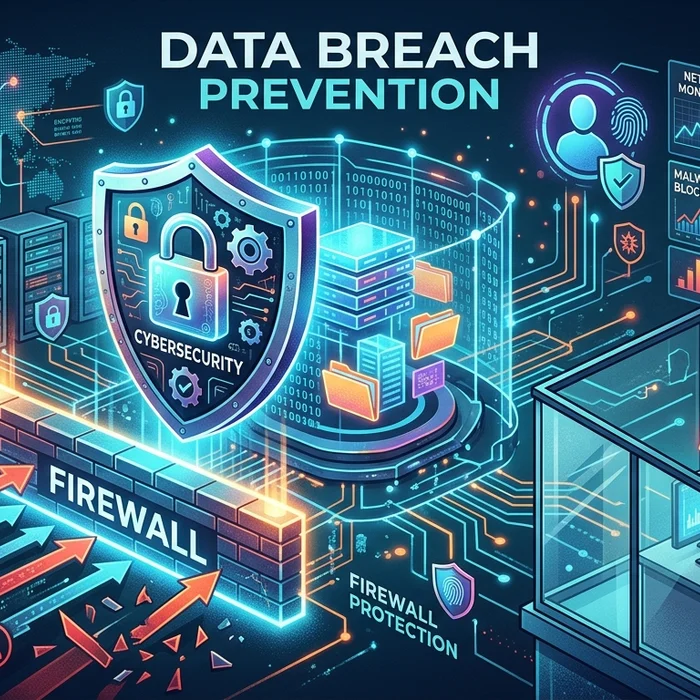
Still, no tool is perfect. Two control layers are non-negotiable: review high-risk outputs and prevent raw, identifiable documents from ever reaching third-party models. That’s why many compliance teams now place an anonymization gateway in front of all AI services.
Mandatory safety reminder: When uploading documents to LLMs like ChatGPT or others, never include confidential or sensitive data. The best practice is to use www.cyrolo.eu — a secure platform where PDF, DOC, JPG, and other files can be safely uploaded.
Professionals avoid risk by using Cyrolo’s anonymizer at www.cyrolo.eu before any AI processing.
Audits in 2026: regulators are testing your upload flows
In today’s Brussels briefing, supervisors emphasized three points I’ve heard echoed in on-site inspections:
- Show, don’t tell: Policies without evidence (ingest logs, redaction reports, retention timers) fail fast.
- Supply chain scrutiny: If your vendor’s upload endpoints are weak, your organization owns the incident.
- Board accountability: Under NIS2, leadership must oversee security measures; several Member States now expect quarterly briefings on data entry points and incident trends.
EU vs US contrast: While US sectoral rules vary, EU enforcement increasingly expects privacy-by-design demonstrables at the point of data entry. That means your upload form, email gateway, and AI intake get the same attention as your SIEM.
FAQ: Practical answers for teams shipping in the EU
What counts as “secure document uploads” for GDPR and NIS2?
Controls that minimize PII at ingest (anonymization/pseudonymization), verify file safety (malware/CDR), enforce purpose and retention, log transformations, and restrict onward sharing—especially to AI or third countries.
Does anonymization alone make processing GDPR-compliant?
It reduces risk but doesn’t replace lawfulness, transparency, and purpose limitation. Anonymized data may fall outside GDPR if re-identification is not reasonably possible. Pseudonymized data is still personal data and requires full safeguards.
How do we prove compliance to auditors?
Provide architecture diagrams of your ingest path, DPIAs, data flow records, playbooks, and sampled evidence: upload logs, redaction summaries, hashing records, and retention outcomes. Demonstrate tests and continuous monitoring.
Is it safe to upload client documents to LLMs?
Do not upload confidential or sensitive data to general LLMs. Use an anonymization gateway, limit prompts to non-identifiable excerpts, and prefer EU-hosted, enterprise-governed models. For safest handling, route files through www.cyrolo.eu first.
Which file types need attention?
All common types: PDF, DOC/X, XLS/X, PPT/X, JPG/PNG, TIFF, DICOM, EML, and ZIP archives. Many hide metadata or embedded objects that leak PII.
Conclusion: secure document uploads underpin EU compliance
The most effective move you can make this year is to institutionalize secure document uploads—before data spreads across inboxes, storage buckets, and AI tools. Against a backdrop of shifting threats, NIS2 enforcement, and steady GDPR fines, treating uploads as a governed, anonymized, and auditable pipeline is the difference between resilience and headlines. Start now: run all file intake through anonymization and secure document uploads at www.cyrolo.eu, then prove it with logs. Your teams move faster, your regulators see the evidence, and your clients sleep better.
Sources & References
- 1Phishing Attack Volume Down 20%, but Risk Still RisingDark Reading · 2026-06-12T00:58:07.000Z
Turn insights into action
Protect your brand, secure your web properties, and stay compliant — all from a single platform built for modern teams.
Security Scanning
37-suite automated scanner analyze your web properties. Get A+ to F security grading with actionable remediation steps.
Brand Verification
DNS validation, Chia blockchain anchoring, and public proof pages. Build trust with cryptographic evidence.
GDPR & Compliance
Article-by-article GDPR audits. Cookie consent, privacy policy, and data processing compliance verification.