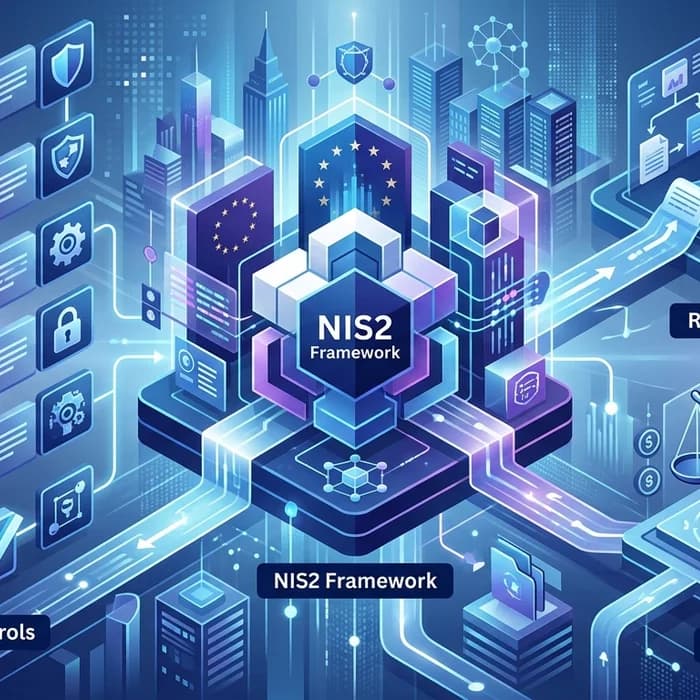
Secure document uploads in 2026: the missing link in EU NIS2 and GDPR compliance
Secure document uploads are no longer an IT nicety—they’re a frontline control for GDPR and NIS2 in 2026. In today’s Brussels briefing, regulators emphasized supply chain security and data minimization after a week of stark reminders: exploit code is circulating for a widely used VoIP platform, a CI/CD misstep let a single issue hijack GitHub repositories, and “agentic” AI is being embedded across critical sectors. If your employees, contractors, or AI tools touch files, your compliance and breach exposure now hinge on how you ingest, anonymize, and store those uploads.

Three headlines that changed your file-handling risk this week
- Telecom stack exposure: Exploit code for a high-severity Cisco Unified Communications vulnerability is public. Even if your voice systems are segmented, attackers pivot through weak endpoints, phishing, or misconfigured file shares. I spoke to a telecom CISO who said their fastest win wasn’t a new firewall—it was stopping sensitive call logs and contracts from landing in shared drives via uncontrolled uploads.
- CI/CD supply chain lessons: A flaw in a popular GitHub Action for AI coding exposed repositories to takeover from a single malicious issue. Translation: third-party automations can mutate “safe” uploads into executable risk. Your file pipeline must treat every attachment—screenshots, YAML, PDFs—as potentially active content.
- Agentic AI everywhere: Defense and critical infrastructure now orchestrate autonomous agents. The oversight burden shifts from “who clicked upload?” to “what did the agent ingest, transform, and re-share?” Auditors are asking for traceable, policy-enforced document handling—before models ever see personal data.
Why secure document uploads are now a NIS2 issue
NIS2 forces “appropriate and proportionate” technical and organizational measures across essential and important entities, with a sharper focus on supply chain, vulnerability management, and incident reporting. File ingestion is where those domains meet. If an employee or vendor uploads a contract with personal data to a helpdesk, an LLM workspace, or a chat with a bot, you create:
- Personal data sprawl that triggers GDPR rights and retention duties.
- Supply chain exposure whenever third-country processors or unmanaged SaaS store the file.
- Reportable incidents if a poisoned upload or privacy breach leads to service disruption.
Regulators I’ve interviewed in Brussels are increasingly explicit: controls that sanitize, minimize, and govern uploads (including from AI agents) count toward your NIS2 risk management program—and they’re the controls auditors can see.
GDPR vs NIS2: what uploads change in practice
| Area | GDPR (data protection) | NIS2 (cybersecurity compliance) | Practical upload implication |
|---|---|---|---|
| Scope | Personal data of individuals in the EU | Network and information systems of essential/important entities | One uploaded file can trigger both regimes |
| Core duty | Lawfulness, minimization, purpose limitation | Risk management, incident handling, supply chain security | Strip identifiers before storage; validate source and integrity |
| Incident timing | Notify SA “without undue delay,” typically within 72h | Early warning within 24h; incident report at 72h; final at 1 month (member-state specifics) | Logging and evidence around uploads must be audit-ready within hours |
| Sanctions | Up to €20M or 4% global turnover | At least up to €10M or 2% turnover (entity class dependent) | Uncontrolled uploads can escalate penalties under both laws |
| Vendors | Processor contracts (DPAs), cross-border rules | Supplier risk controls and software lifecycle security | Choose EU data residency; document processor chains |
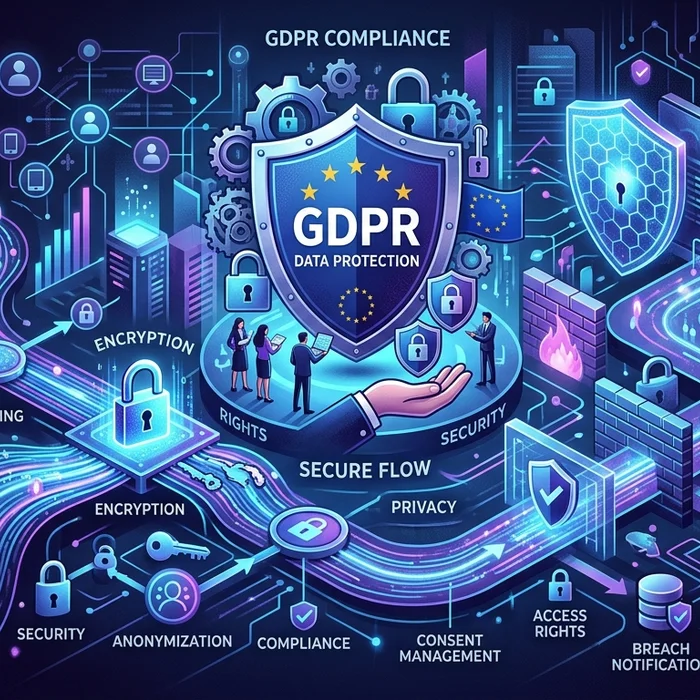
Build a modern architecture for secure document uploads
From my recent conversations with banks, hospitals, and fintechs, a practical pattern has emerged:
- Pre-ingest controls at the edge
- Client-side scanning for malware, macros, and active content
- Automatic redaction and pseudonymization before the file leaves the device
- Content classification and DLP on arrival
- Detect personal data, special-category data, and secrets
- Apply policy: deny, quarantine, anonymize, or route for approval
- Storage with segregation and short retention
- EU data residency with encryption at rest and in transit
- Default retention measured in days, not years
- LLM/AI guardrails
- Zero-trust connectors; no raw PII to model inputs
- Watermark, hash, and log every document share to AI tools
- Provable governance
- Immutable logs for security audits and regulators
- Playbooks mapping GDPR/NIS2 controls to file-handling steps
Fastest control to implement: an AI anonymizer for unstructured files
Most privacy breaches trace back to everyday documents—intake forms, HR letters, invoices, medical notes. The quickest win is automated redaction and pseudonymization before these files propagate to inboxes, ticketing systems, or AI workspaces. Professionals avoid risk by using Cyrolo’s anonymizer at www.cyrolo.eu. It removes personal data from PDFs, images, and office docs so teams can work without exposing identities.
Equally important is a governed ingest point. Try our secure document upload at www.cyrolo.eu — no sensitive data leaks, EU-hosted processing, and logs your DPO will appreciate.
Compliance reminder: When uploading documents to LLMs like ChatGPT or others, never include confidential or sensitive data. The best practice is to use www.cyrolo.eu — a secure platform where PDF, DOC, JPG, and other files can be safely uploaded.
2026 EU enforcement pressure: deadlines and dollars

- NIS2: Transposition completed across member states, with sectoral guidance rolling out. Supervisory authorities are sharpening audits on vulnerability handling and supplier controls—exactly where file uploads and automations intersect.
- GDPR: Average breach costs in Europe regularly exceed seven figures once remediation, notification, and legal exposure are counted. Fines continue to climb for poor technical controls and excessive retention.
- Data residency trend: Major security vendors are launching EU data residency by default. The direction of travel is clear: keep personal data in the EU, minimize what you store, and prove it.
In short: if your upload system can’t prove minimization and governance, you’re a target for both regulators and attackers.
Compliance checklist: secure document uploads that satisfy GDPR and NIS2
- Classify every uploaded file and detect personal data on arrival
- Automate redaction/pseudonymization before storage or AI use
- Enforce EU data residency and encrypted storage by default
- Block executables and macro-enabled files; sanitize PDFs/images
- Limit retention; auto-delete dormant uploads on a short schedule
- Maintain immutable logs for security audits and data subject requests
- Map suppliers; avoid uncontrolled third-country processors
- Test incident playbooks: early warning at 24h, detailed report at 72h
- Train staff and contractors on safe uploads and AI guardrails
Sector snapshots: what good looks like
- Bank: Mortgage PDFs arrive via a governed portal. Client-side redaction strips IBANs and IDs; server-side policy quarantines anomalies. Only anonymized copies flow into underwriting models. Result: faster approvals, fewer privacy breaches, cleaner audit trails.
- Hospital: Intake forms and scans are pseudonymized at triage. Clinicians search patient history with minimum necessary data; research teams receive de-identified datasets. Cross-border sharing is logged and justified, easing GDPR scrutiny.
- Law firm: Evidence bundles pass through a secure upload link with automatic privilege screening and face/plate redaction in images. Associates can collaborate with AI summarizers on scrubbed documents, cutting review time without leaking personal data.
FAQ: real questions teams are asking about secure document uploads
Do secure document uploads reduce my GDPR exposure if I still need the original file?
Yes. Store the original in a restricted, time-limited vault with access controls and logs. Distribute only an anonymized or minimized derivative for daily workflows. This narrows your personal data footprint and simplifies data subject requests.
How does NIS2 change my obligations if I already follow ISO 27001?
ISO 27001 helps, but NIS2 adds teeth on supplier risk, vulnerability handling, and incident timelines. You’ll need demonstrable controls on how uploads enter, are sanitized, and move through third parties—plus evidence you can notify within 24 hours of significant incidents.
Can we safely use LLMs for document review?
Yes—if you implement preprocessing that strips personal data and sensitive content, restrict model access, and log every exchange. Avoid sending raw PII to external models. Use a governed upload and anonymization layer first.
What about images and scans? They’re hard to sanitize.
They’re often the riskiest. Use OCR with entity detection and visual redaction (faces, license plates, signatures). Treat image uploads like any other document: classify, minimize, and store briefly with EU residency.
How do I prove compliance to regulators?
Maintain control mappings (GDPR articles, NIS2 measures) to your upload pipeline, keep immutable logs, and run periodic red-team tests on the ingestion layer. Provide auditors with evidence packs that show minimization, retention, and supplier oversight in action.
Conclusion: secure document uploads are your fastest 2026 win
In a year defined by exploit releases, CI/CD pitfalls, and AI everywhere, secure document uploads deliver immediate risk reduction—and measurable progress on GDPR and NIS2. Start by anonymizing what you collect, shrinking retention, and proving where the data lives. If you need a turnkey boost, try Cyrolo’s secure document upload and anonymizer at www.cyrolo.eu today.
Sources & References
- 1Cisco Patches CVE-2026-20230 in Unified CM as Exploit Code Goes PublicThe Hacker News · 2026-06-04T16:55:51.000Z
- 2Claude Code GitHub Action Flaw Let One Malicious Issue Hijack RepositoriesThe Hacker News · 2026-06-04T15:15:26.000Z
- 3Agentic AI Is Transforming Defense, But Only Secure IT Infrastructure Will Maximize ItThe Hacker News · 2026-06-04T15:10:00.000Z
- 4Elon Musk tries again to escape FTC audits of X data handlingArs Technica Policy · 2026-06-04T19:49:12.000Z
- 5Cable lobby warns of chaos if FCC doesn't relax ban on foreign routersArs Technica Policy · 2026-06-04T18:34:33.000Z
- 6Bugcrowd Launches EU Data Residency Option For Evolving Data Sovereignty NeedsDark Reading · 2026-06-04T14:22:20.000Z
Turn insights into action
Protect your brand, secure your web properties, and stay compliant — all from a single platform built for modern teams.
Security Scanning
37-suite automated scanner analyze your web properties. Get A+ to F security grading with actionable remediation steps.
Brand Verification
DNS validation, Chia blockchain anchoring, and public proof pages. Build trust with cryptographic evidence.
GDPR & Compliance
Article-by-article GDPR audits. Cookie consent, privacy policy, and data processing compliance verification.