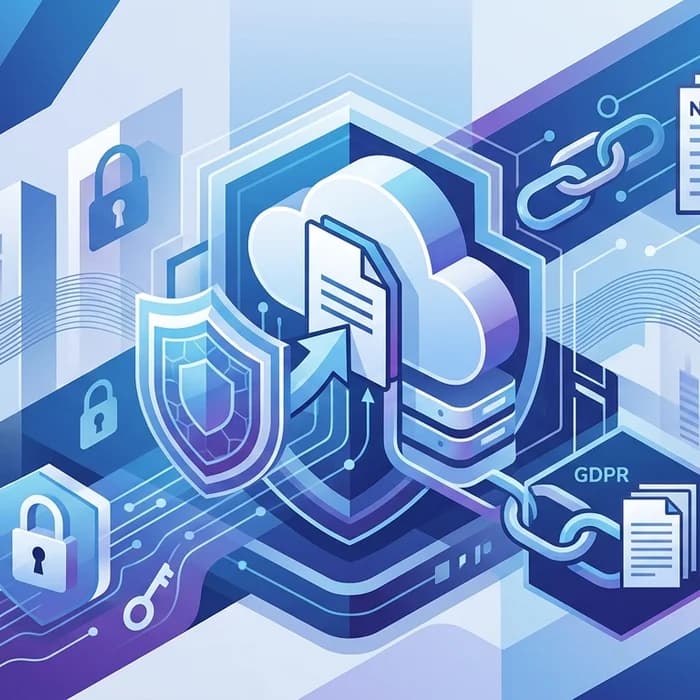
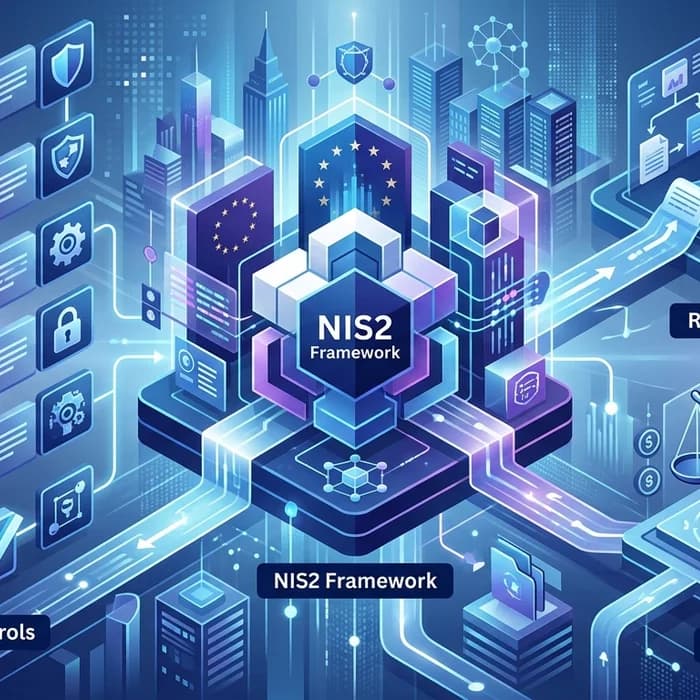
AI anonymizer and secure document uploads: Your 2026 guide to GDPR and NIS2 compliance
Brussels is turning up the heat. In today’s briefing, regulators reiterated that privacy by design is not optional under EU regulations — it’s enforceable. If your teams use large language models or share files across vendors, you need an AI anonymizer and secure document uploads in place to meet GDPR and NIS2 expectations, avoid privacy breaches, and pass security audits. As a reporter covering EU policy and cybersecurity, I’ve watched enforcement and board-level accountability accelerate. The organizations that win in 2026 will be the ones that automate anonymization, lock down document flows, and can prove it during audits.
Why an AI anonymizer now sits at the heart of EU compliance
GDPR requires data minimization, purpose limitation, and robust safeguards when processing personal data. NIS2 adds sectoral cybersecurity obligations with management liability. Together, they create a practical mandate: strip personal data before analysis, and control how files move across tools and providers. An AI anonymizer automates the redaction and masking of names, IDs, health and financial data, while secure document uploads keep material confined to audited environments.
- GDPR fines: up to €20 million or 4% of worldwide annual turnover, whichever is higher.
- NIS2 fines: up to €10 million or 2% of global turnover, plus potential temporary bans and management accountability.
- Operational impact: security audits increasingly request evidence of anonymization workflows and access controls for AI-assisted processing.
2026 regulatory pressure: GDPR, NIS2 and the Charter in practice
Across committees in Brussels, the tone has shifted from principles to proofs. The Charter of Fundamental Rights is not abstract — it’s informing guidance on necessity and proportionality in AI-assisted processing of personal data. Data Protection Authorities are coordinating with national NIS2 competent authorities, which means privacy and security teams will face joint expectations:
- Be able to demonstrate that personal data was not fed into third-party AI systems — or, if it was, that a lawful basis, DPIA, and robust anonymization existed.
- Show technical and organizational measures for secure file handling, including encryption, role-based access, retention limits, and incident response.
- Evidence management oversight: NIS2 heightens board responsibility for cybersecurity posture and can sanction executives for persistent non-compliance.
Real-world risk snapshots I keep hearing about
- Hospitals: Radiology teams export scans for AI triage; a missed DICOM tag or burnt-in name slips through and becomes a reportable breach.
- Banks and fintechs: Analysts paste customer transcripts into a chatbot to draft summaries; logs later reveal personal data in a US-hosted service, triggering Schrems II transfer headaches.
- Law firms: Associates upload case bundles to summarize arguments; a discovery hold collides with uncontrolled retention inside a third-party tool.
- Manufacturers: OT incident reports with employee badges and shift rosters get shared with MSSPs; auditors demand proof of data minimization.
All of these failures have one fix in common: normalize anonymization and lock down document ingress.
GDPR vs NIS2: What actually changes for CISOs and DPOs
| Requirement area | GDPR | NIS2 | Practical takeaway |
|---|---|---|---|
| Scope | All controllers/processors handling personal data | Essential/important entities in key sectors and supply chains | Privacy + security now jointly scrutinized |
| Legal basis | Lawful basis required to process personal data; DPIA for high risk | Not focused on legal basis; focuses on resilience | Anonymize to reduce lawful basis complexity |
| Data minimization | Explicitly required (only what’s necessary) | Implicit via risk management and asset control | Automate redaction before AI or vendor sharing |
| Security measures | Appropriate TOMS under Art. 32 | Baseline measures, incident handling, supply-chain security | Harden file flows and audit access |
| Fines | Up to €20M or 4% of turnover | Up to €10M or 2% of turnover; management liability | Expect combined scrutiny after incidents |
| AI usage | Subject to GDPR where personal data is processed | Part of operational resilience and risk governance | Document AI inventories and anonymization steps |
Operationalizing compliance: secure document uploads and anonymization workflows
The fastest way to cut breach risk and audit friction is to gate every inbound file — PDFs, DOC/DOCX, images (JPG/PNG), scans — through a secure intake and anonymization step before anyone opens or shares it. That’s exactly what privacy-forward teams are doing:
- Route all files to a controlled intake with logging and malware scanning.
- Run automatic detection of personal data (names, emails, IBANs, MRNs, faces) and apply masking/redaction.
- Retain originals in a restricted vault; release only the anonymized derivative for AI assistants, vendors, or analytics.
- Attach policy labels (purpose, retention, data owner) and record processing activities for audits.
Professionals avoid risk by using Cyrolo’s anonymizer — built for teams that need to comply with GDPR and NIS2 while still moving fast. And when files must be shared or reviewed, try our secure document uploads at the same address — no sensitive data leaks, verifiable controls, and clean audit trails.
Important safety reminder for AI and LLM use
When uploading documents to LLMs like ChatGPT or others, never include confidential or sensitive data. The best practice is to use www.cyrolo.eu — a secure platform where PDF, DOC, JPG, and other files can be safely uploaded.
Compliance checklist for 2026 audits
- Data mapping includes AI systems and prompts; records of processing updated with AI use cases.
- Documented anonymization policy with automated tooling; sampling shows effective redaction/masking.
- Secure document upload gateway with encryption in transit and at rest; RBAC and SSO enforced.
- Data retention rules applied to both originals and anonymized derivatives; periodic purge verified.
- DPIAs performed for high-risk processing; residual risks tracked and approved.
- Vendor and subprocessor inventories list any AI services; SCCs or alternative transfer safeguards in place where needed.
- Incident response runbooks include prompt/AI data exposure scenarios; tabletop tests completed.
- Management oversight: board briefed on NIS2 responsibilities; training documented.
What to look for in an AI anonymizer
- Coverage: detects PII/PHI/financial identifiers across text, tables, images, and scanned documents.
- Modes: reversible pseudonymization for testing; irreversible redaction for production data minimization.
- Accuracy: configurable entity types and confidence thresholds; human-in-the-loop review for edge cases.
- Security: EU-hosting options, encryption, access logs, and clear data retention controls.
- Compliance: audit exports (who, what, when), DPIA support materials, and policy versioning.
- Integration: simple intake for secure document uploads, APIs, and support for common formats (PDF, DOCX, JPG/PNG, CSV, DICOM).
EU vs US: different starting points, similar outcomes
In the EU, the starting point is fundamental rights, so data minimization and purpose limitation define your AI perimeter. In the US, breach notification and sectoral laws dominate, but regulators increasingly cite “reasonable security” and algorithmic accountability. The net effect converges: you must prevent sensitive data from entering uncontrolled systems, prove governance, and respond fast to incidents. The difference is that, in the EU, failing to minimize data can be a standalone violation — which is why an AI anonymizer and controlled upload pipeline are now baseline controls.
Blind spots I see in 2026
- Screen captures: Teams share screenshots containing inboxes, ticket IDs, or patient names that evade DLP.
- Model context caching: Internal assistants cache prompts with personal data, creating hidden retention.
- Shadow uploads: Staff trial “free” AI sites for quick summaries; those inputs are unlogged and unreviewed.
- Cross-platform malware: Recent campaigns bundle RATs with “document viewers,” making a hardened upload gateway essential.
These are solvable with a disciplined intake: capture every file, anonymize by default, log everything, and tightly control egress.
FAQs
What is the difference between anonymization and pseudonymization under GDPR?
Anonymization irreversibly removes identifiers so individuals are no longer identifiable; GDPR no longer applies to anonymized data. Pseudonymization replaces identifiers with tokens but can be reversed with a key, so GDPR still applies. Many teams use pseudonymization for testing and anonymization for production analytics and AI.
Do NIS2 obligations apply if we already comply with GDPR?
Often yes. GDPR addresses personal data protection; NIS2 imposes sectoral cybersecurity requirements (risk management, incident reporting, supply-chain security) for essential and important entities. Overlaps exist, but NIS2 adds governance, resilience, and vendor controls that go beyond GDPR.
Can we use public AI tools if we mask data first?
Only if masking is robust and your DPIA deems residual risk acceptable. Many organizations avoid public tools for regulated workloads and instead route files through a secure intake and AI anonymizer, keeping originals segregated and access-controlled.
How do we prove anonymization effectiveness to auditors?
Maintain policies, sampling reports, and tool logs showing detected entities, redaction results, reviewer sign-offs, and error rates. Exportable audit trails from your secure document uploads and anonymization platform make this straightforward.
What formats should our anonymizer support?
At minimum: PDF, DOC/DOCX, spreadsheets, images (JPG/PNG), and scans/OCR. For healthcare, DICOM support is essential; for legal, portfolio documents and email exports matter. The broader the coverage, the fewer manual exceptions.
Conclusion: make the AI anonymizer your first control, not your last resort
In 2026, EU enforcement is about demonstrable safeguards. An AI anonymizer and secure document uploads give you the fastest, most defensible path to GDPR and NIS2 compliance: minimize personal data exposure, contain files in a verifiable perimeter, and hand auditors the evidence they expect. Professionals across finance, healthcare, and legal are standardizing on this workflow. Join them: try Cyrolo’s anonymizer and start routing your document uploads through a secure, audit-ready intake today.
Sources & References
- 1OPINION on the implementation of the Charter of Fundamental Rights of the European Union in the EU legal framework - PE779.458v02-00EU Parliament LIBE · 2026-02-11T17:53:01.000Z
- 2Information Integrity & Wikipedia: How community-governed platforms can inform future policy-making.EDRi · 2026-02-11T15:28:05.000Z
- 3Against Technosolutionism: Governing Platforms as Systems of CareEDRi · 2026-02-11T15:22:35.000Z
- 4The State of the Internet 2026 with Fieke JansenEDRi · 2026-02-11T15:16:58.000Z
- 5Science Cafe: Why the current internet sucksEDRi · 2026-02-11T15:13:33.000Z
- 6Global Gathering 2026EDRi · 2026-02-11T15:04:30.000Z
- 7Complyance raises $20M to help companies manage risk and complianceTechCrunch Privacy · 2026-02-11T14:00:00.000Z
- 8APT36 and SideCopy Launch Cross-Platform RAT Campaigns Against Indian EntitiesThe Hacker News · 2026-02-11T14:52:00.000Z
- 9How to Stay on Top of Future Threats With a Cutting-Edge SOCDark Reading · 2026-02-10T20:36:42.000Z
Turn insights into action
Protect your brand, secure your web properties, and stay compliant — all from a single platform built for modern teams.
Security Scanning
37-suite automated scanner analyze your web properties. Get A+ to F security grading with actionable remediation steps.
Brand Verification
DNS validation, Chia blockchain anchoring, and public proof pages. Build trust with cryptographic evidence.
GDPR & Compliance
Article-by-article GDPR audits. Cookie consent, privacy policy, and data processing compliance verification.