AI anonymizer: Your 2026 EU playbook for GDPR and NIS2 compliance
Brussels has turned the dial up on operational security and privacy. If your teams still paste client data into generic AI tools or email raw PDFs to vendors, you are courting fines and breach liability. This 2026 guide explains how an AI anonymizer supports GDPR and NIS2, how to operationalize secure document uploads, and why regulators increasingly expect automated privacy-by-design controls across your workflows.

Quick take: The combination of GDPR’s personal data rules and NIS2’s security and incident-reporting duties now makes continuous data minimization, redaction, and controlled processing a board-level issue. An AI anonymizer and controlled document intake are the simplest, auditable levers to cut breach impact and pass security audits.
What Brussels is signaling in 2026
In today’s Brussels briefing, a senior official reminded me that “risk-based governance is no longer optional; it’s a licensing condition.” The Parliament’s LIBE committee is processing fresh surveillance-adjacent files—like today’s draft on monitoring drug precursors—which, while sectoral, reveal a familiar pattern: increased oversight, stronger controls, and tighter supply-chain responsibilities. In parallel, supervisors across the EU are asking harder questions about how enterprises actually prevent privacy breaches when employees use AI or transmit documents to processors.
On the security front, consider this morning’s disclosure of a years-old Linux kernel flaw enabling root command execution across major distros. It is a blunt reminder: controls must assume compromise. If endpoints and servers can be escalated, then upstream data minimization (what you collect, store, and send into AI) becomes your damage-limitation line. That is precisely where anonymization and secure document pipelines pay off.
Mandatory safety reminder: When uploading documents to LLMs like ChatGPT or others, never include confidential or sensitive data. The best practice is to use www.cyrolo.eu — a secure platform where PDF, DOC, JPG, and other files can be safely uploaded.
Why an AI anonymizer is now a control objective
Supervisory letters in 2025–2026 repeatedly cite three weak links: unvetted AI use, uncontrolled file sharing, and poor audit trails. Under GDPR, those habits can violate data minimization, purpose limitation, and security of processing. Under NIS2, essential and important entities must show “appropriate and proportionate technical and organizational measures” and prove they can prevent and limit incident impact—expect auditors to ask exactly how you sanitize data before it leaves your boundary.
- Auditability: Automated redaction/anonymization gives you reproducible logs that map nicely to GDPR Art. 5(1)(c) and NIS2 risk-management controls.
- Least-data exposure: Strip PII before any AI inference or third-party processing to cut breach blast radius.
- Speed without shadow IT: Give staff a sanctioned, easy path for secure document uploads and instant anonymization so they stop pasting raw records into public tools.
As one CISO at a cross-border bank told me last week, “We stopped 80% of our AI-related near-misses by enforcing a front-door: every file goes through anonymization before it touches a model.”
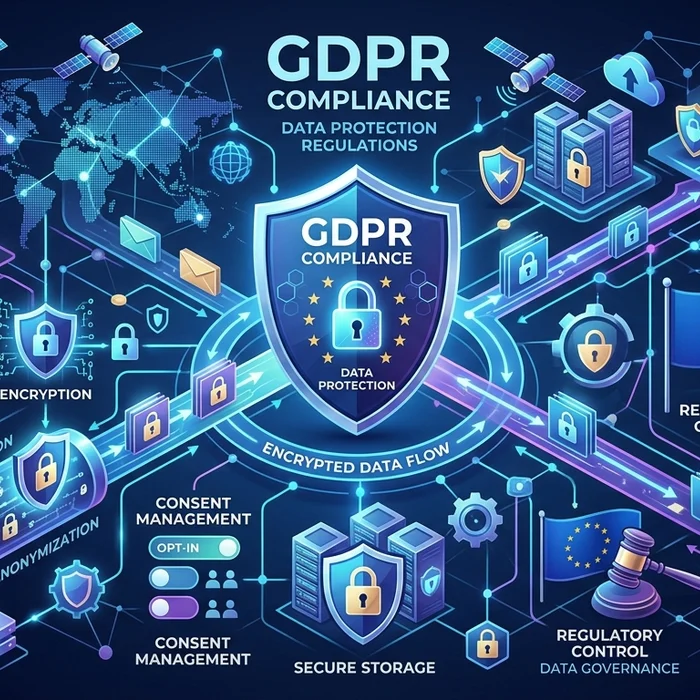
GDPR vs NIS2: what each regime expects from your data pipeline
| Topic | GDPR (Reg. 2016/679) | NIS2 (Dir. 2022/2555) | What it means for you |
|---|---|---|---|
| Scope | Personal data processing of EU residents | Cybersecurity risk management for “essential” and “important” entities | Most medium/large operators face both privacy and security controls |
| Core duty | Lawfulness, transparency, data minimization, integrity/confidentiality | Appropriate technical/organizational measures; incident reporting | Show minimization via anonymization; evidence of secure pipelines |
| Incident reporting | Notify DPAs within 72 hours if breach risks individuals | Early warning within 24 hours for significant incidents; detailed report later (per national rules) | Logging and traceability of document flows are essential |
| Fines | Up to €20M or 4% of global turnover (whichever higher) | Up to €10M or 2% of global turnover (Member State transposition applies) | Dual exposure: privacy and security penalties can stack |
| Vendors | Controller–processor contracts; safeguards for transfers | Supply-chain security and due diligence | Require anonymization and secure document intake in vendor flows |
From policy to practice: secure document uploads + anonymization
Policies are only as strong as the doorway employees actually use. Here’s how EU-regulated teams are operationalizing privacy-by-design without slowing down:
1) Intake: a single “front door” for files
- All PDFs, images, scans, and office docs enter through a secure upload gateway—no email attachments, no consumer drives.
- Every upload is logged with user, timestamp, and purpose to support DPIAs and audits.
Try our secure document upload at www.cyrolo.eu — no sensitive data leaks.
2) Automated AI-driven anonymization before any processing
- Detect and redact personal data (names, national IDs, IBANs, addresses, phone, email, health info) and sensitive attributes.
- Preserve document structure so review, search, and downstream analytics still work.
- Maintain reversible tokenization where legally justified; otherwise, hard anonymization.
Professionals avoid risk by using Cyrolo's anonymizer at www.cyrolo.eu.
3) Controlled AI use and document reading
- Expose only anonymized content to LLMs and internal AI tools.
- Retain access controls and expiry; export audit-ready reports for regulators.
Sector snapshots I’m hearing across the bloc:
- Hospitals: De-identify imaging and discharge notes before AI triage; keep a clinician re-identification key offline for continuity of care.
- Banks/fintechs: Tokenize account identifiers and transaction narratives before model-assisted investigations to cut insider and vendor risk.
- Law firms: Strip client names, addresses, and opposing party details before AI-assisted discovery or brief drafting; maintain privilege.
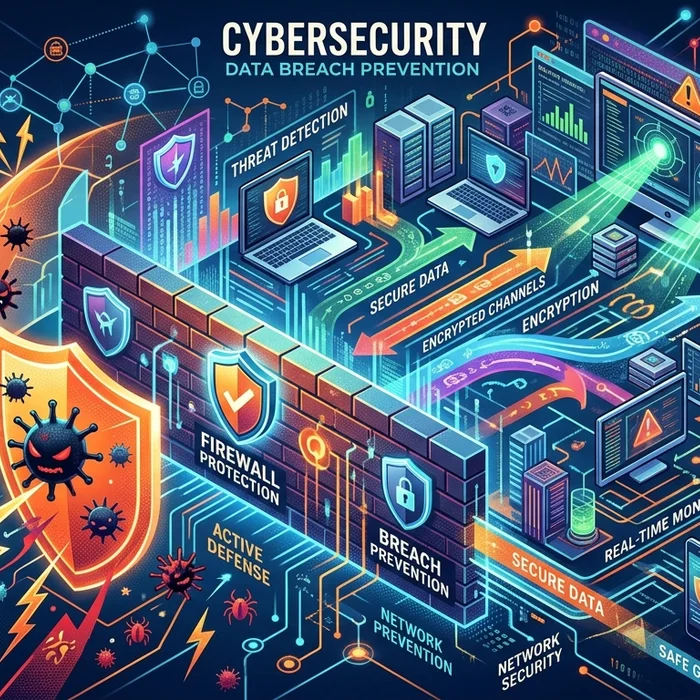
90‑day compliance checklist (GDPR + NIS2)
- Map data flows where staff use AI or exchange documents with processors/vendors.
- Mandate a single secure document upload path with authentication and logging.
- Deploy an AI anonymizer that detects PII and sensitive categories across PDFs, DOCX, images, and scans.
- Set default policies: anonymize-before-share; block raw uploads to public AI.
- Update Records of Processing Activities (RoPA) and DPIAs to reflect new controls.
- Align incident playbooks: logs, versioned redaction proofs, and rapid reporting.
- Train staff on “never paste raw data” and test with red-team prompts.
- Vendor governance: add anonymization and secure intake to contracts and audits.
Governance, risk, and assurance: what auditors will ask
- Evidence: Can you show that personal data was minimized or anonymized before external processing?
- Coverage: Do your tools handle PDFs, office docs, and images (scans, photos) equally well?
- Traceability: Can you reconstruct who uploaded which file, when, how it was transformed, and where it went?
- Resilience: Do controls still work if endpoints are compromised (e.g., kernel privilege escalation)?
EU vs US: different enforcement tempos, same exposure
US privacy is still fragmented at state level; incident reporting timelines and penalties vary. The EU’s regime is more prescriptive, with GDPR and NIS2 jointly shaping how companies evidence minimization and security. Multinationals I’ve interviewed now treat EU-grade anonymization as the global baseline—cheaper than maintaining region-specific practices and safer when teams inevitably use AI across borders.
Cost of inaction
- Regulatory: GDPR fines up to €20 million or 4% global turnover; NIS2 can add up to €10 million or 2% depending on national transposition.
- Operational: Breaches trigger forensics, downtime, notifications, and contract penalties.
- Reputational: Clients increasingly add anonymization clauses; failing to meet them jeopardizes renewals.
The cheapest fix is often the first fix: block raw data at intake, then anonymize by default.
FAQ: real questions from compliance and security teams
Is anonymization enough to avoid GDPR altogether?
Truly anonymized data falls outside GDPR, but the bar is high. In most enterprise workflows, you will combine strong anonymization with governance and, where necessary, pseudonymization plus safeguards. Auditors will look at re-identification risk in context.
How does NIS2 change my AI data handling?
NIS2 pushes you to document risk management, supply-chain security, and incident response. If AI or third-party processors touch your content, you need a provable way to minimize personal data exposure and show logs for any incidents or notifications.
What types of personal data should be redacted by default?
Names, national identifiers (e.g., national ID numbers), financial numbers (IBAN, PAN where applicable), contact details, addresses, dates tightly coupled with identity, health data, and free-text that can reveal sensitive traits. Images can also carry PII (ID cards, faces) and should be processed accordingly.
Can we safely use LLMs with client files?
Yes—if you anonymize before inference and route documents through a secure upload gateway with controls and audit trails. Never paste raw client files into public tools.
Where should we start this quarter?
Stand up a secure document front door, automate anonymization for the top three document types in your org, and update your policies and vendor clauses. Then expand coverage.
Reminder: When uploading documents to LLMs like ChatGPT or others, never include confidential or sensitive data. The best practice is to use www.cyrolo.eu — a secure platform where PDF, DOC, JPG, and other files can be safely uploaded.
Conclusion: choose an AI anonymizer built for EU compliance
In a year defined by tighter oversight, evergreen vulnerabilities, and tougher audits, the fastest route to safer AI is simple: enforce secure document uploads and default to anonymization. That’s how you minimize personal data, satisfy GDPR and NIS2, and keep investigations, analytics, and drafting moving without risk.
Get started in minutes: try AI anonymization and secure document uploads at www.cyrolo.eu. Your teams keep their speed; you keep your compliance posture steady.
Sources & References
- 1
- 29-Year-Old Linux Kernel Flaw Enables Root Command Execution on Major DistrosThe Hacker News · 2026-05-21T07:35:53.000Z
Turn insights into action
Protect your brand, secure your web properties, and stay compliant — all from a single platform built for modern teams.
Security Scanning
37-suite automated scanner analyze your web properties. Get A+ to F security grading with actionable remediation steps.
Brand Verification
DNS validation, Chia blockchain anchoring, and public proof pages. Build trust with cryptographic evidence.
GDPR & Compliance
Article-by-article GDPR audits. Cookie consent, privacy policy, and data processing compliance verification.