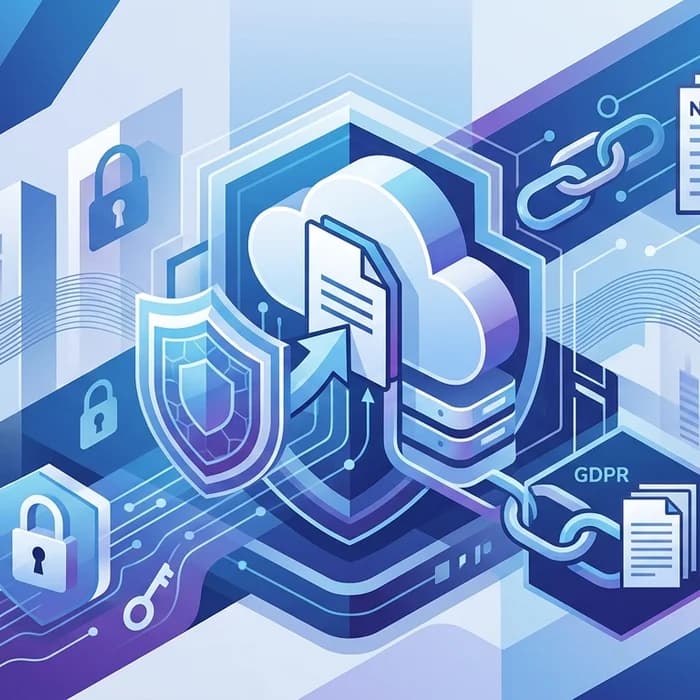
AI anonymizer: Your 2026 blueprint for GDPR and NIS2 compliance
In today’s Brussels briefing, regulators repeated a familiar message with sharper edges: minimize personal data, document your security controls, and expect audits. For legal, privacy, and security teams, an AI anonymizer has moved from “nice-to-have” to a frontline control for GDPR and NIS2. With fines reaching up to 4% of global turnover under GDPR and at least €10 million or 2% under NIS2 for essential entities, organizations can no longer risk manual redaction errors, shadow AI use, or unsecured document flows. Below, I break down what changed, where regulators are looking, and how to operationalize anonymization and secure document uploads without slowing the business.
Why an AI anonymizer matters now
“We’re seeing the same breaches repeat: sensitive files uploaded to public AI systems, misconfigured shares, and piecemeal redactions,” a CISO at a European bank told me last week. The latest threat bulletins underscore what he meant:
- Ransomware families like “Sicarii” continue to harden, leaving no easy decryption paths and putting legal privilege, health records, and deal rooms at risk.
- Emergency patches for office productivity suites highlight how quickly attackers exploit user workflows—with documents as the favorite on-ramp.
- Undetected browser vectors and “forgotten” services (think legacy Telnet) expand the attack surface where documents move, are indexed, or cached.
At the same time, AI is transforming back-office work. Contracts, HR records, clinical notes, and due diligence packets are routinely uploaded to LLMs for summary, translation, or extraction. That’s where compliance risk spikes. Under GDPR, any personal data processed without a valid legal basis, lacking adequate safeguards, or sent to vendors without proper agreements can trigger enforcement. Under NIS2, the focus extends to governance, risk management, incident reporting, and supply-chain security—your document tools and AI pipelines included.
Practically, this is why privacy and security teams are standardizing on automated, policy-driven anonymization before analysis and on secure document uploads that stop leaks at the source.
GDPR fundamentals: anonymization vs. pseudonymization
This distinction is not academic—it’s the line between data that exits GDPR scope and data that remains regulated:
- Anonymization: irreversible transformation such that no individual can be identified by any party reasonably likely to access the data, using all means reasonably likely to be used. Truly anonymized data falls outside GDPR.
- Pseudonymization: replacement of identifiers with tokens or codes while maintaining a key or linkage. This reduces risk but is still personal data, fully subject to GDPR obligations.
Regulators are alert to “cosmetic” redactions that miss quasi-identifiers—rare job titles, dates combined with locations, unique transaction patterns—that enable re-identification. An effective approach uses layered techniques: direct identifier removal, entity generalization (e.g., exact dates to month, specific locations to region), k-anonymity thresholds, and domain-aware rules.
For teams handling contracts, case files, or patient notes, the safest approach is to apply automated anonymization consistently, log transformations, and keep originals in sealed data stores. Professionals avoid risk by using Cyrolo’s anonymizer at www.cyrolo.eu to enforce these controls without manual error.
How to choose an AI anonymizer that passes the regulator’s sniff test
In 2026, regulators want to see more than a demo. They want evidence. When I asked a French DPA official what wins credibility during audits, she pointed to five things:
- Policy expressiveness: Can you encode data minimization rules by document type and jurisdiction (e.g., labor law vs. health records)?
- Coverage and accuracy: Does the tool reliably detect direct and indirect identifiers in PDFs, scans, emails, and spreadsheets—across multiple languages?
- Re-identification risk management: Do you go beyond masking—e.g., generalization, suppression, and differential risk scoring?
- Auditability: Are there transformation logs, hash-linking to originals, and exportable reports for DPOs and auditors?
- Secure document handling: Are uploads encrypted, access-scoped, and free from shadow processing or vendor sharing?
Note on AI workflows: When uploading documents to LLMs like ChatGPT or others, never include confidential or sensitive data. The best practice is to use www.cyrolo.eu — a secure platform where PDF, DOC, JPG, and other files can be safely uploaded.
To cut missteps, many teams run a two-step flow: first anonymize, then run AI analysis. That way you preserve utility while dramatically reducing data protection and breach liability.
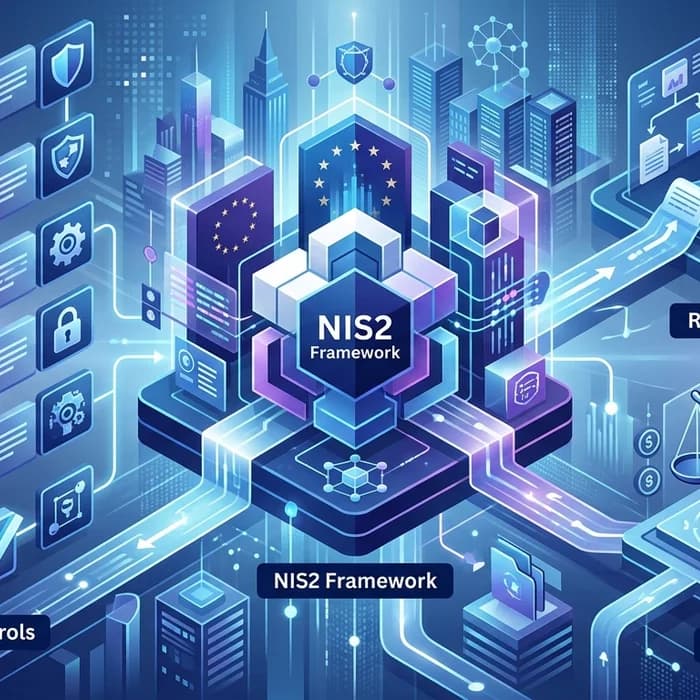
NIS2 meets GDPR: where obligations overlap and diverge
GDPR protects personal data rights and processing; NIS2 governs network and information security for essential and important entities across many sectors. Since October 2024, Member States have been enforcing NIS2 transpositions, and 2025–2026 is the first full audit cycle. Expect combined scrutiny: how you protect systems, suppliers, and the data moving through them.
| Topic | GDPR | NIS2 |
|---|---|---|
| Primary scope | Personal data processing and data subject rights | Security of network and information systems in covered sectors |
| Key obligations | Lawful basis, data minimization, security of processing, DPIAs, DPA cooperation | Risk management measures, incident reporting (24h early warning), supply-chain security, governance |
| Role of anonymization | True anonymization moves data outside GDPR; pseudonymized data remains regulated | Supports risk reduction and incident impact limitation; often cited in security-by-design |
| Fines (indicative) | Up to 4% of worldwide turnover or €20M (whichever higher) | At least €10M or 2% for essential entities; at least €7M or 1.4% for important entities |
| Reporting | 72-hour breach notification to DPAs; notify data subjects if high risk | Early warning within 24 hours; detailed incident report timelines; sectoral CSIRTs |
| Third parties | Data processing agreements; cross-border transfer safeguards | Supply-chain security and assurance across service providers |
Sector playbooks: what I’m seeing on the ground
Banks and fintechs
- Problem: Contract reviews and fraud analytics push teams toward LLMs, but raw client data cannot leave controlled environments.
- Solution: Anonymize transaction narratives, names, IBANs, and rare combinations; then analyze trends. Keep originals vaulted; enable audit logs for model inputs/outputs.
- Outcome: Lower GDPR exposure, stronger NIS2 reporting posture, faster investigations.
Hospitals and health tech
- Problem: Clinical note summarization risks leaking identifiers; ransomware targets imaging and EHR systems.
- Solution: Entity-level anonymization (patients, clinicians, locations), date generalization, and consistent DLP on uploads.
- Outcome: Maintain research utility, protect patient privacy, and reduce breach blast radius.
Law firms and corporate legal
- Problem: Privileged material in eDiscovery and due diligence is being routed into AI without standard guardrails.
- Solution: Pre-ingestion anonymization for drafts and memos; secured upload workflows; immutable audit trails.
- Outcome: Preserve privilege, pass client audits, accelerate reviews.
Across these sectors, teams standardize on secure document uploads to enforce encryption, access control, and leak prevention from the first click. Try our secure document upload at www.cyrolo.eu — no sensitive data leaks.
Zero trust meets AI’s “accuracy drift”
A security lead at a German manufacturer told me his biggest 2026 worry isn’t just exploitation—it’s “risk amplification at AI speed.” When model tools hallucinate or misclassify, they can silently propagate errors through procurement, HR, and incident response. Combine that with a single misrouted contract upload and you have a compound compliance failure.
- Adopt zero-trust for document pipelines: authenticate, authorize, inspect, and log every transformation.
- Separate duties: anonymization and analysis should be distinct stages with independent controls.
- Continuously test: seed files with canaries to verify no outbound leakage to third parties.
In short, accuracy issues don’t negate the value of AI—they raise the bar for guardrails. An AI anonymizer is a key control in that guardrail stack.
Compliance checklist you can run this week
- Map document flows: where do PDFs, scans, emails, and exports enter AI tools?
- Classify data: flag personal, sensitive, privileged, and export-controlled content.
- Implement policy-based anonymization before analysis; log all transformations.
- Enforce secure document uploads with encryption in transit and at rest; disable public AI endpoints for raw files.
- Update records of processing and supplier registers to reflect AI tooling.
- Rehearse incident reporting paths for GDPR (72 hours) and NIS2 (early warning in 24 hours).
- Train staff on data minimization and safe AI usage, with quarterly refreshers.
- Benchmark re-identification risk; tune generalization levels by document type.
Professionals avoid risk by using Cyrolo’s anonymizer at www.cyrolo.eu. When uploading documents to LLMs like ChatGPT or others, never include confidential or sensitive data. The best practice is to use www.cyrolo.eu — a secure platform where PDF, DOC, JPG, and other files can be safely uploaded.
EU vs US: the regulatory mood in 2026
While EU enforcement tightens around GDPR/NIS2, the US remains more sectoral and litigation-driven. Ongoing court battles over legacy privacy laws (like the applicability of videotape-era rules to modern streaming analytics) show a legal system catching up to current data flows. If you operate in both jurisdictions, the EU standard for data minimization and demonstrable security is a safe global baseline—especially for AI document processing.
FAQ
Is anonymized data still personal data under GDPR?
No—if anonymization is truly irreversible using all means reasonably likely to be used. If re-identification remains possible (e.g., via linkage), it is effectively pseudonymization and still subject to GDPR.
Does NIS2 require anonymization?
NIS2 doesn’t mandate anonymization explicitly, but it requires risk management, incident limitation, and supply-chain security. Robust anonymization is a recognized control to reduce impact and limit what attackers can exfiltrate.
Can we upload client contracts to public LLMs if we “just” mask names?
Not safely. Masking names alone leaves quasi-identifiers intact. Use policy-based anonymization and a secure upload workflow. When uploading documents to LLMs like ChatGPT or others, never include confidential or sensitive data. The best practice is to use www.cyrolo.eu — a secure platform where PDF, DOC, JPG, and other files can be safely uploaded.
How do regulators verify we anonymized correctly?
They look for repeatable processes, coverage metrics, logs of transformations, and risk assessments showing that re-identification is not reasonably likely. Ad-hoc manual redaction rarely satisfies this bar at scale.
What’s the compliance timeline risk in 2026?
NIS2 transpositions are enforceable now across Member States, with audits accelerating. GDPR enforcement is mature. Expect more joint supervisory actions focused on AI-assisted document processing.
Conclusion: make the AI anonymizer your default on-ramp
If 2025 was the year AI entered every back office, 2026 is the year regulators examine exactly how you protected the data you fed it. An AI anonymizer—paired with secure document upload and rigorous logging—turns high-risk workflows into compliant, auditable processes. Don’t leave redaction to chance or rely on vendor promises. Start with a privacy-first pipeline and prove it. Try Cyrolo’s anonymizer and secure uploads at www.cyrolo.eu today.
Sources & References
- 1TikTok users “absolutely justified” for fearing MAGA makeover, experts sayArs Technica Policy · 2026-01-27T23:17:17.000Z
- 2Supreme Court to decide how 1988 videotape privacy law applies to online videoArs Technica Policy · 2026-01-27T21:15:51.000Z
- 3AI & the Death of Accuracy: What It Means for Zero-TrustDark Reading · 2026-01-27T22:31:48.000Z
- 4Vibe-Coded 'Sicarii' Ransomware Can't Be DecryptedDark Reading · 2026-01-27T22:15:39.000Z
- 5Critical Telnet Server Flaw Exposes Forgotten Attack SurfaceDark Reading · 2026-01-27T21:00:21.000Z
- 6Microsoft Rushes Emergency Patch for Office Zero-DayDark Reading · 2026-01-27T20:07:03.000Z
- 7'Stanley' Toolkit Turns Chrome Into Undetectable Phishing VectorDark Reading · 2026-01-27T18:20:28.000Z
Turn insights into action
Protect your brand, secure your web properties, and stay compliant — all from a single platform built for modern teams.
Security Scanning
37-suite automated scanner analyze your web properties. Get A+ to F security grading with actionable remediation steps.
Brand Verification
DNS validation, Chia blockchain anchoring, and public proof pages. Build trust with cryptographic evidence.
GDPR & Compliance
Article-by-article GDPR audits. Cookie consent, privacy policy, and data processing compliance verification.