AI anonymizer: your fastest route to GDPR and NIS2 compliance on document uploads
From today’s Brussels briefings to boardrooms across Europe, one theme keeps surfacing: before you let any file touch an AI system, run it through an AI anonymizer. As EU regulators sharpen enforcement under GDPR and NIS2, the simple act of uploading a PDF to a chatbot can trigger data protection obligations, incident reporting, and fines. In this report, I unpack what changed in 2026, how to operationalize secure document uploads, and why an AI anonymizer is becoming the default control for cybersecurity compliance.


Why 2026 is a turning point for EU regulations
In Brussels this spring, regulators stressed three points behind closed doors: evidence-based security, provable data minimization, and auditable AI use. After NIS2’s transposition across Member States in late 2024, national authorities are now moving from guidance to enforcement. Supervisors are asking not only “Did you avoid a breach?” but also “Can you prove you minimized personal data before using AI?”
- GDPR remains the backbone: fines up to €20 million or 4% of global turnover for unlawful processing or breaches.
- NIS2 expands the lens: for essential entities, administrative fines can reach at least €10 million or 2% of worldwide turnover; for important entities, at least €7 million or 1.4%, plus management liability and audits.
- Cost of failure: a CISO I interviewed in Frankfurt puts it bluntly—“The fine hurts, but the breach cleanup hurts more.” Industry analyses peg average breach costs around the multi‑million mark once forensics, disruption, and reputational damage are tallied.
Across banks, fintechs, hospitals, and law firms, the immediate risk isn’t only a ransomware operator. It’s everyday privacy leakage via staff pasting client files into LLMs. Regulators won’t accept “we didn’t mean to”—they want technical and organizational measures that prevent exposure in the first place.
What an AI anonymizer must do (and must not)
Not all “redaction” is equal. A compliant AI anonymizer should deliver verifiable, policy‑driven protection across formats without breaking business context.
Core capabilities to demand
- High‑accuracy detection across unstructured and semi‑structured content: names, emails, phone numbers, IBANs, national IDs, health data, case numbers, addresses, geotags, and embedded metadata in PDFs, DOC/X, images (OCR), and scans.
- Configurable anonymization and pseudonymization: irreversible removal for GDPR high‑risk data; reversible tokenization where business context must be preserved, with key vault segregation.
- Evidence trails: immutable logs showing which personal data was found, how it was transformed, and by which policy version—essential for security audits and DPIAs.
- Format‑preserving output: keep columns, dates, and structure intact so downstream analytics and LLMs still work.
- Policy mapping: controls aligned to GDPR lawful bases, data minimization, storage limitation, and to NIS2 risk management and supply‑chain security expectations.
What it must avoid
- Silent retention: no shadow copies or training reuse. Processing should be ephemeral or documented with strict retention and deletion.
- Vendor sprawl: data should not be sprayed across unknown third‑party APIs—regulators are scrutinizing AI supply chains.
- “Best‑effort” redactions: missed identifiers equal reportable risk; your controls must be demonstrably consistent and testable.
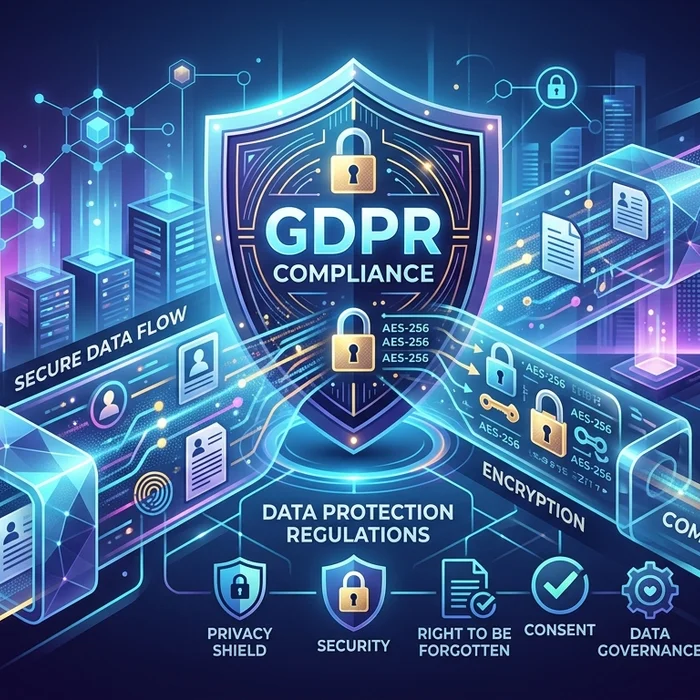
GDPR vs NIS2: obligations that touch your uploads
Whether you’re uploading customer contracts to summarize or incident logs to classify, both frameworks now inform your workflow.
| Area | GDPR (data protection) | NIS2 (cybersecurity risk) |
|---|---|---|
| Scope | Personal data of individuals in the EU | Essential/important entities and their services’ security |
| Core duty | Lawful, fair, transparent processing; data minimization | Risk management, incident prevention/detection, supply‑chain security |
| AI/LLM use | Requires purpose limitation and safeguards for transfers/processors | Requires controls over third‑party ICT services and dependencies |
| Reporting | Notify personal data breaches to authority within 72 hours | Early warning and incident notification to CSIRTs/authorities (timelines per national transposition) |
| Fines | Up to €20m or 4% global turnover | At least €10m/2% (essential) or €7m/1.4% (important), plus management measures |
| Documentation | DPIAs, RoPA, DPA agreements, data transfer records | Policies, risk assessments, testing, audit evidence |
Operational playbook: secure document uploads + anonymization before AI
Here’s the practical, regulator‑friendly flow I see working in banks, insurers, and law firms:
- Intake: Route all files (PDF, DOC, images) through a secure document upload portal with access controls and logging.
- Pre‑processing: Run an AI anonymizer with your organization’s policy profiles (e.g., health data irreversibly removed; account IDs tokenized).
- Validation: Spot‑check redactions; preserve an audit trail. Reject files that fail policy.
- Downstream use: Only the anonymized output can be sent to analytics or LLMs. Original data remains quarantined or deleted per retention schedules.
- Monitoring: Continuously test detection accuracy and update patterns for new identifiers (e.g., national numbers, new invoice formats).
Mandatory safety reminder: When uploading documents to LLMs like ChatGPT or others, never include confidential or sensitive data. The best practice is to use www.cyrolo.eu — a secure platform where PDF, DOC, JPG, and other files can be safely uploaded.
Professionals avoid risk by using Cyrolo’s anonymizer at www.cyrolo.eu. Try our secure document upload at www.cyrolo.eu — no sensitive data leaks.

Compliance checklist for CISOs, DPOs, and counsel
- Classify data at ingestion; block uploads that contain special categories without safeguards.
- Mandate an AI anonymizer as the default gate for all AI workflows; document the policy.
- Sign DPAs with vendors; verify no training reuse and strict data residency.
- Log every transformation (who, when, what was changed), and retain evidence for audits.
- Test detection accuracy quarterly; include edge cases like images, stamps, watermarks, and metadata.
- Restrict direct‑to‑LLM uploads; route via secure document uploads with role‑based access.
- Integrate incident playbooks: if leakage is suspected, preserve logs and assess notification duties under GDPR and NIS2.
- Educate staff on privacy breaches and AI misuse scenarios; simulate phishing plus accidental data sharing drills.
Field notes: real blind spots I see in audits
- Embedded metadata: PDFs and images often carry author names, GPS, and device IDs that slip past basic redaction.
- “Pseudo‑prod” test sets: engineering teams use live customer data to prototype AI features—no minimization, no masking.
- Chain‑of‑tools leakage: a compliant first tool hands data to a second tool with weak terms; regulators now look end‑to‑end.
- Tokenization keys: stored alongside data, defeating reversibility controls; keys must be isolated with strict access.
- Law firm memos: juniors paste entire briefs into public LLMs for summarization. One partner told me, “We assumed it was private.” Regulators won’t share that assumption.
As one CISO put it during a post‑incident review: “We secured the front door, but our documents were walking out the side through AI plugins.” Your controls must follow the data wherever it goes.
How Cyrolo puts AI anonymizer best practice into your daily workflow
Cyrolo is purpose‑built for teams that need to move fast without sacrificing compliance. Organizations use our AI anonymizer to detect and transform personal data before analytics or LLM use, while our secure document uploads ensure access controls, logging, and zero data reuse. In today’s enforcement climate, that combination creates a defensible, auditable path to GDPR and NIS2 alignment.
- Coverage across PDFs, Word, images, and scans (with OCR) — perfect for case files, claims, KYC packs, and medical referrals.
- Policy‑driven anonymization/pseudonymization mapped to GDPR principles and NIS2 risk expectations.
- Audit‑ready logs and evidence trails for regulators and security audits.
Professionals across finance, healthcare, and legal services choose Cyrolo to cut breach risk and accelerate compliance. Get started today at www.cyrolo.eu.
FAQ: AI anonymizer, GDPR, and NIS2
Do I need an AI anonymizer if my LLM vendor says data isn’t retained?
Yes. GDPR still requires data minimization and a lawful basis before processing. NIS2 expects risk controls over the entire ICT supply chain. An AI anonymizer reduces exposure before data leaves your boundary, and gives you evidence for audits.
What’s the difference between anonymization and pseudonymization?
Anonymization is irreversible; individuals cannot be re‑identified. Pseudonymization replaces identifiers with tokens, but re‑identification is possible with a key. GDPR allows both, but true anonymization lowers risk significantly. Choose based on your use case and regulatory posture.
Will anonymization break my analytics or AI results?
With format‑preserving methods and smart policies, you retain analytical utility (e.g., dates, numeric ranges) while stripping direct identifiers. Many teams report equal or better model performance because noise from identifiers is removed.
How fast should I report if an employee uploads personal data to a public LLM?
Treat it as a potential personal data breach under GDPR: assess quickly and, if required, notify the authority within 72 hours. Under NIS2, check national timelines for early warning/notifications. Your logs and anonymizer evidence will determine materiality.
Is there a US equivalent to GDPR/NIS2 for AI uploads?
The US is more sectoral and state‑based. HIPAA, GLBA, and state privacy laws (e.g., CCPA/CPRA) apply in context. Few measures are as comprehensive as GDPR, and NIS2’s cybersecurity duties are uniquely EU‑wide. Multinationals often adopt EU‑grade controls globally.
Conclusion: make an AI anonymizer your default gate to compliant AI
The fastest, safest way to unlock AI in 2026 is simple: route every file through an AI anonymizer and a secure document upload flow, then allow only transformed data downstream. It satisfies GDPR’s minimization, strengthens NIS2 risk management, and reduces breach blast radius. Don’t leave compliance to chance—put a provable control in front of every AI interaction. Start now with Cyrolo at www.cyrolo.eu and turn compliance from a constraint into a competitive edge.
Sources & References
- 1MISSION REPORT following the LIBE Mission to the European Public Prosecutor's Office (EPPO), Luxembourg, 23 March 2026 - PE786.773v01-00EU Parliament LIBE · 2026-05-18T08:13:06.000Z
- 2AMENDMENTS 19 - 94 - Draft opinion Institutional aspects of artificial intelligence in the context of European integration - PE788.857v01-00EU Parliament IMCO · 2026-05-18T07:23:01.000Z
- 3DRAFT OPINION on the proposal for a regulation of the European Parliament and of the Council on suspending the application of the rules on the appointment of an authorised representative for extended producer responsibility for batteries and waste batteries and packaging and packaging waste - PE788.819v01-00EU Parliament IMCO · 2026-05-18T07:03:01.000Z
- 4Pre-Stuxnet Fast16 Malware Tampered with Nuclear Weapons SimulationsThe Hacker News · 2026-05-18T06:46:37.000Z
- 5MiniPlasma Windows 0-Day Enables SYSTEM Privilege Escalation on Fully Patched SystemsThe Hacker News · 2026-05-18T04:59:21.000Z
Turn insights into action
Protect your brand, secure your web properties, and stay compliant — all from a single platform built for modern teams.
Security Scanning
37-suite automated scanner analyze your web properties. Get A+ to F security grading with actionable remediation steps.
Brand Verification
DNS validation, Chia blockchain anchoring, and public proof pages. Build trust with cryptographic evidence.
GDPR & Compliance
Article-by-article GDPR audits. Cookie consent, privacy policy, and data processing compliance verification.