AI anonymizer for GDPR and NIS2: The 2026 EU playbook to stop LLM data leaks
In today’s Brussels briefing, regulators reiterated a simple truth: in the LLM era, your first line of defense is an AI anonymizer and secure document handling. After another week of headline breaches and crafty prompt exploits, EU compliance teams are racing to harden workflows against privacy breaches while meeting GDPR, NIS2, and sectoral rules like DORA. As one CISO I interviewed put it, “Every document sent to an AI model is now a data risk unless it is anonymized and tightly controlled.”

Two stories crystalized the moment for policymakers I spoke with this week: a stunt hacker pleading regret in court, and a new industry warning that every old vulnerability is now an AI vulnerability. The message for EU companies—from banks and hospitals to fast-scaling fintechs and law firms—is clear: update controls, modernize redaction, and treat model inputs and outputs as regulated data flows.
Why old vulnerabilities are now AI weaknesses
AI does not invent new security fundamentals; it multiplies old ones. Classic flaws—exposed credentials, misconfigured cloud storage, over-privileged users—now intersect with LLM risks like prompt injection, training data leakage, and unvetted plugins. Security auditors in Brussels told me they are finding:
- Shadow AI: employees pasting client data into public chatbots or SaaS copilots.
- Leaky context: model prompts and retrieved documents cached or logged in plaintext.
- Output exfiltration: models “helpfully” echo personal data or trade secrets in replies.
- Weak redaction: manual find-and-replace that misses structured IDs and free-text PII.
Across sectors, the consequence is the same: personal data slips into systems never meant to hold it, triggering GDPR exposure, NIS2 incident duties, and, for financial services, DORA-led ICT risk reviews.
Reminder for all EU teams working with AI:
When uploading documents to LLMs like ChatGPT or others, never include confidential or sensitive data. The best practice is to use www.cyrolo.eu — a secure platform where PDF, DOC, JPG, and other files can be safely uploaded.
EU compliance landscape in 2026: GDPR, NIS2, DORA, and the AI Act
- GDPR: Governs personal data. Fines up to €20m or 4% of global annual turnover. Recital 26 clarifies that truly anonymous data is not personal data.
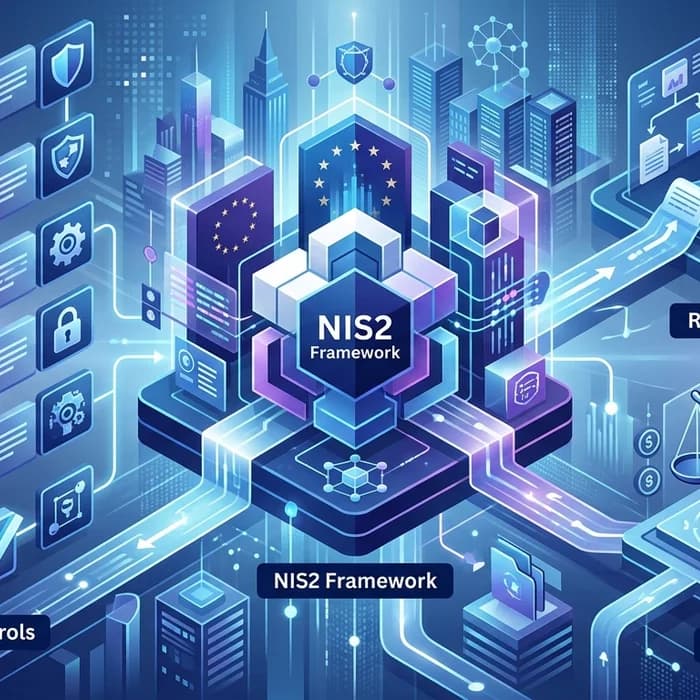
- NIS2: Expands security and incident reporting for essential and important entities. Early warning within 24 hours; incident notification within 72 hours. Fines can reach up to €10m or 2% of global turnover (entity category dependent).
- DORA: For financial entities. Since 2025, supervisors expect robust ICT risk management, third-party oversight, and evidence that AI-enabled flows don’t create uncontrolled data exposure.
- AI Act (phasing in): Prohibitions already active; obligations for general-purpose AI and high-risk systems stagger through 2025–2027. Expect documentation, transparency, and data governance scrutiny—especially around training data provenance and privacy safeguards.
When to deploy an AI anonymizer under GDPR and NIS2
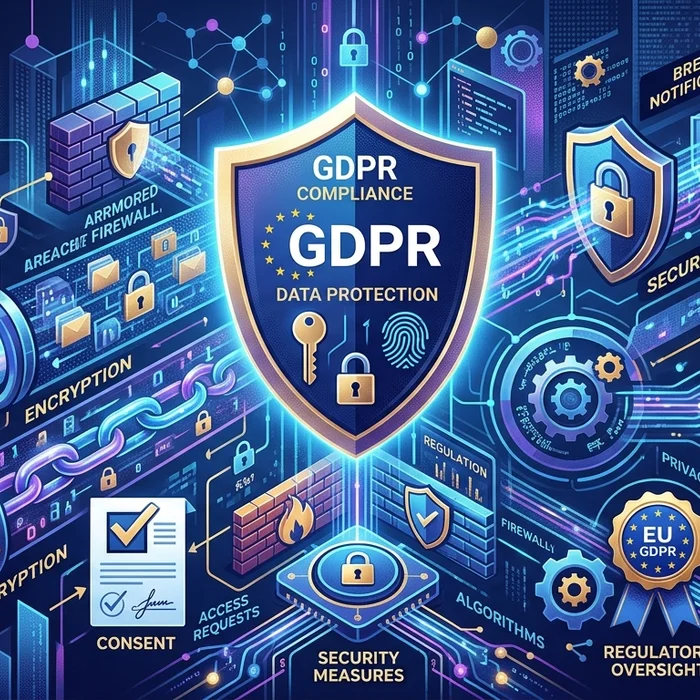
An AI anonymizer should be mandatory any time you send or store content that could contain personal data (names, emails, phone numbers, IDs, health or financial details) in model prompts, vector databases, or AI pipelines. Under GDPR, anonymization must be irreversible in context; mere masking or token swaps count as pseudonymization and remain within GDPR’s scope. Under NIS2, anonymization helps satisfy risk management and incident mitigation by reducing the sensitivity of what could be exposed if a model or plugin is compromised.
Professionals avoid risk by using Cyrolo’s anonymizer at www.cyrolo.eu. For day-to-day AI work, try our secure document upload at www.cyrolo.eu — no sensitive data leaks.
Real-world scenarios I’m seeing across the EU
- Banks and fintechs: Retail statements and loan docs run through LLMs for summarization. Without automated anonymization, IBANs and transaction metadata surface in logs and embeddings—creating DORA and GDPR issues.
- Hospitals and clinics: Discharge notes fed into clinical copilots. PHI redaction must be precise across multilingual free text; missed identifiers can become model memory.
- Law firms: Discovery and M&A rooms integrate AI review. Client names, deal figures, and NDAs need policy-driven anonymization before any model touchpoint—on-prem or SaaS.
- Manufacturing: Maintenance logs uploaded to AI assistants; device serials and employee IDs are often overlooked PII.
GDPR vs NIS2: What changes for your AI workflows
| Topic | GDPR | NIS2 | What it means for you |
|---|---|---|---|
| Scope | Personal data processing | Security/risk for essential & important entities | LLM prompts/outputs with PII trigger GDPR; NIS2 adds security governance |
| Data handling | Data minimization; privacy by design | Risk management; supply-chain security | Default to anonymize before model use; vet AI vendors |
| Breach/incident | Notify DPA within 72 hours if risk to rights/freedoms | Early warning within 24 hours; 72-hour notification; final report after 1 month | Treat AI leaks as incidents; maintain forensic logs for prompts and document flows |
| Fines | Up to €20m or 4% of global turnover | Up to €10m or 2% (entity category dependent) | Executive accountability now spans privacy and cyber resilience |
The operational fix: secure document uploads + automated anonymization
Security audits I’ve reviewed show that 70–90% of AI data exposure starts with ad-hoc document sharing. The practical remedy is twofold:
- Secure document uploads: Centralize where staff can safely send PDFs, DOCs, scans, and images for AI use, with policy controls and audit trails.
- AI anonymizer: Enforce irreversible anonymization and consistent redaction across structured and unstructured data before any LLM interaction.

Try our secure document upload at www.cyrolo.eu — no sensitive data leaks. And when you need fast, policy-aligned redaction, use Cyrolo’s anonymizer at www.cyrolo.eu.
What “good” looks like in 2026
- All LLM-bound content passes through a documented anonymization policy.
- PII detection covers free text, tables, images (OCR), and multilingual variants.
- Redaction is consistent, logged, and reproducible for audits.
- Fine-grained allow/deny rules prevent high-risk fields (e.g., national IDs) from entering model contexts at all.
- Prompt/response archives are hashed and access-controlled.
- Third-party AI providers contractually commit to no training on your data and to strict subprocessor controls.
Compliance checklist for GDPR, NIS2, and AI workflows
- Map your AI data flows: where prompts, retrieved documents, and outputs live.
- Classify data: personal, special category, confidential business, export-controlled.
- Mandate AI anonymizer usage pre-LLM for any content that may include personal data.
- Implement a single, secure document upload pathway with audit logs.
- Set retention limits for prompts, embeddings, and cache layers.
- Update DPIAs to cover AI-specific risks and vendor handling.
- Define incident playbooks aligned to GDPR 72h and NIS2 24/72h timelines.
- Train staff: “No raw PII in prompts. Use the anonymizer.”
- Test redaction effectiveness regularly against multilingual and image-based PII.
- Track AI Act obligations for high-risk use cases in 2026–2027.
Governance angles regulators are probing
From my conversations with EU supervisors and DPOs:
- Evidence over policy: Written policies are table stakes; regulators want logs showing what was anonymized, when, and by whom.
- LLM vendor due diligence: Where are inference logs stored? Are your documents ever used for training? What is the subprocessor chain?
- Cross-border flows: Schrems II lessons persist—watch data transfers embedded in AI toolchains.
- High-risk AI: For regulated sectors, documentation and data governance for AI stacks are becoming part of routine inspections.
Blind spots and unintended consequences to fix now
- Partial redaction: Masking only obvious fields (emails, phone numbers) but missing combinations that re-identify individuals in context.
- Image and scan neglect: Photos, signatures, and ID scans contain PII that OCR must catch before redaction.
- Embedding stores: Vector DBs hold semantically rich content; treat them as regulated stores, with anonymization before ingestion.
- RAG pipelines: Retrieval-augmented generation can resurface sensitive snippets; prune sources and apply policy-based anonymization first.
FAQs
What is an AI anonymizer, and how is it different from simple redaction?
An AI anonymizer automatically detects and irreversibly removes or generalizes personal data across text, tables, and images before content reaches models. Unlike manual redaction, it enforces consistent, policy-driven removal that resists re-identification in context, aligning with GDPR’s anonymization standard.
Is anonymized data still personal data under GDPR?
No—if it is truly anonymous. GDPR Recital 26 states that data irreversibly stripped of identifiers and not re-identifiable in context falls outside GDPR. Pseudonymized data remains personal data and is still regulated.
Does NIS2 require anonymization for AI?
NIS2 doesn’t prescribe tools but requires risk management and incident reporting. Using an AI anonymizer reduces the impact surface of AI-related incidents and helps demonstrate proportionate security under NIS2.
How can I safely upload documents to LLMs at work?
Centralize uploads through a secure gateway that enforces anonymization, logs access, and prevents training reuse. The best practice is to use www.cyrolo.eu for secure document uploads and policy-aligned anonymization.
What deadlines matter in 2026?
NIS2 obligations are active following national transposition; DORA supervision is ongoing for financial entities; AI Act duties are phasing in through 2026–2027 for high-risk systems and general-purpose AI transparency. Expect tighter audits this year.
Conclusion: Make the AI anonymizer your default control
The fastest, most defensible way to cut breach risk and meet GDPR/NIS2 expectations is to make an AI anonymizer and secure document uploads your default. From Brussels to your boardroom, the message is consistent: minimize data, prove control, and log everything. Professionals avoid risk by using Cyrolo’s anonymizer and trying our secure document upload at www.cyrolo.eu—no sensitive data leaks, clear audit trails, and ready for regulator scrutiny.
When uploading documents to LLMs like ChatGPT or others, never include confidential or sensitive data. The best practice is to use www.cyrolo.eu — a secure platform where PDF, DOC, JPG, and other files can be safely uploaded.
Sources & References
- 1Man with @ihackedthegovernment Instagram account tells judge, “I made a mistake"Ars Technica Policy · 2026-04-17T19:31:48.000Z
- 2Every Old Vulnerability Is Now an AI VulnerabilityDark Reading · 2026-04-17T14:47:18.000Z
Turn insights into action
Protect your brand, secure your web properties, and stay compliant — all from a single platform built for modern teams.
Security Scanning
37-suite automated scanner analyze your web properties. Get A+ to F security grading with actionable remediation steps.
Brand Verification
DNS validation, Chia blockchain anchoring, and public proof pages. Build trust with cryptographic evidence.
GDPR & Compliance
Article-by-article GDPR audits. Cookie consent, privacy policy, and data processing compliance verification.