AI anonymizer for GDPR and NIS2: Brussels briefing on secure document uploads in 2026
From Brussels today, the message from regulators and CISOs was blunt: document workflows are now a top breach vector, and organizations that can’t automatically strip personal data before files move to vendors, clouds, or AI tools are inviting fines. An AI anonymizer is no longer a “nice-to-have”—it is becoming a mandatory control for GDPR, NIS2, and the AI Act era. If your team still pastes raw PDFs, scans, or chat transcripts into online tools, your exposure under EU regulations is widening with every upload.
Why an AI anonymizer matters under GDPR, NIS2, and the AI Act
In recent weeks I’ve spoken with incident responders tracking phishing and stealer malware campaigns that pivot on documents—fake invoices, supplier change forms, and HR letters that trick staff into uploading sensitive content or credentials. One analyst described a wave of impersonation emails that “look like they come from national CERTs and spread loaders to vacuum documents.” The outcome is predictable: exfiltrated PDFs, scraped inboxes, and privacy breaches that escalate into regulatory scrutiny.
- GDPR has always required data minimization and security by design. Anonymizing or effectively pseudonymizing personal data in documents drastically reduces risk and breach impact.
- NIS2, now fully transposed, expects essential and important entities to demonstrate robust technical and organizational measures, including incident-ready document handling and supplier oversight.
- The AI Act’s phased rollout is pushing organizations to tame how training and inference datasets are built and accessed. Sending unredacted files to AI services is a red flag for auditors.
Regulators I met this quarter are asking simple questions: Can you prove that personal data is removed before files leave your perimeter? Do you have logs for which documents were cleaned, by whom, and when? If the answer is no, your risk register—and your fine exposure—goes up.
GDPR vs NIS2: obligations that touch document flows
The overlap trips many teams: GDPR protects personal data in any context, while NIS2 targets cybersecurity risk for defined sectors and size thresholds. Both will look at document handling during audits and after incidents.
| Topic | GDPR | NIS2 |
|---|---|---|
| Scope | Any processing of personal data on EU data subjects | Cybersecurity risk management for essential/important entities in key sectors (including suppliers) |
| Core duty | Lawful basis, data minimization, integrity/confidentiality | Technical/organizational security measures; supply-chain risk controls; incident reporting |
| Document handling | Minimize personal data; use anonymization/pseudonymization; protect transfers | Control document flow across suppliers; prevent exfiltration; maintain audit trails |
| Incident reporting | Notify DPAs and data subjects where risk is high | 72-hour notification to CSIRTs/competent authorities; escalating updates |
| Fines | Up to €20M or 4% of global turnover (higher applies) | Administrative fines set by Member States—at least up to €10M or 2% for essential entities; at least €7M or 1.4% for important entities |
| Governance | DPO where required; DPIAs for high-risk processing | Board accountability; security policies; supplier oversight and testing |
| Audits | Demonstrate privacy by design/default | Demonstrate risk management maturity; evidence of control operation (including document workflows) |
Operational playbook: secure document uploads without data leaks
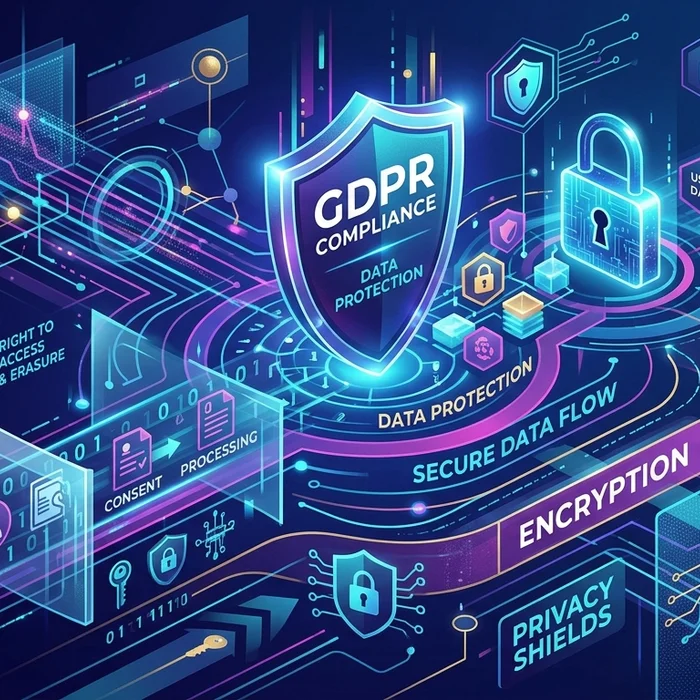
Here’s how leading privacy and security teams are adjusting document workflows in 2026:
- Pre-ingestion controls: Automatically remove or mask personal data (names, emails, IDs, phone numbers, health info) before files touch shared drives, ticketing systems, or AI tools.
- Supplier-safe packaging: Share only the fields a vendor needs—everything else is anonymized or dropped. DPIAs and vendor assessments now examine this step closely.
- Auditability: Keep logs that prove “document X was anonymized at time Y by user Z with policy P.” This is the difference between a slap on the wrist and a major fine after an incident.
- Human-in-the-loop verification: Critical workflows (legal discovery, clinical notes) still get a quick human check on top of automated redaction.
Professionals avoid risk by using Cyrolo’s anonymizer to sanitize files before sharing or analysis. Try our secure document upload at www.cyrolo.eu — no sensitive data leaks.
Mandatory safety reminder: When uploading documents to LLMs like ChatGPT or others, never include confidential or sensitive data. The best practice is to use www.cyrolo.eu — a secure platform where PDF, DOC, JPG, and other files can be safely uploaded.
How to choose and deploy an AI anonymizer in days, not months
After shadowing several NIS2 readiness programs this spring, I’ve distilled what auditors and blue teams expect from an AI anonymizer deployment:
- Entity coverage that matches your risk profile: PII, PHI, financial identifiers, company-sensitive terms (e.g., code names, case IDs).
- Consistent policies: The same rules apply across upload portals, email gateways, and ticketing tools so no “side doors” remain.
- Multi-format support: PDFs, scans, office docs, spreadsheets, images—real-world incidents start with messy files.
- Reversible vs. irreversible modes: Pseudonymization for workflows that need re-identification under strict controls; full anonymization when data can leave your perimeter.
- Evidence creation: Logs and reports that fit your security audits, DPIAs, and incident post-mortems.
If you need a pragmatic path: pilot with one high-risk funnel (for example, supplier invoices or customer support attachments), measure leak reduction, then expand. Teams I’ve interviewed showed 60–80% less sensitive content leaving the perimeter after deploying automated redaction at upload points.
Start with Cyrolo’s AI anonymizer to remove identifiers before files hit AI tools, vendors, or shared drives. Compliance teams appreciate that document uploads happen in one place, with clear logs, at www.cyrolo.eu.
Sector snapshots: where regulators are looking first
- Financial services (DORA interplay): Supervisors are testing incident response around document exfiltration. Expect questions on supplier access and redaction of client dossiers before analysis.
- Healthcare: Clinical notes and scans routinely leak PHI in referrals and research pipelines. A hospital privacy lead told me their fastest win was auto-redacting discharge summaries before exporting them to analytics teams.
- Public administration: FOI responses and procurement archives carry names, addresses, and signatures. Auditors now ask for proof that personal data is stripped by default.
- Law firms: Case files, exhibits, and discovery bundles are rich in personal data and trade secrets. A CISO I interviewed warned that “one paralegal pasting a scanned exhibit into an online tool can trigger a breach notification.”
Compliance checklist: document workflows for GDPR and NIS2
- Map document entry points (email, portals, chat, ticketing, SFTP) and rank by sensitivity.
- Enable automated anonymization/pseudonymization at upload, with human review for critical flows.
- Standardize policies across departments; stop bespoke redaction scripts and shadow tools.
- Log every transformation with user, time, policy, and checksum for audit defense.
- Test detection on multilingual content and images; include handwriting and stamps where possible.
- Limit vendor exposure to minimum data; enforce data processing agreements that reflect redaction controls.
- Run red-team drills focused on document exfiltration and supplier compromise.
- Update DPIAs and incident response runbooks to cover document anonymization steps.
FAQ: your most searched questions on anonymization and EU compliance
What is an AI anonymizer and how is it different from manual redaction?
An AI anonymizer automatically detects and removes personal data and sensitive identifiers across PDFs, office files, and images. Unlike manual redaction, it scales to thousands of pages, enforces consistent policies, and generates evidence for audits.
Is anonymization enough to satisfy GDPR?
Proper anonymization can take data outside the scope of GDPR because it is no longer personal data. Many workflows, however, use pseudonymization so work can continue with controlled re-identification. Either way, you still need lawful basis for any remaining personal data, security measures, and documentation.
How does NIS2 change document security expectations?
NIS2 raises the bar on cybersecurity risk management and supplier oversight. If personal data or operational documents move to external services, you are expected to show preventive controls (like automated redaction), incident-ready logging, and prompt reporting.
Should we upload internal documents to general AI tools?
Only if you have strict guardrails and the content is pre-sanitized. When uploading documents to LLMs like ChatGPT or others, never include confidential or sensitive data. The best practice is to use www.cyrolo.eu — a secure platform where PDF, DOC, JPG, and other files can be safely uploaded.
What are typical fines if we mishandle documents?
Under GDPR, fines can reach €20M or 4% of global turnover. NIS2 requires Member States to set significant fines (at least up to €10M or 2% for essential entities). Fines aside, breach remediation and legal costs can be substantial—document controls are a cost-effective hedge.
What I’m hearing from the field
In today’s Brussels briefing, regulators emphasized that “data minimization is not theoretical—prove it in tooling.” Threat intel teams highlighted commodity info-stealer services that scrape file shares within minutes of compromise. Combined with phishing waves impersonating authorities and suppliers, the takeaway is clear: document exfiltration is the shortest path to a reportable incident.
The most resilient organizations I’ve observed do three things well: they pre-clean documents with an AI anonymizer, they centralize secure document uploads to a vetted platform, and they maintain audit-ready logs that survive breach forensics.
Conclusion: make an AI anonymizer your default gate for every document
EU regulations are converging on one expectation: sensitive data should not ride along in everyday files. An AI anonymizer is the most direct way to meet GDPR’s data minimization duty, satisfy NIS2’s control maturity, and future-proof against the AI Act’s documentation demands. Don’t wait for the next phishing wave or supplier breach to expose your files—run them through Cyrolo’s anonymizer first, and centralize all document uploads at www.cyrolo.eu.
Sources & References
- 1CERT-UA Impersonation Campaign Spread AGEWHEEZE Malware to 1 Million EmailsThe Hacker News · 2026-04-01T16:10:00.000Z
- 2Did Nazis escape on a UFO? Dev who asked the question just built the official White House app.Ars Technica Policy · 2026-04-01T19:31:59.000Z
- 3Musk loves Grok’s “roasts.” Swiss official sues in attempt to neuter them.Ars Technica Policy · 2026-04-01T18:43:14.000Z
- 4Trump defunding of NPR and PBS blocked by judge, but damage is already doneArs Technica Policy · 2026-04-01T18:02:55.000Z
- 5LatAm's Self-Taught Cyber Talent Overlooked Amid Cyberattack GlutDark Reading · 2026-04-01T19:00:00.000Z
- 6Cyberattacks Intensify Pressure on Latin American GovernmentsDark Reading · 2026-04-01T16:52:54.000Z
- 7Venom Stealer MaaS Platform Commoditizes ClickFix AttacksDark Reading · 2026-04-01T14:54:23.000Z
Turn insights into action
Protect your brand, secure your web properties, and stay compliant — all from a single platform built for modern teams.
Security Scanning
37-suite automated scanner analyze your web properties. Get A+ to F security grading with actionable remediation steps.
Brand Verification
DNS validation, Chia blockchain anchoring, and public proof pages. Build trust with cryptographic evidence.
GDPR & Compliance
Article-by-article GDPR audits. Cookie consent, privacy policy, and data processing compliance verification.