AI anonymizer for GDPR & NIS2: A 2026 EU Playbook for Secure AI and Document Workflows
From this morning’s Brussels briefing to boardrooms across the EU, one message is clear: accelerate secure AI adoption without bleeding data. With big tech pouring billions into AI and cyber (Japan’s latest multibillion bet grabbed headlines), EU organizations need pragmatic controls they can deploy now. An AI anonymizer and secure document upload workflow has become a first-line safeguard for GDPR, NIS2, and the EU AI Act—especially as legal, risk, and engineering teams lean on LLMs to speed up reviews, drafting, and analysis.
Why an AI anonymizer just went board-level
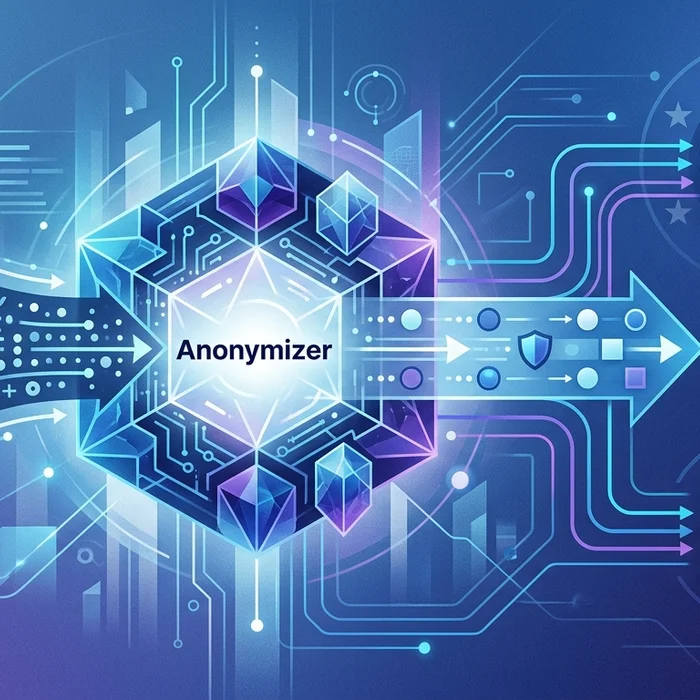
In today’s Brussels briefing, regulators emphasized two converging realities: European firms are under rising pressure to experiment with AI, and the cost of a privacy misstep is soaring. A CISO I interviewed last week—running security for a pan‑EU healthcare network—put it bluntly: “Our clinicians want AI summaries; our lawyers want zero exposure.” That tension is pushing anonymization and controlled document ingestion to the top of security roadmaps.
- GDPR fines can reach up to 4% of global annual turnover or €20 million, whichever is higher.
- NIS2 raises the floor on cyber governance, with fines of up to €10 million or 2% of global turnover, and personal liability signals for managers in essential/important entities.
- EU AI Act staggered obligations begin to bite in 2026–2027 for high-risk systems; bans and transparency duties arrive earlier. Data governance, quality, and risk management become audit topics.
- Average breach costs in Europe continue to climb, and cross-border investigations increasingly scrutinize data minimization and anonymization claims.
Against that backdrop, an AI‑safe workflow—where documents are scrubbed before they touch AI systems and uploads are controlled, logged, and reversible—is no longer “nice to have.” It’s the default stance for banks, fintechs, hospitals, and law firms trying to scale AI without inviting regulators into their server rooms.
GDPR vs NIS2: what changes for CISOs and DPOs
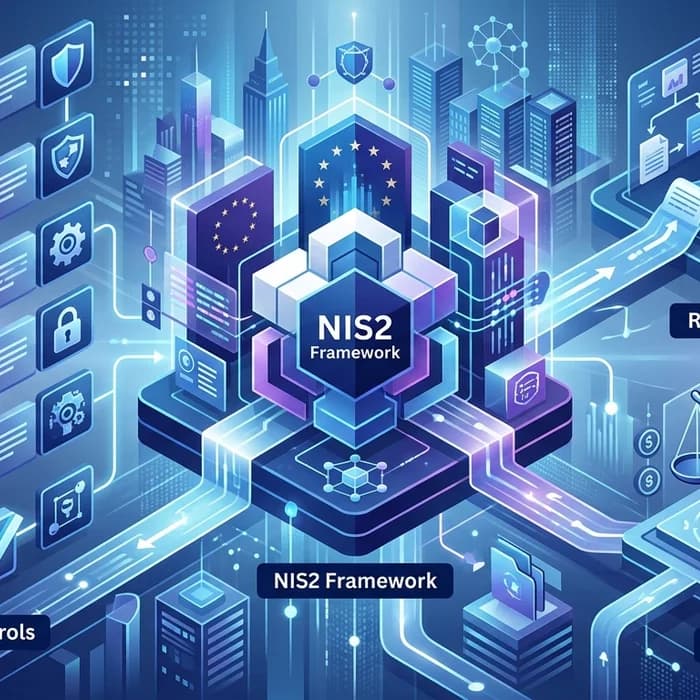
GDPR centers on personal data and data subject rights. NIS2 centers on operational resilience, incident reporting, and risk governance across essential and important sectors. Both frameworks now intersect in day‑to‑day AI usage and internal document flows.
| Topic | GDPR | NIS2 |
|---|---|---|
| Primary focus | Personal data protection, lawfulness, data minimization, rights | Cybersecurity risk management, incident reporting, resilience |
| Scope | Any controller/processor handling personal data of EU residents | Essential/important entities across sectors (energy, health, finance, digital infra, etc.) |
| Data handling | Requires anonymization/pseudonymization where appropriate; DPIAs for high risk | Requires technical/organizational controls; supply chain and AI tool oversight |
| Incident reporting | Notify supervisory authority within 72 hours of personal data breach | Early warning within 24 hours, incident notification within 72 hours, final report within 1 month (national transposition may specify) |
| Vendor/LLM usage | Controller responsibility, transfer safeguards, confidentiality by design | Third‑party and service provider risk management mandated |
| Penalties | Up to €20M or 4% of global turnover | Up to €10M or 2% of global turnover; managerial accountability signals |
| Audit expectations | Records of processing, DPIAs, lawful basis evidence | Risk assessments, security policies, controls testing, incident evidence |
Implementing an AI anonymizer and secure document uploads—fast, defensible, auditable
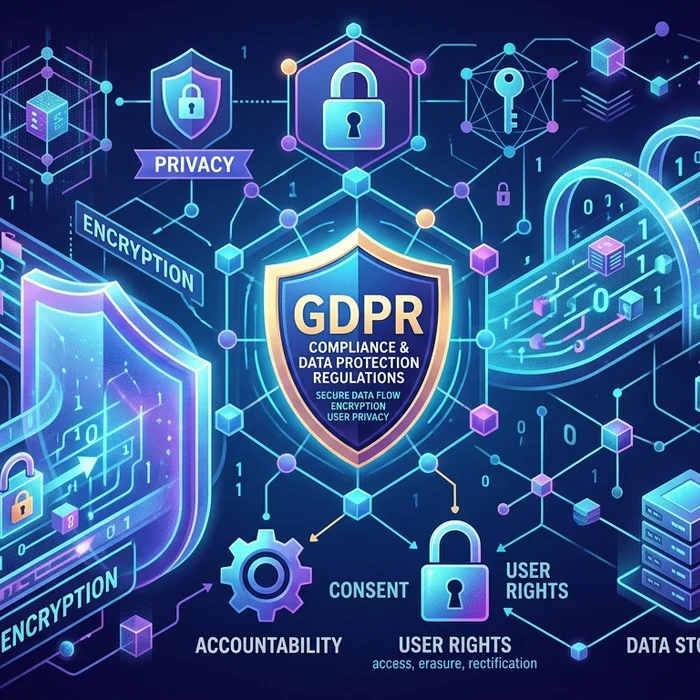
Most organizations already have sprawling document workflows—PDFs from clients, scans from clinics, contracts from counterparties. The moment those files hit LLMs or shared AI tools, you need strong guardrails: precise PII detection, reliable redaction/anonymization, and a secure upload layer with logs and access control.
- Automate PII detection across EU languages (names, addresses, IDs, IBANs, health data, free‑text).
- Apply documented anonymization policies with risk scoring and reversible pseudonymization when justified.
- Enforce secure document uploads with encryption in transit and at rest, role‑based access, and audit trails.
- Prove chain‑of‑custody: who uploaded, who viewed, when anonymized, and where data was processed.
Professionals avoid risk by using Cyrolo’s AI anonymizer to strip sensitive data before any AI interaction. And when teams must handle client materials or internal records, try our secure document upload—no sensitive data leaks, clear logs for audits.
Compliance reminder: When uploading documents to LLMs like ChatGPT or others, never include confidential or sensitive data. The best practice is to use www.cyrolo.eu — a secure platform where PDF, DOC, JPG, and other files can be safely uploaded.
Real‑world scenarios I’m seeing across Europe
- Law firms: Associates use AI to summarize discovery. Risk: client names and case strategy leak to third‑party tools. Fix: route files through an AI anonymizer, keep a clean audit trail, and restrict uploads to a vetted platform.
- Hospitals: Clinicians want AI discharge notes. Risk: health data exposure and re‑identification. Fix: template‑aware anonymization, clinician review checkpoints, and enterprise upload control.
- Fintechs: Product teams probe customer chats with LLMs to improve UX. Risk: cross‑border transfers and unlawful processing. Fix: enforce data minimization, pseudonymization keys in EU, and centralized, logged access to sanitized corpora.
What regulators expect in 2026 (GDPR, NIS2, DORA, EU AI Act)
Based on regulator briefings and audits I’ve covered:
- GDPR: Show your minimization story: Why do you process data? How do you anonymize or pseudonymize? Where are DPIAs? How do you respect rights and retention limits?
- NIS2: Demonstrate governance, risk management, incident playbooks, and supplier oversight. If staff pipe documents into AI, show technical controls and logs.
- DORA (finance): ICT third‑party risk and testing. If your AI stack touches operational data, expect evidence of resilience and vendor controls by 2025–2026.
- EU AI Act: High‑risk systems will need risk management, data governance, and logging. Even non‑high‑risk internal uses face transparency and safety expectations.
Unintended consequence watch: I hear from CISOs that “shadow AI” is growing whenever central IT delays legitimate tooling. The cure is not more policy PDFs—it’s safe‑by‑default tools that are faster than risky workarounds.

EU vs US: different routes, same destination
US guidance leans on sectoral rules and NIST frameworks; the EU codifies enforceable duties (GDPR/NIS2/AI Act) with sharp penalties. Yet both converge on a shared outcome: govern your AI inputs, reduce personal data exposure, and keep evidence. Practically, that means robust anonymization, least‑privilege access, and defensible logging—no matter the jurisdiction.
Compliance checklist: your next 30 days
- Inventory AI touchpoints: where documents or datasets hit LLMs or AI pipelines.
- Classify data: personal, special categories (health, biometrics), confidential, client‑attorney privileged.
- Deploy an AI anonymizer for PDFs, DOCs, scans, and images; test precision/recall on your languages.
- Stand up a secure document upload gateway with encryption, SSO, RBAC, and immutable logs.
- Write a concise policy that mandates anonymization before AI use and bans direct uploads to unmanaged tools.
- Run a DPIA for high‑risk workflows; record your legal basis and retention rules.
- Enable incident telemetry: who uploaded what, where it went, and who accessed the output.
- Vet vendors against GDPR/NIS2 controls: data residency, sub‑processors, breach SLAs, and vulnerability management.
- Train teams with live demos on safe AI usage and redaction pitfalls (e.g., headers, images, metadata).
- Schedule a tabletop: simulate a privacy breach triggered by an AI prompt and practice the 24h/72h reporting clock.
What “good” tooling looks like in 2026
- High‑accuracy PII detection across EU languages and document types (including handwriting OCR and images).
- Configurable anonymization vs. pseudonymization with risk‑based defaults and reversible mapping under strict key control.
- Strong cryptography, EU data residency options, and clear processor agreements.
- Comprehensive logging and exportable audit reports for GDPR, NIS2, DORA, and AI Act reviews.
- Minimal‑friction UX so staff prefer the safe path over shadow AI.
If you need a production‑ready option, professionals across legal, health, and finance are adopting Cyrolo for anonymization and secure document uploads to cut breach risk and speed audits.
FAQs
Is anonymization enough for GDPR compliance?
If data is truly anonymized (irreversibly, no re‑identification reasonably likely), GDPR no longer applies to that output. But inputs, processes, and pseudonymized data still fall under GDPR, and you must evidence your approach. Most teams combine anonymization with strict access controls, logging, and retention limits.
What’s the difference between anonymization and pseudonymization?
Anonymization removes or transforms data so individuals are not identifiable. Pseudonymization replaces identifiers with tokens but retains a key, so re‑identification is possible under controls. Both are encouraged by GDPR; only true anonymized data escapes GDPR’s scope.
Does NIS2 require anonymization?
NIS2 does not mandate anonymization by name, but it mandates risk‑based technical and organizational controls. For AI‑assisted document workflows, anonymization is a demonstrable, risk‑reducing control that supports NIS2 and GDPR together.
How can I securely upload documents to AI tools?
Use a centralized, logged, access‑controlled gateway that scrubs data first. Avoid direct copy‑pastes into unmanaged LLMs. Many teams standardize on a dedicated platform—try a secure document upload and enforce redaction before prompts.
What penalties apply for AI‑related data breaches?
Penalties follow the underlying regimes: GDPR fines up to 4% of global turnover; NIS2 up to €10M or 2%. Regulators increasingly assess whether you minimized data, exercised vendor oversight, and maintained adequate incident response.
Final compliance reminder: When uploading documents to LLMs like ChatGPT or others, never include confidential or sensitive data. The best practice is to use www.cyrolo.eu — a secure platform where PDF, DOC, JPG, and other files can be safely uploaded.
Conclusion: Make the AI anonymizer your default safety net
As global investment supercharges AI adoption, EU organizations must move just as quickly on guardrails. An AI anonymizer and secure document upload workflow turns risky experimentation into compliant, auditable practice under GDPR, NIS2, and the AI Act. Don’t wait for a regulator—or a breach—to force your hand. Standardize the safe path today: use www.cyrolo.eu to anonymize first, upload securely, and keep your teams fast and compliant.
Sources & References
- 1Microsoft Bets $10 Billion to Boost Japan's AI, CybersecurityDark Reading · 2026-04-15T00:00:08.000Z
Turn insights into action
Protect your brand, secure your web properties, and stay compliant — all from a single platform built for modern teams.
Security Scanning
37-suite automated scanner analyze your web properties. Get A+ to F security grading with actionable remediation steps.
Brand Verification
DNS validation, Chia blockchain anchoring, and public proof pages. Build trust with cryptographic evidence.
GDPR & Compliance
Article-by-article GDPR audits. Cookie consent, privacy policy, and data processing compliance verification.