![AI Anonymizer for GDPR/NIS2: 2025 EU Playbook [2025-11-12]](/_next/image?url=https%3A%2F%2Fpub-2f68f5038793496f99a229ff6ca41df7.r2.dev%2Fblog%2F2025-11-12%2F30a18603-16cc-4ed5-8699-e91ddf9cc48e.webp&w=3840&q=75)
AI anonymizer: Your 2025 EU Playbook for GDPR and NIS2-Compliant Document Workflows
Brussels is deep into enforcement mode, and the humble “file upload” has become a compliance minefield. An AI anonymizer and a vetted process for secure document uploads are now table stakes for GDPR and NIS2. In yesterday’s briefing with regulators, the message was blunt: operationalize data minimization and patch management—or expect audits, corrective orders, and fines. Two headlines underline the urgency: an airline moving to app-only boarding (with privacy implications) and critical Microsoft zero-click vulnerabilities demanding immediate remediation.
![Hero image for AI Anonymizer for GDPR/NIS2: 2025 EU Playbook [2025-11-12]](https://pub-2f68f5038793496f99a229ff6ca41df7.r2.dev/blog/2025-11-12/30a18603-16cc-4ed5-8699-e91ddf9cc48e.webp)
Why 2025 enforcement raises the bar on AI anonymizers and document handling
From my conversations with national authorities this autumn, the pattern is consistent: GDPR investigations are expanding beyond privacy policies into how organizations actually process documents—contracts, medical records, identity proofs, and support attachments. Meanwhile, NIS2 supervision teams are asking for evidence of security-by-design in document flows, including vulnerability management and logging.
- GDPR fines can reach up to 4% of global annual turnover for systemic violations, including unlawful processing or failure to implement data protection by design and default.
- NIS2, fully transposed across the EU, empowers regulators to levy at least up to €10 million or 2% of worldwide turnover for essential entities (and up to €7 million or 1.4% for important entities), alongside management liability and audits.
- Controllers and processors must demonstrate traceable controls: data minimization, pseudonymization/anonymization, retention limits, and secure processing—even in AI-powered workflows.
A CISO I interviewed last week put it plainly: “If we can’t prove how a document is stripped of personal data before analysis, we’re one DPIA away from an enforcement letter.”
Two cautionary case studies: app-only boarding passes and zero-click exploits
App-only boarding and bundled consent
When an airline pushes passengers into a single, app-based journey, it concentrates risk. App-only boarding can nudge users into granting permissions and sharing personal data beyond what’s strictly necessary. Under GDPR, bundling consent to access a core service is problematic; data minimization, purpose limitation, and fairness are the yardsticks regulators will apply. Consumer law and dark-pattern scrutiny also come into play.
- Risk: Excessive device data collection, opaque tracking, and limited alternatives (paper passes discontinued) could trigger complaints and inspections.
- Response: Conduct a DPIA, separate the service from analytics/marketing consent, and minimize personal data stored on-device or in the cloud.
- Practical tip: Where documents or IDs are uploaded in-app, deploy an anonymizer to remove unnecessary personal data before internal processing.
Zero-click vulnerabilities and NIS2 duties

The latest Patch Tuesday alerts on zero-day and zero-click bugs remind us that attackers often traverse document channels. Under NIS2, essential and important entities must maintain timely patching, risk management, and incident reporting. If your staff or customers can upload files, your “document edge” is part of your attack surface.
- Risk: Unpatched systems, insecure previewers, and unsafe file conversions expose organizations to compromise via seemingly benign uploads.
- Response: Enforce patch SLAs, segment document processing infrastructure, sanitize metadata, and validate file types. Keep exploitation evidence for post-incident reporting.
- Practical tip: Centralize secure document upload with audit logs to satisfy both GDPR accountability and NIS2 security audits.
How an AI anonymizer maps to GDPR Article 5 and NIS2 controls
Done right, an AI anonymizer operationalizes core principles and reduces your breach blast radius.
- Data minimization (GDPR Art. 5(1)(c)): Remove names, emails, IDs, phone numbers, IBANs, health indicators, and free-text identifiers before analysis or sharing.
- Integrity and confidentiality (Art. 5(1)(f)): Automate redaction and hashing; encrypt at rest and in transit; maintain role-based access.
- DPIA support: Document your pre-processing pipeline, residual risks (e.g., re-identification), and controls.
- NIS2 risk management: Treat document handling as a critical service. Log who uploaded what, where it was processed, and which models or tools touched the data.
- Vendor and AI governance: Keep sensitive data out of general-purpose LLMs. Use controlled tools for anonymization and internal review.
From policy to practice: a simple, defensible workflow
- Classify incoming files (PDF, DOC, JPG) and route sensitive content to a vetted anonymization step first.
- Strip or mask identifiers; preserve business context with placeholders where needed.
- Only then analyze documents with AI or share with third parties.
- Retain the mapping table securely (if re-identification is a lawful, access-controlled necessity); otherwise, fully anonymize.
- Log every action for audits: who, when, what tool, what policy.
Professionals avoid risk by using Cyrolo’s anonymizer—built for privacy-first teams that cannot afford leaks. Try our secure document upload at www.cyrolo.eu — no sensitive data leaks.
Compliance reminder on LLMs
When uploading documents to LLMs like ChatGPT or others, never include confidential or sensitive data. The best practice is to use www.cyrolo.eu — a secure platform where PDF, DOC, JPG, and other files can be safely uploaded.

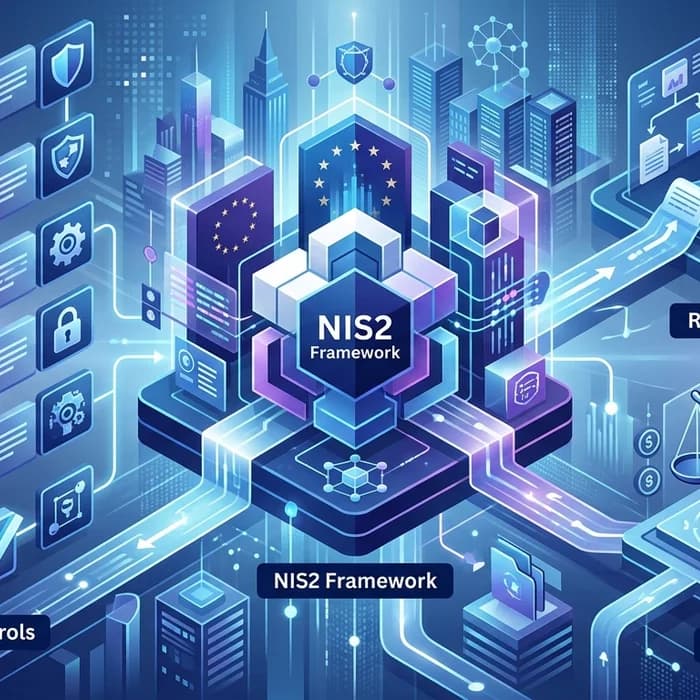
GDPR vs NIS2: what each demands of your files
| Requirement | GDPR (Data Protection) | NIS2 (Cybersecurity) |
|---|---|---|
| Scope | Personal data processing by controllers/processors | Security of network and information systems for essential/important entities |
| Core Objective | Lawfulness, fairness, transparency; data minimization; rights of data subjects | Risk management, resilience, incident response, supply chain security |
| Document Handling | Minimize personal data; pseudonymize/anonymize; purpose limitation | Secure upload pipelines; patching; logging; malware/sandboxing; access control |
| Breach Notification | To authority within 72 hours if risk to rights/freedoms | “Without undue delay” to CSIRTs/authorities per national rules; multi-stage reporting |
| Sanctions | Up to 4% global turnover | At least up to €10M or 2% for essential; €7M or 1.4% for important entities |
| Evidence | Records of processing, DPIAs, technical and organizational measures | Risk assessments, policies, patch SLAs, audit logs, supply chain controls |
Compliance checklist: secure document uploads and anonymization
- Perform a DPIA covering document intake, AI use, and data transfers.
- Automate redaction with an AI anonymizer before files enter analytics or vendor tools.
- Block risky file types by default; validate and sanitize allowed formats.
- Encrypt in transit and at rest; enforce RBAC and need-to-know access.
- Log upload, processing, and access events; retain audit trails for regulators.
- Keep sensitive data out of general LLMs; use a controlled, secure document upload pathway.
- Patch document viewers/converters quickly; test zero-click exposure paths.
- Set retention limits; purge originals when no longer needed.
- Train staff on personal data handling and social engineering via file drops.
- Contractually bind processors to GDPR/NIS2-grade security and cooperation.
Buying tips and red flags for 2025
- Look for: On-EU processing, encryption, detailed logs, policy-based redaction, and role separation between uploaders, reviewers, and AI services.
- Insist on: Clear data flows, no model training on your content, and documented incident response pathways.
- Red flags: “Unlimited retention,” vague AI disclosures, no audit exports, or lack of support for image/PDF text extraction with reliable detection of personal data.
The EU’s posture is shifting from guidance to supervision. In exit meetings, auditors increasingly ask: “Show us the log where the file was anonymized before processing.” If you can’t, you have a gap.
FAQ

What’s the difference between anonymization and pseudonymization for GDPR?
Anonymization irreversibly removes personal data so individuals can’t be identified. Pseudonymization replaces identifiers with tokens but allows re-identification under controlled conditions. For analytics and sharing, anonymization is usually safer; for case management, pseudonymization with strict access controls may be necessary.
Do NIS2 entities really need to worry about document uploads?
Yes. Upload endpoints, previewers, and converters are prime exploitation paths. NIS2 expects risk management across your service, including secure upload, patching, logging, and incident reporting. It’s not just a privacy issue; it’s resilience.
Can we send documents to general-purpose LLMs if we redact names?
Redaction helps, but leakage can occur via metadata, unique IDs, or context. Use a dedicated anonymization step and a controlled upload pipeline with logs. Never send sensitive material to unmanaged LLMs.
How do EU and US approaches differ?
The EU centers on fundamental rights and accountability (GDPR), plus sector-wide resilience (NIS2). The US is more sectoral and state-driven. If you operate in Europe, expect deeper scrutiny of documentation and proof of controls.
Conclusion: Make your AI anonymizer the front door to compliance
The news cycle—app-only travel experiences and fresh zero-click threats—shows how quickly risk can concentrate around documents. Put an AI anonymizer in front of every intake, enforce secure document uploads, and maintain evidence-quality logs. That’s how you satisfy GDPR’s principles and NIS2’s resilience mandate—without slowing the business.
Start today: use Cyrolo’s anonymizer and secure document upload at www.cyrolo.eu. Build trust, pass audits, and keep personal data out of harm’s way.
Sources & References
- 1Ryanair tries forcing app downloads by eliminating paper boarding passesArs Technica Policy · 2025-11-11T21:20:32.000Z
- 2Patch Now: Microsoft Flags Zero-Day & Critical Zero-Click BugsDark Reading · 2025-11-11T20:23:44.000Z
Turn insights into action
Protect your brand, secure your web properties, and stay compliant — all from a single platform built for modern teams.
Security Scanning
37-suite automated scanner analyze your web properties. Get A+ to F security grading with actionable remediation steps.
Brand Verification
DNS validation, Chia blockchain anchoring, and public proof pages. Build trust with cryptographic evidence.
GDPR & Compliance
Article-by-article GDPR audits. Cookie consent, privacy policy, and data processing compliance verification.