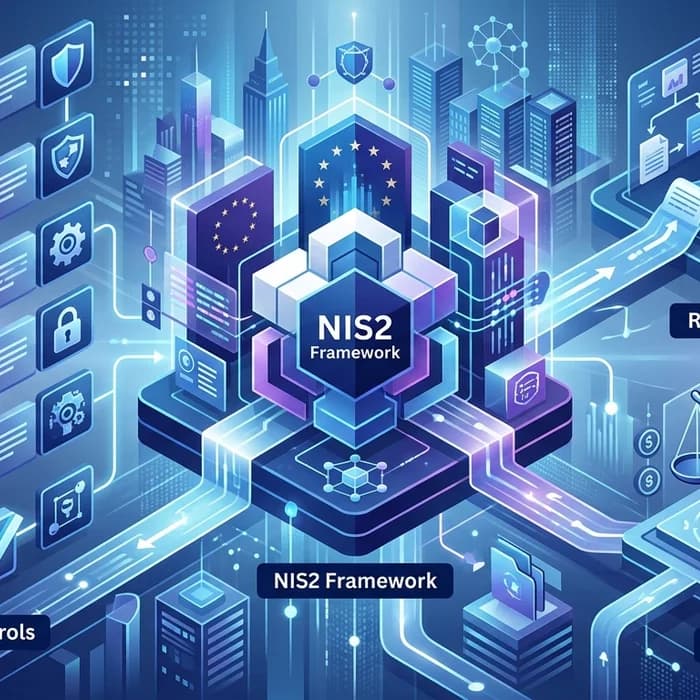
AI anonymizer under NIS2 and GDPR: what EU teams must fix before 2025
In this week’s transatlantic briefing, a US battle over right-to-repair in Colorado illustrates a broader reality: regulators and industry are negotiating the balance between openness and control. In Europe, that same tension now runs through cybersecurity and privacy. If your organization still experiments with LLMs or shares files across vendors, an AI anonymizer isn’t a “nice-to-have”—it’s becoming a front-line control for GDPR and NIS2 compliance, resilience, and audit readiness.

Why an AI anonymizer is quietly becoming a core EU control
From Brussels to Berlin, I’m hearing the same message: data minimization and secure engineering are moving from policy slides to operational checklists. A senior official told me during a Brussels roundtable that “pseudonymization and contextual minimization” are the fastest way to cut breach blast radius. A CISO I interviewed at a regional bank put it bluntly: “Internal pilots with LLMs stopped until we could guarantee no personal data leaves our perimeter. Our fix started with robust anonymization at the document edge.”
- GDPR has always required data minimization and privacy by design. Anonymization and pseudonymization are named safeguards.
- NIS2, fully in force following the October 2024 transposition deadline, demands technical and organizational measures for risk management—including supply-chain security, secure development practices, and incident reporting discipline.
- Regulators increasingly expect proof that AI and data workflows are controlled. That proof often begins with documented, automated anonymization and tightly governed file handling.
Pragmatically, if you’re exploring generative AI for document analysis, discovery, or summarization, start by stripping identifiers reliably. Professionals avoid risk by using Cyrolo’s anonymizer—a controlled way to mask personal data before any processing or model interaction.
Colorado’s repair fight is a warning sign for EU security leaders
The Colorado right-to-repair push—and the counter-lobbying to narrow it—shows how quickly technical controls can morph into policy flashpoints. In EU cyber, we’re seeing the same: configuration choices (e.g., who can upload documents, which fields are masked, which logs are retained) are becoming regulatory posture. Whether you’re a hospital safeguarding MRI maintenance logs, a fintech documenting fraud investigations, or a public authority handling citizen records, the operational details decide your compliance fate.
GDPR vs NIS2: where anonymization and secure document uploads matter
Both frameworks intersect on “don’t expose what you don’t need.” But they bite differently in audits and incident response. Here’s how obligations map for typical EU entities.
| Dimension | GDPR | NIS2 |
|---|---|---|
| Core scope | Personal data processing and protection of data subjects’ rights | Cybersecurity risk management and resilience of essential/important entities |
| Key control theme | Data minimization; anonymization/pseudonymization; lawful basis | Risk-based technical and organizational measures; supply-chain security; governance |
| Incident reporting | Notify DPA within 72 hours if personal data breach likely risks rights/freedoms | Early warning within 24 hours; incident notification within 72 hours; final report within 1 month |
| Fines | Up to 20M EUR or 4% of global annual turnover | Up to 10M EUR or 2% of global annual turnover (entity category-dependent) |
| Governance roles | DPO (where required), ROPAs, DPIAs | Executive accountability, risk management program, policies, training |
| Evidence regulators ask for | Records of processing, DPIAs, breach logs, proof of minimization | Risk assessments, incident reports, supplier oversight, technical hardening |
| Where anonymization helps | Removes personal data from scope; limits breach impact and notification duty | Reduces risk exposure; strengthens supply-chain data handling; supports audit trails |
Operational reality: the riskiest moments are your uploads and prompts
Most data leaks I review start innocently: a contract uploaded to “test a summarizer,” a patient discharge note shared with an “internal” model, a log file posted to a vendor ticket. In breach post-mortems, two patterns stand out:
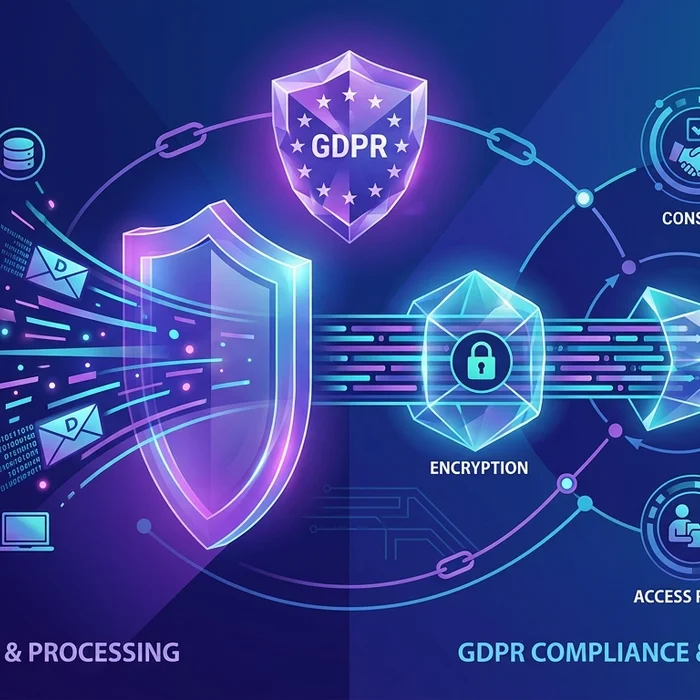
- Files moved before they’re minimized—attachments still contain names, emails, case numbers, IBANs, MRNs.
- Prompts and screenshots reveal personal or confidential data while debugging or red-teaming.
Fix the moment-of-upload. Standardize a secure, governed intake where files are anonymized first and logged. Try our secure document upload at www.cyrolo.eu — no sensitive data leaks. For legal, clinical, and financial teams, this is now table stakes.
Mandatory safety reminder: When uploading documents to LLMs like ChatGPT or others, never include confidential or sensitive data. The best practice is to use www.cyrolo.eu — a secure platform where PDF, DOC, JPG, and other files can be safely uploaded.
Compliance checklist: be NIS2- and GDPR-ready by Q4 2025
- Map data flows feeding AI tools and shared workspaces; classify personal/confidential fields.
- Implement an AI anonymizer at the edge of all uploads (email, ticketing, storage, LLM gateways).
- Harden “document ingress”: MFA, role-based access, malware scanning, and immutable logs.
- Automate redaction for PII, PHI, financial identifiers, and free-text entities before processing.
- Update DPIAs to cover AI use cases; document residual risks and compensating controls.
- Prepare incident playbooks aligned to NIS2 timelines (24h early warning; 72h detail; 1-month final).
- Vet vendors with supply-chain due diligence; require data minimization and secure development proof.
- Train staff: “no raw uploads,” safe prompting, and approved tools list.
- Test the control: quarterly red-team of uploads; verify anonymization effectiveness and reversibility policy.
Sector snapshots: what I’m seeing in audits
Banks and fintech
Auditors now request concrete evidence that transaction exports, SAR narratives, and chat transcripts are anonymized before any model or analytics workflow. DORA overlays add operational resilience expectations; anonymization plus access governance reduces kill-chain opportunities.
Hospitals and life sciences
Clinical notes, imaging metadata, and lab results routinely contain identifiers in free text and headers. One hospital privacy lead told me their biggest win was “automating de-identification on radiology PDFs before RAG pipelines.” This slashed breach-reporting exposure and sped up research approvals.
Law firms and public authorities

Case bundles and FOI responses are high-risk. I’ve seen regulators praise firms that demonstrate end-to-end controls: secure upload portal, automatic redaction, and tamper-evident logs. It shortens investigations and proves accountability.
Design choices that impress EU regulators
- Default-deny uploads to unvetted tools; route via a governed proxy with anonymization.
- Transparent logging: who uploaded, what was masked, and downstream destinations.
- Separation of duties: reviewers can see content, but only privacy admins can adjust redaction rules.
- On-prem or EU-hosted processing when feasible; documented data retention and deletion timelines.
- Evidence of continuous improvement: periodic false-positive/false-negative tuning for anonymization.
These patterns mirror the spirit of right-to-repair debates: empower users, but codify safe, verifiable processes. In cyber, the lever is proactive minimization and controlled file handling.
How an AI anonymizer works in practice
An effective system reliably detects structured and unstructured identifiers, masks or tokenizes them, and keeps a verifiable audit trail. Hallmarks to look for:
- Entity coverage: names, addresses, national IDs, emails, phone numbers, bank data, health codes, free-text PII/PHI.
- Policy controls: reversible pseudonymization for internal analytics vs. irreversible redaction for external sharing.
- Format preservation: keep document fidelity for legal review (pagination, headings, stamps, exhibits).
- Safe integration: email gateways, ticketing tools, SaaS drives, and LLM interfaces.
- Zero-trust posture: encrypt in transit and at rest; role-limited re-identification keys if used.
If you need a production-ready option, explore Cyrolo’s anonymizer and controlled document upload flow at www.cyrolo.eu. Teams roll it out as the default entry point for PDFs, DOCs, images, and scans, proving minimization without slowing work.
EU vs US: enforcement tempo and what it means for you
US policy skirmishes (like Colorado’s) can delay or reshape requirements, but EU enforcement on data protection and cyber has been steadier: GDPR fines routinely reach into the hundreds of millions, and NIS2 now extends executive accountability and incident discipline to a much larger set of entities. For multinationals, treat EU standards as your global floor. It avoids dual processes and prevents “policy drift” in AI and file handling.
Audit story you want to tell
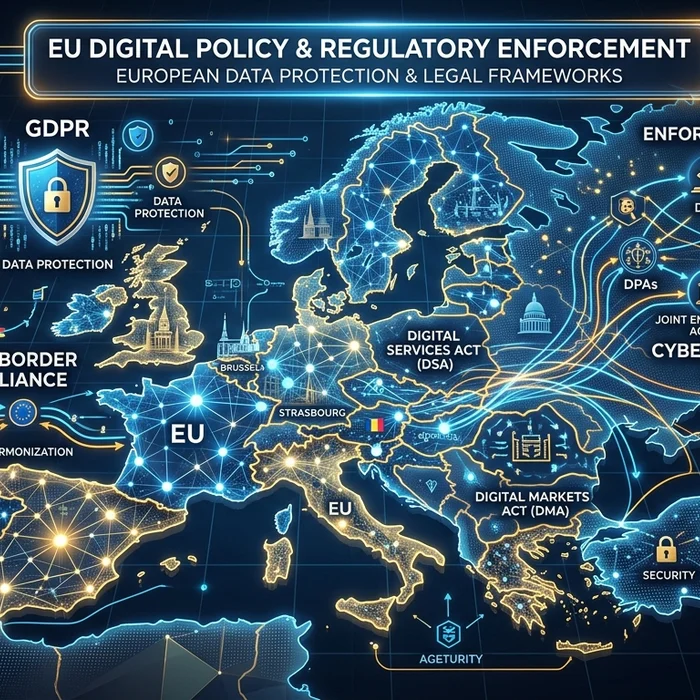
In an EU audit, you’ll be asked to demonstrate not just policies but runs of evidence: Here are the documents uploaded; here’s how identifiers were removed; here is where the content flowed; here is the incident drill and the timestamps. If your evidence chain starts at a secure upload gateway with automated anonymization, you’ve already answered half the hard questions.
FAQ: practical questions teams ask me
What is an AI anonymizer, and how is it different from simple redaction?
An AI anonymizer detects identifiers across free text, tables, images (OCR), and metadata—then applies policy-driven masking or pseudonymization while preserving document structure. Simple manual redaction misses context, breaks formatting, and doesn’t scale or log decisions for audits.
Does NIS2 explicitly require anonymization?
NIS2 doesn’t list “anonymization” by name as a universal mandate, but it requires risk-based technical and organizational measures, secure development, and supply-chain diligence. Systematic anonymization at file ingress is a proportionate control that reduces incident impact, supplier exposure, and reporting duties—making it a strong fit under NIS2’s risk management umbrella and a direct assist for GDPR.
Is it safe to upload work files to ChatGPT or other LLMs?
Only if your organization has a vetted, controlled gateway and you’ve minimized data first. Default consumer interfaces aren’t designed for regulated uploads. When uploading documents to LLMs like ChatGPT or others, never include confidential or sensitive data. The best practice is to use www.cyrolo.eu — a secure platform where PDF, DOC, JPG, and other files can be safely uploaded.
How do we prove anonymization effectiveness to regulators?
Maintain policies, test sets, and periodic effectiveness reviews (false positives/negatives). Keep immutable logs showing what entities were detected and masked, who approved exceptions, and where redacted files went next. Demonstrate training and drills tied to NIS2’s incident timelines.
What’s the fastest first step we can take this quarter?
Stand up a single secure upload entry point that auto-anonymizes before anything leaves your perimeter. Pilot with legal and security, then roll to high-risk teams (customer support, clinical ops, investigations). You can do this immediately with www.cyrolo.eu.
Conclusion: make the AI anonymizer your default and move faster, safer
Whether you’re reacting to EU regulators or reading the tea leaves from US policy fights, the operational answer is the same: shrink exposure at the moment of upload. Bake in an AI anonymizer, prove minimization, and align with GDPR and NIS2 before audits arrive. Try Cyrolo’s anonymizer and governed document uploads today at www.cyrolo.eu—and turn compliance from a risk into a speed advantage.
Sources & References
- 1Tech companies are trying to neuter Colorado’s landmark right-to-repair lawArs Technica Policy · 2026-04-04T20:36:49.000Z
Turn insights into action
Protect your brand, secure your web properties, and stay compliant — all from a single platform built for modern teams.
Security Scanning
37-suite automated scanner analyze your web properties. Get A+ to F security grading with actionable remediation steps.
Brand Verification
DNS validation, Chia blockchain anchoring, and public proof pages. Build trust with cryptographic evidence.
GDPR & Compliance
Article-by-article GDPR audits. Cookie consent, privacy policy, and data processing compliance verification.