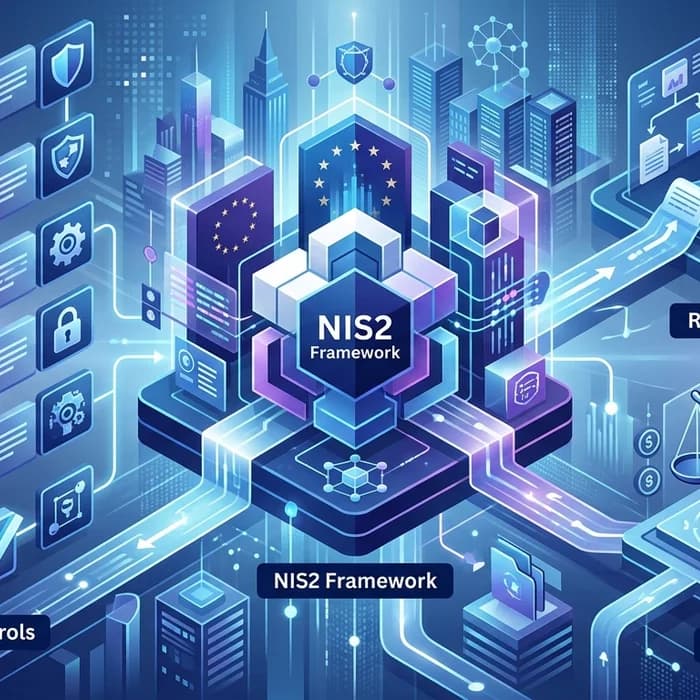
NIS2 Cybersecurity Compliance: What Android’s Rust Pivot Teaches EU CISOs
Android just crossed an important threshold: memory safety bugs reportedly fell below 20% for the first time, thanks to wider Rust adoption in critical components. That headline is more than an engineering milestone—it’s a blueprint for NIS2 cybersecurity compliance in 2025. In Brussels this morning, regulators again underscored “state-of-the-art” secure development as a baseline, not a bonus. For CISOs juggling EU regulations, GDPR, and data protection obligations, the lesson is simple: memory safety and secure SDLC evidence now sit at the heart of cybersecurity compliance—and the audit trail must prove it.

Why the Android memory safety milestone matters for EU regulators
When a platform as vast as Android shows memory safety issues dipping below 20%, it validates a decade of warnings: most catastrophic exploits trace back to memory-unsafe code paths. In interviews this quarter, a CISO at a pan-EU fintech told me bluntly: “Every serious incident review we run ends the same way—unsafe language bugs or third-party libraries we couldn’t patch fast enough.”
EU regulators are watching the same trendlines. Under NIS2, “state-of-the-art” risk management measures explicitly include secure development practices, vulnerability handling, and supply-chain hardening. If big ecosystems can meaningfully suppress entire classes of bugs by moving to safer languages, boards will be asked why their own development policies lag behind. Expect this to surface in security audits and supervisory questions throughout 2025.
NIS2 cybersecurity compliance in 2025: where audits focus
- Secure software development lifecycle (SDLC) with measurable controls and code hygiene.
- Vulnerability management across suppliers; demonstrable SBOM usage and patch SLAs.
- Incident reporting: early warning within 24 hours, full notification within 72 hours, and a final report within one month.
- Management accountability: board-level oversight, training, and potential sanctions for persistent non-compliance.
- Data protection alignment: GDPR still governs personal data, privacy breaches, and security of processing.
For essential entities, NIS2 fines can reach up to €10 million or 2% of worldwide annual turnover; for important entities, up to €7 million or 1.4%. Those are independent of GDPR penalties (up to €20 million or 4%), and regulators increasingly coordinate when privacy breaches and operational outages intersect.
From policy to practice: secure SDLC and memory safety
Android’s Rust story illustrates how language choices reshape risk. You can’t forklift-rewrite a core platform overnight, but you can prioritize high-risk modules. At a Brussels briefing last week, an EU official put it plainly: “We don’t prescribe languages; we expect evidence the risk is being retired.” That evidence can include:

- Language strategy: new modules in memory-safe languages; legacy C/C++ isolated behind safe interfaces.
- Compiler hardening and sanitizers in CI pipelines, with blocking gates for critical findings.
- SBOMs for every release, signed and tied to deployment artifacts.
- Coordinated vulnerability disclosure (CVD) policy and response playbooks.
- Security architecture reviews factoring threat modeling and privacy by design.
Hospitals, law firms, and banks I’ve spoken with are also adding a crucial complement: disciplined handling of production data in testing and model evaluation. This is where GDPR intersects with engineering reality—test data must be anonymized or minimized before it moves into dev workflows, external vendors, or AI tools.
Protecting personal data while collaborating with AI
LLMs have slipped into daily workflows—from incident analysis to document drafting. The blind spot: personal data and confidential content drifting into prompts, screenshots, or attached files. Under GDPR and NIS2, that’s a privacy breach risk and a supply-chain exposure in one.
- Before sharing logs, legal memos, or patient notes with an AI assistant, strip out personal data and sensitive identifiers.
- Use an anonymizer designed for regulated environments to remove names, emails, IBANs, national IDs, and free-text PII at scale.
- Centralize and audit secure document uploads so teams don’t scatter files across consumer tools.
Compliance reminder: When uploading documents to LLMs like ChatGPT or others, never include confidential or sensitive data. The best practice is to use www.cyrolo.eu — a secure platform where PDF, DOC, JPG, and other files can be safely uploaded.
Professionals avoid risk by using Cyrolo’s anonymizer at www.cyrolo.eu. Try our secure document upload at www.cyrolo.eu — no sensitive data leaks.
GDPR vs NIS2: what changes for CISOs
Both regimes demand strong security, but they target different harms. GDPR is about personal data and privacy breaches; NIS2 is about the resilience of essential and important services. In practice, you’ll answer to both.
| Dimension | GDPR | NIS2 |
|---|---|---|
| Scope | Personal data processing by controllers/processors | Essential/important entities in key sectors and their supply chains |
| Core Objective | Data protection and privacy | Cyber resilience and continuity of services |
| Incident Reporting | Notify supervisory authority within 72 hours for personal data breaches | Early warning within 24 hours; notification within 72 hours; final report within one month |
| Fines | Up to €20M or 4% global turnover | Up to €10M/2% (essential) or €7M/1.4% (important) |
| Management Accountability | Implicit via controller obligations | Explicit management oversight duties and possible sanctions |
| Security Measures | Appropriate technical and organizational measures (state-of-the-art) | Risk management measures incl. secure SDLC, vulnerability handling, supplier risk |
The US vs EU approach: disclosure vs resilience
For context, the US leans toward rapid disclosure (e.g., SEC incident reporting for listed companies) and sectoral rules, while the EU couples disclosure with prescriptive resilience measures and board accountability across sectors. For multinational teams, that means harmonizing controls that satisfy both transparency and engineering rigor—clear incident playbooks, evidence of secure development, and consistent data protection.
Action plan: your NIS2-aligned compliance checklist
- Map NIS2 applicability and classification (essential vs important) across the group.
- Implement a written secure SDLC, with controls for design review, threat modeling, code scanning, dependency risk, and hardening in CI/CD.
- Prioritize memory safety in new modules; isolate legacy C/C++ behind safe FFI and deploy exploit mitigations.
- Generate and sign SBOMs; set patch SLAs by criticality; require SBOMs from suppliers.
- Stand up coordinated vulnerability disclosure and track time-to-remediate as a KPI.
- Integrate breach notification timetables (24h early warning, 72h notification) into incident response runbooks.
- Align GDPR and NIS2 logs: capture minimal personal data and pseudonymize where feasible.
- Govern AI usage: mandate secure document upload and automated anonymization before sharing content with LLMs or vendors.
- Board reporting: quarterly cyber risk dashboard with SDLC metrics, supplier exposure, and audit readiness.
- Tabletop exercises with regulators’ scenarios (ransomware, third-party outage, privacy breach overlap).
How Cyrolo reduces practical compliance risk
- AI anonymizer: Strip names, emails, account numbers, and free-text PII from documents and logs before collaboration—supporting GDPR data minimization and NIS2 supplier hygiene.
- Secure uploads: Centralized, auditable workflow for PDFs, DOCs, images, and more—avoiding shadow IT and uncontrolled shares.
- Developer enablement: Safe redaction for issue trackers and code review, so engineers can seek help without leaking secrets.

Professionals across banks, hospitals, and law firms use www.cyrolo.eu to operationalize privacy-by-design without slowing delivery. If your teams already paste snippets into AI tools, this is your fastest risk reduction win.
FAQ: NIS2, GDPR, and secure development
What does Android’s memory safety progress have to do with NIS2?
It shows regulators that organizations can measurably reduce entire classes of bugs. Under NIS2, you need evidence of “state-of-the-art” measures—adopting safer languages for new code and hardening legacy modules fits that standard.
Do I have to rewrite everything in Rust to be compliant?
No. NIS2 is risk-based. Prioritize high-risk components, isolate unsafe code, and prove your secure SDLC works with metrics and audits. Show continuous improvement, not perfection.
How do NIS2 timelines interact with GDPR breach reporting?
Run an integrated process: early warning within 24 hours (NIS2), full notification within 72 hours (both NIS2 and GDPR for personal data breaches), and a final report within one month (NIS2). Keep one master incident record.
Is it safe to use LLMs for incident analysis or policy drafting?
Yes, if you remove personal data and confidential content first and use controlled, auditable channels. Use an AI anonymizer and secure document uploads to avoid privacy breaches.
What are typical audit artifacts under NIS2?
SDLC policies, threat models, SBOMs, vulnerability SLAs, incident runbooks, supplier assessments, and training records—plus evidence they’re used in practice.
Conclusion: making NIS2 cybersecurity compliance tangible
Android’s sub‑20% memory safety bug milestone proves that engineering choices change risk profiles. For NIS2 cybersecurity compliance, that translates into a concrete plan: safer languages where it counts, secure SDLC with proof, supplier transparency via SBOMs, and rigorous data protection when using AI. Close your biggest exposure today—move sensitive work into audited, privacy‑by‑design workflows with Cyrolo’s anonymizer and secure uploads at www.cyrolo.eu.
Sources & References
- 1Rust Adoption Drives Android Memory Safety Bugs Below 20% for First TimeThe Hacker News · 2025-11-17T06:02:00.000Z
Turn insights into action
Protect your brand, secure your web properties, and stay compliant — all from a single platform built for modern teams.
Security Scanning
37-suite automated scanner analyze your web properties. Get A+ to F security grading with actionable remediation steps.
Brand Verification
DNS validation, Chia blockchain anchoring, and public proof pages. Build trust with cryptographic evidence.
GDPR & Compliance
Article-by-article GDPR audits. Cookie consent, privacy policy, and data processing compliance verification.