EDPB annual report 2025: what it means for GDPR and NIS2 compliance in 2026
In today’s Brussels briefing, privacy regulators signaled firmer enforcement and more practical guidance—messages that echo through the EDPB annual report 2025. For privacy, security, and legal teams navigating EU regulations, this report is a roadmap for the year ahead: GDPR enforcement priorities, cross-border case handling, AI risk guidance, and the tug-of-war between data access for policing and data protection. If you’re preparing for cybersecurity compliance under GDPR and NIS2, and rethinking AI anonymizer workflows and secure document uploads, this is your moment to tighten controls and reduce breach exposure.

- Enforcement will intensify on international transfers, children’s data, and AI-assisted processing.
- GDPR and NIS2 converge on governance: risk management, incident reporting, and board accountability.
- LIBE’s hearing on police/judicial cooperation underscores scrutiny over proportional access to personal data.
- Operational fixes—data mapping, DPIAs, logging, role-based access—now decide audit outcomes.
- Reduce risk instantly by anonymizing files before sharing: try Cyrolo’s anonymizer and secure document upload.
Why the EDPB annual report 2025 matters now
Three signals stand out from the EDPB annual report 2025 and recent EU committee debates I followed in Parliament:
- Sharper guidance, steadier enforcement: Supervisory authorities continue to coordinate on cross-border cases, with clearer expectations on legal bases, transparency, and privacy-by-design.
- AI and personal data: Supervisors are pushing for concrete mitigations where AI models touch personal data—minimization, robust anonymization, and demonstrable necessity/proportionality.
- Public interest vs. privacy: LIBE’s hearing on the future of police and judicial cooperation highlighted the friction between investigatory needs and GDPR safeguards—expect more scrutiny of data-sharing requests.
On the market-facing front, IMCO’s agenda reflects steady pressure for secure-by-default products and honest privacy disclosures. For CISOs, DPOs, and counsels, the message is consistent: compliance is now measured in logs, configurations, and breach metrics—not just policies.
GDPR and NIS2: compliance realities in 2026
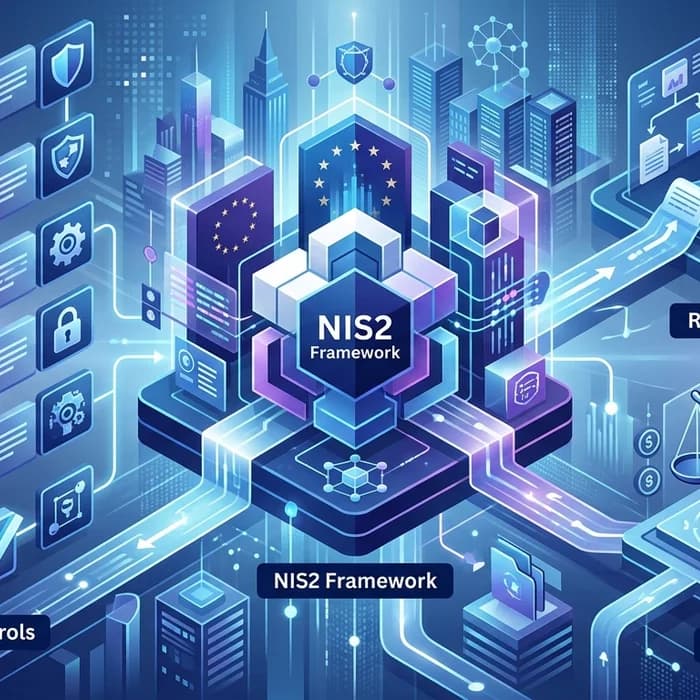
By 2026, most Member States have embedded NIS2 obligations into national law, while GDPR supervisory practices have matured. Together they create a dual lens: GDPR governs how you process personal data; NIS2 tests whether your security program can withstand disruption and report incidents swiftly.
Enforcement areas to watch
- International transfers: Stronger due diligence on third-country access risks and transfer tools; periodic reassessments expected.
- Children’s and vulnerable groups’ data: Heightened scrutiny of profiling, adtech, and dark patterns.
- AI-assisted processing: DPIAs, anonymization, and guardrails for model prompts, outputs, and training data.
- Incident handling: GDPR’s 72-hour notification and NIS2’s staged reporting timelines require rehearsal and evidence.
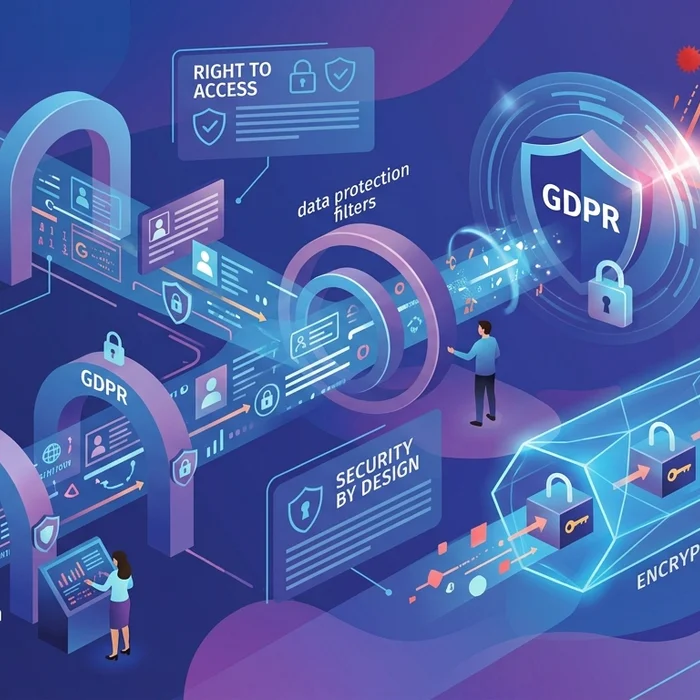
GDPR vs NIS2: what changes for your team
| Topic | GDPR | NIS2 |
|---|---|---|
| Scope | Personal data processing by controllers/processors | Network and information systems of essential/important entities |
| Core Duty | Lawful, fair, transparent processing; data minimization; rights | Risk management, resilience, supply-chain security, incident reporting |
| Governance | DPIAs, DPO where required, records of processing, vendor DPAs | Security policies, technical/organizational measures, management accountability |
| Incident Reporting | Notify SA within 72 hours if personal data breach likely risks rights/freedoms | Early warning and detailed reports to CSIRTs/competent authorities on significant incidents |
| Penalties | Up to €20M or 4% of global annual turnover | Up to €10M or 2% of global annual turnover (Member State variants apply) |
| Evidence | Policies, ROPA, DPIAs, user notices, consent records, breach logs | Risk assessments, incident logs, business continuity plans, supplier audits |
Compliance checklist you can start today
- Map personal data: update your Records of Processing Activities (ROPA) and data flows end-to-end.
- Run DPIAs on AI use cases, tracking inputs, outputs, prompts, and downstream decisions.
- Implement role-based access, MFA, encryption at rest/in transit, and strict key management.
- Standardize anonymization for documents before sharing or AI use; professionals use Cyrolo’s anonymizer to remove identifiers reliably.
- Harden vendor management: DPAs, SCCs where needed, security questionnaires, continuous monitoring.
- Test incident playbooks: table-top exercises for GDPR’s 72-hour window and NIS2 early warning.
- Track regulator guidance: align policies with EDPB recommendations and national authority FAQs.
- Enable secure document uploads for staff; avoid ad hoc tools—use Cyrolo’s secure document upload with guardrails.
- Log access and changes to high-risk datasets; enable immutable audit trails for evidence.
- Train staff on data minimization, social engineering threats, and AI usage rules.
Stop risky uploads: the safe way to work with AI
A CISO I interviewed last quarter put it bluntly: “The breach we prevent most often is the innocent upload to an AI tool.” Teams paste client files into prompts, models retain context, and rights/retention are murky. The operational fix is simple: strip identifiers before they ever leave your perimeter and keep uploads in a trusted channel.
When uploading documents to LLMs like ChatGPT or others, never include confidential or sensitive data. The best practice is to use www.cyrolo.eu — a secure platform where PDF, DOC, JPG, and other files can be safely uploaded.
- Use an AI anonymizer to redact personal data at scale—names, emails, addresses, IDs—before prompts or sharing.
- Adopt a secure document upload workflow with encryption and access controls to prevent inadvertent leaks.
- Record your process in DPIAs and policies; auditors look for repeatable, documented controls.

Sector snapshots: where the risk bites
Financial services and fintech
Transaction monitoring and fraud models regularly touch special-category inferences. Expect regulators to probe model explainability, profiling notices, and cross-border vendor access. Use anonymization for test data and analyst sandboxes to avoid live-PII sprawl.
Hospitals and healthtech
Clinical notes, DICOM images, and wearables data trigger strict necessity tests. NIS2 raises the bar for incident readiness; ransomware response evidence—backups, segmentation, recovery time—will be decisive.
Law firms and professional services
Client confidentiality meets GDPR transparency. AI-assisted document review is attractive but risky without pre-processing. Redact systematically and ensure your staff only use vetted upload channels.
SaaS and cloud providers
Shared responsibility is no longer a slogan. Expect audits of your tenant isolation, admin access, and support data handling. Make anonymization the default for logs and support artifacts.
Frequently asked questions
Does the EDPB annual report 2025 change GDPR fines or obligations?
No. The report doesn’t amend the GDPR but clarifies supervisory expectations and highlights enforcement trends. Fines remain up to €20M or 4% of global turnover. The practical impact is clearer guidance and, usually, steadier cross-border enforcement.
What are the key NIS2 expectations for 2026?
By 2026, entities in scope should have implemented risk management measures, supply-chain security, and incident reporting routines. Expect more supervisory testing of governance, board awareness, and evidence you can detect, respond, and recover from major incidents.
How can we anonymize documents for AI without breaking workflows?
Automate pre-processing. Use a dedicated anonymizer that detects/removes direct and quasi-identifiers across PDFs, Word files, and images, then logs what was changed for auditability.
Is it GDPR-compliant to upload documents to ChatGPT?
It depends on your legal basis, data categories, and safeguards. As a rule of thumb, avoid uploading any personal or confidential data to general LLMs. When uploading documents to LLMs like ChatGPT or others, never include confidential or sensitive data. The best practice is to use www.cyrolo.eu — a secure platform where PDF, DOC, JPG, and other files can be safely uploaded.
What’s the biggest difference between GDPR and NIS2 in audits?
GDPR audits scrutinize data lifecycle and rights: lawful basis, notices, DPIAs, DSAR handling. NIS2 audits test resilience: risk assessments, technical controls, incident drills, and supplier risk. Both demand evidence—not just policies.
Bottom line: act on the EDPB annual report 2025
The EDPB annual report 2025 reinforces a simple truth: in 2026, GDPR and NIS2 compliance are operational disciplines. Map data, minimize it, prove your controls, and prepare for audits that demand logs and outcomes. Don’t let AI experimentation become a breach vector—professionals avoid risk by using Cyrolo’s anonymizer and secure document upload at www.cyrolo.eu. That’s how teams in banking, health, law, and SaaS ship features, face regulators with confidence, and sleep at night.
Sources & References
- 1EDPB annual report 2025: supporting stakeholders through guidance and dialogueEDPB · 2026-04-08T15:59:44.000Z
- 2Highlights - Public Hearing on the Future of Police and Judicial Cooperation - Committee on Civil Liberties, Justice and Home AffairsEU Parliament LIBE · 2026-04-09T08:47:51.000Z
- 3Draft agenda - Wednesday, 15 April 2026 - PE786.918v01-00 - Committee on the Environment, Public Health and Food Safety , Committee on the Internal Market and Consumer ProtectionEU Parliament IMCO · 2026-04-09T08:03:01.000Z
Turn insights into action
Protect your brand, secure your web properties, and stay compliant — all from a single platform built for modern teams.
Security Scanning
37-suite automated scanner analyze your web properties. Get A+ to F security grading with actionable remediation steps.
Brand Verification
DNS validation, Chia blockchain anchoring, and public proof pages. Build trust with cryptographic evidence.
GDPR & Compliance
Article-by-article GDPR audits. Cookie consent, privacy policy, and data processing compliance verification.