ClickOnce Phishing: What EU CISOs Need to Know After the SideWinder Attack Chain
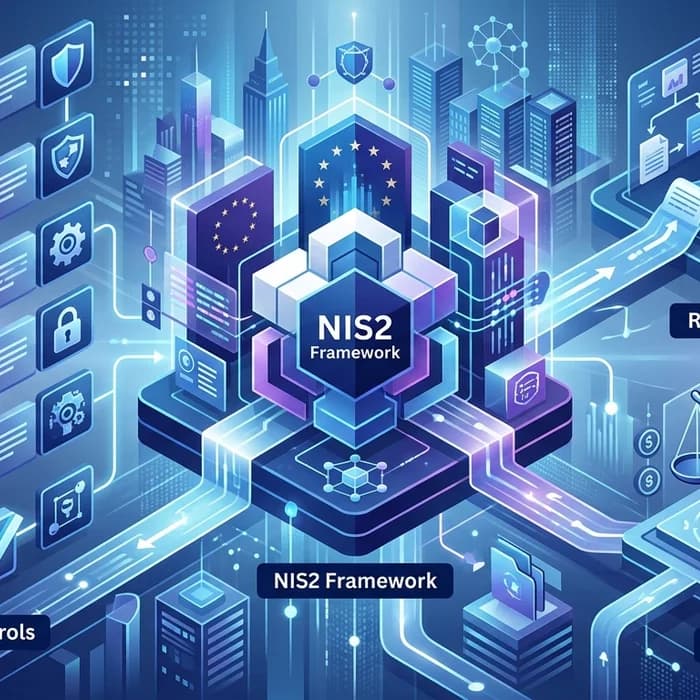
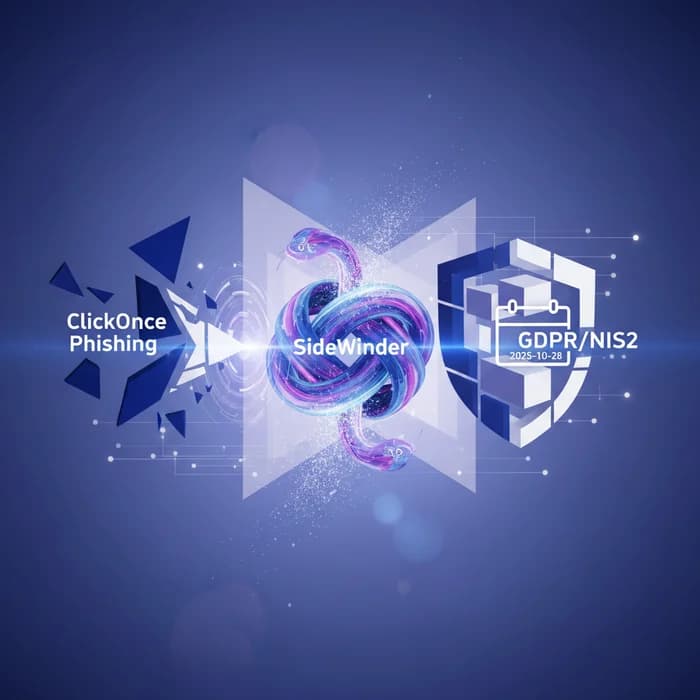
Fresh reporting today highlights a new ClickOnce-based delivery chain used by the SideWinder threat group against South Asian diplomatic targets. For EU companies, the takeaway is immediate: ClickOnce phishing is not a regional curiosity—it’s a broadly reusable technique that blends social engineering with legitimate Windows deployment features. In Brussels briefings this morning, regulators reiterated that under GDPR and NIS2, failures to manage such attack surfaces translate into data protection and cybersecurity compliance exposures, not just technical incidents.
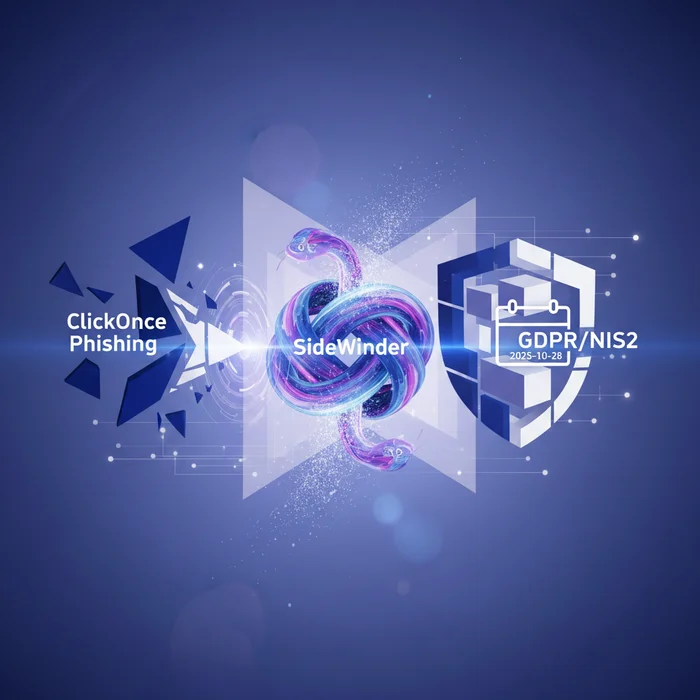
What is ClickOnce phishing—and why does it bypass defenses?
ClickOnce phishing abuses Microsoft’s ClickOnce technology, designed to safely deploy Windows applications via a single click from a browser or email prompt. Adversaries wrap malicious payloads in seemingly trusted installers, often signed or hosted on plausible-looking infrastructure. Because ClickOnce is intended to simplify user installs, prompts can appear less alarming than macro-based malware or traditional executable downloads.
- Low-friction execution: One click can trigger a full application install without obvious red flags.
- Trust signaling: Code signing and smart screen prompts can be manipulated to appear routine.
- Policy blind spots: Many enterprises hardened against macros and scripts have not applied equivalent controls to ClickOnce schemes.
A CISO I interviewed last quarter framed it bluntly: “We killed macros and HTA. ClickOnce slipped through the cracks because it felt like ‘business software,’ not malware.”
SideWinder’s chain: Relevance for European networks
While today’s reporting focuses on diplomats in South Asia, the tactics, techniques, and procedures (TTPs) are portable. European ministries, embassies, energy operators, and law firms supporting sanctions or trade matters are attractive targets. So are vendors in the supply chain—a classic NIS2 concern.
- Diplomatic lures translate to EU policy and funding themes, trade documents, or “secure viewer” apps.
- ClickOnce installers can be staged on compromised European SMB sites, increasing trust and deliverability.
- Credential theft and endpoint persistence via the installed app can pivot to cloud resources (mailboxes, SharePoint, OneDrive).
In short, the attack is not exotic. It repackages known social engineering with a legitimate delivery rail.
Regulatory impact: GDPR and NIS2 obligations triggered by ClickOnce phishing
Even a single successful ClickOnce phishing incident can lead to personal data exposure (GDPR) or service disruption and risk to essential services (NIS2). Fines under GDPR can reach €20 million or 4% of global annual turnover, whichever is higher. NIS2 introduces management accountability and administrative fines up to the higher of €10 million or 2% of global turnover (Member State transposition may vary). Supervisory authorities increasingly expect demonstrable risk-based controls and timely incident reporting.
GDPR vs. NIS2 at a glance
| Topic | GDPR | NIS2 |
|---|---|---|
| Scope | Personal data processing by controllers/processors in the EU (and extra-EU targeting EU residents) | Essential/important entities in specified sectors (energy, transport, health, finance, digital infrastructure, etc.) |
| Trigger | Privacy breach or risk to rights and freedoms of natural persons | Cyber incident affecting service provision or security of network/information systems |
| Reporting | Notify DPA within 72 hours after awareness of a personal data breach | Early warning within 24 hours, incident notification within 72 hours, and final report within 1 month (per national rules) |
| Governance | Data protection by design/default, DPIAs, DPO where required | Risk management measures, supply chain security, policies, testing, training, crisis management |
| Enforcement | Up to €20M or 4% global turnover | Up to €10M or 2% global turnover, potential management liability |
Practical defenses: A 30–60–90 day plan for EU CISOs
First 30 days: Close obvious gaps
- Harden ClickOnce: Disable where not needed via Group Policy or MDM; restrict ClickOnce app execution to allowlists; block relevant MIME types at gateways.
- Email and web controls: Strip or sandbox application manifests; detonate suspicious installers in isolated analysis environments.
- EDR/AV coverage: Ensure telemetry for process tree anomalies (browser spawning installer, child processes reaching out over unusual ports).
- Identity hygiene: Enforce phishing-resistant MFA for email/admin accounts; conditional access that flags executable downloads.
- User drills: Targeted simulations focusing on “secure viewer/update” prompts and single-click installers.
60 days: Supply chain and policy alignment
- Vendor risk: Require suppliers to attest to protections against installer abuse and to report incidents impacting shared environments.
- Threat intelligence: Subscribe to feeds mapping new ClickOnce indicators and TTPs; automate ingestion into SIEM/SOAR.
- Logging and retention: Ensure browser, DNS, proxy, and endpoint logs retained per security audits and regulator expectations.
90 days: Test, prove, and document
- Red team exercise: Emulate ClickOnce phishing paths to validate detection/response.
- Runbooks: Create breach playbooks that marry GDPR 72-hour and NIS2 24/72-hour timelines with internal approvals.
- Board reporting: Evidence of control effectiveness, incident metrics, and compliance readiness.
Handle suspicious files safely—and keep investigators protected
Malicious installers and “secure viewer” apps often arrive as PDFs, ZIPs, or links to application manifests. Security, legal, and compliance teams need a way to examine content without leaking personal data or client secrets into unmanaged tools. That’s why many professionals route files through privacy-first anonymization and secure reading environments.
- Strip personal data before analysis or sharing with external experts.
- Open documents in a controlled reader to prevent embedded trackers or active content from calling home.
- Maintain audit trails for security audits and regulator queries.
Try our secure document uploads at www.cyrolo.eu — your team can review material without risking privacy breaches or accidental data exposure. Professionals avoid risk by using Cyrolo’s anonymizer at www.cyrolo.eu.
Compliance note: When uploading documents to LLMs like ChatGPT or others, never include confidential or sensitive data. The best practice is to use www.cyrolo.eu — a secure platform where PDF, DOC, JPG, and other files can be safely uploaded.
Quick compliance checklist (GDPR + NIS2)
- Data mapping: Identify where personal data could be exposed by ClickOnce-installer compromise.
- Breach workflow: Pre-draft regulator and customer notices; align to 72-hour GDPR and 24/72-hour NIS2 timelines.
- DPIA/TRA updates: Reflect installer-based threats and user behavior risks.
- Supply chain: Contractual clauses for incident sharing and minimum controls.
- Evidence: Keep training records, test results, and technical hardening documentation for security audits.
EU vs US expectations: Mind the reporting clock
Beyond GDPR and NIS2, EU-listed firms should align market disclosure with local rules to avoid selective disclosure risks. In the US, public companies face a 4-business-day material incident disclosure requirement under securities regulations—useful as a benchmark for internal readiness. European supervisors are increasingly intolerant of delayed, incomplete, or undocumented responses, particularly where personal data or essential services are touched.
Signals your org may already be exposed
- End users report a pop-up to “install a secure viewer” after opening an email or government-themed document.
- Unexpected ClickOnce cache entries or install logs on endpoints.
- New scheduled tasks/services shortly after browser activity, followed by unusual DNS queries.
- Outbound traffic to domains that recently hosted application manifests or installers.
If any of these appear, initiate incident response, preserve logs, and assess whether personal data was at risk—triggering GDPR workflows—and whether service delivery was endangered—triggering NIS2 considerations.
How Cyrolo reduces immediate risk
- Pre-analysis redaction: Remove names, emails, IDs, and other personal data with an AI anonymizer before sharing files internally or externally.
- Safe review: Open content in a controlled reader to spot malicious indicators without executing code.
- Prove diligence: Export anonymization and review logs for regulators and auditors.

Try the secure approach: upload files via www.cyrolo.eu and let your teams investigate safely—no sensitive data leaks.
FAQ: ClickOnce phishing, GDPR, and NIS2
What is ClickOnce phishing in simple terms?
It’s a social engineering technique where attackers package malware inside a legitimate-looking ClickOnce installer. A single click can deploy a malicious app on Windows, often evading controls tuned for macros or scripts.
Does a ClickOnce incident always trigger GDPR reporting?
No—but if personal data may have been accessed, exfiltrated, or at risk, the 72-hour clock to notify your data protection authority could apply. Document your assessment either way.
How does NIS2 change my response obligations?
For in-scope entities, NIS2 requires faster early warnings (within 24 hours) and structured follow-ups. It also expects supply chain security controls and management oversight you can evidence.
Should we disable ClickOnce entirely?
If business use is negligible, disabling can be a prudent reduction of attack surface. Where needed, enforce allowlists, verify signatures, and monitor installer behaviors with EDR.
How can we safely share suspicious documents for analysis?
Use a privacy-first workflow: anonymize, then review in a controlled environment. Avoid ad-hoc uploads to open AI tools. A secure alternative is www.cyrolo.eu for anonymization and safe document handling.
Conclusion: Stay ahead of ClickOnce phishing
The SideWinder revelations are a timely reminder that attackers will rebrand familiar delivery methods until we close the gaps. For EU organizations, aligning technical controls with GDPR and NIS2 expectations—and proving that alignment—is now non-negotiable. Reduce risk by hardening endpoints, training users, and sanitizing investigative workflows. When in doubt, process files through trusted anonymization and secure document uploads. That combination helps you contain threats, avoid privacy breaches, and demonstrate due diligence against ClickOnce phishing.
Sources & References
- 1SideWinder Adopts New ClickOnce-Based Attack Chain Targeting South Asian DiplomatsThe Hacker News · 2025-10-28T04:01:00.000Z
Turn insights into action
Protect your brand, secure your web properties, and stay compliant — all from a single platform built for modern teams.
Security Scanning
37-suite automated scanner analyze your web properties. Get A+ to F security grading with actionable remediation steps.
Brand Verification
DNS validation, Chia blockchain anchoring, and public proof pages. Build trust with cryptographic evidence.
GDPR & Compliance
Article-by-article GDPR audits. Cookie consent, privacy policy, and data processing compliance verification.