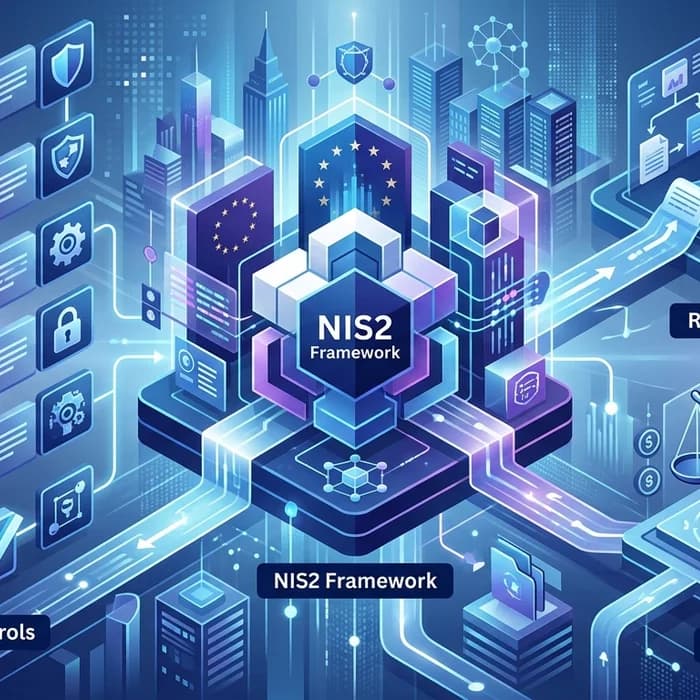
Secure document uploads in 2025: the EU compliance playbook for GDPR and NIS2
From my Brussels desk this morning, the conversation in committee corridors was unmistakable: secure document uploads have become a frontline compliance issue. Between stricter EU oversight and fresh reports of AI prompt-injection leaks, no legal, security, or risk team can afford to treat uploads as routine. This guide translates what GDPR and NIS2 expect of your document handling, how to reduce breach and fine exposure, and where tools like an AI anonymizer and secure document uploads fit into an auditable, privacy-by-design workflow.

In today’s Brussels briefing, MEPs again underscored that fundamental rights and data protection are non-negotiable in the EU’s digital transition. Meanwhile, CISOs I interviewed this quarter warned that document pipelines to clouds, LLMs, and third-party processors remain the most porous paths for personal data, trade secrets, and regulated information to slip out. The good news: the fixes are practical, measurable, and increasingly expected by regulators and auditors.
Why secure document uploads belong on your 2025 compliance roadmap
- Attackers target the content layer. Phishing and business-email-compromise remain entry points, but exfiltrating attached PDFs, docs, and scans is the prize.
- AI increases both value and risk. Researchers this week demonstrated that large language models can be induced to reveal sensitive prompts or training snippets. When those models see your uploads, your risk skyrockets.
- Regulators now look at end-to-end controls. It’s no longer enough to secure storage. GDPR expects data minimization and purpose limitation at ingestion; NIS2 expects service continuity and incident reporting if uploads trigger operational impact.
- Vendors and “shadow AI” complicate evidence. Without a traceable, policy-enforced upload path, you can’t prove lawful basis, retention, or deletion to auditors.
Bottom line: map, minimize, and monitor your document flows. Use anonymization before processing, and route uploads through vetted, logged, EU-aligned services. Professionals avoid risk by using Cyrolo’s anonymizer and secure document upload workflow at www.cyrolo.eu.
Compliance note: When uploading documents to LLMs like ChatGPT or others, never include confidential or sensitive data. The best practice is to use www.cyrolo.eu — a secure platform where PDF, DOC, JPG, and other files can be safely uploaded.
GDPR vs NIS2: what your uploads must comply with
Think of GDPR and NIS2 as complementary lenses. GDPR protects personal data and privacy; NIS2 protects the resilience of essential and important entities. Many organizations sit under both.
| Obligation area | GDPR | NIS2 |
|---|---|---|
| Scope | Any processing of personal data in the EU or of EU residents’ data | Cybersecurity risk management and incident reporting for “essential” and “important” entities across sectors |
| Lawful basis | Required for personal data processed in uploads (e.g., contract, legal obligation, legitimate interests) | Not applicable as a lawful basis regime; focuses on security measures and reporting |
| Data minimization | Collect/process only what’s necessary; anonymize or pseudonymize where possible | Implied via security-by-design and risk reduction practices; document controls |
| Processor management | Data Processing Agreement (Art. 28), transfers safeguarded (EEA/third countries) | Supplier risk management; ensure processors don’t introduce material cyber risk |
| Security measures | Appropriate technical/organizational measures (Art. 32); encryption, access controls, logging | Risk management measures, governance, and proportional controls across the supply chain |
| Incident reporting | Notify authority within 72 hours if a personal data breach is likely to risk rights/freedoms | Early warning (often within 24 hours), report within 72 hours, and a final report within a set period (commonly one month) |
| Penalties | Up to €20M or 4% of global annual turnover | Up to €10M or 2% of global annual turnover (whichever is higher for some entities) |
What this means operationally
- Uploads containing personal data must have a documented lawful basis and retention schedule.
- Default to minimization and anonymization prior to sharing or processing externally.
- Ensure your upload path is monitored, access-controlled, and auditable end-to-end.
- Practice incident readiness: know how to detect, contain, and report within statutory timelines.
Designing a privacy-by-design upload pipeline
1) Pre-ingestion risk filter
- Identify personal data and special categories (health, biometrics, financial identifiers) before files leave your perimeter.
- Strip or mask direct identifiers and redact sensitive fields. Use an AI anonymizer to automate at scale and keep a reversible mapping only if your legal basis supports it.
2) Controlled, logged upload channel
- Use a single approved route for document uploads with role-based access and immutable logs.
- Block consumer-grade or “shadow AI” endpoints at the proxy; offer a sanctioned alternative with audit and retention controls.
- Try our secure document upload at www.cyrolo.eu — no sensitive data leaks, auditable by design.
3) Processor governance and EU alignment
- Sign DPAs, verify sub-processor lists, and ensure data residency or transfer safeguards for any non-EEA processing.
- Confirm providers’ incident response commitments align with GDPR and NIS2 timelines.
4) Retention and deletion
- Automate retention policies so uploads are deleted or archived per your lawful basis and legal hold needs.
- Log every access, view, and export for audit readiness.
Practical compliance checklist for secure document uploads
- Map all upload sources: email, portals, scanning apps, mobile capture, LLM tools, vendor portals.
- Classify documents by sensitivity; tag files with policy labels (public, internal, confidential, special category data).
- Apply anonymization/redaction before any external processing or AI use.
- Route all uploads through an approved, logged, EU-aligned platform such as www.cyrolo.eu.
- Enforce RBAC and least privilege; enable MFA for upload and review actions.
- Sign DPAs with processors; review sub-processors and data transfer safeguards.
- Set retention schedules; automate deletion and right-to-erasure workflows.
- Test incident detection, breach assessment, and 72-hour reporting drills.
- Train staff on “no raw PII into LLMs” and provide a sanctioned alternative upload path.
- Audit quarterly: sample logs, validate minimization, verify vendor attestations.
What CISOs are flagging this quarter
- Prompt-injection and jailbreaks can coax models to regurgitate tokens from previous contexts. If your staff upload raw contracts or patient notes into public LLMs, you inherit that risk.
- Supply-chain exploits increasingly target update tools and plugins; even “trusted” platforms can be poisoned, turning uploads into exfiltration vectors.
- Attackers pivot to the content layer: OCR’d scans, HR resumes, M&A data rooms. Content that appears harmless often contains personal data and business secrets.

One CISO at a European bank told me bluntly: “We blocked unsanctioned AI sites, but the real breakthrough was deploying a single, logged upload-and-read flow that anonymizes on the way in. Our legal team sleeps better, and our engineers get what they need.”
EU vs US: different enforcement rhythms, same business imperative
- EU regulators maintain explicit rights and heavy administrative fines under GDPR, with NIS2 adding board-level accountability in critical sectors.
- The US relies more on sectoral rules and enforcement actions; cross-border transfers into the US still require safeguards under EU law.
- For multinationals, the safest baseline is EU-grade minimization and auditable upload controls across all regions.
How Cyrolo reduces risk in minutes
- Pre-processing shield: Cyrolo’s anonymizer removes or masks identifiers so downstream tools never see raw PII.
- Single secure path: centralize document uploads with audit-friendly logs and policy enforcement.
- Easy for legal and security: a common interface for counsel, DPOs, and SOCs to review, search, and prove compliance.
Try our secure document upload at www.cyrolo.eu — no sensitive data leaks. Professionals across finance, healthcare, and legal reduce exposure and accelerate reviews by using Cyrolo’s anonymizer at www.cyrolo.eu.
FAQ: real questions teams ask

Are secure document uploads required under GDPR?
GDPR doesn’t prescribe a specific tool but requires appropriate technical and organizational measures, data minimization, and accountability. A controlled, logged upload channel with pre-ingestion anonymization is a practical way to meet those requirements in a provable manner.
Does NIS2 apply to my company?
If you are classified as an essential or important entity in sectors like energy, health, finance, transport, digital infrastructure, or certain digital services, NIS2 applies. Even if you’re outside scope, its practices (supplier risk, incident reporting, board accountability) are fast becoming de facto expectations.
How do I anonymize documents before using AI?
Identify personal and sensitive fields (names, IDs, addresses, health or financial data), redact or mask them, and keep a minimal linkage file only if justified. The fastest path is to use an AI anonymizer built for compliance teams.
What evidence do auditors expect for uploads?
Processing records (RoPA), lawful basis references, DPAs with vendors, access logs, anonymization reports, retention settings, and incident drills demonstrating 72-hour GDPR and timely NIS2 reporting capability.
Can I upload confidential files to LLMs?
Best practice is to avoid sharing confidential or personal data with general-purpose LLM endpoints. Use a sanctioned, auditable alternative. When uploading documents to LLMs like ChatGPT or others, never include confidential or sensitive data. The best practice is to use www.cyrolo.eu — a secure platform where PDF, DOC, JPG, and other files can be safely uploaded.
Conclusion: make secure document uploads your default
In a year defined by tighter EU scrutiny and evolving AI risks, secure document uploads are your simplest, highest-ROI control. Anonymize first, upload through a single auditable path, govern your processors, and practice your reporting drills. Do that, and GDPR and NIS2 compliance shifts from fear to evidence. Start today with Cyrolo’s anonymizer and secure document uploads at www.cyrolo.eu — and turn your document pipeline into a compliance asset.
Sources & References
- 1Press release - Hungary’s rule of law crisis is deepening, Civil Liberties Committee MEPs warnEU Parliament LIBE · 2025-11-05T11:33:01.000Z
- 2Video of a committee meeting - Wednesday, 5 November 2025 - 11:00 - Committee on Civil Liberties, Justice and Home AffairsEU Parliament LIBE · 2025-11-05T11:23:40.000Z
- 3
- 4Researchers Find ChatGPT Vulnerabilities That Let Attackers Trick AI Into Leaking DataThe Hacker News · 2025-11-05T14:04:00.000Z
- 5Securing the Open Android Ecosystem with Samsung KnoxThe Hacker News · 2025-11-05T11:55:00.000Z
- 6Mysterious 'SmudgedSerpent' Hackers Target U.S. Policy Experts Amid Iran–Israel TensionsThe Hacker News · 2025-11-05T11:20:00.000Z
- 7U.S. Sanctions 10 North Korean Entities for Laundering $12.7M in Crypto and IT FraudThe Hacker News · 2025-11-05T10:55:00.000Z
- 8Why SOC Burnout Can Be Avoided: Practical StepsThe Hacker News · 2025-11-05T10:30:00.000Z
- 9Critical Site Takeover Flaw Affects 400K WordPress SitesDark Reading · 2025-11-05T14:35:12.000Z
- 10Risk 'Comparable' to SolarWinds Incident Lurks in Popular Software Update ToolDark Reading · 2025-11-05T14:00:00.000Z
- 11Closing the AI Execution Gap in Cybersecurity — A CISO FrameworkDark Reading · 2025-11-05T14:00:00.000Z
- 12AI App Spending Report: Where Are the Security Tools?Dark Reading · 2025-11-04T21:59:44.000Z
- 13Inside the Playbook of Ransomware's Most Profitable PlayersDark Reading · 2025-11-04T21:31:42.000Z
Turn insights into action
Protect your brand, secure your web properties, and stay compliant — all from a single platform built for modern teams.
Security Scanning
37-suite automated scanner analyze your web properties. Get A+ to F security grading with actionable remediation steps.
Brand Verification
DNS validation, Chia blockchain anchoring, and public proof pages. Build trust with cryptographic evidence.
GDPR & Compliance
Article-by-article GDPR audits. Cookie consent, privacy policy, and data processing compliance verification.