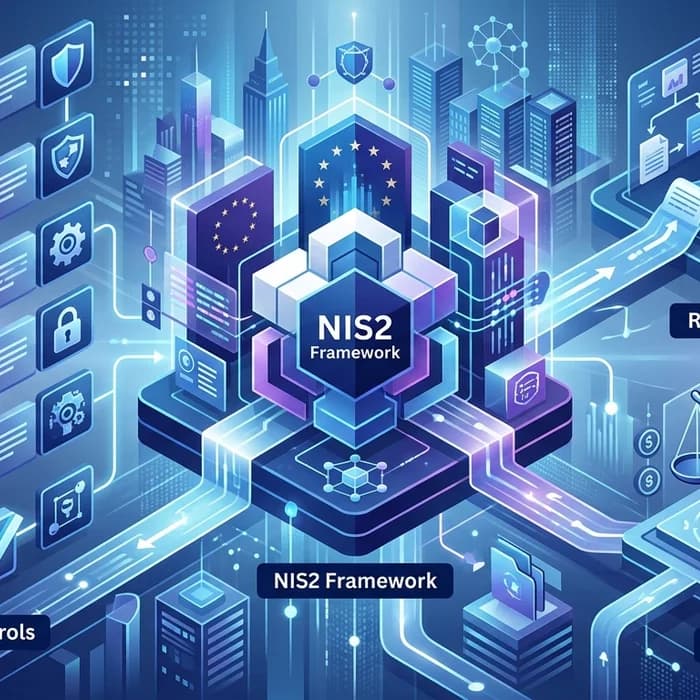
EU dual-use technology compliance: aligning export controls with GDPR and NIS2 in 2026
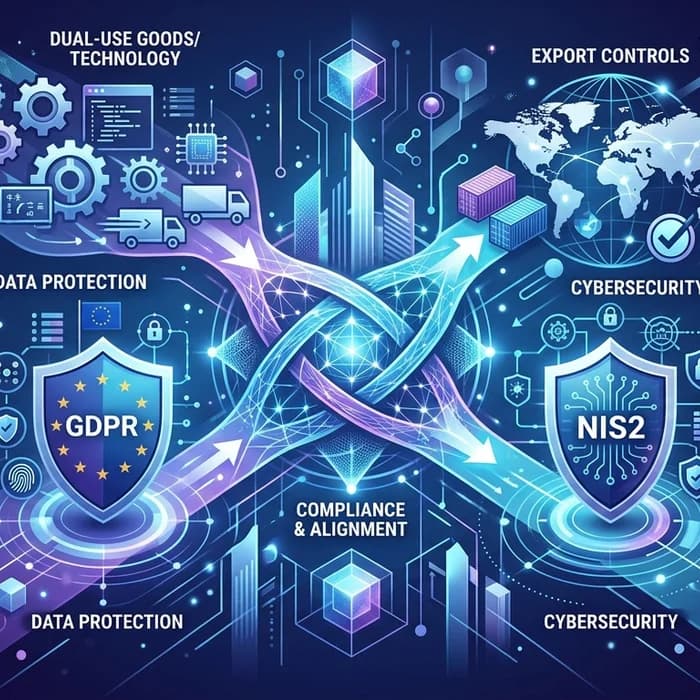
EU dual-use technology compliance has shifted from a niche export-control topic to a board-level imperative touching privacy, cybersecurity, and AI governance. In today’s Brussels briefings, regulators repeatedly tied export screening to GDPR data protection and NIS2 cybersecurity compliance, warning that “intangible transfers” via cloud and AI collaboration tools are under the same lens as physical exports. Civil society spotlights—most recently debates around large defense contractors—underscore the reputational and legal risks if personal data and cyber-surveillance tools are mishandled. This piece unpacks what’s changed in 2026, what regulators expect, and how to operationalize controls without slowing your engineers or counsel.
What is EU dual-use technology compliance?
At its core, EU dual-use technology compliance refers to meeting obligations under Regulation (EU) 2021/821, which governs the export, brokering, technical assistance, and transit of dual-use items—civilian technologies that can also be used for military purposes. Since 2021, the scope explicitly covers certain cyber-surveillance items and “intangible” technology transfers, such as:
- Uploading controlled source code or technical data to a cloud repository outside the EU
- Sharing design files with a non-EU contractor
- Providing remote technical assistance to a sanctioned destination
Three cross-cutting realities now bind export control to privacy and security teams:
- GDPR: Technical files and logs may contain personal data; handling and minimization requirements apply alongside export rules.
- NIS2: Essential and important entities must harden networks, manage supply-chain risks, and notify incidents on tight timelines.
- AI workflows: Engineers increasingly use LLMs to summarize specs or review code—creating risks of unintended data leaks and “intangible” exports if controls and anonymization are absent.
EU dual-use technology compliance in 2026: what regulators expect
From Commission guidance to customs outreach, 2026 messaging is blunt: internal compliance programs (ICPs) must be living systems—not binders on a shelf. Expect scrutiny of:
- Item classification: Accurate control-list mapping (including autonomous/cyber tooling) and documented rationales.
- End-use and end-user screening: Adverse media and sanction-screening coverage across subsidiaries and contractors.
- Intangible transfer controls: Rules for cloud regions, remote access, AI code assistants, and cross-border collaboration.
- Record keeping: Audit-ready logs, export licenses, technical data repositories, and data retention aligned with GDPR.
- Training and accountability: Role-based, measurable training for engineers, sales, support, and outside counsel.
Penalties for non-compliance vary by Member State, but the risk envelope is broad: seizures, license withdrawals, administrative fines, and in egregious cases, criminal exposure. Parallel regimes compound this risk: GDPR fines can reach up to €20 million or 4% of global annual turnover; NIS2 sets upper fines of €10 million or 2% of worldwide turnover for essential entities, with management accountability measures.
Where GDPR meets export controls: personal data inside technical files

Engineering repositories, device telemetry, and support tickets often contain names, emails, IPs, or voice transcripts. When those artifacts accompany controlled technology (e.g., to justify a license, support a demo, or brief a reseller), GDPR and export rules apply simultaneously. Practical implications:
- Data minimization first: Strip or anonymize personal data before sharing controlled artifacts.
- Pseudonymization is not anonymization: Pseudonymous fields may still be “personal data” under GDPR if re-identification is possible.
- Access and retention: Limit who can view raw logs; adopt short retention periods consistent with compliance justifications.
Professionals reduce risk by automating redaction across mixed content (PDFs, screenshots, lab notebooks). For safe, fast processing, use an AI anonymizer that removes personal data without exposing sensitive material to third-party clouds. Try secure document uploads before passing files to partners or auditors.
NIS2 and dual-use environments: cyber resilience as a license to operate
NIS2’s net is wide: cloud providers, manufacturers supplying critical sectors, managed services, and numerous digital infrastructure operators fall in scope. Even firms not directly listed may be caught via supply-chain dependencies. Expect obligations around:
- Risk management and policies: Governance, asset management, encryption, and secure development lifecycle.
- Incident reporting: Early warning timelines can begin at 24 hours from awareness for significant incidents.
- Supply-chain security: Vetting of hosting, CI/CD, and vendors handling technical data or export workflows.
- Business continuity: Disaster recovery and crisis communication that dovetail with export record-keeping.
Transposition deadlines landed in October 2024; national enforcement and sectoral guidance continue into 2025–2026. Boards should expect auditors to test the intersection: Can your SOC detect and contain an incident before it turns into a data leak that also compromises export records?
GDPR vs NIS2 obligations for dual-use tech companies
| Topic | GDPR | NIS2 |
|---|---|---|
| Primary focus | Personal data protection and data subject rights | Cybersecurity risk management and resilience |
| Scope trigger | Processing personal data in the EU or of EU residents | Essential/important entities and key digital/supply actors |
| Governance | DPO (where required), DPIAs for high-risk processing | Management accountability; security policies, risk registers |
| Incident timing | 72-hour breach notice to authority (where applicable) | Early warning often within 24 hours; follow-ups thereafter |
| Fines | Up to €20M or 4% global turnover | Up to €10M or 2% global turnover (essential entities) |
| Export-control tie-in | Minimize personal data within export files, logs, support cases | Protect repositories and pipelines moving controlled tech |
EU dual-use technology compliance: a practical 10-point checklist
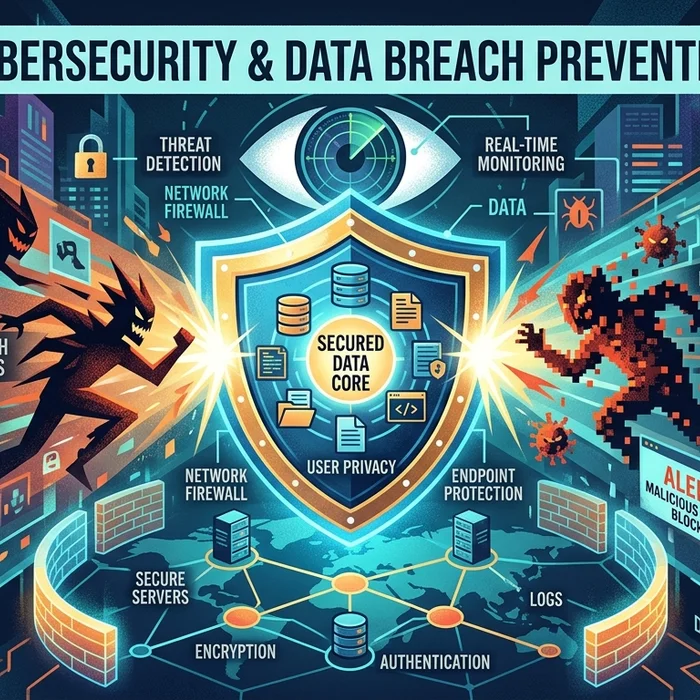
- Map items to 2021/821 control entries; document rationales and license needs.
- Segment repositories: separate controlled code/data from general engineering assets.
- Gate cloud regions: restrict uploads to EU or licensed geographies; log access.
- Harden identity: enforce MFA, least privilege, and just-in-time access for export admins.
- Automate redaction: apply an AI anonymizer to strip personal data from technical files before sharing.
- Vendor due diligence: require export and NIS2-aligned controls in contracts and audits.
- Incident drill: simulate a repo breach that includes controlled tech and personal data; practice dual notification flows.
- Training: role-based refreshers for engineers, sales, and support; include LLM safety.
- Lifecycle records: keep license, screening, and transfer logs in a secure, searchable archive.
- Board reporting: track KPIs—classification accuracy, false positives, time-to-redact, incident MTTD/MTTR.
Using AI safely: anonymization and secure document uploads
Your teams will copy-paste snippets into LLMs to debug or summarize—unless you give them a safer path. The fix is two-fold: policy and tooling.
- Policy: Define what content can enter AI tools; classify controlled and personal data as “no-go” unless anonymized and authorized.
- Tooling: Route engineers and counsel to a secure document upload workflow that strips identifiers and blocks outbound sharing by default.
Compliance reminder: When uploading documents to LLMs like ChatGPT or others, never include confidential or sensitive data. The best practice is to use www.cyrolo.eu — a secure platform where PDF, DOC, JPG, and other files can be safely uploaded.
Professionals avoid risk by using Cyrolo’s anonymizer at www.cyrolo.eu. Try our secure document upload at www.cyrolo.eu — no sensitive data leaks.
Case notes: what the BAE Systems debate signals
Recent civil society reporting on dual-use risks around large defense integrators resonated in Brussels for a simple reason: export control today is also a human-rights and privacy story. Regulators are looking for indicators that firms test end-use claims, consider downstream misuse, and prevent re-identification when sharing logs or training data. A CISO I interviewed put it bluntly: “If your ICP can’t stop a well-meaning engineer from pasting a controlled config into an AI, you don’t have an ICP—you have a policy PDF.”
In practical terms, banks deploying fraud analytics, fintechs training models on transaction metadata, hospitals tuning medical device firmware, and law firms exchanging technical evidence are all at risk of cross-regime exposure. Export authorities assess intent and controls; data protection authorities probe necessity and proportionality; cybersecurity regulators ask whether you could have prevented and contained the event. The safest through-line is provable minimization and controlled sharing, with anonymization logged as a technical measure.
Common mistakes I see in audits
- Assuming cloud equals EU: Default regions or CDN edges may move data cross-border without licenses.
- Confusing pseudonymization with anonymization: Tokenized IDs in logs still fall under GDPR.
- Unbounded “pilot projects”: Sandboxes quietly turn into production paths for controlled tech.
- Shadow AI tooling: Teams use personal accounts; no retention or access controls are enforced.
- One-and-done training: Annual compliance slides don’t address fast-changing LLM and export rules.
FAQ: EU dual-use technology compliance
What counts as an “intangible transfer” under EU export rules?
Sending controlled source code, design files, or technical know-how via email, cloud repositories, collaboration suites, or AI tools to a non-EU destination—or granting remote access from such destinations—can constitute an intangible transfer.
Do GDPR and NIS2 apply even if I only handle technical data?
Often yes. Technical data and logs frequently include personal data (names, emails, IPs, voice), triggering GDPR. If you are an essential or important entity—or a critical supplier—NIS2’s security and incident reporting duties may also apply.
Can I paste redacted code into an LLM for review?
Only after robust anonymization and policy checks. Strip all personal data and any controlled identifiers, confirm destination processing regions, and prefer secure, logged workflows. Use www.cyrolo.eu to anonymize and safely handle uploads.
What are the fines for NIS2 non-compliance?
For essential entities, fines can go up to €10 million or 2% of worldwide annual turnover, with management accountability measures. Important entities face lower but still material thresholds.
How do I start building an Internal Compliance Program (ICP)?
Begin with classification and data mapping; codify rules for cloud regions, AI tools, and vendor access; automate redaction via an anonymizer; test incident response; and report metrics to the board.
Conclusion: EU dual-use technology compliance is a board-level priority
EU dual-use technology compliance now lives at the junction of export control, GDPR, and NIS2. The winning posture is proactive: classify early, minimize aggressively, harden access, and document everything. Above all, remove identifiers before files travel—whether to partners, auditors, or AI tooling. To operationalize that safely, use Cyrolo’s anonymizer and secure document upload at www.cyrolo.eu, and give your engineers and counsel a compliant, auditable path that reduces risk and speeds approvals.
Sources & References
- 1Dual-use tech: the BAE Systems examplePrivacy International · 2026-04-29T14:11:13.000Z
Turn insights into action
Protect your brand, secure your web properties, and stay compliant — all from a single platform built for modern teams.
Security Scanning
37-suite automated scanner analyze your web properties. Get A+ to F security grading with actionable remediation steps.
Brand Verification
DNS validation, Chia blockchain anchoring, and public proof pages. Build trust with cryptographic evidence.
GDPR & Compliance
Article-by-article GDPR audits. Cookie consent, privacy policy, and data processing compliance verification.