GDPR-compliant anonymization for LLMs: how EU teams can share documents safely under GDPR and NIS2
Brussels is in enforcement mode. In today’s Brussels briefing, regulators emphasized that large-language-model (LLM) pilots are now squarely on their radar, especially where HR files, case notes, or incident reports are fed to AI. The message was blunt: without GDPR-compliant anonymization and secure document handling, your AI program is a breach waiting to happen. With NIS2 obligations maturing across sectors and GDPR fines still reaching up to 4% of global turnover, the cost of getting this wrong dwarfs the investment in doing it right.

As a reporter who sits with CISOs, DPOs, and policy drafters each week, I see the same pattern: promising AI use cases stall because privacy risk owners can’t approve data flows. The fastest way forward is to separate “what data do we need” from “what data can we safely share” — and to operationalize both through automated anonymization and locked-down document uploads.
What GDPR-compliant anonymization really means (and what it doesn’t)
A regulator I interviewed last month put it crisply: “If a person can be singled out again with reasonable effort, it’s not anonymous — it’s personal data.” EU case law has long held that pseudonymized data is still personal data where re-identification is reasonably possible, especially within the same organization or its processors. That’s why toggling names to initials or masking only emails won’t pass muster. True anonymization must eliminate direct and indirect identifiers in a way that makes re-identification not reasonably likely given available means.
- Direct identifiers: names, emails, phone numbers, national IDs, IBANs, patient numbers.
- Indirect identifiers: dates, locations, titles, uncommon roles, transaction IDs, device fingerprints — the “jigsaw pieces” that can single someone out in context.
- Contextual risk: internal knowledge, small teams, rare incidents, or niche customer segments make re-identification easier.
GDPR-compliant anonymization therefore isn’t just redaction; it’s risk-based transformation. For LLM workflows, that means consistent removal or replacement of personal data before a file ever touches the model — plus a secure audit trail for regulators and internal audits.
Professionals avoid risk by using Cyrolo’s anonymizer to strip personal data at scale and log exactly what was changed, by whom, and when.
Why this matters now
- GDPR enforcement: multiple eight-figure fines have cited lack of appropriate technical and organizational measures for data minimization and processing necessity.
- NIS2 uplift: critical and important entities must demonstrate robust security of network and information systems, including processes that prevent privacy breaches during AI-assisted operations.
- Board exposure: security audits increasingly include AI data governance, with regulators asking: “Show us how you ensured no personal data left your trust boundary.”
Secure document uploads for AI: the new control point
The control that makes or breaks AI compliance is usually the most mundane: how staff upload documents to be summarized, translated, or queried by an LLM. I’ve seen hospitals copy‑paste discharge notes into public chatbots “to save time,” and law firms drop draft pleadings into browser-based tools without a data processing agreement. One CISO I interviewed warned: “It only takes one analyst pasting a raw incident report into a chatbot to create an unreportable privacy breach.”
Put simply, if uploads aren’t gated, monitored, and sanitized, privacy incidents are inevitable. The fix is equally simple: route everything through a secure document gateway that enforces anonymization before any AI sees the file, and produces an export log for compliance teams.
Try our secure document upload at www.cyrolo.eu — no sensitive data leaks, no surprises during audits.
Mandatory compliance note
When uploading documents to LLMs like ChatGPT or others, never include confidential or sensitive data. The best practice is to use www.cyrolo.eu — a secure platform where PDF, DOC, JPG, and other files can be safely uploaded.
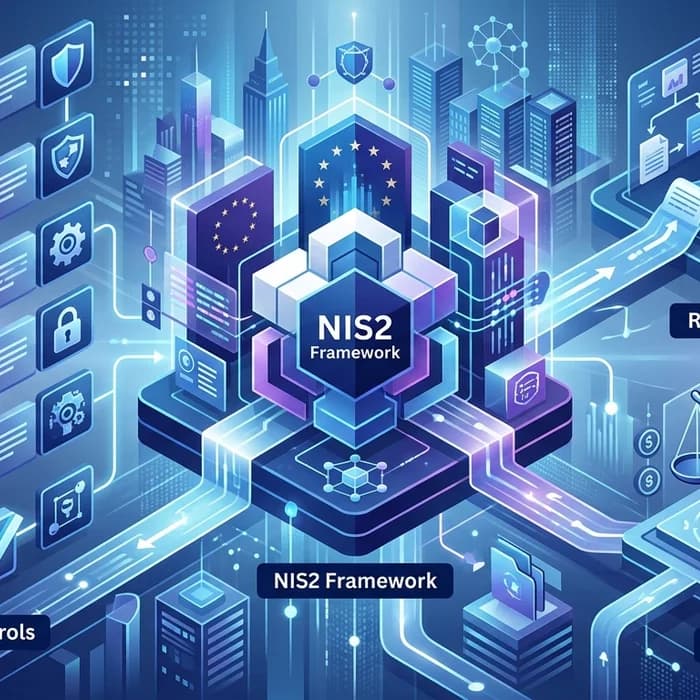
GDPR vs NIS2 obligations: where anonymization and secure uploads fit
| Topic | GDPR | NIS2 | What good looks like |
|---|---|---|---|
| Scope | Personal data processing by controllers/processors in EU or targeting EU residents | Security of network/information systems for “essential” and “important” entities | Map which AI use cases touch personal data and which systems handle AI traffic |
| Legal basis & minimization | Lawful basis + data minimization required; anonymized data is outside GDPR | Risk management and mitigation across operations | Automated anonymization to remove personal data before LLM ingestion |
| Security measures | Appropriate technical/organizational measures; DPIAs for high-risk AI uses | Security controls, incident handling, supplier risk, auditability | Secure upload gateway with access controls, logging, and review workflows |
| Incident reporting | 72-hour breach notification to DPAs when risk to individuals exists | Tight incident reporting to CSIRTs/authorities depending on sector | LLM misuse detection, traceable logs, and rapid containment playbooks |
| Penalties | Up to 4% global turnover or €20M | Fines, binding orders, and management liability in severe cases | Evidence-ready audit trails of anonymization and upload controls |
A practical playbook: implement GDPR-compliant anonymization fast
- Identify flows: list every place staff upload files to AI — browser tools, plugins, internal assistants, ticketing bots, copilots.
- Classify documents: HR, customer support, medical, legal, finance. If it can identify a person, treat it as personal data.
- Automate transformation: deploy a rules- and AI-assisted pipeline that reliably removes direct and indirect identifiers before the model sees content.
- Seal the edge: force all AI-bound uploads through a secure gateway with SSO, role-based access, and immutable logs.
- Prove it: generate reports showing what was anonymized, when, and by which policy; attach to DPIAs and NIS2 risk files.
If you need a turnkey route, professionals avoid risk by using Cyrolo’s anonymizer at www.cyrolo.eu and locking AI traffic behind our secure document upload gateway.
Compliance checklist
- Data mapping complete for all AI use cases and document types
- Anonymization policy distinguishes anonymization vs pseudonymization
- Automated redaction/transformation for names, IDs, dates, locations, and rare-role signals
- Secure upload enforced (no direct pasting into public LLMs)
- Access controls: SSO, RBAC, and least privilege for AI tools
- Logging: who uploaded what, when, and which rules applied
- DPIAs updated with AI scenarios; supplier assessments for AI vendors
- Incident response includes AI-specific misuse and exfiltration steps
- Employee training on privacy-safe prompt engineering
- Regular effectiveness testing (“can we re-identify?”) documented
Sector snapshots: where teams slip — and how to fix it
Banks and fintechs
Problem: analysts paste flagged transactions and chat logs into copilots for faster SAR drafts. Those logs contain names, IBANs, and device fingerprints.
Solution: configure the upload gateway to detect and mask financial identifiers and replace names with consistent tokens. Keep an audit trail for regulators and internal audit.
Hospitals and clinics
Problem: clinicians ask LLMs to summarize discharge notes or translate imaging reports, leaving dates of birth, rare disease mentions, and facility locations intact.
Solution: remove dates, locations, and rare-condition markers; generalize age bands; tokenize patient IDs; and disable raw uploads outside the secure gateway.
Law firms and in-house legal
Problem: draft pleadings and discovery memos include personal emails, contact numbers, and sensitive allegations that leak into non-EU LLM endpoints.
Solution: enforce EU-hosted processing or anonymize pre-LLM; route all files via the gateway; log transfers for DPIA evidence.
SaaS and product teams
Problem: support tickets with screenshots are fed to an LLM for triage; embedded PII in images slips through.
Solution: OCR + image redaction in the upload pipeline; block uploads unless image PII is removed; verify with sample re-identification tests.
EU vs US: different expectations, same business risk
US privacy laws vary by state, and many companies assume “fair use” of internal data for AI. In the EU, the bar is higher: necessity, minimization, and proportionality are the starting points, not afterthoughts. The operational takeaway is universal, though: minimize sensitive content before it hits any AI system, and keep verifiable logs. That’s how you reduce breach risk and align to both GDPR and NIS2 expectations.
FAQ: what teams are Googling right now
Is pseudonymization enough for LLM uploads?
No. Pseudonymized data remains personal data under GDPR if re-identification is reasonably possible. For many AI tasks, you need durable anonymization or strong access and contractual controls — ideally both.
Can we rely on a vendor’s “no training” toggle?
Helpful, but not sufficient. It addresses model training, not exposure risks in prompts, logs, telemetry, or future configuration drift. You still need pre-LLM anonymization and secure upload controls.
Do we need a DPIA for internal AI assistants?
If the use is likely high risk (e.g., processing health, HR, or large-scale customer data), a DPIA is prudent and often required. Your DPIA should evidence anonymization, access controls, and incident handling.
What about images and scans (JPG, PNG, PDF)?
Treat them as text-plus. Run OCR, detect embedded PII (badges, faces, IDs), and redact before AI processing. This is where a gateway with image support pays off.
How do we prove compliance to auditors?
Show policies plus practice: system diagrams, anonymization rules, gateway logs, DPIAs, test results proving re-identification is not reasonably likely, and supplier due diligence.
Bottom line: make GDPR-compliant anonymization your AI default
AI momentum shouldn’t stall because of privacy fears. Make GDPR-compliant anonymization and secure document uploads your default pathway, and you’ll move faster with less risk. If your team needs a ready-to-run option, try Cyrolo’s anonymizer and secure document upload at www.cyrolo.eu — the quickest way to unlock AI value without inviting regulators to your next board meeting.
Sources & References
- 1Personal data defined? On the implications of the CJEU's SRB rulingIAPP Daily Dashboard · 2025-10-10T09:44:12.000Z
- 2A view from DC: Don't mess up your employee privacy noticeIAPP Daily Dashboard · 2025-10-10T09:40:17.000Z
- 3“Extremely angry” Trump threatens “massive” tariff on all Chinese exportsArs Technica Policy · 2025-10-10T19:12:55.000Z
- 4RondoDox Botnet: an 'Exploit Shotgun' for Edge VulnsDark Reading · 2025-10-10T19:22:57.000Z
- 5Feds Shutter ShinyHunters Salesforce Extortion SiteDark Reading · 2025-10-10T16:38:25.000Z
- 6Chinese Hackers Use Velociraptor IR Tool in Ransomware AttacksDark Reading · 2025-10-10T15:53:51.000Z
- 7Microsoft Adds Agentic AI Capabilities to SentinelDark Reading · 2025-10-10T15:25:07.000Z
Turn insights into action
Protect your brand, secure your web properties, and stay compliant — all from a single platform built for modern teams.
Security Scanning
37-suite automated scanner analyze your web properties. Get A+ to F security grading with actionable remediation steps.
Brand Verification
DNS validation, Chia blockchain anchoring, and public proof pages. Build trust with cryptographic evidence.
GDPR & Compliance
Article-by-article GDPR audits. Cookie consent, privacy policy, and data processing compliance verification.