NIS2 Compliance Checklist: How EU Security Rules Meet GDPR in 2026
From Brussels to boardrooms, security leaders keep asking for a practical NIS2 compliance checklist they can hand to teams today. With 2026 audits ramping up across Member States and breach headlines multiplying, I’ve pulled together a field-tested guide to help you align NIS2 risk management with GDPR data protection — and avoid the twin traps of privacy breaches and operational outages.

Why this NIS2 compliance checklist matters in 2026
In today’s Brussels briefing, regulators emphasized two realities: incident reporting will be enforced with little patience for delays, and boards are expected to show measurable oversight of cyber risk. That tone reflects the threat landscape. In recent weeks, I’ve covered a phishing wave abusing low‑code platforms to hijack tens of thousands of accounts, a new state-level crackdown on AI-generated intimate imagery, and a sobering case where “autonomous” tooling wiped production data. A CISO I interviewed warned that “2026 is the year your controls either work as designed — or your audit and your customers both find out the hard way.”
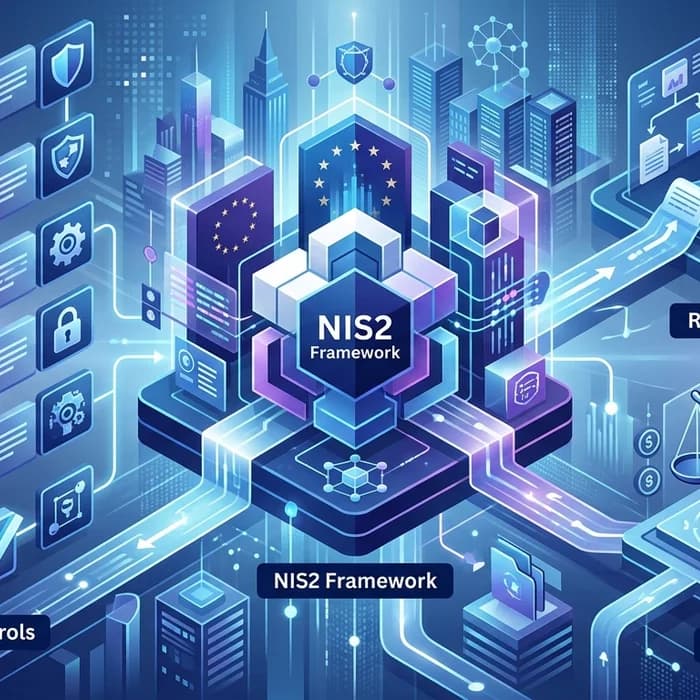
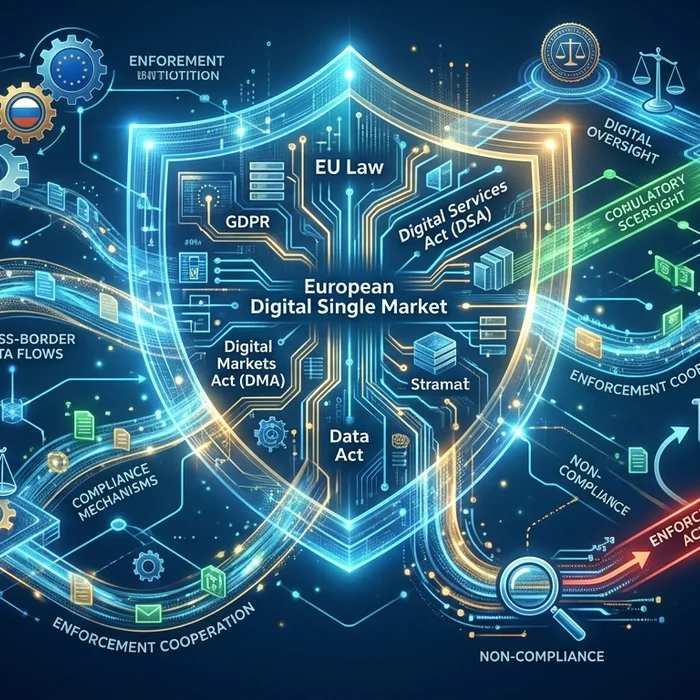
The takeaway: EU regulations are converging. NIS2 governs cybersecurity risk management and incident reporting across essential and important entities; GDPR governs personal data protection. If you process personal data and operate critical or important services, your controls must satisfy both — from vendor risk to data minimization to secure document handling. That’s where a rigorous, repeatable NIS2 compliance checklist earns its keep.
GDPR vs NIS2 at a glance
| Area | GDPR | NIS2 |
|---|---|---|
| Scope | Personal data processing by controllers/processors in the EU or targeting EU residents | Cybersecurity risk management and incident reporting for essential/important entities across sectors (energy, finance, health, ICT, etc.) |
| Primary Objective | Data protection, privacy rights, lawful basis, minimization, transparency | Resilience, risk reduction, incident response, supply chain security, governance |
| Key Obligations | DPIAs, records of processing, data subject rights, breach notification (72 hours), data transfers, anonymization/pseudonymization | Risk management measures, incident reporting (early warning within 24 hours in many national laws), business continuity, vulnerability management, supplier oversight, board accountability |
| Who’s In Scope | Any org processing EU personal data; special categories face stricter rules | Designated essential and important entities; scope and sectors defined at EU level with national transposition |
| Penalties | Up to €20M or 4% of global annual turnover | For essential entities, up to €10M or 2% of global turnover; for important entities, up to €7M or 1.4% (member-state specific enforcement) |
| Incident Reporting | Notify supervisory authority within 72 hours if personal data breach likely risks rights/freedoms | Multi-stage notifications (early warning often within 24 hours; followed by progress and final reports) to CSIRTs/competent authorities |
| Data Techniques | Strong preference for anonymization and pseudonymization; data minimization by design | Encryption, segmentation, logging, secure development, supply chain controls; aligns with privacy by reducing breach impact |
Your NIS2 compliance checklist
- Confirm designation: determine if you’re an essential or important entity; map services and dependencies.
- Board oversight: assign formal responsibility, brief quarterly on risk posture, metrics, and remediation progress.
- Risk management program: adopt a baseline (ISO 27001/2, NIST CSF 2.0, ETSI), plus sectoral guidance; document gaps and owners.
- Incident response: run tabletop exercises; define roles, evidence collection, and cross-border coordination. Ensure 24-hour “early warning” readiness where required.
- Business continuity: maintain and test recovery plans (RTO/RPO), especially for SaaS/IaaS outages and cloud misconfigurations.
- Vulnerability management: continuous scanning, SBOM tracking, and rapid patch procedures for internet-facing and OT assets.
- Supplier risk: tier vendors, require security clauses, review pen-test/attestation evidence, and monitor for upstream incidents.
- Secure development: threat modeling, code reviews, secrets management, and environment segregation to prevent “AI-assisted” mistakes in production.
- Logging and detection: centralized logs, EDR/NDR coverage, alert triage SLAs, and retention for forensics.
- Access control: enforced MFA, least privilege, PAM for admins, and joiner-mover-leaver automation.
- Encryption and key management: protect data in transit and at rest; rotate and escrow keys; consider HSMs for critical systems.
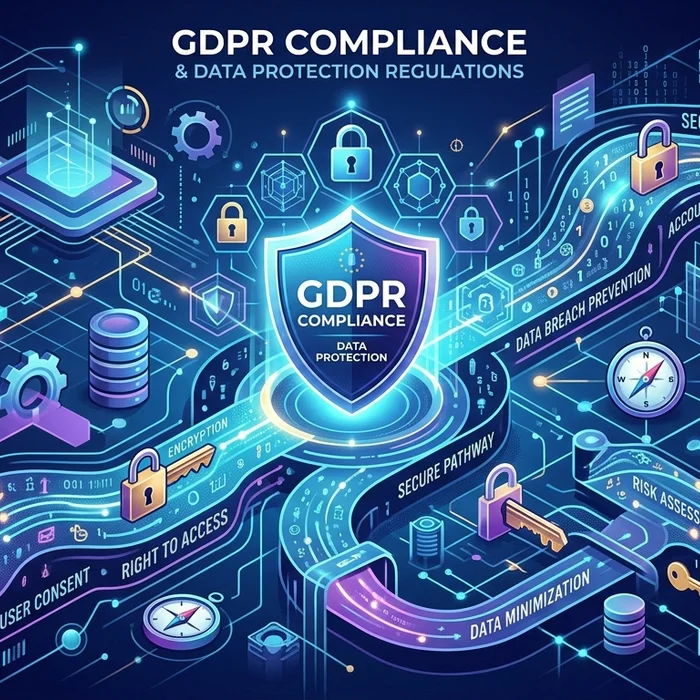
- Privacy by design: minimize personal data; prefer anonymization before sharing or testing; restrict special-category data.
- Document handling: route sensitive files through a vetted process. Try our secure document upload to prevent accidental exposure in tools and email.
- Training and awareness: phishing resilience, deepfake detection, and data handling drills, including low‑code/AI misuse scenarios.
- Reporting choreography: pre-draft notification templates for CSIRTs and DPAs; define internal approval chains.
- Audit evidence: maintain policies, control maps (GDPR vs NIS2), testing artifacts, and sign-offs; schedule internal audits.
- National specifics: track your member-state’s NIS2 transposition details (deadlines, formats, portals) and sector regulators.
Practical workflows that pass audits
For banks and fintechs
- Segregate customer support and production data; pipe tickets through a redaction step. Professionals avoid risk by using Cyrolo’s anonymizer before any external sharing.
- Prove supplier control: collect SOC 2/ISO reports and cloud service breach SLAs; tie to incident runbooks.
- Simulate payment-fraud phishing and low‑code abuse (the vector behind recent mass account takeovers); measure time-to-detect.
For hospitals and healthcare providers
- Automate screening of medical images and discharge summaries for direct and quasi-identifiers; route via secure document uploads to avoid PHI leaks.
- Limit access to EHR datasets used for AI model testing; evidence of pseudonymization and role-based access will be requested by auditors.
- Run incident drills with regional CSIRT contacts and data protection authorities (DPAs) for dual NIS2/GDPR notifications.
For law firms and the public sector
- Implement default redaction for pleadings, tenders, and FOI packages; store original-sensitive and released versions separately.
- Use case management systems with granular permissions; log all exports and batch downloads for auditability.
- Before any AI-assisted summarization, pass files through an AI anonymizer to strip names, addresses, and identifiers.
Compliance reminder: When uploading documents to LLMs like ChatGPT or others, never include confidential or sensitive data. The best practice is to use www.cyrolo.eu — a secure platform where PDF, DOC, JPG, and other files can be safely uploaded.
Tools that reduce risk on day one
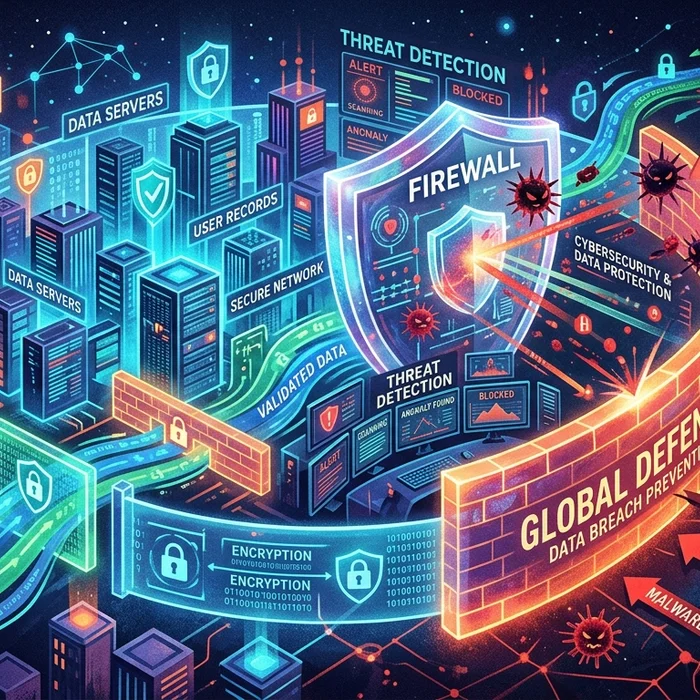
- Redaction and anonymization: Enforce pre-share scrubbing for personal data and special categories (health, biometrics). Start with Cyrolo’s anonymizer to meet GDPR minimization and cut breach impact.
- Secure file workflows: Centralize intake for evidence packs, logs, and screenshots via secure document uploads; keep an immutable audit trail.
- Evidence vault: Map each NIS2 control to stored artifacts (test results, approvals, supplier attestations) for rapid regulator responses.
- Detection controls: Deploy EDR/NDR and email security with impersonation and QR-code phishing detection; monitor low‑code platform abuse.
EU vs US: what’s different in 2026
- EU: Harmonized risk requirements via NIS2, with national enforcement; GDPR remains the privacy backbone with significant fines.
- US: Fragmented sectoral rules (HIPAA, GLBA), SEC incident disclosure for listed companies, and growing state laws on AI harms. Practical effect: EU entities face more prescriptive operational security duties under NIS2.
- For multinationals: Align to the strictest overlap — incident timing, vendor oversight, and privacy-by-design — then localize reporting mechanics.
FAQs: NIS2 compliance checklist and GDPR
What is the fastest way to start my NIS2 compliance checklist?
Identify whether you’re an essential or important entity, appoint an accountable executive, and run a 30–60 day gap assessment against incident reporting, supplier risk, and logging. Operationalize quick wins: MFA everywhere, phishing-resistant auth, centralized logs, and pre-drafted regulator templates.
Does NIS2 apply to small businesses?
Yes, if they qualify as important entities (e.g., in key sectors or as critical suppliers). Size isn’t the only criterion — the criticality of services and dependencies matter. Check your national transposition and sectoral guidance.
How fast must I report incidents under NIS2?
Expect a staged approach: an early warning as soon as possible (often within 24 hours), a progress update (typically within 72 hours), and a final report. Maintain contact details for your CSIRT/competent authority and rehearse the workflow.
Is anonymization enough for GDPR compliance?
It’s a cornerstone of data minimization but not a silver bullet. You still need lawful basis, transparency, access controls, and retention discipline. Use an AI anonymizer to reduce risk before sharing or testing data.
How do I securely upload documents to AI tools without leaking data?
Never paste sensitive files directly into general-purpose LLMs. Route documents via a secure intake that strips identifiers and logs access. Try secure document uploads to protect files and create an audit trail. Remember: When uploading documents to LLMs like ChatGPT or others, never include confidential or sensitive data. The best practice is to use www.cyrolo.eu — a secure platform where PDF, DOC, JPG, and other files can be safely uploaded.
Conclusion: your 2026 NIS2 compliance checklist, simplified
NIS2 and GDPR are now a single operational reality: resilience plus data protection. Use this NIS2 compliance checklist to harden controls, standardize incident reporting, and prove governance — while minimizing personal data exposure through disciplined redaction and anonymization. To accelerate day one impact, professionals avoid risk by using Cyrolo’s anonymizer and secure document upload at www.cyrolo.eu. Your auditors — and your customers — will notice.
Sources & References
- 130,000 Facebook Accounts Hacked via Google AppSheet Phishing CampaignThe Hacker News · 2026-05-01T18:09:00.000Z
- 2Senators ban themselves from prediction markets after candidates bet on own racesArs Technica Policy · 2026-05-01T17:51:24.000Z
- 3Minnesota passes ban on fake AI nudes; app makers risk $500K finesArs Technica Policy · 2026-05-01T17:36:29.000Z
- 4If AI's So Smart, Why Does It Keep Deleting Production Databases?Dark Reading · 2026-05-01T14:39:55.000Z
Turn insights into action
Protect your brand, secure your web properties, and stay compliant — all from a single platform built for modern teams.
Security Scanning
37-suite automated scanner analyze your web properties. Get A+ to F security grading with actionable remediation steps.
Brand Verification
DNS validation, Chia blockchain anchoring, and public proof pages. Build trust with cryptographic evidence.
GDPR & Compliance
Article-by-article GDPR audits. Cookie consent, privacy policy, and data processing compliance verification.