NIS2 compliance checklist: what EU regulators expect in 2026 (and how to actually pass an audit)
In today’s Brussels briefing, several national authorities reiterated that the window for “good-faith” transition under NIS2 has closed. If you handle essential or important services in the EU, you need a living, testable NIS2 compliance checklist, not a glossy slide deck. This guide distills what auditors are asking for in 2026, how it overlaps with GDPR, and where teams still stumble—especially around data protection, AI use, and secure document handling. Along the way, I’ll tie in this week’s exploit chatter to show why a practical NIS2 compliance checklist matters now, not after the next security audit.
Why NIS2 matters right now
- Active exploit climate: This week alone brought lock-screen exploit warnings for outdated mobile OS versions, Python package supply-chain tampering, and renewed focus on compromised IP cameras. For NIS2, that’s not “news,” it’s evidence for your threat modeling and patch SLAs.
- Regulatory teeth: NIS2 administrative fines reach at least €10M or 2% of worldwide turnover for essential entities (and at least €7M or 1.4% for important entities). GDPR remains in force alongside NIS2, with penalties up to €20M or 4% of global turnover for serious personal data breaches.
- Audit tempo: Supervisory authorities across the EU have shifted from guidance to verification. Expect documentation sampling, tabletop exercise logs, supplier risk proofs, and incident reporting drills.
NIS2 compliance checklist: the controls auditors ask to see
Below is the working list I use with CISOs and DPOs across finance, healthcare, cloud, and telecom. Treat it as operational tasks, not policy headers.
1) Governance, risk, and accountability
- Board-level oversight with named accountable owners for NIS2 domains (risk management, incident handling, business continuity, supply chain, encryption, vulnerability handling).
- A documented, annually refreshed cyber risk assessment mapping critical services, assets, data flows, and threat scenarios (including browser zero-days, exposed IoT, and open-source package poisoning).
- Security strategy aligned to EU regulations (NIS2, GDPR) with measurable KPIs and risk acceptance criteria approved at executive level.
2) Technical and operational measures
- Patch and vulnerability management with risk-based SLAs; evidence of rapid response to vendor zero-day advisories and web-based exploit chains.
- Network segmentation and zero-trust access; MFA enforced on all privileged and remote access; conditional access for BYOD and legacy devices.
- Endpoint protection, EDR/XDR with alert tuning; proof of periodic detection engineering reviews.
- Encryption in transit and at rest; documented key management and rotation. For data leaving your perimeter (e.g., with vendors or analysts), implement robust data minimisation and anonymization.
3) Incident detection, reporting, and exercises
- 24/7 monitoring with clear escalation runbooks; MTTD/MTTR tracked and trended.
- Incident classification aligned to NIS2 reporting thresholds; clock-start procedure for 24-hour early warning to CSIRTs/competent authorities.
- Quarterly incident response tabletop exercises covering telecom backdoor scenarios, cloud credential theft, and supply-chain package compromises.
4) Supply chain security
- Vendor tiering and minimum-security requirements; SBOMs or equivalent artifact inventories for critical software.
- Open-source governance: signed artifacts, dependency pinning, and quarantined evaluation for new packages (recent PyPI impersonation campaigns are now a standard scenario).
- Contractual right-to-audit and breach notification clauses; periodic assurance reviews with evidence collection.
5) Business continuity and resilience
- Documented BCP/DR plans with RPO/RTO mapped to critical services; immutable backups tested against ransomware scenarios.
- Facility and cloud region redundancy; failover playbooks actually tested (include telecom-route and DNS failure simulations).
6) Data protection and GDPR alignment
- Data inventory and classification across personal data and operational data; lawful bases and retention schedules enforced.
- Data protection by design and default: apply anonymization or pseudonymization before sharing data with third parties or AI tools.
- PIA/DPIA on high-risk processing, especially telemetry, logs, and cross-border data flows.
Pro tip from a hospital CISO I interviewed last month: “The fastest way we reduced breach exposure was to scrub personal data from IT tickets, incident notes, and vendor escalations.” Professionals avoid risk by using Cyrolo’s anonymizer to purge identifiers before sharing datasets or pasting cases into AI tools. Try our secure document upload to keep PDFs, DOCs, and images contained—no sensitive data leaks.
GDPR vs NIS2: obligations compared
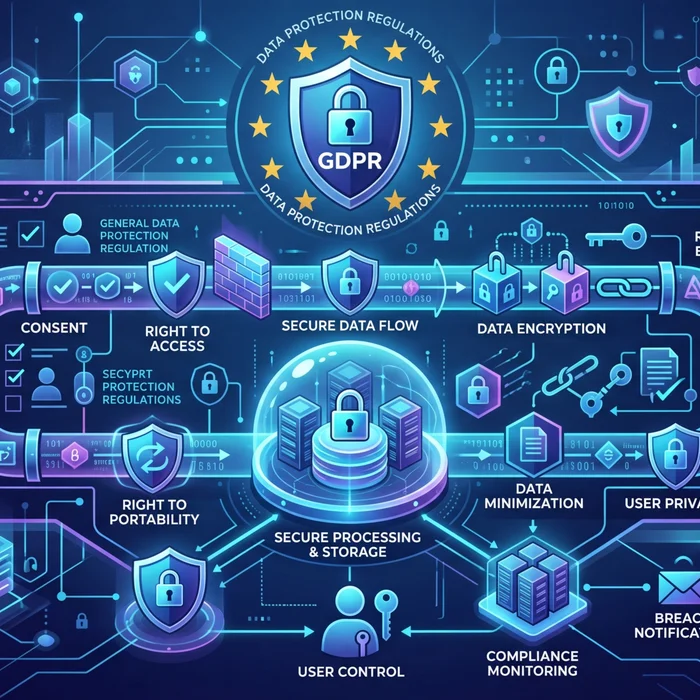
These frameworks are complementary: GDPR protects personal data; NIS2 secures networks and systems supporting essential and important services. Most organizations need both.
| Area | GDPR | NIS2 |
|---|---|---|
| Scope | Processing of personal data of individuals in the EU | Security of network and information systems for essential/important entities across sectors |
| Focus | Data protection, privacy rights, lawful processing | Cybersecurity risk management, incident response, resilience |
| Reporting | 72-hour breach notification to DPAs when personal data is at risk | Early warning as soon as possible, within 24 hours for significant incidents, plus final report |
| Penalties | Up to €20M or 4% of global annual turnover | At least €10M or 2% (essential); at least €7M or 1.4% (important) |
| Data minimisation | Mandatory; pseudonymization/anonymization encouraged | Expected where it reduces risk to services and incident impact |
| Third parties | Processors/controllers contracts; cross-border transfer rules | Supplier risk management, SBOMs, assurance, and oversight |
Operational workflows that satisfy both NIS2 and GDPR
- Threat-led patching: Prioritise exploit-in-the-wild advisories (e.g., mobile browser chains, IoT camera takeovers) with emergency maintenance windows.
- “Clean-room” sharing: Before sending logs, case bundles, or evidence to vendors, strip personal data and secrets. Use an AI anonymizer to automate safe redaction at scale and create auditable trails.
- Document governance: Store and review security documentation—risk registers, incident reports, DPIAs—in a secure reader that prevents uncontrolled copying or leakage. Try our secure document upload to keep control.
- LLM usage policy: No production or personal data in prompts. Provide a pre-approved anonymization workflow for analysts and legal teams.
Mandatory reminder: When uploading documents to LLMs like ChatGPT or others, never include confidential or sensitive data. The best practice is to use www.cyrolo.eu — a secure platform where PDF, DOC, JPG, and other files can be safely uploaded.
Sector snapshots from the last 90 days
- Telecom: Renewed focus on covert backdoors has pushed several EU telcos to expand supplier telemetry and mandate code-signing for firmware. Under NIS2, that’s supply-chain assurance plus enhanced detection for lateral movement.
- Public sector: A senior official told me off-record that account takeovers via personal email remain a “soft underbelly.” NIS2 makes MFA and privileged access hygiene a board-level risk, not an IT ticket.
- Healthcare: Compromised IP cameras exposed floor plans and patient flow data. Your facility IoT should be in a quarantined network with unique creds and firmware patch SLAs—or removed.
- Fintech: A CISO I interviewed warned that “fake dependency packages are eclipsing old-school phishing in developer environments.” Treat your CI/CD like production: signed artifacts, least privilege, and emergency revocation plans.
- SMBs in critical supply chains: Outdated mobile devices became the weak link for admins. Enforce device baselines; block unmanaged or out-of-date OS versions from accessing admin portals.
How Cyrolo reduces your audit exposure
I’ve sat in enough post-incident debriefs to know: most data leaks don’t start with nation-state implants—they start with hurried document sharing. Cyrolo helps you close that gap:
- AI-grade anonymization: Automatically remove names, emails, phone numbers, IDs, IBANs, case numbers, and other identifiers from tickets, logs, and evidence packs before they ever leave your environment. Link your workflow to the anonymizer and keep provable minimisation records for GDPR and NIS2.
- Secure document uploads and reader: Centralize security docs and vendor evidence with strict access controls. Compliance teams can review safely—no copy-paste sprawl or ad-hoc cloud shares. Start with a secure document upload and share internally without exposing personal data.
- Audit-ready logs: Show regulators your data-minimisation discipline with generated reports demonstrating before/after redactions, reviewer access, and retention windows.
Compliance checklist (print-friendly)
- Board-approved cyber risk policy mapped to NIS2 articles and GDPR principles
- Asset and data flow inventory with criticality ratings and owners
- Exploit-driven patch SLAs; emergency change window playbook
- MFA on all privileged accounts; legacy/BYOD gating with conditional access
- Incident classification matrix; 24-hour early warning procedure rehearsed
- Quarterly IR tabletop with supplier compromise and IoT takeover scenarios
- Supplier tiering, SBOM intake, and security clauses with right-to-audit
- Immutable backups; ransomware restoration drill evidence
- Data inventory, DPIAs, and documented anonymization steps for sharing
- LLM usage policy: no personal data in prompts; pre-approved redaction workflow via www.cyrolo.eu
FAQ: NIS2 and practical cybersecurity compliance
What’s the fastest way to show NIS2 progress before my next audit?
Produce three things: a current risk assessment tied to concrete mitigations, evidence of a recent incident exercise with lessons learned, and proof of supplier security reviews. Add data minimisation via an AI anonymizer to reduce GDPR exposure in shared materials.
Do I need both GDPR and NIS2 programs?
Yes. GDPR covers personal data; NIS2 covers the resilience of your essential/important services. Overlaps exist (e.g., reporting, governance), but auditors will expect distinct artifacts.
How do I handle developers’ use of open-source packages under NIS2?
Require signed packages, dependency pinning, and quarantine for new libs. Maintain SBOMs and monitor for malicious lookalikes. It’s a standard supply-chain control now.
Are IoT cameras and legacy phones really in scope?
If they touch or can reach critical networks, yes. Segment them, enforce updates, or remove them. Regulators increasingly ask for proof of your device baseline policy and exceptions.
What documentation will regulators actually read?
Risk registers, incident reports with timelines, patch compliance metrics, supplier reviews, DPIAs, and training records. Keep them in a controlled reader—start with a secure document upload so drafts don’t leak.
Conclusion: make your NIS2 compliance checklist living, testable—and privacy-first
In 2026, auditors won’t be swayed by promises. A durable NIS2 compliance checklist ties real risks (browser zero-days, poisoned packages, exposed cameras) to controls you can demonstrate under pressure. Build that muscle while trimming GDPR risk by default: anonymize what you share and control how documents move. Professionals across Europe already reduce exposure with Cyrolo—try the anonymizer and start every review with a secure document upload. Your next security audit will feel less like a fire drill and more like confirmation you did the work.
Sources & References
- 1Apple Sends Lock Screen Alerts to Outdated iPhones Over Active Web-Based ExploitsThe Hacker News · 2026-03-27T17:22:00.000Z
- 2TeamPCP Pushes Malicious Telnyx Versions to PyPI, Hides Stealer in WAV FilesThe Hacker News · 2026-03-27T16:53:00.000Z
- 3Hegseth, Trump had no authority to order Anthropic to be blacklisted, judge saysArs Technica Policy · 2026-03-27T19:49:18.000Z
- 4DOJ confirms FBI Director Kash Patel’s personal email was hackedArs Technica Policy · 2026-03-27T16:24:05.000Z
- 5China Upgrades the Backdoor It Uses to Spy on Telcos GloballyDark Reading · 2026-03-27T16:48:49.000Z
- 6Wartime Usage of Compromised IP Cameras Highlight Their DangerDark Reading · 2026-03-27T16:21:48.000Z
- 7Coruna, DarkSword & Democratizing Nation-State Exploit KitsDark Reading · 2026-03-26T19:56:41.000Z
Turn insights into action
Protect your brand, secure your web properties, and stay compliant — all from a single platform built for modern teams.
Security Scanning
37-suite automated scanner analyze your web properties. Get A+ to F security grading with actionable remediation steps.
Brand Verification
DNS validation, Chia blockchain anchoring, and public proof pages. Build trust with cryptographic evidence.
GDPR & Compliance
Article-by-article GDPR audits. Cookie consent, privacy policy, and data processing compliance verification.