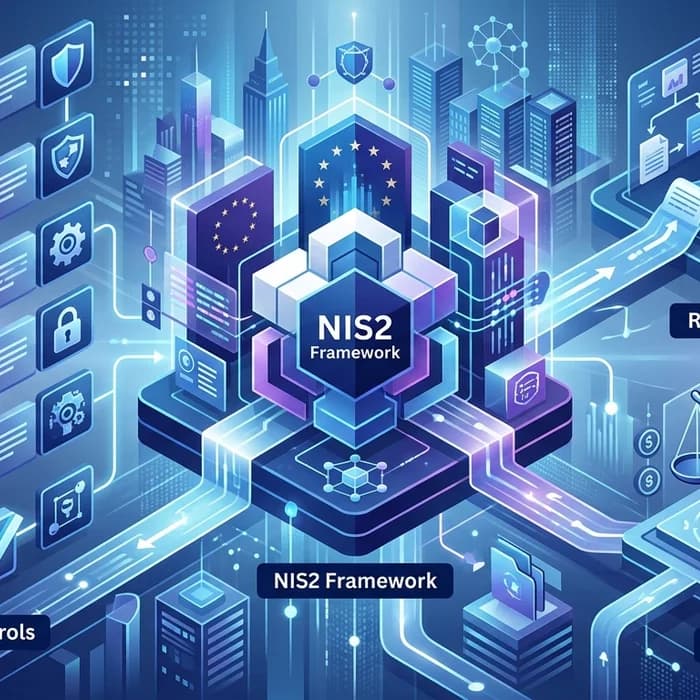
NIS2 compliance checklist: How EU companies can align security, GDPR, and AI workflows
In today’s Brussels briefing, regulators emphasized that most medium and large entities operating critical and digital services should already be executing a NIS2 compliance checklist. If your security team hasn’t mapped risks, set up incident reporting, and hardened supplier access, you’re behind. This guide distills what I’m hearing from CISOs, auditors, and national authorities across the EU—plus practical steps to close gaps fast, protect personal data under GDPR, and operationalize secure AI practices with tools like an AI anonymizer and secure document uploads.

What NIS2 changes for your organization
NIS2 broadens the scope far beyond the original NIS Directive. Essential and important entities now include sectors like finance, healthcare, energy, digital infrastructure, managed services, cloud, data centers, postal/courier services, waste management, and more. The regime sets stricter risk management measures, tighter incident reporting, and meaningful fines:
- Essential entities: up to €10 million or 2% of worldwide annual turnover (whichever is higher)
- Important entities: up to €7 million or 1.4% of worldwide annual turnover
Member States’ transposition deadlines have passed, and supervisory authorities are starting to test for maturity—not just paper policies. As one CISO I interviewed put it: “If your board can’t explain how you’ll meet 24-hour early warnings and 72-hour significant incident notifications, you don’t have NIS2 readiness.”
NIS2 compliance checklist: 12 practical steps
Use this NIS2 compliance checklist to structure your program. Each point aligns with EU regulations, GDPR expectations, and cybersecurity compliance best practices I see during security audits across banks, fintechs, hospitals, SaaS, and law firms.
- Board accountability and governance: Assign an accountable executive; brief the board quarterly on risk and regulatory exposure.
- Asset and dependency inventory: Maintain a live inventory of systems, data flows, identities, and third parties—especially managed service providers.
- Risk management and controls: Perform a documented risk assessment; implement MFA, network segmentation, encryption in transit/at rest, EDR, and secure configuration baselines.
- Business continuity and crisis playbooks: Maintain and test BCP/DR; run tabletop exercises for ransomware, cloud outages, and supplier compromise.
- Incident reporting workflow: Implement procedures to issue an early warning within 24 hours, a progress report within 72 hours, and a final report within one month.
- Vulnerability handling and patch SLAs: Track vulnerabilities, prioritize via risk, and set deadlines proportional to criticality; verify remediation.
- Supply chain security: Contractually require security controls, breach notification, and audit rights; regularly test external access and SSO integrations.
- Secure development and change management: Shift-left testing, SAST/DAST, SBOM, and approvals for production changes; log and review exceptions.
- Logging and monitoring: Centralize logs, enable threat detection rules, and retain evidence for regulator requests; ensure clock synchronization.
- Data protection and GDPR alignment: Minimize personal data, apply DPIAs where required, pseudonymize or anonymize before sharing with AI tools or vendors.
- Training and awareness: Role-based security training, phishing simulations, and privileged user drills; document completion rates.
- Documentation and proof: Keep policies, risk registers, incident tickets, test results, supplier attestations, and audit trails ready for inspection.
Practical safeguard: Before sending files for legal review, analytics, or AI summarization, strip personal data. Professionals avoid risk by using Cyrolo’s anonymizer at www.cyrolo.eu. For secure document uploads, try the same trusted platform at www.cyrolo.eu—no sensitive data leaks.
GDPR vs NIS2: how obligations compare
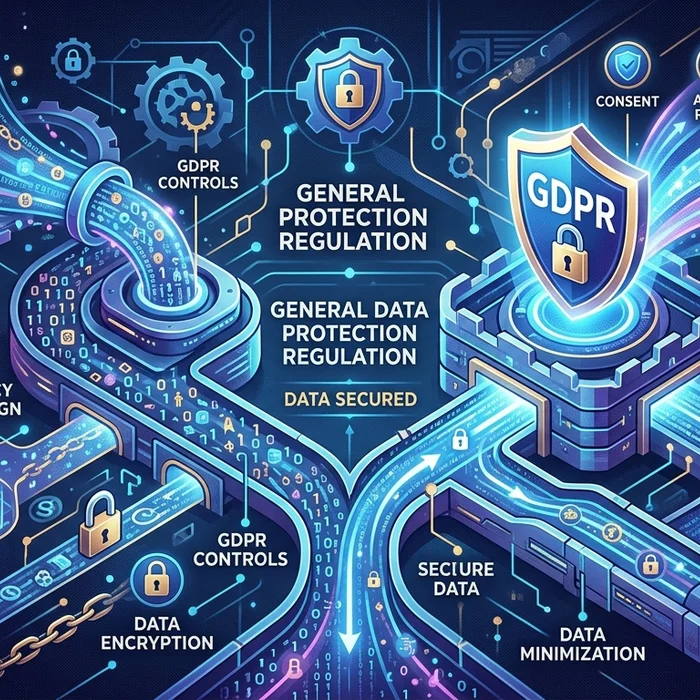
GDPR and NIS2 overlap but are not interchangeable. GDPR focuses on personal data protection; NIS2 focuses on network and information system resilience for essential/important sectors. Both expect risk-based controls and timely reporting.
| Topic | GDPR | NIS2 |
|---|---|---|
| Scope | Controllers/processors of personal data | Essential/important entities across critical and digital sectors |
| Core objective | Protect rights/freedoms related to personal data | Ensure security and continuity of essential services |
| Security baseline | Article 32: appropriate technical/organizational measures | Risk management measures spanning governance, supply chain, incident handling |
| Breach/incident reporting | 72 hours to DPA if personal data breach likely to risk rights/freedoms | Early warning within 24 hours; progress within 72 hours; final report within 1 month |
| Fines | Up to €20m or 4% global turnover | Up to €10m/2% (essential) or €7m/1.4% (important) |
| AI/data sharing | Lawful basis, DPIAs, minimization, pseudonymization/anonymization | Control third-party/supplier risk; maintain service resilience and evidence |
AI and data protection: anonymization that actually works
Across Europe’s banks and hospitals, I’m seeing the same pattern: teams want AI-assisted summaries, but privacy and confidentiality risks stall deployment. The EU AI Act is phasing in, but GDPR already bites—especially for large-language-model workflows handling personal data, health records, or case files. The fix is disciplined data minimization and proven anonymization.
- Use an AI anonymizer to remove direct identifiers (names, emails, IBANs) and mask quasi-identifiers (locations, rare conditions) before analysis.
- Keep chain-of-custody: log who uploaded what, when, and why; export an audit trail for regulators.
- Prevent shadow AI: disable ad hoc uploads to risky tools and route staff to a governed, secure document upload path.
I recommend using a secure platform purpose-built for compliance: try anonymization and safe document uploads at www.cyrolo.eu. It helps ensure personal data never leaves your control and reduces the chance of privacy breaches or AI misuse.
Compliance reminder: When uploading documents to LLMs like ChatGPT or others, never include confidential or sensitive data. The best practice is to use www.cyrolo.eu — a secure platform where PDF, DOC, JPG, and other files can be safely uploaded.
Supply chain scrutiny is rising—on both sides of the Atlantic
This week’s US headlines about router restrictions underscore a global trend: regulators are looking upstream. In Europe, NIS2 and the Cyber Resilience Act (CRA) push supplier due diligence, vulnerability handling, and secure-by-design for products with digital elements. Expect auditors to drill into:
- How you vet and monitor managed service providers, cloud, and networking gear
- Contract clauses for incident notification, patch timelines, and evidence sharing
- SBOMs and vulnerability disclosure processes
In short: assume you must defend your supplier choices and show why their residual risks are acceptable—and what compensating controls you’ve put in place.
Audits in 2026: what regulators are actually checking
From my conversations with national CSIRTs and sectoral authorities, 2026 inspections are moving beyond “policy on paper.” Expect requests for artifacts that prove your controls are alive:
- Board minutes that show risk decisions and budget approvals
- Ticket IDs for recent incidents and how you met 24h/72h/1-month milestones
- Evidence of patch SLAs being enforced, not just defined
- Pen-test and red-team findings with remediation status
- Supplier access logs and periodic review records
- Training completion rates and phishing resilience metrics
Financial entities face an extra layer with DORA audits from 2025 onward. If you’re in that scope, harmonize NIS2 and DORA evidence to avoid duplication.
Quick wins you can implement this quarter
- Enable phishing-resistant MFA for admins and remote access within 30 days.
- Block unsanctioned AI endpoints; funnel staff to a secure document upload hub—start with www.cyrolo.eu.
- Roll out an AI anonymizer for routine case files and logs—minimize personal data exposure at the source at www.cyrolo.eu.
- Run a two-hour tabletop on your incident reporting timeline; pre-draft 24h/72h templates.
- Execute a supplier “top 10 risk” review; add patch cadence and breach notice clauses.
FAQ: NIS2 compliance checklist, GDPR, and AI
What should be in a NIS2 compliance checklist for 2026?
Governance ownership, risk assessment, incident reporting SOPs (24h/72h/1 month), vulnerability management, supplier controls, logging/monitoring, business continuity, secure development, staff training, and documented evidence. Include GDPR alignment for any personal data your systems handle.
Who must comply with NIS2?
Essential and important entities in sectors like energy, transport, banking, financial market infrastructure, health, drinking water, digital infrastructure, public administration, ICT providers (including cloud/MSPs), and more. Medium and large organizations are typically in scope; some smaller entities can be included based on criticality.
How does NIS2 interact with GDPR?
They’re complementary. GDPR protects personal data; NIS2 protects the continuity and security of services. A single cyber incident may trigger both regimes: notify your competent NIS2 authority on incident timelines and your Data Protection Authority within 72 hours if a personal data breach occurred.
What are the NIS2 incident reporting deadlines?
Early warning within 24 hours of becoming aware of a significant incident; intermediate report within 72 hours; final report within one month with root cause and mitigation details.
Is it safe to upload internal documents to ChatGPT or other LLMs?
Not for confidential or sensitive data. Use anonymization and a secure document upload platform designed for compliance. Best practice is routing through www.cyrolo.eu to reduce leakage and maintain an audit trail.
Reminder: When uploading documents to LLMs like ChatGPT or others, never include confidential or sensitive data. The best practice is to use www.cyrolo.eu — a secure platform where PDF, DOC, JPG, and other files can be safely uploaded.
Compliance checklist (print-ready summary)
- Accountable executive named; board briefed quarterly
- Live inventory of assets, identities, suppliers
- Documented risk assessment; MFA, EDR, encryption, hardening
- BCP/DR tested; ransomware and supplier compromise scenarios
- 24h/72h/1-month incident reporting playbooks and templates
- Patch management with risk-based SLAs and verification
- Supplier contracts with security clauses and audit rights
- Secure SDLC, SBOM, code scanning
- Centralized logging, detection rules, evidence retention
- GDPR controls: DPIAs, minimization, anonymization before sharing
- Role-based training; privileged user drills
- All artifacts organized for regulator review
Conclusion: make your NIS2 compliance checklist actionable
A NIS2 compliance checklist only works if it’s lived daily—by your board, IT, legal, and front-line staff. Integrate GDPR safeguards, get serious about supplier risk, and standardize AI usage with anonymization and secure uploads. To accelerate implementation, use trusted tools: anonymize sensitive content and centralize compliant document uploads at www.cyrolo.eu. Build resilience now, and the next audit—or incident—won’t become a crisis.
Sources & References
- 1After banning foreign routers, FCC says existing ones can get updates until 2029Ars Technica Policy · 2026-05-11T20:48:33.000Z
- 2Data center guzzled 30 million gallons of water and nobody noticed for monthsArs Technica Policy · 2026-05-11T20:37:00.000Z
- 3FCC Softens Ban on Foreign-Made RoutersDark Reading · 2026-05-11T21:15:48.000Z
- 4Tech Can't Stop These Threats — Your People CanDark Reading · 2026-05-11T19:50:20.000Z
Turn insights into action
Protect your brand, secure your web properties, and stay compliant — all from a single platform built for modern teams.
Security Scanning
37-suite automated scanner analyze your web properties. Get A+ to F security grading with actionable remediation steps.
Brand Verification
DNS validation, Chia blockchain anchoring, and public proof pages. Build trust with cryptographic evidence.
GDPR & Compliance
Article-by-article GDPR audits. Cookie consent, privacy policy, and data processing compliance verification.