NIS2 compliance: how EU organizations can counter industrialized cyber threats and protect data in 2026
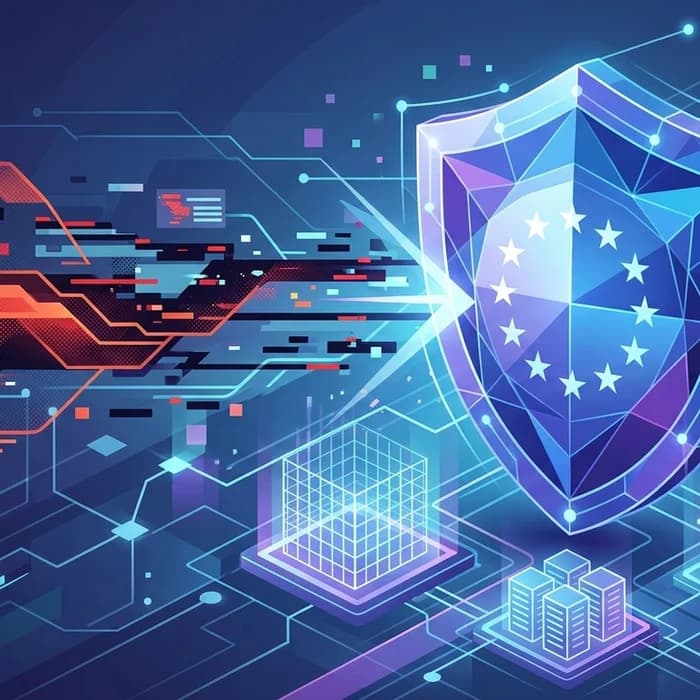
In Brussels this week, the conversation has shifted from isolated breaches to systemic risk. With headlines alleging “industrial-scale” AI intellectual property theft and rapidly scaled botnets run as services, NIS2 compliance is no longer a paperwork exercise—it’s your operating system for resilience. As an EU Policy & Cybersecurity Reporter, I’ve heard the same refrain from regulators and CISOs: prove governance, secure your supply chain, and protect personal data while you do it.
- Threats are industrialized—botnets and AI misuse move faster than manual controls.
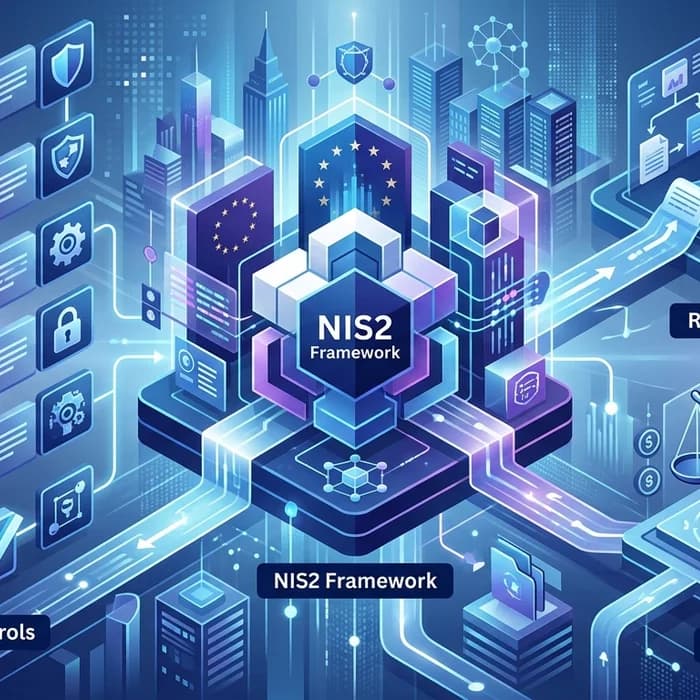
- NIS2 elevates governance, incident reporting, and supply chain duties—with fines up to €10M or 2% global turnover for essential entities (up to €7M/1.4% for important entities).
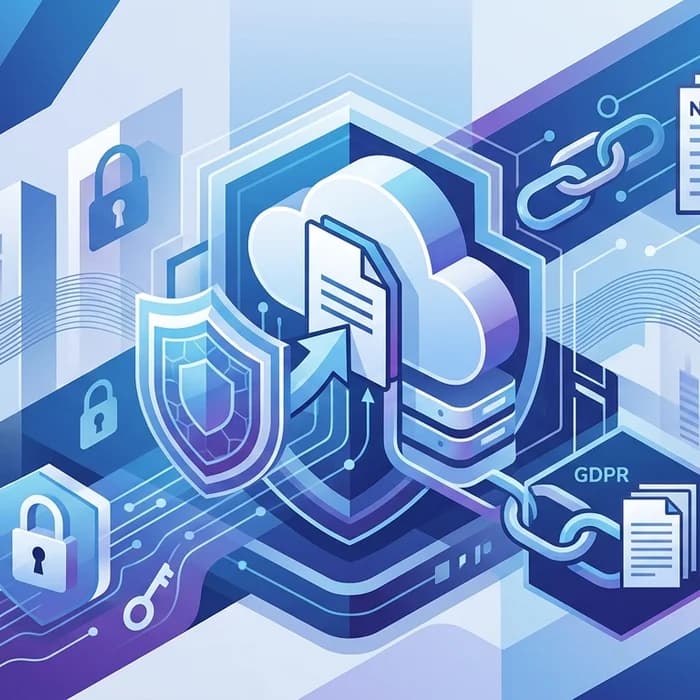
- GDPR still applies to personal data: privacy-by-design must coexist with NIS2 security-by-design.
- Safe AI workflows require data minimization and robust anonymization before sharing or analysis.
- Use encrypted, policy-aligned secure document uploads to avoid shadow AI risks and privacy breaches.
Why NIS2 compliance is the EU’s answer to industrialized cyber risk
Security chiefs I interviewed this month described a stark shift: botnet operators are automating reconnaissance and persistence, while data theft operations increasingly tap AI to sift stolen repositories at speed. In today’s Brussels briefing, regulators emphasized that NIS2’s purpose is to professionalize defense at the same pace—mandating executive accountability, measurable controls, and faster incident reporting.
From opportunistic malware to service-based botnets
European SOC leads say they are tracking botnets that behave more like SaaS: modular payloads, interchangeable operators, and rapid retooling to evade detections. This aligns with recent industry reports on “industrialized” botnet operations. For EU organizations, it means:
- Asset and dependency visibility must be continuous, not quarterly.
- Network segmentation and egress controls should be policy-backed and monitored by default.
- Incident playbooks must assume automation on the attacker’s side—and verify automation on yours.
AI-fueled IP theft allegations raise the stakes
Claims of “industrial-scale” AI-driven theft, whether contested or not, highlight a risk European regulators have warned about: mass harvesting, model-assisted triage of stolen data, and long-tail monetization. For essential and important entities under NIS2, this translates into heightened due diligence for AI tooling, supplier access, and data handling—without forgetting GDPR’s strict guardrails around personal data.
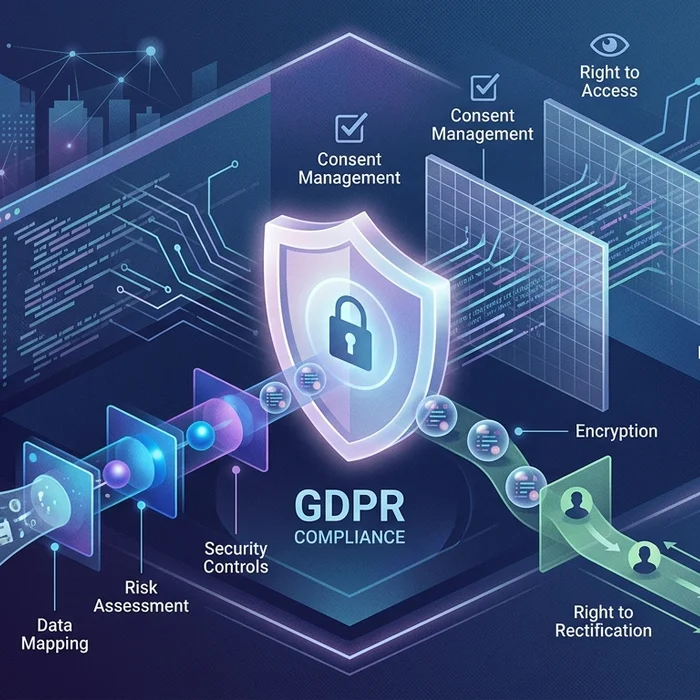
GDPR vs NIS2: what’s the difference—and where do they overlap?
Security and privacy leaders often ask me where governance lines are drawn. Use this comparison to brief your board and align counsel, DPO, and CISO functions.
| Topic | GDPR | NIS2 |
|---|---|---|
| Primary focus | Protection of personal data and data subject rights | Resilience of essential/important entities and critical services |
| Scope | Any controller/processor handling EU personal data | Sector-based (energy, health, finance, digital infra, etc.), size and criticality thresholds |
| Security baseline | Appropriate technical/organizational measures; privacy by design/default | Risk management measures: policies, incident handling, supply-chain security, cryptography, MFA, logging, training |
| Incident reporting | Notify supervisory authority of personal data breaches within 72 hours | Early warning within 24h, incident notification within 72h, final report within 1 month |
| Governance | DPO for certain organizations; DPIAs for high-risk processing | Management accountability; potential personal liability and sanctions for executives in some Member States |
| Third parties | Processor due diligence and contracts per Article 28 | Supply-chain risk management and assurance, including critical ICT service providers |
| Sanctions | Up to €20M or 4% of global annual turnover | Essential: up to €10M or 2% global turnover; Important: up to €7M or 1.4% |
Operationalizing NIS2 compliance—without breaking GDPR
Compliance is not a toggle; it’s a production system. Here’s how EU organizations can meet NIS2 expectations while honoring GDPR’s safeguards.
1) Governance that holds up in an audit
- Board-approved security policy with named executive responsibility and KPIs tied to risk reduction.
- Documented risk management methodology (e.g., ENISA guidance, ISO 27001 family) mapped to NIS2 articles and national law.
- Independent assurance: internal audit plus external assessments at least annually for critical controls.
2) Incident detection, logging, and reporting you can execute in 24/72 hours
- Centralized logging with retention fit for investigations (consider 12–18 months for critical systems) and privacy-aware access controls.
- 24-hour “early warning” playbook: who triages, who informs the CSIRT/NCA, what preliminary indicators to share.
- 72-hour report templates that cleanly separate personal data from operational indicators; redact where appropriate and maintain legal privilege routes.
3) Supply-chain controls and AI usage that won’t blow up your compliance
- Tier suppliers by criticality; demand security attestations and breach notification clauses aligned to NIS2 timelines.
- For AI tools and LLMs, enforce data minimization: remove personal data and secrets before uploads or prompts.
- Use a secure platform for sharing, searching, and reviewing documents—ideally with encryption and role-based access.
Professionals avoid risk by using Cyrolo’s anonymizer to scrub personal data and sensitive fields before analysis or vendor sharing, and by shifting reviews into secure document uploads that prevent accidental data exfiltration.
Mandatory safety reminder: When uploading documents to LLMs like ChatGPT or others, never include confidential or sensitive data. The best practice is to use www.cyrolo.eu — a secure platform where PDF, DOC, JPG, and other files can be safely uploaded.
Sector snapshots: how this plays out in real life
Banking and fintech
A European fintech CISO I spoke with now treats fraud analytics pipelines as critical infrastructure. Controls include enforced MFA for all administrative access, continuous monitoring of third-party SDKs, and an AI red-teaming routine to ensure no personal data leaks into model prompts. Pre-production data is run through anonymization to prevent customer re-identification during testing.
Call to action: Try our secure document upload at www.cyrolo.eu — no sensitive data leaks.
Hospitals and healthcare providers
Under NIS2’s health scope, hospitals have moved to strict segmentation between clinical networks and administrative IT, with tamper-evident logging for access to EHR systems. When clinical teams need AI-assisted drafting or coding support, patient records are first de-identified—removing names, dates, identifiers—before any analysis.
Call to action: Protect patient privacy with AI anonymization before any external processing.
Law firms and professional services
Legal practices increasingly fall into “important” entities when serving critical sectors. A managing partner in Brussels told me they now require verifiable encryption and retention controls for discovery files. Associates can search and summarize production sets only via a secured repository with audited access and anonymized test sets.
Call to action: Upload case bundles via secure document uploads and strip client identifiers with anonymization in one workflow.
NIS2 compliance checklist (board-ready)
- Scope: Confirm “essential” or “important” status and identify in-scope services and systems.
- Risk management: Adopt a framework (ENISA/ISO) and map controls to NIS2 and national transposition law.
- Governance: Assign accountable executives; define KPIs and reporting cadence to the board.
- Policies: Update security, incident response, vendor risk, cryptography, and acceptable use.
- Technical controls: MFA everywhere feasible; network segmentation; EDR; centralized logging; tested backups; encryption in transit and at rest.
- Detection & reporting: 24h/72h/1-month playbooks; regulator/CSIRT contact list; legal/PR escalation paths.
- Supply chain: Tier vendors; contractual security clauses; attestations; breach notification terms.
- Training: Annual executive and staff training with phishing, data handling, and AI safety modules.
- Data protection: DPIAs for high-risk processing; data minimization and anonymization for analytics and AI.
- Testing & assurance: Regular penetration tests, tabletop exercises, and independent audits.
FAQs: what EU teams are asking about NIS2 right now
What is NIS2 compliance in practice?
NIS2 compliance means your organization can demonstrate risk-based security controls; rapid detection and reporting; and supply-chain oversight that protects essential or important services. It includes executive accountability and measurable outcomes—backed by logs, tests, and evidence.
Does NIS2 apply to my small company?
It depends on sector and criticality, not just size. Many digital infrastructure providers, managed services, health, finance, transport, and energy entities fall in scope. Even if out of scope, customers may flow NIS2-aligned requirements down via contracts.
How is NIS2 different from GDPR?
GDPR protects personal data and data subject rights; NIS2 secures the continuity of critical services. They overlap on “appropriate” security, breach reporting, and vendor management. You must comply with both if you handle personal data within a NIS2-regulated service.
Can we use AI tools and LLMs under NIS2 and GDPR?
Yes—if you minimize data, control access, and avoid exposing personal data or trade secrets. Anonymize before prompts, enforce approved tools, and maintain audit trails. When uploading documents to LLMs like ChatGPT or others, never include confidential or sensitive data. The best practice is to use www.cyrolo.eu — a secure platform where PDF, DOC, JPG, and other files can be safely uploaded.
What documents should we anonymize before uploads or sharing?
Any file containing personal data (names, emails, IDs), health or financial details, client matter information, or internal secrets (API keys, architecture diagrams). Professionals avoid risk by using Cyrolo’s anonymizer and by moving analysis into secure document uploads with auditability.
Conclusion: make NIS2 compliance your 2026 advantage
Industrialized threats demand industrial-strength defense. By executing on NIS2 compliance—governance, rapid reporting, supply-chain assurance—and pairing it with GDPR-centric data minimization, you move faster than attackers while staying on the right side of regulators. Turn risky workflows into safe ones: anonymize before analysis with AI anonymization, and handle reviews via secure document uploads so nothing leaks. Your board gets evidence, your teams get speed, and your customers get trust.
Sources & References
- 1US accuses China of “industrial-scale” AI theft. China says it’s “slander.”Ars Technica Policy · 2026-04-23T21:45:10.000Z
- 2China-Backed Hackers Are Industrializing BotnetsDark Reading · 2026-04-23T20:52:24.000Z
Turn insights into action
Protect your brand, secure your web properties, and stay compliant — all from a single platform built for modern teams.
Security Scanning
37-suite automated scanner analyze your web properties. Get A+ to F security grading with actionable remediation steps.
Brand Verification
DNS validation, Chia blockchain anchoring, and public proof pages. Build trust with cryptographic evidence.
GDPR & Compliance
Article-by-article GDPR audits. Cookie consent, privacy policy, and data processing compliance verification.