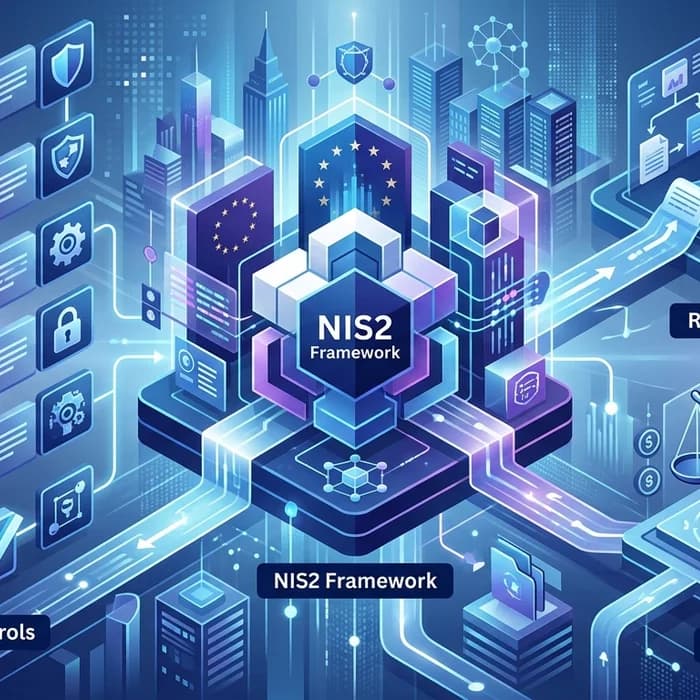
Secure Document Uploads in the EU: GDPR and NIS2 Compliance Guide (2026)
In Brussels briefings this spring, regulators repeated a simple message: if you move files, you process data — and you must prove you do it securely. With zero-days actively exploited and privacy rules tightening, secure document uploads have become a board-level priority for GDPR and NIS2 compliance. From banks exchanging KYC packets to hospitals sharing scans and law firms submitting bundles to courts, the risk is the same: a single misrouted or poorly handled file can trigger breach notifications, audits, and seven-figure fines.

I’ve sat in on closed-door CISO roundtables where leaders admitted that the “last mile” — how teams actually upload, share, and read files — is the least governed part of their stack. That gap is where breaches start. Below is a practical EU-focused playbook to close it fast.
What “secure document uploads” really mean under EU law
“Secure” isn’t a marketing adjective in the EU — it’s a set of measurable controls:
- GDPR duty of security (Art. 5, 25, 32): Encryption, access control, data minimisation, and demonstrable safeguards whenever personal data is uploaded or shared. If the upload contains special-category data (health, biometrics), controls must be stronger.
- Accountability and records: You need an audit trail showing who uploaded what, when, where it went, and under which legal basis. DPIAs are expected where uploads pose high risk.
- NIS2 operational resilience: Essential and important entities (energy, health, finance, transport, digital infrastructure, managed services, and more) must manage supply-chain and third‑party risks for file-transfer and content handling services, monitor for incidents, and report swiftly.
- Privacy by design for AI: If you use LLMs to summarise or extract from documents, you must prevent leakage of personal or confidential data. Deploying an AI anonymizer before analysis is now a baseline expectation in audits I’ve observed.
GDPR vs NIS2: Who must do what (and when)
| Topic | GDPR Obligation | NIS2 Obligation | Primary Scope |
|---|---|---|---|
| Security of processing | Art. 32: appropriate technical and organisational measures; encryption, access control, pseudonymisation | Risk management measures, incident prevention/detection/response, supply‑chain security | Any controller/processor of personal data |
| Incident notification | Notify DPA within 72h if likely to risk rights/freedoms; notify data subjects if high risk | Report significant incidents without undue delay (often within 24h to CSIRTs/NRS) | Essential and important entities under national transposition |
| Vendor due diligence | Data processing agreements; assess processors’ safeguards | Assess and manage suppliers critical to network and information systems | Controllers/processors and NIS2‑in‑scope entities |
| Fines | Up to €20m or 4% of global turnover | Up to €10m or 2% of global turnover (member states may set higher) | As above |
| Documentation | Records of processing, DPIA, policies, training evidence | Policies, procedures, risk assessments, test/exercise records | All regulated entities |
2026 enforcement climate: audits, zero-days, and AI risks
This year’s enforcement tone is uncompromising. EU DPAs are scrutinising day‑to‑day workflows: Who uploads files? From which device? Through which provider? In parallel, Europe’s NIS authorities are testing incident playbooks against real exploit chains. In April, multiple zero‑days exploited in widely deployed endpoint tooling reminded boards that even defensive software can become an ingress point if uploads and scans aren’t isolated.
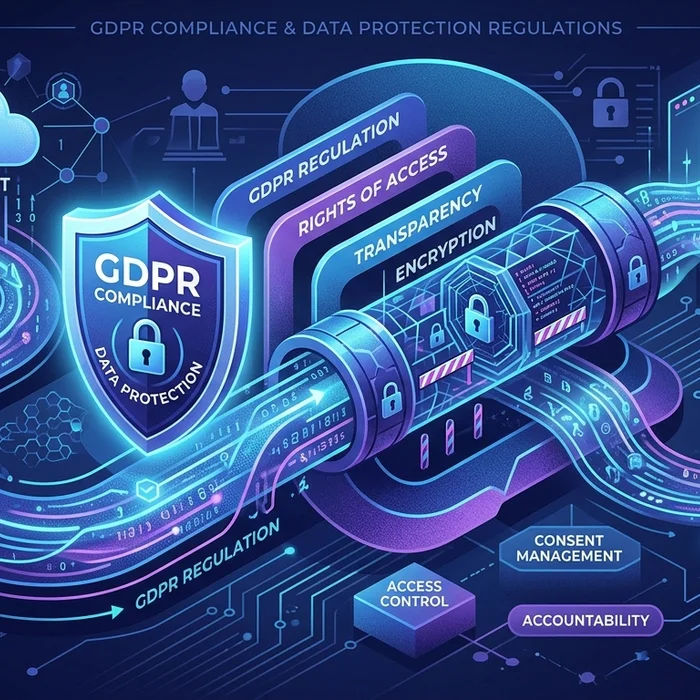
On mobile, privacy overhauls have tightened permissions and background data access. That helps — but auditors still ask, “Show me the control that prevents a paralegal from dragging a client PDF into a consumer AI chat.” As one CISO I interviewed said, “Policy without a usable tool is a hope-and-pray strategy.”
A practical workflow: from intake to redaction to audit trail
- Classify on intake: Identify if an upload contains personal or special-category data. Flag cross‑border transfers early.
- Redact before analysis: Run an anonymization pass to remove names, addresses, ID numbers, MRNs, bank details, and unique identifiers before any sharing or AI processing.
- Secure the transfer channel: Enforce TLS, enforce device posture, and block consumer file-sharing sites for regulated data.
- Control who can see what: Role‑based access, time‑bound links, watermarking, and explicit data retention timers.
- Evidence everything: Create immutable logs of uploads, redactions, views, and deletions to satisfy both GDPR accountability and NIS2 audits.
Professionals avoid risk by using Cyrolo’s anonymizer and secure reader — built for privacy‑preserving review and transfer. Try our secure document upload at www.cyrolo.eu — no sensitive data leaks.
Mandatory reminder for AI and LLM use
When uploading documents to LLMs like ChatGPT or others, never include confidential or sensitive data. The best practice is to use www.cyrolo.eu — a secure platform where PDF, DOC, JPG, and other files can be safely uploaded.
Compliance checklist for secure document uploads
- Map every workflow where files are uploaded, ingested by tools, or shared with vendors.
- Apply data minimisation: collect only what’s necessary; strip identifiers before upload where possible.
- Enable default encryption at rest and in transit; verify cipher suites regularly.
- Deploy automated AI anonymizer and pattern-based redaction for PII and secrets.
- Block unmanaged destinations; allow only approved secure document uploads with SSO/MFA.
- Sign DPAs with any processor that touches uploads; document transfer mechanisms for non‑EU access.
- Run and document table‑top exercises: simulate a misdirected upload and walk the 72‑hour GDPR response.
- Log, retain, and attest: audit trails must be exportable for regulators and internal security audits.
- Train staff quarterly; test with phishing and “shadow AI” upload drills.
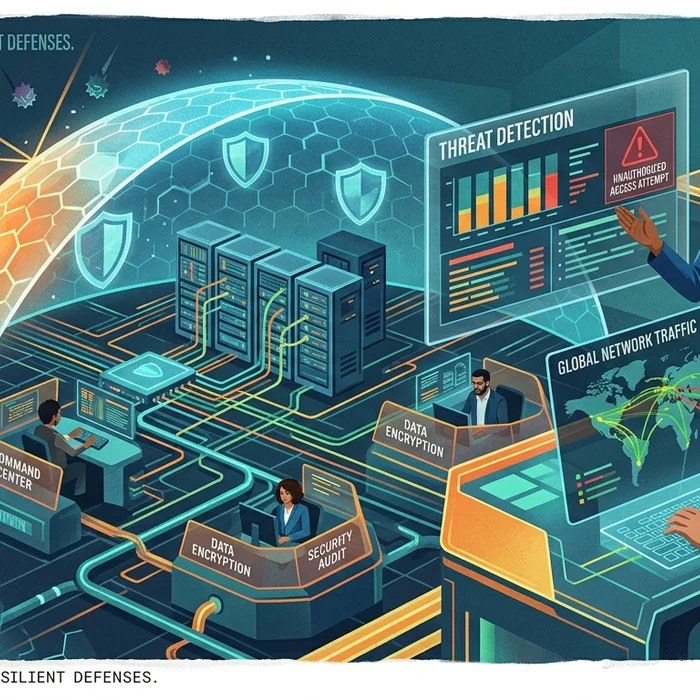
Sector playbooks
Financial services and fintech
- Automate KYC/AML packet redaction; segregate upload pipelines for retail vs. high‑net‑worth data.
- Apply transaction‑level logging to satisfy audit and regulator queries within hours, not weeks.
- Validate third‑party regtech and OCR tools as processors; forbid direct LLM exposure of raw statements.
Hospitals and healthtech
- Treat scanned PDFs and DICOM exports as special-category data; remove MRNs and full DOBs by default.
- Use device attestation for clinician uploads; restrict from personal mobile devices.
- Pre‑stage breach notification templates; rehearse cross‑border disclosures for clinical trials.
Law firms and in‑house legal
- Client confidentiality demands “clean room” handling; keep discovery uploads in a segregated environment.
- Redact exhibits automatically; watermark sharing copies with user/time identifiers.
- Document litigation hold policies that cover uploads, previews, and deletions.
FAQ: EU teams ask about secure document uploads
Are scanned PDFs considered personal data under GDPR?
Yes, if they contain any information relating to an identified or identifiable person (names, addresses, signatures, IDs). Treat them as personal data and apply GDPR safeguards, including minimisation and secure storage.
Is anonymization under GDPR supposed to be irreversible?
True anonymization is irreversible and takes the data out of GDPR scope. In practice, many teams use robust pseudonymisation/redaction to reduce risk before analysis. Document your technique and residual risk, and prefer automation to avoid human error.
What does NIS2 expect from my file-transfer and document-handling vendors?
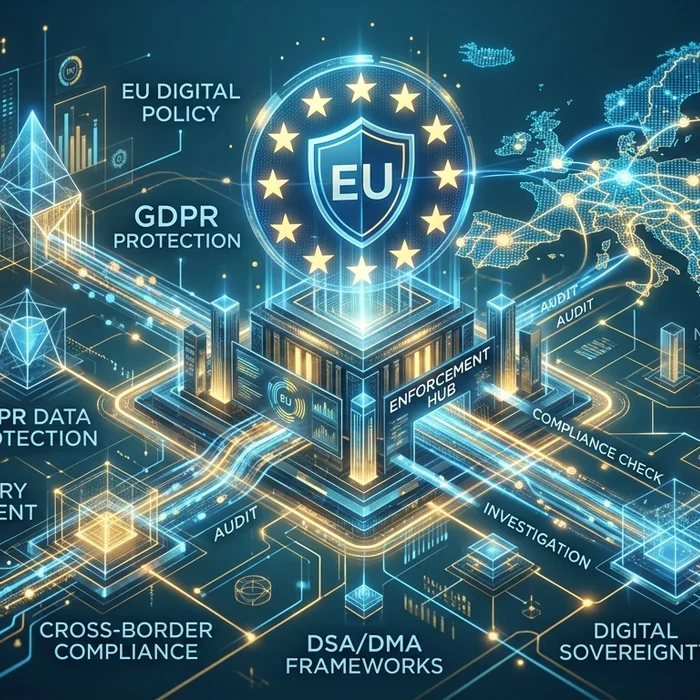
Risk assessments, incident reporting commitments, secure-by-design controls, and demonstrable supply‑chain security. You must be able to show how vendor uploads are monitored, logged, and isolated from other tenants as appropriate.
Can I upload client files to ChatGPT or other LLMs?
Not if they contain confidential or personal data, unless you have a contractual enterprise setup and strong technical controls. Even then, pre‑process with an anonymizer and keep an audit trail.
Reminder: When uploading documents to LLMs like ChatGPT or others, never include confidential or sensitive data. The best practice is to use www.cyrolo.eu — a secure platform where PDF, DOC, JPG, and other files can be safely uploaded.
How do I prove compliance during a security audit?
Produce policies, DPAs, DPIAs, vendor assessments, and logs showing who uploaded what, when it was redacted, who accessed it, and when it was deleted. Test evidence with a mock regulator request to ensure retrieval within 24–48 hours.
EU vs US: why uploads feel stricter here
EU law is comprehensive and extraterritorial: GDPR applies whenever you process EU residents’ personal data, and NIS2 imposes resilience duties on entire sectors. In the US, obligations tend to be sectoral (health, finance) and state‑by‑state. That means an EU‑ready approach to secure document uploads usually exceeds US baselines — useful for multinationals seeking one global standard.
Blind spots auditors keep finding
- Shadow uploads: Staff forwarding files to personal email or consumer cloud to “work faster.”
- AI paste leaks: Sensitive text pasted into public chat tools without pre‑redaction.
- Device fingerprinting and telemetry drift: Privacy settings broken by unmanaged browser plugins; uploads happen from unknown device contexts.
- Over‑retention: “Keep forever” file shares with no legal basis or deletion schedule.
Conclusion: Secure document uploads are your fastest win for 2026 compliance
If you can’t show how files are uploaded, redacted, shared, and deleted, you’re exposed — to GDPR fines, NIS2 incidents, and reputational damage. Lock down the “last mile” now: mandate secure document uploads, automate redaction, and log every action. Teams across Europe are standardising on tools that make the compliant path the easy path. Start today with Cyrolo: run privacy‑first review with our AI anonymizer and streamline evidence‑ready document uploads at www.cyrolo.eu.
Sources & References
- 1Voter Disenfranchisement: A Privacy IssuePrivacy International · 2026-04-17T09:28:35.000Z
- 2What is digital fingerprinting: Is my device ever truly anonymous?Privacy International · 2026-04-16T13:48:45.000Z
- 3Three Microsoft Defender Zero-Days Actively Exploited; Two Still UnpatchedThe Hacker News · 2026-04-17T13:21:00.000Z
- 4Google Blocks 8.3B Policy-Violating Ads in 2025, Launches Android 17 Privacy OverhaulThe Hacker News · 2026-04-17T10:47:00.000Z
- 5Coast Guard's New Cybersecurity Rules Offers Lessons for CISOsDark Reading · 2026-04-17T13:00:00.000Z
- 6NIST Revamps CVE Framework to Focus on High-Impact VulnerabilitiesDark Reading · 2026-04-16T21:47:31.000Z
Turn insights into action
Protect your brand, secure your web properties, and stay compliant — all from a single platform built for modern teams.
Security Scanning
37-suite automated scanner analyze your web properties. Get A+ to F security grading with actionable remediation steps.
Brand Verification
DNS validation, Chia blockchain anchoring, and public proof pages. Build trust with cryptographic evidence.
GDPR & Compliance
Article-by-article GDPR audits. Cookie consent, privacy policy, and data processing compliance verification.