Secure document uploads for GDPR and NIS2 compliance: a 2025 field guide from Brussels
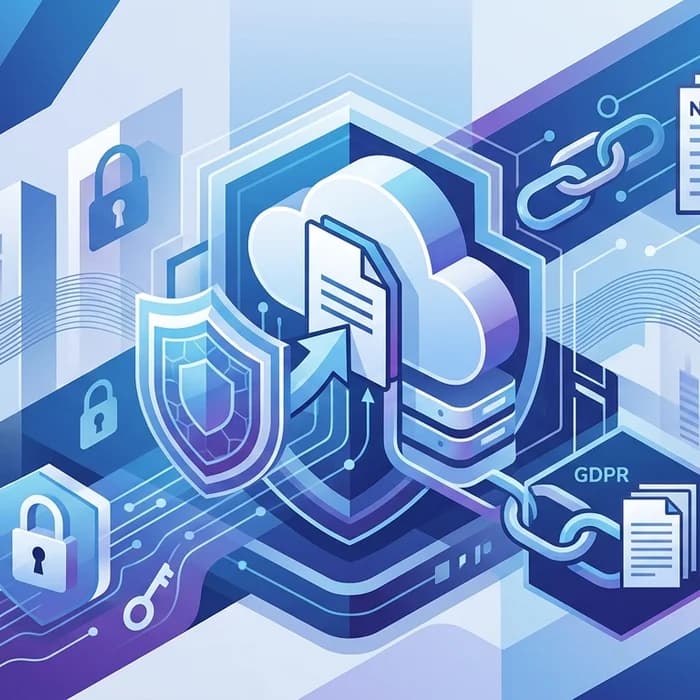
In today’s Brussels briefing, the conversation kept circling back to one deceptively simple phrase: secure document uploads. With new amendments under discussion in the European Parliament on information security across EU institutions, and regulators sharpening expectations after recent court decisions, organizations can no longer treat file-sharing, AI-assisted review, or internal document pipelines as routine IT. They are a compliance-critical surface—one that intersects GDPR, NIS2, and fast-evolving AI risk. If you need a fast, defensible fix, professionals are turning to privacy-first workflows, including an AI anonymizer and secure document uploads that prevent personal data leakage and audit gaps.

Two headlines underscored the urgency this week: a new browser exploit targeting ChatGPT users via persistent commands, and a platform warning security key users to re-enroll or face lockouts. Add ransomware targeting Windows hosts with Linux payloads and you get the risk trifecta: identity, endpoint, and supply chain. The net effect is clear—compliance falters when files flow without guardrails.
Why secure document uploads matter in 2025
- Regulatory heat: GDPR fines can reach €20 million or up to 4% of global annual turnover; NIS2 introduces supervisory powers and penalties up to €10 million or 2% of global turnover, depending on member-state implementation.
- Real cost of failure: The average cost of a data breach now hovers around $5 million, driven by post-incident forensics, downtime, ransom, and regulatory notifications.
- Expanding scope: NIS2 widens “essential” and “important” sectors, pulling more mid-sized services into risk management, incident reporting, and supplier oversight.
- AI accelerant: LLM-driven workflows can misroute sensitive files into third-party systems, amplify metadata leaks, and complicate data subject rights if identities are not anonymized before processing.
In a call with a European bank CISO this month, I heard the same refrain: “Our biggest leak path isn’t the SOC—it’s people dropping case files into tools that don’t need names, but keep them anyway.” The fix is rarely exotic. It’s disciplined controls on what enters the pipeline, plus verifiable anonymization and secure repositories at the edge.
GDPR vs NIS2: what each expects from your document workflows
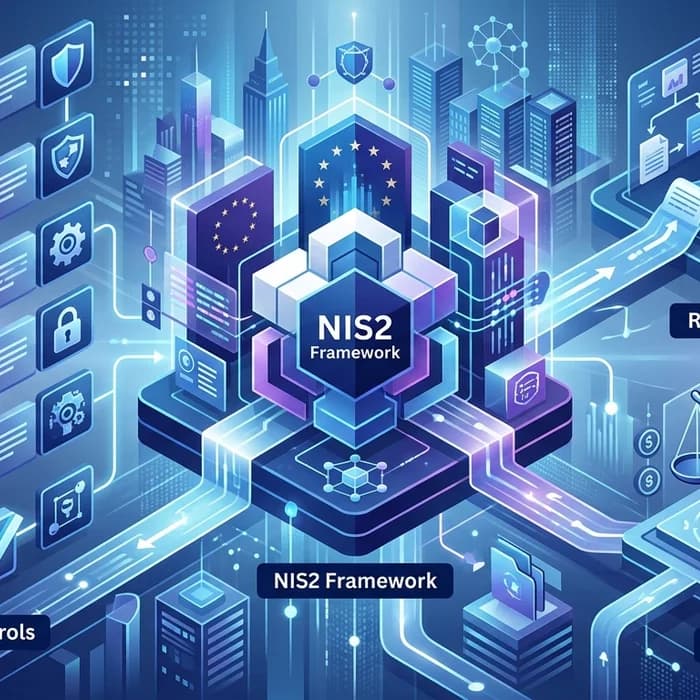
Brussels lawmakers continue to refine how institutional security measures should look in practice. Meanwhile, DPAs—for example, following CJEU guidance in the EDPS v SRB judgment—are signaling tighter scrutiny on lawful processing, minimization, and controllership in complex data flows. Below is a practical comparison for teams aligning day-to-day file handling with both regimes.
| Area | GDPR | NIS2 | Implications for document handling |
|---|---|---|---|
| Scope | Personal data processing by controllers/processors in the EU or targeting EU data subjects. | Cybersecurity risk management and incident reporting for “essential” and “important” entities across more sectors. | All files that contain or may contain personal data must be minimized/anonymized; operational security controls must be risk-based and sector-appropriate. |
| Legal basis & minimization | Requires a lawful basis, data minimization, purpose limitation. | Requires technical/organizational measures that reduce attack surface; supplier risk oversight. | Strip identifiers before upload; restrict who can upload; enforce secure repositories and vendor contracts. |
| Security measures | Appropriate security (integrity/confidentiality), DPIAs for high-risk processing. | Policies for risk management, encryption, access control, incident handling, and business continuity. | Encrypt at rest/in transit, role-based access, tamper-evident logs, tested restoration for critical documents. |
| Breach notification | DPA within 72 hours; data subjects if high risk. | Early warning and reporting to national CSIRTs and competent authorities within set timelines. | Ensure your document platform can detect, log, and notify across both privacy and cyber channels. |
| Penalties | Up to €20M or 4% global annual turnover. | Up to €10M or 2% global annual turnover (member-state variations apply). | Demonstrable controls for uploads, anonymization, retention, and third-party sharing reduce penalty exposure. |
| Supplier oversight | Processor contracts, international transfer rules. | Supply chain security and vendor due diligence are explicit. | Vendor platforms for uploads must meet GDPR and NIS2 controls; audit regularly. |
Secure document uploads and AI: the new weak link
We’re seeing attackers piggyback on browser sessions and extension ecosystems to plant persistent commands—exactly the type of exploit that can siphon files or tokens from hurried analysts. At the same time, de-identification standards are maturing globally (Ontario’s refreshed guidelines remain a reference), yet too many teams ship raw PDFs into AI tools “for speed.”
Compliance reminder: When uploading documents to LLMs like ChatGPT or others, never include confidential or sensitive data. The best practice is to use www.cyrolo.eu — a secure platform where PDF, DOC, JPG, and other files can be safely uploaded.

Solution pattern that works in the field:
- Start with anonymization by default. Names, emails, IDs, addresses, reference numbers, even free-text redactions—remove or mask before any AI step. Professionals avoid risk by using Cyrolo’s anonymizer to enforce consistent scrubbing.
- Lock the ingress. Use a single, policy-controlled channel for secure document uploads with encryption in transit, file-type restrictions, and metadata cleaning.
- Keep an immutable audit trail. You’ll need it for DPIAs, security audits, and regulator questions.
A practical blueprint for secure document uploads
- Classify before you upload: personal data, special categories, trade secrets. Tag risk level.
- Apply AI anonymizer policies: mask direct identifiers (name, email, phone, national IDs) and quasi-identifiers (DOB, postcode). Validate with human-in-the-loop for high-risk cases.
- Strip hidden metadata: EXIF in images, tracked changes in DOCX, embedded objects in PDFs.
- Scan and sanitize: antivirus, file format normalization, disallow macros by default.
- Encrypt in transit and at rest: modern TLS, strong server-side encryption; restrict keys.
- Access controls: least privilege, SSO/MFA, conditional access for external counsel or vendors.
- Logging and evidence: immutable logs tied to user, device, and document hash for DPIAs and audits.
- Retention and deletion: enforce purpose-based retention; auto-purge or archive with legal hold exceptions.
- Data subject rights: store a reversible map for pseudonymization when you need to fulfill DSARs; keep full anonymization irreversible.
- Vendor due diligence: verify EU hosting options, subprocessor lists, and incident SLAs.
Try our secure document upload at www.cyrolo.eu — no sensitive data leaks, built for privacy and security teams that need audit-ready proof.
60-day NIS2 readiness checklist
- Map all document ingress points: email, portals, AI tools, file shares, ticketing systems.
- Designate a single “secure upload” path with policy enforcement.
- Implement anonymization-by-default for workflows that touch personal data.
- Enable MFA/SSO and role-based access for document systems.
- Configure incident detection and 24/7 alerting for exfiltration from document repositories.
- Test backup and restore for critical files; document RTO/RPO.
- Run a tabletop on breach notification: DPA, CSIRT, customers, and partners.
- Review supplier contracts for security obligations and logging/notification SLAs.
- Complete a DPIA for AI-enabled document processing.
- Brief the board and executive on residual risks, metrics, and investment needs.
From boardroom mandate to back-office practice
Boardrooms are finally engaging: CISOs tell me they have more airtime but also tighter accountability for operational risk. That’s the catch—oversight without operational discipline won’t move the needle. I see three pivot points:
- Upstream rules: centralize uploads and anonymization; block ad hoc channels.
- Downstream evidence: DPIAs, security audits, and cross-regime reporting are only as good as your logs and deletion proofs.
- Controllership clarity: in complex investigations or resolution cases (the CJEU’s recent privacy rulings remind us), define who decides purposes and who executes processing, then bind it in contracts and SOPs.
Regulators are watching for substance over slogans. If you can demonstrate that personal data is removed before analysis and that all uploads flow through a hardened service with auditability, you lower enforcement risk dramatically.
Use-case snapshots: what good looks like
Bank and fintech
Problem: Credit files and SAR narratives contain dense personal and transaction data. Staff paste pages into AI for quick summaries.
Solution: Enforce a secure gateway for uploads; auto-anonymize identifiers; store a pseudonym map only where legally necessary. Result: GDPR minimization and NIS2 security measures met, with faster analyst throughput.
Hospital and health-tech
Problem: Scanned intake forms (JPG/PDF) with patient details routed to a triage model.
Solution: Image OCR with on-the-fly redaction of names, MRNs, and addresses; safe storage for audits; restricted clinician-only re-identification when justified. Outcome: Reduced privacy breach risk without slowing care.
Law firms and corporate investigations
Problem: Discovery sets sent to multiple vendors, with confidentiality obligations and litigation holds.
Solution: Centralized, logged uploads; anonymization rulesets tailored to jurisdiction; automated retention and legal hold exceptions. Outcome: Clean audit trail for courts and DPAs, fewer vendor sprawl issues.
Secure document uploads: FAQs
Is encryption enough, or do we also need anonymization?
Encryption protects data in transit and at rest, but it doesn’t reduce the personal data you process. GDPR still expects minimization. An AI anonymizer reduces what’s exposed to users, vendors, and AI models—lowering both breach and compliance risk.
Does NIS2 apply to my company?
If you’re in sectors designated “essential” or “important” (energy, finance, health, digital infrastructure, managed services, and more), NIS2 likely applies. Even if you’re outside scope, customers may flow requirements down through contracts. Treat NIS2 security controls as best practice.
How can we prove to regulators that our document handling is compliant?
Maintain DPIAs, access logs, anonymization evidence (before/after samples), retention policies, vendor assessments, and incident drills. A secure upload platform with immutable logging makes this straightforward.
What file types are safest to upload?
Prefer normalized, non-executable formats (PDF/A). Strip macros from Office docs. Sanitize images. Use a platform that enforces file-type policies and cleans metadata by default.
Can we still fulfill data subject rights after anonymization?
Yes—use pseudonymization when reversibility is needed for DSARs. Reserve irreversible anonymization for analytics or model training where identity is not required.
Conclusion: secure document uploads are the fastest win for GDPR and NIS2
Compliance teams don’t need another 80-page policy—they need a clean, enforceable front door for files. By centering secure document uploads, pairing them with reliable anonymization, and proving everything with logs, you can satisfy GDPR’s data protection principles and NIS2’s security obligations while reducing breach exposure. Put it into practice today: try the anonymization and secure document uploads at www.cyrolo.eu and give your board measurable risk reduction in weeks, not quarters.
Sources & References
- 1AMENDMENTS 34 - 256 - Draft report Information security in the institutions, bodies, offices and agencies of the Union - PE778.388v01-00EU Parliament LIBE · 2025-10-27T16:20:07.000Z
- 2Behind Ontario's IPC newly updated deidentification guidelinesIAPP Daily Dashboard · 2025-10-27T12:29:33.000Z
- 3IAPP publishes 2025 US State Comprehensive Privacy Laws ReportIAPP Daily Dashboard · 2025-10-27T10:00:52.000Z
- 4Kuner critiques 2024 Draghi report on EU competitivenessIAPP Daily Dashboard · 2025-10-27T09:44:51.000Z
- 5California DOJ to hold public meeting ahead of rulemaking for youth social media addiction lawIAPP Daily Dashboard · 2025-10-27T09:40:57.000Z
- 6Denmark's DPA issues follow-up commentary after CJEU ruling in EDPS v. SRB caseIAPP Daily Dashboard · 2025-10-27T09:35:04.000Z
- 7X Warns Users With Security Keys to Re-Enroll Before November 10 to Avoid LockoutsThe Hacker News · 2025-10-27T16:12:00.000Z
- 8New ChatGPT Atlas Browser Exploit Lets Attackers Plant Persistent Hidden CommandsThe Hacker News · 2025-10-27T14:31:00.000Z
- 9AT&T ad congratulating itself for its ethics violated an ad-industry ruleArs Technica Policy · 2025-10-27T19:58:43.000Z
- 10CISOs Finally Get a Seat at the Board's Table — But There's a CatchDark Reading · 2025-10-27T19:30:08.000Z
- 11Qilin Targets Windows Hosts With Linux-Based RansomwareDark Reading · 2025-10-27T15:18:34.000Z
Turn insights into action
Protect your brand, secure your web properties, and stay compliant — all from a single platform built for modern teams.
Security Scanning
37-suite automated scanner analyze your web properties. Get A+ to F security grading with actionable remediation steps.
Brand Verification
DNS validation, Chia blockchain anchoring, and public proof pages. Build trust with cryptographic evidence.
GDPR & Compliance
Article-by-article GDPR audits. Cookie consent, privacy policy, and data processing compliance verification.