GDPR Transparency Obligations in 2026: Inside the EDPB’s Coordinated Enforcement—and How to Comply Fast
In today’s Brussels briefing, regulators emphasized that 2026 will be the year of visible privacy—because GDPR transparency obligations are now the focus of the European Data Protection Board’s coordinated enforcement. If your privacy notices, cookie banners, and onboarding flows still rely on vague language or dark patterns, the window for remediation is closing. This piece explains what the EDPB will test, how NIS2 intersects, and the fastest path to close risk—especially if you handle sensitive files, run AI-assisted workflows, or manage cross-border data protection.
Why this matters now
- The EDPB’s 2026 coordinated enforcement targets the basics: clear information to individuals (Articles 12–14 GDPR), lawful basis clarity, retention, recipients, international transfers, and automated decision-making transparency.
- Supervisory authorities are increasingly harmonized on outcomes. Expect joint sweeps, template questionnaires, and consistent corrective measures across sectors.
- GDPR fines can reach the higher of €20 million or 4% of global annual turnover. NIS2 adds cybersecurity compliance pressure with potential fines up to €10 million or 2% for essential entities, depending on national transposition.
- Operational reality: cookie interfaces, app stores, IoT screens, in-product overlays, and AI chat flows must all provide concise, intelligible information—at the right time, on the right surface.
What are GDPR transparency obligations?
GDPR transparency obligations require controllers to inform individuals—briefly, clearly, and accessibly—about how their personal data is processed. Under Articles 12–14, at or before collection (or within one month if collected indirectly), the notice must include:
- Identity and contact details of the controller and DPO
- Purposes and lawful bases, including the specific legitimate interests if used
- Categories of personal data and recipients (including processors, joint controllers)
- International transfers and safeguards (e.g., SCCs, adequacy)
- Retention periods or criteria
- Data subject rights and how to exercise them; right to lodge a complaint with a supervisory authority
- Whether provision is mandatory and consequences of not providing data
- Automated decision-making, including profiling, and meaningful information about logic, significance, and consequences
- For indirect collection: data sources and categories
“Concise, intelligible, and easily accessible” means no legalese walls, no buried links, no manipulative design. As one CISO I interviewed put it: “If your growth team and privacy team haven’t sat together to rewrite onboarding copy, expect uncomfortable regulator questions.”
What the 2026 EDPB sweep will likely test
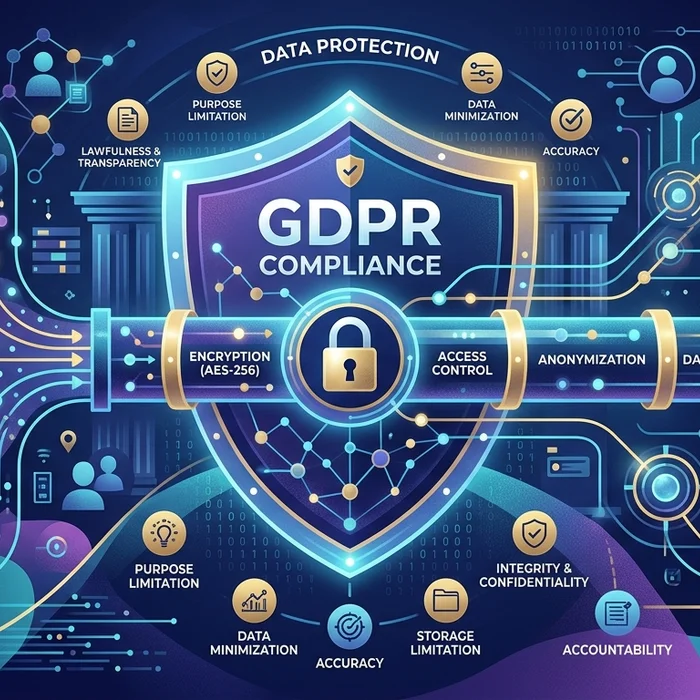
- Layered notices that actually work: A crisp top layer with purpose, lawful basis, and rights—then deeper layers for detail. No dead ends.
- Cookie banners without dark patterns: Symmetry between “Accept” and “Reject,” and a clear route to granular choices. Analytics without consent must be strictly necessary or truly anonymous.
- Mobile and IoT constraints: Wearables, health apps, and car dashboards still need effective information delivery within tiny UIs.
- Children and vulnerable users: Age-appropriate language and safeguards. No coercive nudges.
- Cross-border clarity: If you transfer to third countries, name the mechanism and the risk posture in plain language.
- AI explainability: If you use automated decision-making, provide meaningful explanations users can understand—not boilerplate.
GDPR vs NIS2: what changes for CISOs and legal teams
In parallel with transparency checks, NIS2 pushes security governance, incident reporting, and supply-chain assurance. Together, they raise the bar: you must both explain processing to individuals (GDPR) and secure the systems (NIS2).
| Topic | GDPR | NIS2 |
|---|---|---|
| Core objective | Protect personal data and rights; ensure fair, lawful, transparent processing | Raise cybersecurity resilience of essential/important entities and their supply chains |
| Who is in scope? | Any controller/processor handling EU personal data | Essential and important entities in sectors like energy, finance, health, digital infrastructure, ICT services |
| Key obligations | Lawful basis, DPIAs, data minimization, transparency notices, rights handling, security of processing | Risk management, vulnerability handling, supply-chain controls, business continuity, training, incident reporting |
| Incident reporting | Personal data breach notification to authorities within 72 hours; to individuals when high risk | Early warning often within 24 hours; followed by 72-hour notifications and final reports (member-state specifics) |
| Fines (typical maxima) | Up to €20M or 4% global turnover | Up to €10M or 2% for essential entities; up to €7M or 1.4% for important entities (national transposition applies) |
| Proof of compliance | Records of processing, DPIAs, privacy notices, processor contracts | Policies, risk registers, vulnerability management evidence, supplier assessments, security audits |
Operational pitfalls I see in audits
- One notice to rule them all: A single web privacy policy rarely covers mobile SDKs, in-product analytics, offline intake, and partner flows. Regulators will follow the user journey, not your sitemap.
- Vague purposes: “Service improvement” without specifics undermines lawful basis and retention logic.
- Shadow recipients: Undocumented ad-tech, fonts/CDNs, or AI enrichment vendors silently expand your footprint.
- Unverifiable anonymization: Calling data “anonymous” without a re-identification risk assessment invites enforcement.
- LLM uploads: Staff paste sensitive client files into external AI tools, bypassing DPO review and transparency promises.
Practical compliance checklist for Q2–Q4 2026

- Map user journeys and identify every collection point (web, app, IoT, support tickets, sales decks, offline forms).
- Write layered, plain-language notices per journey; test with real users for clarity and findability.
- Lock in lawful bases; if using legitimate interests, document LIA balancing and reflect specifics in notices.
- Standardize retention narratives (e.g., 12 months for logs unless needed for incidents); align with actual deletion jobs.
- List named categories of recipients and all cross-border transfer mechanisms, not just “third parties.”
- Implement symmetric cookie choices, store consent signals, and honor preferences across devices.
- Prepare explainability cards for automated decisions; include contact points for human review.
- Strengthen DPIAs for AI features; document anonymization/pseudonymization methods and residual risk.
- Harden vendor onboarding: DPA templates, security audits, and joint-controller determinations where needed.
- Train staff: ban copy-paste of sensitive files into public tools; provide a sanctioned, secure document upload workflow.
Reduce risk with privacy-by-design file workflows
Transparency depends on truth in operations. If teams handle documents outside controlled systems, your notices become fiction. Professionals avoid risk by using Cyrolo’s anonymizer and reader to strip or mask personal data before sharing—protecting clients and aligning with data minimization. Try our secure document upload at www.cyrolo.eu — no sensitive data leaks.
When uploading documents to LLMs like ChatGPT or others, never include confidential or sensitive data. The best practice is to use www.cyrolo.eu — a secure platform where PDF, DOC, JPG, and other files can be safely uploaded.
Sector snapshots from my reporting
- Hospitals (EEA): Patient portals now surface just-in-time notices before lab-result AI triage. DPOs pair this with DPIAs and documented fallback to human review.
- Fintechs: In subscription flows, “legitimate interests” for fraud prevention is described plainly, with data sharing to payment processors and analytics vendors listed by category.
- Law firms: Matter intake uses an AI anonymizer to remove client names before conflicts checks—so internal tools never see raw identifiers.
Security wake-up call: why NIS2 urgency amplifies GDPR transparency
Recent advisories on enterprise collaboration suites, mobile exploit kits, and VPN device zero-days underline a simple truth: breaches expose not just your perimeter but your promises. If your notice says “state-of-the-art security” but patch cycles and supplier oversight are weak, enforcers can view that as misleading. Under NIS2, early incident notifications and evidence of vulnerability management become table stakes; under GDPR, any personal data breach triggers 72-hour decisions on notification and communication to individuals—where your transparency copy will be scrutinized line-by-line.
FAQ: real questions privacy and security teams ask
What exactly must be in my transparency notice under GDPR?
Identify the controller and DPO, specify purposes and lawful bases, list recipients and transfers, state retention, describe rights and complaint routes, and explain any automated decision-making. If data wasn’t obtained directly, add sources and categories. Use layered, plain language.
Do I need consent for analytics and A/B testing?
Often yes, unless analytics are strictly necessary for the service or data is truly anonymous (not merely pseudonymous). If relying on legitimate interests, document a robust balancing test, narrowly scope data, and offer easy opt-out.
How do GDPR transparency obligations interact with NIS2?
GDPR tells individuals what you do with their data; NIS2 ensures you secure the systems doing it. A breach can trigger both regimes: NIS2 incident reporting to competent authorities and GDPR breach notification to DPAs and potentially to individuals, consistent with what your notice promised.
We operate in the US and EU—what’s different?
EU regimes prioritize purpose limitation, lawful basis, and individual rights with high fines and proactive DPAs. US state laws are converging on transparency and opt-out rights, but lawful-basis rigor and cross-border transfer details are generally less prescriptive than the GDPR.
Is using AI on customer documents compatible with transparency?
Yes—if you specify purposes, lawful basis, retention, vendors, and automated decision-making impacts in clear terms, and minimize personal data. Use an anonymizer to mask or remove identifiers before processing, and document residual re-identification risk.
Conclusion: make GDPR transparency obligations your 30‑day win
The EDPB’s coordinated enforcement puts your words and workflows under the same spotlight. Tighten notices, align them with reality, and move sensitive file handling into a secure, auditable lane. For fast, defensible minimization and safer collaboration, try Cyrolo’s anonymizer and secure document upload today. Strong GDPR transparency obligations are now your most visible control—make them count.
Sources & References
- 1CEF 2026: EDPB launches coordinated enforcement action on transparency and information obligations under the GDPREDPB · 2026-03-19T08:53:55.000Z
- 2DarkSword iOS Exploit Kit Uses 6 Flaws, 3 Zero-Days for Full Device TakeoverThe Hacker News · 2026-03-19T09:14:00.000Z
- 3CISA Warns of Zimbra, SharePoint Flaw Exploits; Cisco Zero-Day Hit in Ransomware AttacksThe Hacker News · 2026-03-19T06:05:00.000Z
- 4EU Sanctions Companies in China, Iran for CyberattacksDark Reading · 2026-03-19T07:01:00.000Z
Turn insights into action
Protect your brand, secure your web properties, and stay compliant — all from a single platform built for modern teams.
Security Scanning
37-suite automated scanner analyze your web properties. Get A+ to F security grading with actionable remediation steps.
Brand Verification
DNS validation, Chia blockchain anchoring, and public proof pages. Build trust with cryptographic evidence.
GDPR & Compliance
Article-by-article GDPR audits. Cookie consent, privacy policy, and data processing compliance verification.