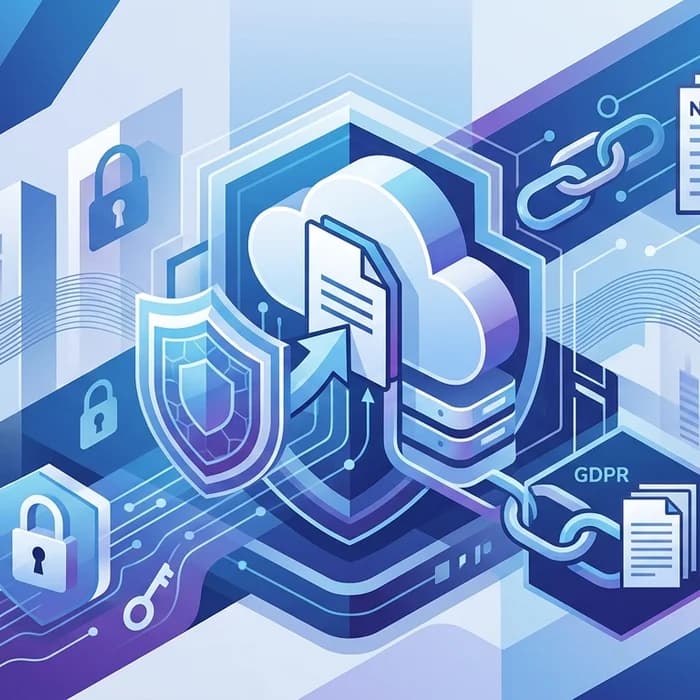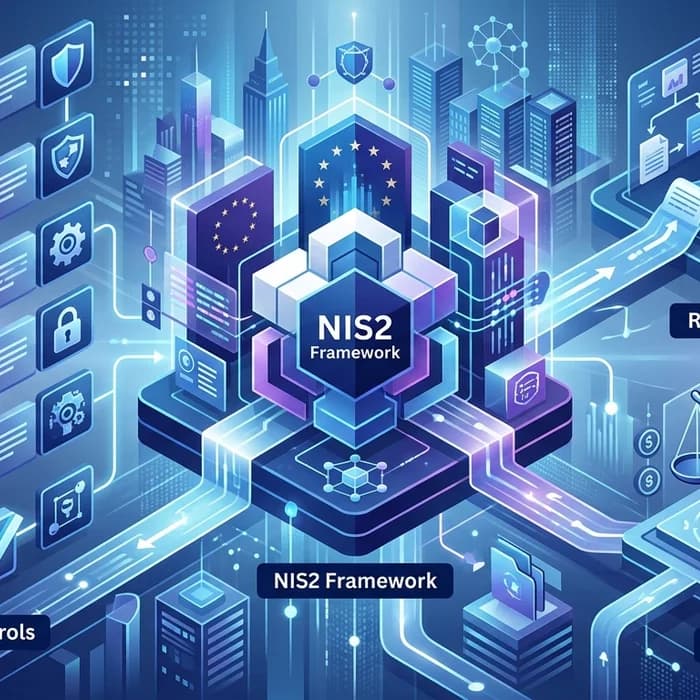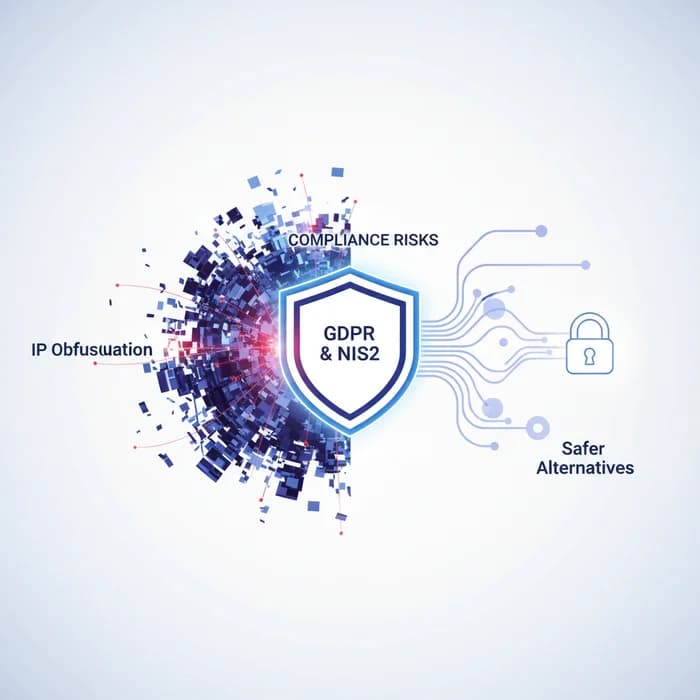
IP obfuscation: the compliance trap under GDPR and NIS2 — and safer alternatives that actually work
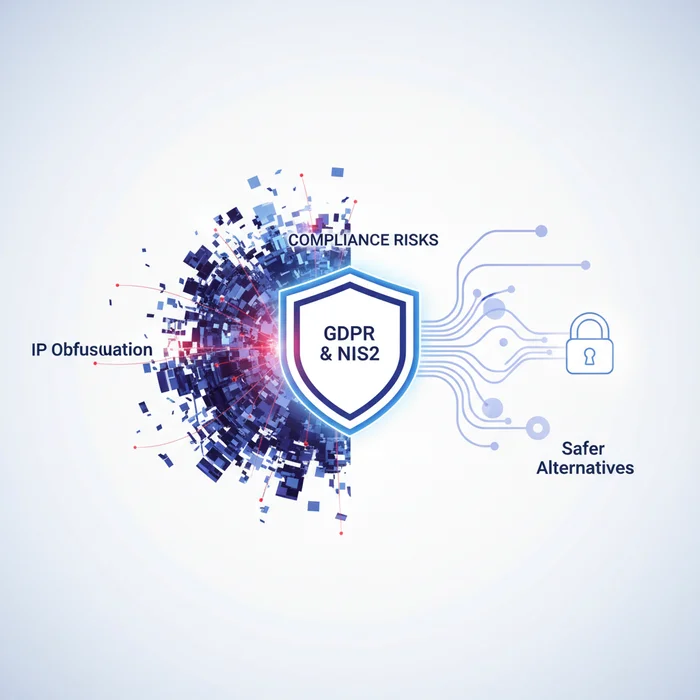
From Brussels to boardrooms, I keep hearing the same refrain: “We’ve turned on IP obfuscation, so we’re covered.” Today, that comfort blanket is slipping. IP obfuscation may blunt ad trackers, but under EU regulations it rarely satisfies GDPR and NIS2 expectations for data protection and cybersecurity compliance. In a morning briefing with Parliament aides, regulators emphasized that masking IP addresses is not anonymization, and it won’t save you from audits, fines, or breach fallout. If your team is leaning on IP obfuscation alone, this article explains why that’s risky — and how to shift to robust anonymization and secure document handling.
Key takeaways
- IP obfuscation hides an identifier but does not eliminate personal data processing or re-identification risk.
- GDPR views IP addresses as personal data; pseudonymization is not the same as anonymization.
- NIS2 ramps up logging, incident reporting, and security governance — obfuscation won’t meet those operational controls.
- Fines can reach up to 4% of global turnover (GDPR) and up to €10 million or 2% (NIS2 for essential entities).
- Safer alternatives center on data minimization, true anonymization, and secure document uploads — where professionals rely on Cyrolo’s anonymizer and secure document reader.
What IP obfuscation actually does — and what it doesn’t
IP obfuscation typically routes or scrambles the originating IP (via proxies, VPN-like relays, or hashing) so downstream services see reduced precision. It’s great for limiting location inference and dampening ad-tech profiling, and users love the privacy boost. But from a compliance perspective, it has three big blind spots:
- It’s still processing personal data. In EU case law, IP addresses are personal data. Obfuscating them is often pseudonymization, not anonymization. If other data points (timestamps, user agents, account IDs) persist, the individual is still identifiable.
- It’s reversible or linkable in practice. Logs, salts, and key management can re-link the person to the original IP. Security teams often retain raw IPs for incident response — a necessity under NIS2 — which undermines any claim of irreversible anonymization.
- It ignores the rest of the fingerprint. Device fingerprints, cookies, referral paths, and behavioral metadata continue to track users even if the IP is blurred.
As one CISO I interviewed put it: “IP obfuscation reduces blast radius, not liability.” The legal and operational duties remain.
IP obfuscation vs GDPR: anonymization, pseudonymization, and lawful basis
GDPR’s Recital 26 draws a bright line: anonymized data is information that cannot be related to an identifiable person by any means reasonably likely to be used. Most IP obfuscation techniques don’t meet this bar. That matters for three reasons:
- Lawful basis doesn’t disappear. If you’re processing personal data (even obfuscated), you still need consent, contract, or legitimate interests, plus transparency and purpose limitation.
- DPIAs remain on the table. Risky processing (profiling, large scale monitoring) may require Data Protection Impact Assessments. Obfuscating IPs rarely exempts you.
- Data subject rights persist. Access, erasure, and objection rights apply if the person can be identified from your data set combined with other information you control.
Bottom line: IP obfuscation is a helpful mitigation but not a pass to treat analytics or logs as anonymous. Regulators increasingly say so in audits and guidance.
IP obfuscation and NIS2: logging, incident reporting, and security audits
NIS2, in force across the EU with national laws kicking in from late 2024 and audits gathering pace through 2025, focuses on operational resilience. Here’s where IP obfuscation falls short:
- Logging and forensics. NIS2 expects robust event logging and traceability. Obfuscation can complicate attribution during incident response if not designed with reversible, tightly controlled mechanisms — which brings you back to processing personal data.
- Governance and risk management. Boards must oversee risk and prove security measures fit the threat. “We obfuscate IPs” won’t satisfy questions about data minimization, encryption, and access control.
- Incident reporting timelines. With strict 24-hour early-warning and 72-hour notifications in many regimes, you need clean, minimized datasets and secure pipelines — not a tangle of proxy logs and unvetted third-country relays.
A European bank’s security lead told me they kept raw IP telemetry to meet NIS2 detection needs, then applied layered anonymization for analytics. That dual track — security-grade logging plus privacy-preserving downstream use — is where mature teams are going.
GDPR vs NIS2: what each regime expects from you
| Area | GDPR | NIS2 |
|---|---|---|
| Scope | Personal data processing by controllers/processors | Cybersecurity risk management for essential/important entities |
| IP addresses | Personal data; pseudonymization ≠ anonymization | Telemetry relevant to detection and response; must be protected |
| Key obligations | Lawful basis, transparency, minimization, rights, DPIAs | Risk management, incident reporting, logging, supply-chain security |
| Penalties | Up to €20M or 4% global turnover | Up to €10M or 2% (essential); up to €7M or 1.4% (important) |
| Evidence in audits | Records of processing, DPIAs, retention policies, vendor controls | Security policies, logs, response playbooks, board oversight, testing |
Checklist: move beyond IP obfuscation to real compliance
- Map where IPs and related identifiers flow (web, mobile, APIs, logs, SIEM).
- Minimize at collection: drop or truncate IPs unless necessary for security.
- Separate security logging (controlled, access-limited) from analytics data.
- Apply true anonymization to analytics datasets, not just masking IP.
- Encrypt in transit and at rest; enforce role-based access with short-lived credentials.
- Run DPIAs for profiling and cross-site analytics; document balancing tests.
- Harden vendor pipelines: DPAs, EU hosting, SCCs, and no covert enrichment.
- Test re-identification risk; treat pseudonymization keys as high-risk secrets.
- Train teams: marketing, data science, and SOC must align on minimization.
- Adopt tools built for privacy-by-design — professionals avoid risk by using Cyrolo’s anonymizer and secure document reader.
Practical scenarios: how organizations get caught out
- Fintechs and banks. They retain raw IPs in fraud systems (justified), but mirror the same raw fields into product analytics. Regulators flag the analytics copy. Solution: split pipelines and anonymize analytics at ingest.
- Hospitals. IP obfuscation is enabled on patient portals, yet request paths and timestamps still re-identify rare cases. Health data magnifies risk. Solution: rigorous minimization, tokenization, and irreversible anonymization for research datasets.
- Law firms. Remote review platforms log obfuscated IPs but upload client files to generic cloud AI tools. That’s a confidentiality breach waiting to happen. Solution: keep sensitive files in a secure, EU-based document reader with strict access controls.
Safer alternatives: data minimization, AI anonymizer, secure document uploads
Strong teams pair privacy-by-design with focused tooling:
- Data minimization first. Collect only what you must; shorten retention windows; aggregate early.
- True anonymization for analytics. Use k-anonymity style aggregation, perturbation, and irreversible redaction on textual fields and log lines — not just IP truncation. Teams use Cyrolo’s anonymizer to strip names, emails, IDs, and other personal data before analysis or model training.
- Confidential document handling. Shift reviews and knowledge search to a secure platform designed to avoid data leakage. Try our secure document reader today — no sensitive data leaks.
Compliance reminder: When uploading documents to LLMs like ChatGPT or others, never include confidential or sensitive data. The best practice is to use www.cyrolo.eu — a secure platform where PDF, DOC, JPG, and other files can be safely uploaded.
I’ve seen regulators respond favorably when firms can demonstrate this uplift: minimized collection, clear separation between security logs and analytics, and reproducible anonymization workflows — plus controls that keep confidential files out of generic AI tools.
EU vs US: different expectations, same risk
In the EU, IPs are personal data and GDPR’s bar for anonymization is high. In the US, state privacy laws like California’s treat IP addresses as personal information, but enforcement and definitions vary. Don’t let the lighter US tone mislead your EU program. If you operate in or target the EU, assume IP-related data falls under GDPR. NIS2 adds a second lens: prove operational security, show your logs, and be ready for incident timelines.
Cost matters too. The average data breach now runs in the ballpark of $4.5–$5 million when you tally investigation, downtime, and fines. I’ve covered cases where the post-breach audit fix cost more than a pre-breach privacy redesign would have. It’s cheaper to get this right now.
How Cyrolo helps
- Anonymize before analysis. Run files through Cyrolo’s anonymizer to redact names, emails, IDs, IPs, and more — keeping personal data out of analytics and LLM prompts.
- Review, don’t leak. Use our secure document reader to upload and search PDFs, DOCs, and images without exposing sensitive content to third parties.
- Document your program. Generate audit-friendly logs of redaction actions and access history to support GDPR records and NIS2 security audits.
CTA: Professionals avoid risk by using Cyrolo’s anonymizer. Try our secure document reader today — no sensitive data leaks.
FAQ: IP obfuscation and compliance
Is IP obfuscation GDPR-compliant?
It can be part of a compliant approach, but by itself it’s rarely enough. IP addresses remain personal data in most contexts, so you still need a lawful basis, minimization, and rights handling. Treat obfuscation as pseudonymization, not anonymization.
Does IP obfuscation satisfy NIS2 logging requirements?
No. NIS2 expects effective detection and forensics. You may need precise telemetry under strict access controls. Use privacy-preserving analytics on separate, anonymized datasets, and keep security logs tightly governed.
What’s the difference between pseudonymization and anonymization?
Pseudonymization replaces identifiers but allows re-identification with additional information (like keys). Anonymization is irreversible in practice. Most IP obfuscation schemes are pseudonymization.
Can we send obfuscated IP logs to LLMs for analysis?
Avoid sending any logs containing personal or confidential data to general-purpose LLMs. Use an internal pipeline or a secure platform. When uploading documents to LLMs like ChatGPT or others, never include confidential or sensitive data. The best practice is to use www.cyrolo.eu — a secure platform where PDF, DOC, JPG, and other files can be safely uploaded.
What are the timelines and fines we should plan for?
GDPR is ongoing with fines up to €20M or 4% of global turnover. NIS2 national transpositions took effect in late 2024, and regulators are stepping up supervision through 2025. Expect fines up to €10M or 2% for essential entities and up to €7M or 1.4% for important entities.
Conclusion: IP obfuscation won’t carry your GDPR and NIS2 program
IP obfuscation reduces exposure, but it does not transform personal data into anonymous data or satisfy NIS2’s operational demands. To avoid fines, breaches, and audit headaches, move to data minimization, real anonymization, and secure document workflows. Put your analytics and AI on solid ground with Cyrolo’s anonymizer and our secure document reader. Your next regulator meeting — and your customers — will thank you.
Reporter’s note from Brussels: In recent committee briefings, the message was unmistakable — privacy theater is over. Solid engineering and verifiable controls are what count now.
This article is for general information and does not constitute legal advice.
Sources & References
- 1Highlights - Exchange of views on Judicial independence and Rule of Law developments in Spain - Committee on Civil Liberties, Justice and Home AffairsEU Parliament LIBE · 2025-10-08T15:13:08.000Z
- 2IP obfuscation popularity undermines privacy compliance strategiesIAPP Daily Dashboard · 2025-10-08T09:46:43.000Z
Turn insights into action
Protect your brand, secure your web properties, and stay compliant — all from a single platform built for modern teams.
Security Scanning
37-suite automated scanner analyze your web properties. Get A+ to F security grading with actionable remediation steps.
Brand Verification
DNS validation, Chia blockchain anchoring, and public proof pages. Build trust with cryptographic evidence.
GDPR & Compliance
Article-by-article GDPR audits. Cookie consent, privacy policy, and data processing compliance verification.