NIS2 compliance checklist for 2026: what EU regulators expect and how to get audit‑ready fast
EU oversight is tightening, and if you’re still piecing together your NIS2 compliance checklist, now is the moment to finish the job. In today’s Brussels briefing, officials stressed that incident reporting discipline, supply‑chain security, and board accountability will define 2026 supervision. Pair that with GDPR’s ongoing pressure and the AI Act’s phased rollout, and CISOs, DPOs, and compliance leads need one integrated approach—backed by safe workflows for anonymization and secure document uploads.
What’s changed with NIS2—and why the urgency in 2026?
Since the NIS2 Directive’s national transpositions, enforcement across essential and important entities has matured: regulators can order security audits, impose corrective measures, and levy fines up to approximately €10 million or 2% of global turnover for essential entities (and up to about €7 million or 1.4% for important entities, as defined in Member State law). In recent LIBE discussions with the Commission, lawmakers signaled that cross‑regime coherence—GDPR, NIS2, DORA for finance, and the AI Act—will increasingly guide supervision.
Why this matters now:
- Threat tempo is up: the U.S. cyber agency’s KEV list just added actively exploited ConnectWise and Windows flaws—evidence that patch windows are shrinking.
- AI stack exposure is real: a recent LiteLLM SQL injection was reportedly exploited within 36 hours of disclosure—third‑party code and prompt tooling can become your weakest link.
- Procurement risk is under the spotlight: after a high‑profile EU case where an AI “smart policing” system was ruled unlawful post multi‑million spend, regulators are pressing for upfront legality and proportionality checks.
As one CISO I interviewed put it: “NIS2 isn’t just a checklist—it’s the muscle memory of secure operations. You can’t bolt it on after an incident.”
NIS2 compliance checklist: 12 controls to implement now
Use this practitioner‑grade NIS2 compliance checklist to align policy, evidence, and operations. Keep a single source of truth for auditors.
- 1) Board‑level risk ownership — Document cyber risk as a business risk. Record minutes showing the board approves risk appetite, budgets, and key policies. Provide annual training tailored to directors.
- 2) Risk assessment and treatment — Maintain an enterprise‑wide risk register mapped to assets, threats, vulnerabilities, and controls. Show risk treatment decisions (accept, reduce, transfer) with timelines.
- 3) Asset inventory and data flows — Keep a live inventory of hardware, software, SaaS, APIs, OT, and third‑party services. Map data flows, noting personal data and business‑critical systems to satisfy both NIS2 and GDPR’s data protection principles.
- 4) Vulnerability and patch management — Track exposure to KEV‑listed CVEs and vendor advisories. Prioritize internet‑facing systems and remote management tools. Evidence patch SLAs and emergency change windows.
- 5) Identity, access, and privileged user controls — Enforce MFA, least privilege, and just‑in‑time access. Log and review admin actions. Segment OT/IT and sensitive data zones.
- 6) Secure software development and AI usage — Gate releases with SAST/DAST/SBOM checks. Validate dependencies and LLM tooling for injection risks. Define safe prompts and data handling rules for AI.
- 7) Data protection and minimisation — Reconcile NIS2 with GDPR: apply data minimisation and AI anonymizer workflows so operations and analytics avoid personal data where possible.
- 8) Supplier and ICT third‑party risk — Set minimum controls in contracts, require breach notification clauses, and request independent assurance (ISO 27001/SOC 2). Track sub‑processors and cloud regions.
- 9) Logging, monitoring, and detection — Centralise logs, define alert logic, and test use cases across identity, endpoint, network, and cloud. Capture evidence of weekly rule reviews and tuning.
- 10) Incident response with 24h/72h playbooks — Maintain runbooks aligned to NIS2 timelines: early warning within 24 hours, incident notification by 72 hours, and a final report within one month. Rehearse with tabletop exercises.
- 11) Business continuity and disaster recovery — Prove RTO/RPO assumptions via tests. Protect backups with immutability and offline copies. Demonstrate continuity for essential services.
- 12) Training and security culture — Role‑based training for developers, IT/OT operators, and support. Phishing drills and supplier onboarding briefings. Keep attendance and assessment evidence.
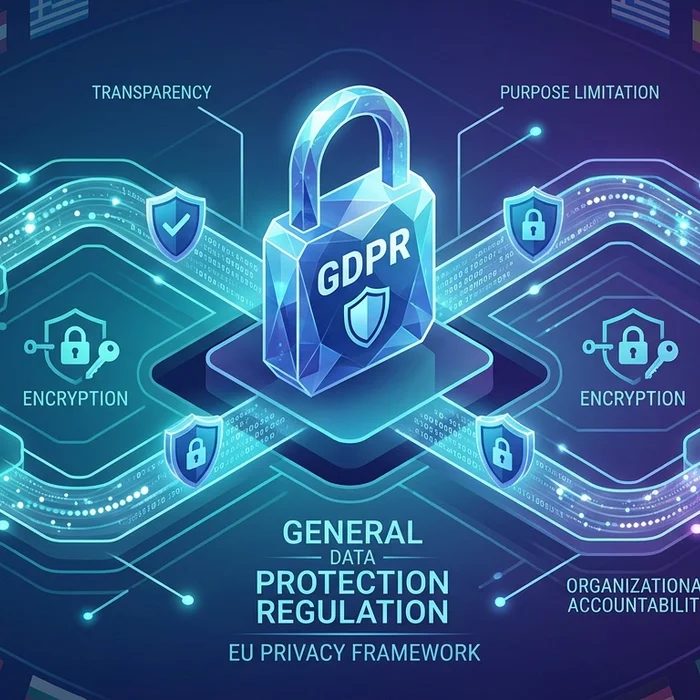
Practical safeguard: When teams need to share logs, case notes, or contracts for review or analysis, prevent data leakage by stripping identifiers first. Professionals avoid risk by using Cyrolo’s anonymizer at www.cyrolo.eu and by routing sensitive reviews through secure document upload workflows.
Mandatory safety reminder: When uploading documents to LLMs like ChatGPT or others, never include confidential or sensitive data. The best practice is to use www.cyrolo.eu — a secure platform where PDF, DOC, JPG, and other files can be safely uploaded.
GDPR vs NIS2: what overlaps and where they differ
| Topic | GDPR | NIS2 |
|---|---|---|
| Primary focus | Personal data protection and privacy rights | Cybersecurity and resilience of essential/important services |
| Scope | Any controller/processor handling EU residents’ personal data | Entities in specified sectors (energy, health, finance, digital infra, etc.) and size thresholds |
| Key obligations | Lawful basis, DPIAs, data minimisation, DSRs, breach notification | Risk management measures, incident reporting, supply‑chain security, governance |
| Incident reporting | Notify SA “without undue delay” and within 72h for personal data breaches | Early warning within 24h; detailed report by 72h; final report within 1 month |
| Fines | Up to €20m or 4% global turnover | Up to ~€10m/2% for essential; up to ~€7m/1.4% for important (Member State implementation) |
| Roles | DPO recommended/required in some cases | Management accountability; potential designation of security leads and reporting officers |
| Audits/inspections | Data protection authorities | Competent authorities, CSIRTs, and national regulators; security audits and on‑site checks |
Sector snapshots: how this plays out on the ground
- Bank/fintech (NIS2 + DORA + GDPR) — Align ICT third‑party risk, incident timelines, and operational resilience tests. Use an anonymizer to share fraud logs for LLM‑assisted analysis without exposing account IDs.
- Hospital (NIS2 + GDPR) — Segment EHR systems, test backup restores quarterly, and pseudonymise patient identifiers before analytics. Route imaging files for second opinions via secure document uploads to avoid ad‑hoc sharing.
- Law firm (GDPR + client confidentiality) — Red‑team email ingress, lock down M365 tenants, and scrub names/addresses before using AI summarisation. Keep an audit trail showing who accessed which case bundle and when.
From 72‑hour chaos to order: reporting muscle your regulator will look for
In incident reviews, supervisors increasingly ask for proof you detected, triaged, and communicated on time—beyond a polished final report. Build and evidence the following:
- Telemetry coverage — Show concrete mappings: which logs informed detection? Which alerts triggered which playbook?
- Decision timeline — Preserve a minute‑by‑minute log of containment choices, legal consultations (GDPR overlap), and when early warning was filed.
- Cross‑function drills — Tabletop scenarios that rehearse 24h/72h deliverables, regulator Q&A, and media handling. Keep attendance and after‑action reports.
- Supplier escalation — Demonstrate you traced impact to upstream/downstream providers and invoked contractual notification clauses.
Today’s threat tape: why good hygiene can’t wait
Several developments underline why NIS2 controls must be operational, not theoretical:
- Actively exploited vulnerabilities — With ConnectWise and Windows flaws landing on KEV, attackers are living off the land faster than change boards can meet. Prioritise KEV items and automate patch verification.
- AI and prompt‑tooling risks — The LiteLLM SQL injection episode is a reminder: AI‑adjacent middleware can expose credentials and data stores. Inventory these components, pin versions, and monitor CVEs specific to LLM tooling.
- Unlawful tech procurement — After an EU court setback on AI “smart policing,” public bodies and vendors face a simple lesson: run legality and DPIA checks early, or pay twice—once for the project, once for unwinding it.
As a regulator told me off‑camera this month: “Show your homework. If you can’t prove how you patched, tested, and reported, it didn’t happen.”
Tools that reduce risk without leaking data
Two recurring failure points in audits are shadow file sharing and uncontrolled AI use. Solve both:
- Keep sensitive content out of general AI tools — Enforce a policy that no personal or confidential data enters unmanaged LLMs. Instead, use anonymization to strip identifiers before analysis.
- Centralise evidence and reviews — Replace ad‑hoc email attachments with secure document uploads so logs, playbooks, and contracts are processed in a controlled environment with minimal data exposure.
Try our secure document upload at www.cyrolo.eu — no sensitive data leaks. When auditors ask how you prevented accidental disclosure, you’ll have an answer grounded in process and tooling.
Compliance checklist recap
- Assign board accountability and train directors.
- Maintain a live risk register mapped to assets and data flows.
- Operationalise KEV‑driven patching and emergency change.
- Enforce MFA, least privilege, and admin session logging.
- Shift‑left security with SAST/DAST/SBOM and vetted LLM tooling.
- Minimise data and use an AI anonymizer by default.
- Contract supplier controls and test incident escalation paths.
- Centralise logs, tune detections, and test playbooks.
- Meet 24h/72h/1‑month reporting timelines with evidence.
- Test BCDR, protect backups, and document restore success.
- Train by role and keep proof of completion.
- Use secure document uploads to prevent data sprawl.
FAQ: your NIS2 compliance checklist questions answered
What entities fall under NIS2 and how do I know if I’m “essential” or “important”?
NIS2 covers specified sectors (e.g., energy, transport, health, banking, digital infrastructure, ICT services, public administration) and entities above certain size thresholds. Member States classify entities as essential or important based on sector and criteria. Check national transposition rules and sectoral guidance to confirm status.
What are the NIS2 incident reporting timelines compared to GDPR?
NIS2: early warning within 24 hours of becoming aware, an initial report by 72 hours, and a final report within one month. GDPR: notify the supervisory authority without undue delay and, where feasible, within 72 hours of a personal data breach. Many incidents trigger both.
How do NIS2 audits work—and what evidence do regulators want?
Competent authorities can request documentation, conduct security audits, and inspect facilities. Expect to provide risk assessments, policies, asset inventories, monitoring evidence, incident logs, supplier risk files, training records, and proof of control effectiveness (e.g., patch timelines, test outputs).
Can we use LLMs for incident analysis if data may include personal information?
Only if you have a lawful basis, strong safeguards, and minimisation. The safer pattern is to anonymise first and use a controlled environment. When uploading documents to LLMs like ChatGPT or others, never include confidential or sensitive data. The best practice is to use www.cyrolo.eu — a secure platform where PDF, DOC, JPG, and other files can be safely uploaded.
What are typical NIS2 fines and how are they calculated?
Member States set exact amounts within the Directive’s framework. For essential entities, ceilings can reach ~€10 million or 2% of global turnover; for important entities, ~€7 million or 1.4%. Factors include severity, duration, negligence, and prior infringements.
Conclusion: your NIS2 compliance checklist for 2026
The NIS2 compliance checklist above isn’t theory—it’s the operational backbone regulators will test in 2026: timely patching against live threats, disciplined 24h/72h reporting, verifiable supplier oversight, and privacy‑by‑design practices that dovetail with GDPR. Reduce risk and speed your audits by anonymising before analysis and keeping reviews in a secure lane: use Cyrolo’s anonymizer and secure document uploads at www.cyrolo.eu. Your future self—and your competent authority—will thank you.
Sources & References
- 1Highlights - Structured Dialogue with Commissioner Michael McGrath - Committee on Civil Liberties, Justice and Home AffairsEU Parliament LIBE · 2026-04-29T07:09:20.000Z
- 2Czech Big Brother Awards 2025: Volkswagen, Meta and the Czech authorities noted as Snoopers of the YearEDRi · 2026-04-29T08:46:36.000Z
- 3Greece’s AI Smart Policing system ruled unlawful after €4 million public spending\EDRi · 2026-04-29T08:20:13.000Z
- 4EDRi responds to European Commission’s consultation call on the Digital OmnibusEDRi · 2026-04-29T08:12:31.000Z
- 5Youth organisations demand social media change, not bans EDRi · 2026-04-29T08:06:21.000Z
- 6The EU AI Office must prioritise setting up the Advisory ForumEDRi · 2026-04-29T08:01:19.000Z
- 7It’s not just spyware scandals: EU is funding the industry that spies on EuropeansEDRi · 2026-04-29T07:52:26.000Z
- 8CISA Adds Actively Exploited ConnectWise and Windows Flaws to KEVThe Hacker News · 2026-04-29T08:46:00.000Z
- 9LiteLLM CVE-2026-42208 SQL Injection Exploited within 36 Hours of DisclosureThe Hacker News · 2026-04-29T05:34:00.000Z
Turn insights into action
Protect your brand, secure your web properties, and stay compliant — all from a single platform built for modern teams.
Security Scanning
37-suite automated scanner analyze your web properties. Get A+ to F security grading with actionable remediation steps.
Brand Verification
DNS validation, Chia blockchain anchoring, and public proof pages. Build trust with cryptographic evidence.
GDPR & Compliance
Article-by-article GDPR audits. Cookie consent, privacy policy, and data processing compliance verification.