NIS2 compliance in 2026: a practical, security-first guide for EU teams
Brussels is turning the screws on NIS2 compliance, and 2026 is the year regulators expect operational proof, not promises. In today’s Brussels briefing, officials flagged supply‑chain attacks and weak vendor controls as the most common audit gaps, echoing a string of developer- and CI/CD-focused incidents. If your organisation handles critical services or essential data, you’ll need an evidence trail: risk management, incident reporting, supplier assurance, and secure handling of personal data across documents and AI workflows.

What NIS2 compliance really demands in 2026
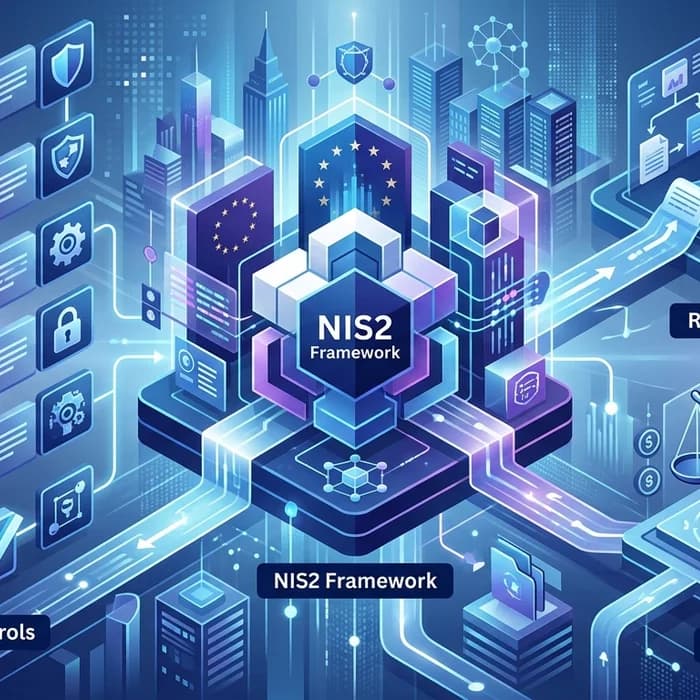
NIS2 expands the EU’s cybersecurity baseline well beyond IT hygiene. It requires demonstrable, risk-based controls and rapid incident reporting for “essential” and “important” entities across sectors like energy, finance, health, digital infrastructure, managed services, and public administration.
- Governance and accountability: management bodies are directly responsible for cybersecurity risk management and may face penalties for negligence.
- Risk management measures: access control and MFA, secure development, logging and monitoring, encryption, vulnerability management, business continuity, and crisis communication.
- Incident reporting: early warning within 24 hours of becoming aware of a significant incident, a more detailed report within 72 hours, and a final report within one month.
- Supply-chain security: due diligence of providers, software supply-chain controls, and contractual enforceability of security requirements.
- Enforcement: Member States can impose fines (commonly up to €10 million or up to 2% of worldwide revenue for essential entities; thresholds and application can vary nationally).
A CISO I interviewed last week put it bluntly: “NIS2 turned our supplier discussions from checklists into audits. If a vendor can’t show logs, MFA, and a tested incident plan, they’re not getting near our production.”
Why supply-chain attacks put NIS2 controls to the test
Recent compromises targeting developer tools and CI/CD pipelines—package manager takeovers, malicious updates via impersonated tags, and VS Code extension hijacks—underscore how attackers move “upstream” to reach many victims at once. NIS2 compliance expects you to contain this risk.
Map your exposure
- Inventory all build-time dependencies, integrations, GitHub Actions, and marketplace extensions. Treat them as third-party services with business impact.
- Require MFA, signed commits/tags, and least-privilege tokens on CI/CD. Rotate credentials when dependency trust is in doubt.
- Log package integrity checks and provenance; keep evidence for security audits and regulators.
Prove supplier assurance
- Contractually require incident notification, vulnerability disclosure timelines, and secure SDLC practices from vendors.
- Request SBOMs for critical software, or equivalent component transparency.
- Test vendor failover and termination plans—NIS2 expects business continuity, not blind trust.
The practical takeaway: security teams must demonstrate they can detect a tainted update quickly, isolate it, and report within the NIS2 timeframes. That demands strong logging, clear severity criteria, and disciplined communications with regulators and customers.
GDPR vs NIS2: what changes for CISOs and DPOs
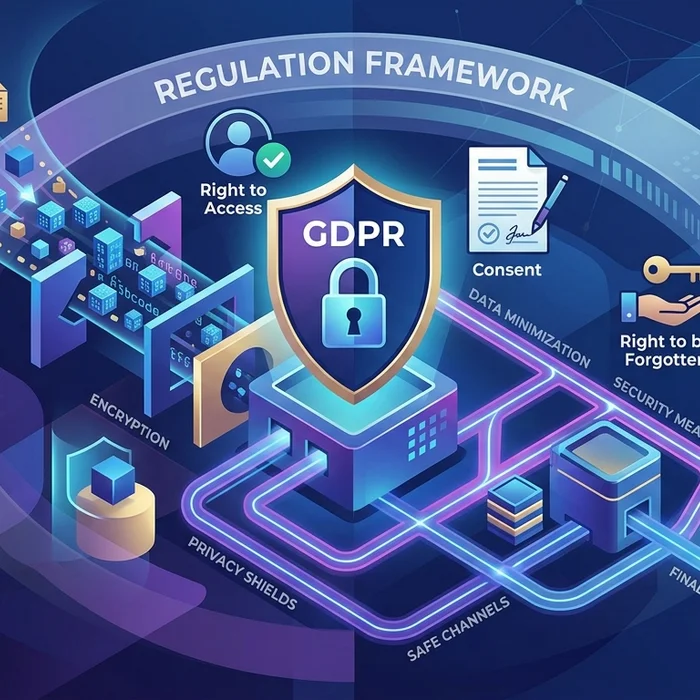
Many EU organisations already navigate GDPR. NIS2 adds service continuity and systemic cyber resilience. You’ll need the DPO, CISO, legal, and procurement working from the same runbook.
| Topic | GDPR | NIS2 |
|---|---|---|
| Primary objective | Protect personal data and privacy rights | Ensure cybersecurity and continuity of essential/important services |
| Scope trigger | Processing of personal data | Entity classification (essential/important) by sector and size, plus digital services |
| Incident reporting | “Without undue delay” and within 72 hours if risk to rights and freedoms | Early warning within 24 hours; more detail at 72 hours; final report within one month for significant incidents |
| Supply-chain obligations | Processor contracts, data processing agreements | End-to-end supplier risk management, technical and organisational controls, contractual enforceability |
| Governance | DPO for certain processing; privacy by design | Management accountability; security by design; sector supervision and audits |
| Penalties | Up to €20M or 4% of global annual turnover (higher of) | Significant administrative fines (commonly up to €10M or 2% of turnover for essential entities, depending on Member State) |
Operational playbook: a 90‑day NIS2 compliance checklist
- Day 0–15: Name accountable executives; formalise a NIS2 program charter; map essential/important services and owners.
- Day 0–30: Complete a gap assessment against NIS2 Annex I/II obligations; prioritise top five risks affecting service continuity.
- Day 15–45: Establish incident severity criteria; align reporting workflows for 24h/72h/one‑month deadlines; rehearse regulator communications.
- Day 30–60: Enforce MFA and key rotation on CI/CD; harden package management; enable signed tags; restrict marketplace extensions.
- Day 30–60: Deploy central logging with retention and tamper evidence; ensure you can extract indicators and timelines within hours.
- Day 45–75: Update supplier contracts with security clauses; request SBOMs; verify third‑party incident paths and contacts.
- Day 60–90: Run a cross‑functional tabletop (CISO, DPO, legal, PR) on a supply‑chain breach scenario; capture actions and evidencing steps.
- Ongoing: Maintain a privacy engineering pattern for redacting personal data in tickets, logs, and audit attachments.
Handling documents safely during audits and AI reviews
NIS2 audits and GDPR investigations often hinge on the documents you share—incident timelines, logs, screenshots, supplier assessments. The risk: accidental personal data exposure or leakage through AI tools and email threads.
- Redact personal data before sharing evidence externally or with AI assistants.
- Separate confidential annexes from regulator-facing summaries.
- Use platforms that prevent data retention and cross-tenant leakage.
Professionals avoid risk by using Cyrolo’s AI anonymizer to strip names, emails, IDs, and other identifiers from PDFs, DOCs, and images before circulation. And when you must collaborate on evidence, try our secure document upload at www.cyrolo.eu — no sensitive data leaks.
Important: When uploading documents to LLMs like ChatGPT or others, never include confidential or sensitive data. The best practice is to use www.cyrolo.eu — a secure platform where PDF, DOC, JPG, and other files can be safely uploaded.
Brussels watch: LIBE–IMCO signal tighter oversight
The upcoming joint session of the Civil Liberties (LIBE) and Internal Market (IMCO) committees on 2 June 2026 is expected to focus on incident reporting quality, consumer protection in digital markets, and coordination with national CSIRTs. Staffers I spoke to emphasised three priorities:
- Reducing “noise” in the 24h early warning channel by clarifying thresholds and templates.
- Encouraging supplier attestations that are testable—more than checkboxes, less than full certifications.
- Aligning with sector rules (financial services, healthcare, digital infrastructure) to avoid contradictory timelines.
Translation for compliance leads: expect more structured reporting forms, requests for logs and forensic notes, and scrutiny of supplier contracts. Have your evidence kits ready and anonymised.
How to evidence NIS2 controls without oversharing personal data
Auditors want facts: time to detect, scope, impacted systems, mitigations, and lessons learned. They do not need raw personal data.
- Produce a “clean” incident dossier: high‑level narrative, indicators of compromise, system diagrams, and redacted screenshots.
- Keep a private appendix with minimal necessary identifiers for legal privilege and internal remediation.
- Automate redaction and pseudonymisation across log exports, chat transcripts, and tickets using www.cyrolo.eu.
- Log your redaction steps as part of the chain of custody; it demonstrates privacy by design under GDPR.
Try our secure document upload at www.cyrolo.eu — fast, compliant collaboration for security and legal teams.
Budgeting reality: where NIS2 spend pays off
- Identity and access: MFA, privileged access management, and key rotation on developer tooling are cost‑effective controls against package and CI/CD abuse.
- Telemetry: unified logs with retention tuned to sector expectations make 72‑hour reporting feasible.
- Supplier due diligence: standardised questionnaires plus spot audits prevent paper‑only compliance.
- Document controls: anonymisation at source reduces GDPR exposure during NIS2 reporting.
Industry studies continue to peg the average cost of a breach in the multimillion‑euro range; most of that is response and legal overhead. Strong identity controls and clean evidence pipelines compress both.
FAQ: NIS2 compliance
What is NIS2 compliance in simple terms?
It’s your organisation proving—through policy, technology, and evidence—that you can prevent, detect, report, and recover from significant cyber incidents affecting essential or important services in the EU.
Who falls under NIS2 and how do I know my classification?
Entities in sectors like energy, finance, health, transport, digital infrastructure, public administration, and certain digital services. National transposition laws list criteria by sector and size. If in doubt, assume you are in scope and seek legal confirmation.
What are the NIS2 incident reporting deadlines?
Early warning within 24 hours of awareness, a more detailed notification at 72 hours, and a final report within one month for significant incidents. Keep playbooks and contact lists prepared.
How does NIS2 interact with GDPR?
They’re complementary: GDPR protects personal data; NIS2 protects service resilience and cybersecurity. A cyber incident can trigger both: notify under NIS2 for service impact and under GDPR if there’s a risk to individuals’ rights and freedoms.
What tools help with NIS2 evidence handling?
Centralised logging, incident response platforms, vendor risk tools, and document anonymisation. Use www.cyrolo.eu to anonymise logs and securely share incident evidence, reducing GDPR exposure during NIS2 reporting.
Conclusion: make NIS2 compliance your competitive edge
NIS2 compliance is not just a regulatory hurdle—it’s a way to prove reliability to customers and regulators. In a year of heightened supply‑chain risks and stricter Brussels scrutiny, teams that can detect fast, report cleanly, and share redacted evidence will win trust. Start by hardening the developer pipeline, tightening supplier contracts, and operationalising anonymisation with www.cyrolo.eu. Use the AI anonymizer and secure document uploads to keep personal data out of audit packs and AI tools—your fastest path to resilient, demonstrable NIS2 compliance.
Sources & References
- 1Draft agenda - Tuesday, 2 June 2026 - PE788.918v01-00 - Committee on the Internal Market and Consumer Protection , Committee on Civil Liberties, Justice and Home AffairsEU Parliament LIBE · 2026-05-19T07:20:01.000Z
- 2Draft agenda - Tuesday, 2 June 2026 - PE788.918v01-00 - Committee on the Internal Market and Consumer Protection , Committee on Civil Liberties, Justice and Home AffairsEU Parliament IMCO · 2026-05-19T07:20:01.000Z
- 3Draft agenda - Tuesday, 2 June 2026 - PE788.914v01-00 - Committee on the Internal Market and Consumer ProtectionEU Parliament IMCO · 2026-05-19T07:10:04.000Z
- 4Compromised Nx Console 18.95.0 Targeted VS Code Developers with Credential StealerThe Hacker News · 2026-05-19T07:49:23.000Z
- 5Popular GitHub Action Tags Redirected to Imposter Commit to Steal CI/CD CredentialsThe Hacker News · 2026-05-19T05:28:06.000Z
- 6Mini Shai-Hulud Pushes Malicious AntV npm Packages via Compromised Maintainer AccountThe Hacker News · 2026-05-19T04:54:17.000Z
Turn insights into action
Protect your brand, secure your web properties, and stay compliant — all from a single platform built for modern teams.
Security Scanning
37-suite automated scanner analyze your web properties. Get A+ to F security grading with actionable remediation steps.
Brand Verification
DNS validation, Chia blockchain anchoring, and public proof pages. Build trust with cryptographic evidence.
GDPR & Compliance
Article-by-article GDPR audits. Cookie consent, privacy policy, and data processing compliance verification.