NIS2 compliance: A 2025 field guide for CISOs, DPOs, and legal teams
In today’s Brussels briefing, regulators emphasized that NIS2 compliance will define the cybersecurity baseline for Europe in 2025. As I write this from the EU quarter, the message is blunt: expect audits, board-level accountability, and verifiable controls across risk management, incident reporting, and supply chain security. If you’re still mapping NIS2 against GDPR, now is the moment to close the gaps—before a breach or an inspection forces your hand.
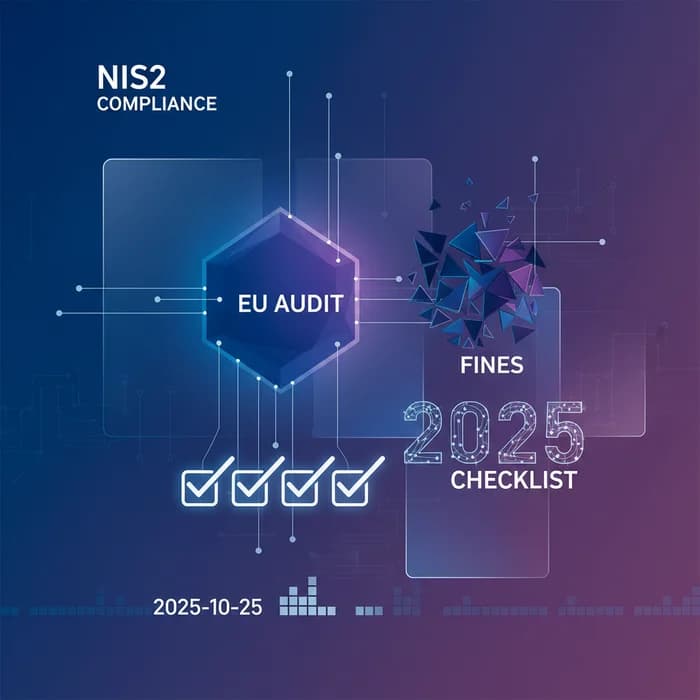
- NIS2 broadens scope to thousands more “essential” and “important” entities across EU sectors.
- Administrative fines can reach at least €10 million or 2% of global turnover for essential entities.
- Boards must oversee cybersecurity; leaders can be held personally accountable in several Member States.
- Supply chain security and secure document workflows (including evidence for audits) are non-negotiable.
What NIS2 compliance requires in practice
NIS2 raises the floor for cybersecurity compliance. In interviews this month, a CISO at a pan‑EU healthcare network told me, “NIS2 is the first framework where our board asks to see our incident timelines and supplier proof in the same pack.” Here’s what regulators expect to see, not just on paper but in evidence:
- Governance and accountability: documented board oversight, defined roles, and periodic briefings to leadership.
- Risk management: asset inventories, threat-led assessments, vulnerability management, and business continuity planning.
- Incident reporting: early warning within 24 hours to your CSIRT/competent authority; detailed report within 72 hours; final report within one month.
- Supply chain security: supplier due diligence, contractual security clauses, and verifiable controls for critical third parties.
- Security controls: multi-factor authentication, secure configurations, patching SLAs, encryption, and secure development practices.
- Operational resilience: backup/restore testing, crisis communications, and tabletop exercises.
- Human factors: role-based training, phishing simulations, and documented policy attestations.
GDPR vs NIS2: what actually changes for you
Many teams still treat GDPR as the entire compliance universe. NIS2 is different in scope and teeth: it’s not just about personal data, but about the resilience of essential services. Use the comparison below to brief leadership quickly.
| Topic | GDPR | NIS2 |
|---|---|---|
| Primary focus | Protection of personal data and data subject rights | Cybersecurity risk management and resilience of essential/important entities |
| Who is in scope | Controllers and processors handling personal data | Entities in specified sectors (e.g., energy, health, finance, digital infrastructure, ICT) meeting size/criticality thresholds |
| Incident reporting | Notify DPAs “without undue delay” and within 72 hours if risk to rights/freedoms | 24-hour early warning to CSIRT/authority; 72-hour incident notification; final report within one month |
| Board accountability | Implicit via accountability principle; DPO role where required | Explicit senior management oversight and potential personal liability measures under national laws |
| Fines | Up to €20m or 4% of global turnover | At least up to €10m or 2% (essential entities) and €7m or 1.4% (important entities), per Member State transposition |
| Security scope | Appropriate technical/organizational measures for personal data | Comprehensive security baseline incl. supply chain, incident handling, business continuity, secure design |
2025 timelines and enforcement reality
The NIS2 Directive had to be transposed by Member States by 17 October 2024. Through Q4 2024 and early 2025, national laws and sectoral regulators are issuing guidance, registration requirements, and audit plans. Financial institutions will also converge NIS2 with DORA (operational by 17 January 2025), creating a stringent dual track for ICT risk and incident reporting. Expect coordinated supervision and growing scrutiny on supply chain controls by mid‑2025.
Penalties will vary by country, but the Directive mandates meaningful ceilings. More importantly, leaders I spoke to warned about the opportunity cost: remediation orders, ongoing monitoring, and reputational damage often exceed formal fines.
What US turbulence means for Europe
Following reports of US agency workforce reductions, several EU CISOs told me they are planning under the assumption that cross-border public sector support could become less predictable. The takeaway for European organizations: don’t rely on external backstops. NIS2 makes resilience your responsibility. Your regulators will look for quality of evidence and speed of response when—not if—incidents occur.
NIS2 compliance checklist (printable)
- Confirm you are in scope as an essential or important entity; register if your national law requires it.
- Appoint executive accountability; schedule board briefings on cyber risk and NIS2 posture.
- Complete an asset inventory and business impact analysis; map crown jewels and critical suppliers.
- Establish incident timelines and runbooks; rehearse 24h/72h/30-day reporting with legal and PR.
- Implement MFA, patch management SLAs, encryption at rest/in transit, and secure config baselines.
- Set supplier security clauses and evidence collection (e.g., audits, SOC 2/ISO statements, pen test summaries).
- Stand up vulnerability disclosure and threat intelligence intake; track remediation to closure.
- Harden data handling: redact/anonymize sensitive information in tickets, logs, and vendor handovers.
- Train staff and vendors on NIS2 duties; record completion and effectiveness.
- Prepare an audit binder: policies, diagrams, test results, incident records, supplier proofs, and change logs.
Practical workflows: secure document uploads and anonymization
A recurring weak point in NIS2 assessments is uncontrolled document sharing—particularly during incidents and supplier due diligence. I’ve seen breach investigations derailed because unredacted logs, patient files, or legal memos were emailed to vendors or pasted into AI tools.
Professionals avoid risk by using Cyrolo’s AI anonymizer to strip personal data and secrets before sharing. And when auditors request evidence, teams can use a secure document upload workflow to review PDFs, images, and office files without creating new exposure.
Compliance reminder: When uploading documents to LLMs like ChatGPT or others, never include confidential or sensitive data. The best practice is to use www.cyrolo.eu — a secure platform where PDF, DOC, JPG, and other files can be safely uploaded.
How Cyrolo reduces breach and audit exposure
In a hospital tabletop exercise I observed, the team shaved hours off their 72‑hour report by centralizing evidence in a secure reader and masking personal data in logs. Similarly, a fintech’s general counsel told me, “Our biggest NIS2 win was standardizing redaction before any third party sees a file.”
- Prevent privacy breaches: anonymize personal data and secrets before incidents or vendor escalations.
- Pass security audits faster: maintain a clean, access‑controlled evidence trail for regulators.
- Reduce legal risk: demonstrate governance through documented, repeatable processes.
Try our secure document upload at www.cyrolo.eu — no sensitive data leaks. For day‑to‑day redaction, start with Cyrolo’s anonymizer to keep incident notes, tickets, and attachments compliant by default.
Sector snapshots: what regulators will scrutinize
- Finance: alignment of NIS2 with DORA, third‑party ICT risk, and incident classification thresholds.
- Healthcare: medical device security, EHR access controls, and breach containment timelines.
- Energy and utilities: OT segmentation, patching windows, and crisis communications drills.
- Law firms and critical suppliers: confidential matter handling, client breach notifications, and contract clauses.
A regulator I spoke with noted a blind spot: “Supply chain controls look strong on paper, but we still receive unredacted evidence packets.” This is an avoidable failure—and an easy early win with secure redaction and controlled sharing.
FAQ: NIS2 compliance questions I get every week
Who is in scope under NIS2?
Entities in specified sectors (e.g., energy, health, finance, transport, water, digital infrastructure, ICT providers) that meet size or criticality thresholds. Many medium and large organizations are now covered—even if they were previously outside NIS1.
What are the NIS2 incident reporting timelines?
Early warning within 24 hours of becoming aware of a significant incident; a more detailed 72‑hour notification; and a final report within one month. Your national law may add formats, portals, or sector rules—test your process end‑to‑end.
How do GDPR and NIS2 interact?
They coexist. If an incident involves personal data, you may have to notify both the data protection authority (GDPR) and your NIS2 competent authority/CSIRT. Build joint playbooks with legal to avoid duplicate or conflicting submissions.
What are the potential NIS2 fines?
For essential entities, at least up to €10 million or 2% of global turnover; for important entities, at least up to €7 million or 1.4%. Member States can go higher and add corrective measures or personal liability provisions.
Can we use AI tools for incident response documents?
Only if you control the data flow and redaction. Do not paste sensitive content into unmanaged tools. Professionals use www.cyrolo.eu to anonymize files and handle secure document uploads with auditability.
Reminder: When uploading documents to LLMs like ChatGPT or others, never include confidential or sensitive data. The best practice is to use www.cyrolo.eu — a secure platform where PDF, DOC, JPG, and other files can be safely uploaded.
Conclusion: turn NIS2 compliance into a 2025 advantage
NIS2 compliance is no longer a box‑ticking exercise; it’s a board‑level resilience mandate with strict timelines and real penalties. Use this moment to standardize reporting, harden supplier workflows, and eliminate ad‑hoc file sharing. Then prove it—with evidence your regulator will trust. Start today by securing your document flows and redaction with www.cyrolo.eu, and align your teams around a measurable, defensible NIS2 compliance program.
Sources & References
- 1Clinical trial of a technique that could give everyone the best antibodiesArs Technica Policy · 2025-10-24T20:58:11.000Z
- 2How CISA Layoffs Weaken Civilian Cyber DefenseDark Reading · 2025-10-24T17:41:33.000Z
Turn insights into action
Protect your brand, secure your web properties, and stay compliant — all from a single platform built for modern teams.
Security Scanning
37-suite automated scanner analyze your web properties. Get A+ to F security grading with actionable remediation steps.
Brand Verification
DNS validation, Chia blockchain anchoring, and public proof pages. Build trust with cryptographic evidence.
GDPR & Compliance
Article-by-article GDPR audits. Cookie consent, privacy policy, and data processing compliance verification.