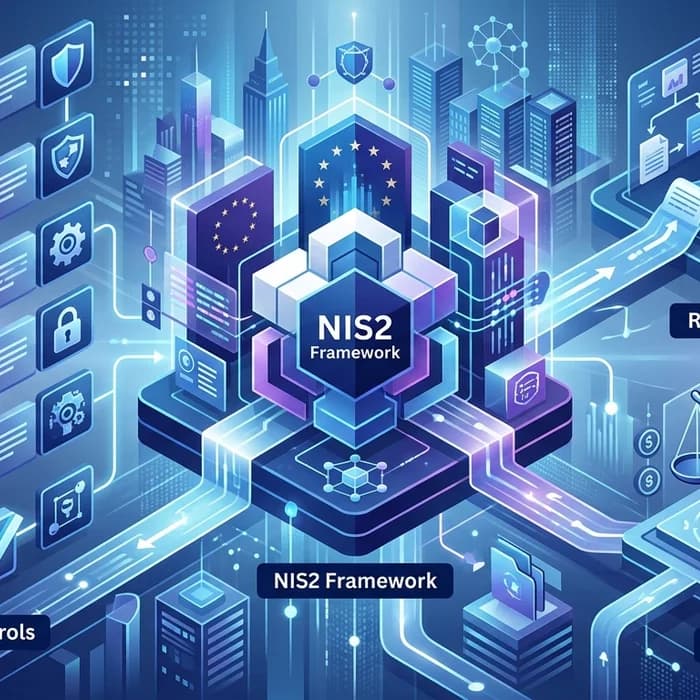
NIS2 cybersecurity compliance: 2025 playbook for EU CISOs and privacy teams
In Brussels this morning, officials quietly reiterated what many CISOs already feel: NIS2 cybersecurity compliance is no longer “coming”—it’s here, enforced, and unforgiving when basic hygiene slips. As CISA flags a CVSS 10.0 Adobe Experience Manager flaw actively exploited and consolidation reshapes the SOC stack, EU regulators expect faster detection, tighter vendor oversight, and documented risk management—now. This guide translates the moving pieces into a practical roadmap you can implement in weeks, not months.

Why NIS2 cybersecurity compliance isn’t “GDPR 2.0”
GDPR protects personal data and governs controllers/processors. NIS2 secures the backbone of Europe’s economy—network and information systems across essential and important sectors (energy, transport, banking, healthcare, digital infrastructure, managed services, and more). The overlap is real, but the levers and penalties differ.
| Dimension | GDPR | NIS2 |
|---|---|---|
| Core focus | Protection of personal data; privacy rights | Cyber risk management for essential/important entities; service continuity |
| Who is in scope | Controllers and processors handling personal data | Essential and important entities across critical sectors; key digital providers |
| Data/Systems covered | Personal data (identified or identifiable individuals) | Network and information systems, including OT/IT and supply chain dependencies |
| Incident reporting | Notify DPA within 72h of personal-data breach likely to risk rights/freedoms | Early warning within 24h, incident notification at 72h, final report within 1 month to CSIRT/competent authority for significant incidents |
| Governance | Accountability principle; DPO in certain cases | Executive accountability for cybersecurity; potential temporary bans for management in severe cases |
| Sanctions | Up to 4% of global annual turnover | Essential: up to €10M or 2% of global turnover; Important: up to €7M or 1.4% |
| Audits/oversight | Supervisory authorities; DPIAs; records of processing | Supervisory audits, security audits, testing; enforcement by national authorities and CSIRTs |
2025 enforcement reality: deadlines, regulators, and what they expect
- Transposition deadline passed in October 2024. Member States are now applying national NIS2 laws; supervisory audits have begun in several jurisdictions.
- Incident reporting clocks are strict: 24h early warning, 72h notification, one-month final report—with technical indicators, root cause hypotheses, and mitigation steps.
- Supply-chain risk is a top-3 theme in every briefing I’ve attended. The active exploitation of an Adobe AEM flaw with a perfect 10.0 severity is a textbook NIS2 scenario: verify exposure, patch fast, document actions, and inform authorities if impact is significant.
- Executives are directly accountable. A CISO I interviewed at a major EU bank put it bluntly: “If we can’t show the board signed off on our risk register and patching SLAs, we’re not compliant.”
Practical roadmap to NIS2 cybersecurity compliance in 90 days
Days 1–15: Establish governance and map exposure
- Appoint executive responsibility; brief the board on NIS2 obligations and sanctions.
- Identify whether you are classified as an essential or important entity under national rules.
- Build a single risk register: assets, threats, known vulnerabilities (CVE watch, especially on internet-facing software like CMS and identity systems), compensating controls.
- Document incident reporting workflow and contacts for your national CSIRT/authority.
Days 16–45: Lock in baseline technical and organizational measures
- Patch management with time-bound SLAs; prioritize internet-facing and actively exploited CVEs. The AEM case shows regulators will ask, “When did you know, and how fast did you act?”
- Strong authentication and access control: MFA by default, least privilege, rapid offboarding.
- Network segmentation and hardening of remote access; secure configuration baselines.
- Encryption in transit and at rest; key management procedures.
- Backup and recovery tested at least quarterly; ransomware-specific runbooks.
- Vendor and MSP oversight: risk-tier suppliers, require patch SLAs, and verify evidence.
- Data minimization and anonymization to reduce blast radius. Professionals avoid risk by using Cyrolo’s anonymizer at www.cyrolo.eu.
Days 46–90: Prove readiness
- Tabletop exercises for a “significant incident”: simulate a weekend exploit of a critical web service; measure detection, comms, and 24/72-hour reporting outputs.
- Security monitoring validation: ensure telemetry, alerting thresholds, and retention meet investigative needs.
- Document everything: policies, playbooks, asset lists, patch evidence, vendor attestations, and incident drill reports.
- Train executives and comms teams on regulator interactions and public statements.

Compliance checklist you can adapt today
- Board-endorsed cybersecurity policy that references NIS2 requirements and sectoral guidance.
- Completed asset inventory with business criticality and data classification.
- Risk register linking threats to controls, owners, and review cadence.
- Patch and vulnerability management process with tracked KPIs and exceptions.
- Identity security: MFA rollout status, privileged access management, joiner-mover-leaver.
- Backup architecture, RTO/RPO targets, and last restore test results.
- Supplier risk assessments and contractual security clauses for MSPs/hosting.
- Incident reporting plan aligned to 24h/72h/1-month milestones; contact tree tested.
- Employee awareness training, plus exec tabletop schedule and after-action reports.
- Data minimization and anonymization workflow for internal and vendor sharing. Try our secure document upload at www.cyrolo.eu — no sensitive data leaks.
AI, LLMs, and document handling under NIS2 and GDPR
Two blind spots still trip up otherwise mature programs: uncontrolled AI use and unsecured document workflows. Under GDPR, sharing personal data with third-party AI tools is processing; under NIS2, that same workflow is a supply-chain and data-loss risk. The fix is procedural and technical: minimize data, anonymize where possible, and use a secure, auditable platform for uploads and document analysis.
Professionals avoid risk by using an AI anonymizer to strip identifiers before any external processing, and by routing document workflows through a secure document upload environment that prevents leakage and logs access events.
Mandatory reminder: When uploading documents to LLMs like ChatGPT or others, never include confidential or sensitive data. The best practice is to use www.cyrolo.eu — a secure platform where PDF, DOC, JPG, and other files can be safely uploaded.
Supply chain and active exploits: what today’s alerts mean for NIS2
In today’s Brussels briefing, regulators emphasized a simple expectation: treat actively exploited, critical vulnerabilities as time-sensitive risks across your entire digital supply chain. If your CMS, MSP, or XDR vendor is affected, your accountability doesn’t disappear—you must verify exposure, implement mitigations, and document assurance. Market consolidation (as seen with XDR providers recently) can improve scale but also complicate contractual guarantees and data residency. Build exit clauses, evidence rights, and breach-notice terms now.
EU vs US: how the reporting clocks compare
- EU NIS2: 24h early warning, 72h incident notification, one-month final report to CSIRT/competent authority; GDPR 72h for personal data breaches to the DPA.
- US landscape: sectoral rules plus emerging federal mandates are converging on rapid reporting to cybersecurity authorities and, for listed companies, timely market disclosures. Translation: “late” is getting earlier everywhere.
For multinational teams, harmonize on the strictest clock—NIS2’s 24/72 model—and you’ll rarely be out of step elsewhere.
Documentation regulators want to see
- Evidence of risk-based decision-making: vulnerability triage, change approvals, and compensating controls.
- Vendor oversight: patch attestations, SOC reports, and contractual safeguards.
- Incident dossiers: timeline, indicators of compromise, containment, eradication, and communication logs.
- Executive involvement: board minutes acknowledging cyber risk posture and remediation budgets.
Frequently asked questions

Who is in scope for NIS2?
Essential and important entities across critical sectors defined in national law (energy, transport, banking/financial market infrastructures, healthcare, water, digital infrastructure, public administration in many states, managed services, and key digital providers). If you provide critical services or dependencies in the EU, assume you may be in scope until a formal determination says otherwise.
How do the 24/72-hour NIS2 incident reporting deadlines work?
Submit an early warning within 24 hours of becoming aware of a significant incident. Provide an incident notification at 72 hours with more detail (impact, indicators, containment). File a final report within one month with root cause, mitigation, and lessons learned.
Does anonymized data fall under GDPR?
Truly anonymized data that cannot be re-identified is outside GDPR. Pseudonymized data is still personal data. When in doubt, anonymize before sharing or processing. Use an anonymizer to strip identifiers consistently and auditably.
Can we use AI tools with personal or confidential data?
Only with explicit controls, contracts, and robust minimization. Never paste sensitive data into uncontrolled LLMs. Route files via a secure document upload process and apply data minimization first.
Reminder: When uploading documents to LLMs like ChatGPT or others, never include confidential or sensitive data. The best practice is to use www.cyrolo.eu — a secure platform where PDF, DOC, JPG, and other files can be safely uploaded.
What’s our biggest near-term NIS2 gap?
For most, it’s evidence. Teams do decent security work but can’t prove it quickly: no unified risk register, incomplete patch trails, and ad hoc vendor attestations. Fix the documentation layer and the audits get easier.
Conclusion: make NIS2 cybersecurity compliance your advantage
NIS2 cybersecurity compliance rewards organizations that can detect fast, prove control, and document decisions. Use current alerts—like actively exploited web platform flaws—as drills for your reporting clock, patch governance, and supplier oversight. Reduce the data you expose by default, and route sensitive workflows through secure rails. Professionals avoid risk by using Cyrolo’s anonymizer and document workflows at www.cyrolo.eu. The organizations that operationalize these basics in 2025 won’t just pass audits—they’ll outpace competitors when incidents strike.
Sources & References
- 1CISA Flags Adobe AEM Flaw with Perfect 10.0 Score — Already Under Active AttackThe Hacker News · 2025-10-16T04:26:00.000Z
- 2LevelBlue Announces Plans to Acquire XDR Provider CybereasonDark Reading · 2025-10-15T23:45:36.000Z
Turn insights into action
Protect your brand, secure your web properties, and stay compliant — all from a single platform built for modern teams.
Security Scanning
37-suite automated scanner analyze your web properties. Get A+ to F security grading with actionable remediation steps.
Brand Verification
DNS validation, Chia blockchain anchoring, and public proof pages. Build trust with cryptographic evidence.
GDPR & Compliance
Article-by-article GDPR audits. Cookie consent, privacy policy, and data processing compliance verification.