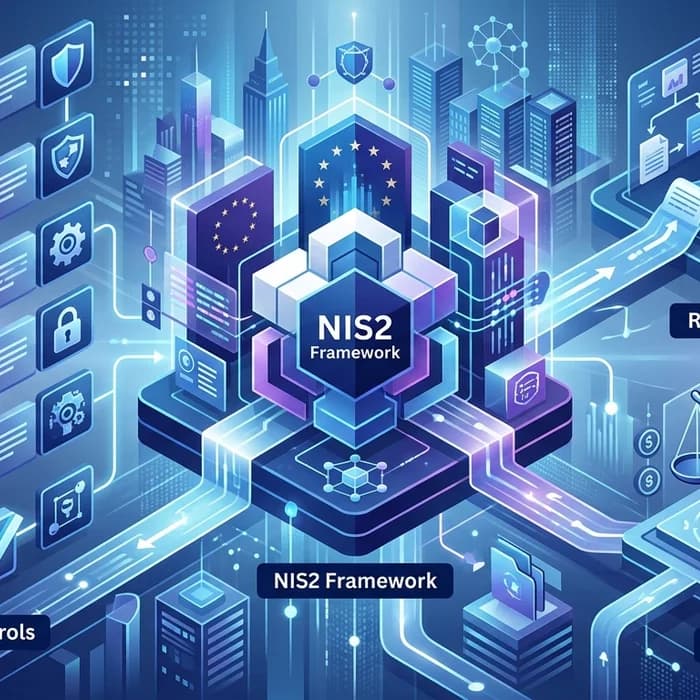
NIS2 compliance: the 2025 playbook for CISOs, DPOs, and counsel
As of 2025, NIS2 compliance is no longer a “nice-to-have” but a board-level obligation that touches security, legal, and operations. In today’s Brussels briefing, regulators reiterated that incident reporting timelines and management accountability will be enforced across essential and important entities. Meanwhile, the real-world threat landscape is unforgiving: espionage malware evolving across campaigns, spyware-laced mobile apps, and a stark reminder from a major vendor that backups are often the weakest link. Add to that new US moves like mandatory browser-based opt-out signals and state-level age verification, and the message is clear—your EU cybersecurity compliance posture must be airtight, privacy-aware, and provably defensible.

That starts with disciplined processes, safer tooling, and eliminating risky data handling. Professionals avoid risk by using Cyrolo’s anonymizer and by shifting sensitive workflows to secure document uploads that do not leak private or regulated data.
What NIS2 changes in 2025
Reporting from conversations with national CSIRTs and supervisory authorities this quarter, three themes dominate the NIS2 enforcement agenda:
- Broadened scope: More sectors classified as essential or important (e.g., ICT service management, managed security, digital infrastructure, finance, health, water, public administration).
- Stricter governance: Management bodies must approve and oversee risk management measures—and can be held liable for systemic failures.
- Faster, clearer incident reporting: Early warning within 24 hours of becoming aware; a more complete notification within 72 hours; and a final report within one month. Expect scrutiny on timeliness and signal quality.
Penalties are material. For essential entities, expect administrative fines up to at least €10 million or 2% of global annual turnover; for important entities, up to at least €7 million or 1.4%—whichever is higher. Supervisors have told me they will evaluate “reasonable” measures pragmatically, but will not overlook preventable control failures, including exposed backups, unpatched third-party components, and unmanaged data shuttled into AI tools.
NIS2 compliance checklist for 2025
Use this concise checklist to de-risk audits and board updates:
- Map scope and dependencies
- Confirm if your entity is “essential” or “important.”
- Inventory critical services, suppliers, telecom, cloud, and MSSPs.
- Governance and accountability
- Document the management body’s approval of the cybersecurity program.
- Assign an accountable executive; align with risk appetite and budget.
- Risk management measures
- Threat-led risk assessment covering ransomware, data exfiltration, mobile spyware, and supply chain compromise.
- Hardening of backups (offline, immutable; separate credentials and monitoring).
- Patch and vulnerability management with SLAs tied to asset criticality.
- Identity and access management with MFA and privileged access controls.
- Data security: encryption, minimization, and anonymization for analytics and AI.
- Incident response
- Playbooks aligned to NIS2 timelines: 24h early warning, 72h update, 1-month final report.
- Tabletop exercises with legal, PR, and executive teams; evidence capture protocols.
- Monitoring and reporting
- Centralized telemetry; anomaly detection across endpoints, cloud, and backups.
- Clear thresholds for “significant incident” classification and regulatory notification.
- Supply chain controls
- Security clauses, audit rights, and incident co‑reporting in vendor contracts.
- Continuous vendor risk assessments, prioritizing core providers and MSPs.
- People and process
- Mandatory awareness on phishing, mobile malware, and safe AI use.
- Approved tooling for secure document uploads and AI anonymizer workflows.
GDPR vs NIS2: what’s the difference and why it matters
Many organizations still conflate these frameworks. In my briefings with EU counsel, the fastest path to clarity is to compare their purposes, triggers, and reporting mechanics.
| Area | GDPR | NIS2 |
|---|---|---|
| Primary focus | Protection of personal data and data subject rights | Security and resilience of essential/important services and networks |
| Scope trigger | Processing of personal data | Entity classification (essential/important) and critical services |
| Incident threshold | Personal data breach likely to risk rights and freedoms | Significant incident impacting service continuity, data, or security |
| Reporting timelines | Notify authority within 72 hours of becoming aware; sometimes notify individuals “without undue delay” | Early warning within 24h, substantial update within 72h, final report within 1 month |
| Penalties | Up to €20m or 4% of global turnover (higher of the two) | Up to at least €10m/2% (essential) or €7m/1.4% (important) |
| Data handling expectations | Data minimization, anonymization/pseudonymization, DPIAs | Risk management measures, supply chain security, incident readiness |
In practice, your breach may trigger both regimes: exfiltrated personal data (GDPR) and disruption to a critical service (NIS2). Harmonize your notifications and evidence collection to satisfy both, and never rely on ad hoc exports into unvetted AI tools during crisis response.
What I’m hearing from the field: real scenarios
- Bank and fintech stack: A CISO I interviewed flagged unmanaged LLM paste-ins during fraud investigations. Solution: route case files through an anonymizer before any analysis, and only allow queries via a secure document upload workflow.
- Hospital and medtech: Mobile spyware masquerading as popular apps has been used to harvest credentials. Countermeasure: mobile threat defense, least privilege, and strict separation of clinical data with anonymized extracts for AI triage pilots.
- Public administration: Backup compromise is a recurring theme. Supervisors now ask for immutable, offline copies and evidence of restore drills. Treat backups as tier‑1 assets with independent monitoring.
- Law firms: Cross-border matters mix EU and US rules. With US states mandating browser-based opt-out signals, counsel expect clients to ask for unified privacy controls and provable minimization via anonymization.
Safe AI workflows for compliance teams
- Codify a “no raw data into public AI” rule. Use an AI anonymizer to strip personal and sensitive fields before analysis.
- Centralize evidence: upload discovery packets, policies, and logs through secure document uploads to avoid shadow IT.
- Log access and transformations for auditability; tie artifacts to incident tickets and DPIAs.
Compliance note: When uploading documents to LLMs like ChatGPT or others, never include confidential or sensitive data. The best practice is to use www.cyrolo.eu — a secure platform where PDF, DOC, JPG, and other files can be safely uploaded.
Regulatory temperature check: EU vs US
From Brussels, the tone is tightening. LIBE and national authorities are laser-focused on rule-of-law and systemic governance—expect little patience for management teams that cannot evidence oversight. Across the Atlantic, privacy enforcement is fragmenting but accelerating: California’s mandate for in-browser opt-out signals raises the bar for honoring global privacy controls; state age-verification requirements are pressuring app distribution ecosystems to retool. For EU entities operating in the US, bake these signals into your consent frameworks and be prepared to justify your user journey to EU regulators under the principles of fairness and transparency.
Bottom line: harmonize your privacy and security controls. Use anonymization by default for analytics and model training, and confine uploads to enterprise-grade, EU-aligned platforms. Try our secure document upload at www.cyrolo.eu — no sensitive data leaks.
Threats that sway enforcement priorities in 2025
- Backups under siege: A high-profile finding this year showed a vendor’s customers facing compromised firewall backups at scale. Expect supervisors to ask how you segregate backup credentials, validate integrity, and monitor exfiltration.
- Espionage and mobile spyware: Campaigns that weaponize fake popular apps reinforce the need for mobile baselines, app allowlists, and network egress controls.
- Supply-chain exposure: Intermediaries and subcontractors can amplify risk. Contractual security clauses must be backed by evidence (SBOMs, patch cadence, incident co-reporting).
- Shadow AI: Uncontrolled data pastes into public LLMs create both GDPR and NIS2 headaches. Replace them with a governed workflow: anonymize, upload securely, log everything.
How Cyrolo accelerates compliance without slowing teams
In dozens of CISO and DPO interviews this year, one pattern stands out: teams move faster when the safe path is the easy path.
- Minimize data by design: Cyrolo’s anonymizer removes personal identifiers so analysts and lawyers can work with compliant datasets.
- Secure intake: Route policies, logs, and case files through secure document uploads to keep sensitive material off personal drives and public tools.
- Audit-ready: Access trails and transformations make regulator conversations simpler during security audits and breach reviews.
Professionals avoid risk by using Cyrolo’s anonymizer at www.cyrolo.eu. Start today—reduce breach exposure and prove due diligence to regulators.
Implementation timeline you can brief to the board
- Week 1–2: Confirm classification, finalize governance memo, and budget alignment.
- Week 3–6: Risk assessment refresh; backup hardening; patch SLAs; identity controls.
- Week 7–8: Incident reporting run-throughs (24h/72h/1‑month) with counsel; supplier notification rules.
- Week 9–10: Deploy AI anonymizer and secure document upload workflows; update the acceptable use policy for AI.
- Week 11–12: Tabletop exercises; finalize evidence binder for audits; schedule quarterly reviews.
FAQ: your top questions answered

What is NIS2 compliance and who must meet it?
NIS2 compliance means implementing risk management, incident reporting, and governance measures required under the EU’s Directive (EU) 2022/2555. It applies to “essential” and “important” entities across expanded sectors, including digital infrastructure, finance, health, and public administration.
What are the NIS2 incident reporting deadlines?
Provide an early warning within 24 hours of becoming aware of a significant incident, a substantial update within 72 hours, and a final report within one month. Align your playbooks—and rehearse them with legal and comms.
How does NIS2 interact with GDPR?
A single event can trigger both: if personal data is breached (GDPR) and a critical service is impacted (NIS2). Harmonize evidence collection and notifications, and adopt anonymization to reduce personal data risk.
Can I upload case files to ChatGPT or other LLMs?
Do not upload confidential or sensitive material to public LLMs. Use a controlled path: anonymize first and rely on enterprise-grade intake. When uploading documents to LLMs like ChatGPT or others, never include confidential or sensitive data. The best practice is to use www.cyrolo.eu — a secure platform where PDF, DOC, JPG, and other files can be safely uploaded.
Does NIS2 apply to SMEs?
Many micro and small enterprises are out of scope, but exceptions exist based on sectoral importance and impact. Always verify classification; some small providers are still “important” due to criticality in the supply chain.
Conclusion: NIS2 compliance is now a leadership test
Regulators will reward preparedness, not perfection. In 2025, the organizations that thrive will prove NIS2 compliance with clear governance, hardened backups, fast reporting, and privacy-first data handling. Replace risky AI habits with governed workflows: anonymize before analysis and keep sensitive content inside secure document uploads. Start today with Cyrolo’s anonymizer and show your board—and your regulator—that you’ve turned compliance into an operational advantage.
Sources & References
- 1AMENDMENTS 1 - 169 - Draft report Proposal for a Council decision determining, pursuant to Article 7(1) of the Treaty on European Union, the existence of a clear risk of a serious breach by Hungary of the values on which the Union is founded - PE778.253v01-00EU Parliament LIBE · 2025-10-09T15:48:39.000Z
- 2AMENDMENTS 33 - 153 - Draft opinion Addressing subcontracting chains and the role of intermediaries in order to protect workers’ rights - PE778.151v01-00EU Parliament IMCO · 2025-10-09T15:48:49.000Z
- 3California governor signs law requiring in-browser opt-out preference signalIAPP Daily Dashboard · 2025-10-09T13:35:09.000Z
- 4From HealthKick to GOVERSHELL: The Evolution of UTA0388's Espionage MalwareThe Hacker News · 2025-10-09T17:19:00.000Z
- 5New ClayRat Spyware Targets Android Users via Fake WhatsApp and TikTok AppsThe Hacker News · 2025-10-09T15:30:00.000Z
- 6Apple and Google reluctantly comply with Texas age verification lawArs Technica Policy · 2025-10-09T19:09:55.000Z
- 7Musk’s X posts on ketamine, Putin spur release of his security clearancesArs Technica Policy · 2025-10-09T16:12:00.000Z
- 8SonicWall: 100% of Firewall Backups Were BreachedDark Reading · 2025-10-09T19:10:13.000Z
- 9Fastly CISO: Using Major Incidents as Career CatalystsDark Reading · 2025-10-09T15:33:49.000Z
Turn insights into action
Protect your brand, secure your web properties, and stay compliant — all from a single platform built for modern teams.
Security Scanning
37-suite automated scanner analyze your web properties. Get A+ to F security grading with actionable remediation steps.
Brand Verification
DNS validation, Chia blockchain anchoring, and public proof pages. Build trust with cryptographic evidence.
GDPR & Compliance
Article-by-article GDPR audits. Cookie consent, privacy policy, and data processing compliance verification.