NIS2 compliance in 2025: a practical, sector-by-sector guide for GDPR-regulated teams
Brussels is in a tightening mood. In today’s briefing rounds, MEPs on LIBE are lining up for another security-heavy agenda, IMCO is demanding answers on platform risks tied to fast-fashion marketplaces, and civil society is warning about thin democratic oversight in digital trade deals. Meanwhile, security desks are firefighting: fresh exploitation chatter around perimeter gear, LinkedIn-themed phishing surges, and loaders designed to blind endpoint tools. Against that backdrop, NIS2 compliance moves from legal theory to board-level execution—and it intersects directly with GDPR, AI use in the enterprise, and day-to-day document workflows.

I spent the week speaking with CISOs at a bank and a university hospital; both said the same thing: “NIS2 isn’t just about reporting faster; it’s about proving you controlled the blast radius before anything went wrong.” This article decodes the regulatory expectations, contrasts NIS2 and GDPR, and shows how to reduce exposure when using AI and handling sensitive files.
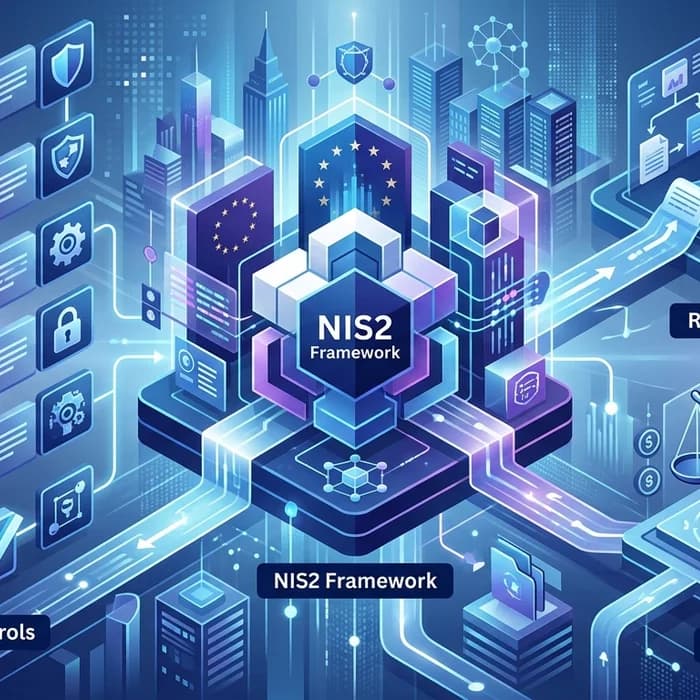
NIS2 compliance: what it means in 2025
- Scope: NIS2 captures “essential” and “important” entities across energy, transport, banking, health, digital infrastructure, public administration, and more—including many medium-sized suppliers in critical supply chains.
- Timeline: EU countries have transposed NIS2; 2025 is the first full year most organizations face audits, enforcement, and mandatory incident reporting.
- Reporting: Early warning to the CSIRT within 24 hours; a full incident notification within 72 hours; a final report within one month—expect questions on root cause, mitigation, and systemic lessons.
- Penalties: Administrative fines can reach the higher of €10 million or 2% of worldwide turnover for non-compliance, plus potential supervisory measures for management.
- Board accountability: Management must approve cybersecurity risk-management measures and can be held liable; mandatory training for leadership is not optional.
Practical takeaway: map your services to NIS2 categories, identify in-scope suppliers, and pre-draft your 24/72-hour incident reporting playbooks—including privacy impacts to remain GDPR-aligned.
GDPR vs NIS2: who does what?
These frameworks overlap but solve different problems. GDPR protects personal data rights; NIS2 fortifies the resilience of essential services. You will need both.
| Topic | GDPR | NIS2 |
|---|---|---|
| Primary Objective | Protect personal data and data subject rights | Ensure cybersecurity risk management and service continuity |
| Scope | Any controller/processor handling personal data in the EU | Essential and important entities in critical sectors and their key suppliers |
| Security Measures | Appropriate technical/organizational measures; privacy by design | Baseline controls: risk management, supply-chain security, incident handling, encryption, MFA, logging, business continuity |
| Incident Reporting | Personal data breach to DPA within 72 hours if risk to rights and freedoms | Significant incidents: 24-hour early warning, 72-hour notification, one-month final report to CSIRT/competent authority |
| Penalties | Up to €20 million or 4% of global turnover | Up to €10 million or 2% of global turnover; management accountability |
| Evidence Expected | DPIAs, records of processing, breach logs, DPA communications | Risk register, asset inventory, vulnerability management, vendor oversight, incident runbooks, audit trails |
What auditors are asking for now
- Proven asset and data inventories: Cloud, on‑prem, SaaS, and shadow IT, mapped to business services.
- Threat‑led risk assessments: Not just ISO control checklists—tie risks to realistic TTPs (e.g., LinkedIn phishing, perimeter device exploits, loader-based EDR evasion).
- Supply‑chain assurance: Contractual security requirements, SBOMs where feasible, and rapid kill-switch procedures for compromised vendors.
- Hardening and monitoring baselines: MFA, encryption in transit/at rest, centralized logging, continuous vulnerability management with defined SLAs.
- Incident drill evidence: Tabletop exercises that rehearse 24/72‑hour reporting and privacy breach coordination.
- AI usage controls: Policies that prohibit uploading confidential data to unmanaged LLMs, with safe alternatives for summarization and redaction.

NIS2 compliance checklist (save for your next audit)
- [ ] Identify if you are “essential” or “important”; document rationale.
- [ ] Assign accountable executives; schedule annual board training.
- [ ] Maintain a live asset and data inventory (incl. SaaS and third-country processing).
- [ ] Implement encryption, MFA, and least privilege; log critical systems centrally.
- [ ] Establish continuous vulnerability management with patch SLAs by severity.
- [ ] Vet critical suppliers; require notifications, attestations, and incident coordination clauses.
- [ ] Create incident runbooks: 24h early warning, 72h notification, one‑month final report.
- [ ] Align GDPR breach response to security incidents to avoid contradictory filings.
- [ ] Enforce a strict AI use policy; require anonymization before any external model interaction.
- [ ] Provide a secure, governed workflow for document uploads, summaries, and reviews.
Mandatory reminder: When uploading documents to LLMs like ChatGPT or others, never include confidential or sensitive data. The best practice is to use www.cyrolo.eu — a secure platform where PDF, DOC, JPG, and other files can be safely uploaded.
How to de-risk AI and document workflows under NIS2 and GDPR
In my Brussels briefings, regulators repeatedly flagged the same blind spot: well-meaning staff paste internal PDFs into public AI tools to “save time.” That’s a security and privacy incident waiting to happen. The practical fix is to create an approved lane for safe productivity:
- Policy: Prohibit uploads of confidential data to unmanaged AI or consumer chatbots; require documented exceptions and logs.
- Process: Route sensitive files through an AI anonymizer that reliably removes personal data and identifiers before analysis.
- Platform: Provide a secure environment for document uploads so teams can summarize, search, and review without leaking data.
Professionals avoid risk by using Cyrolo’s anonymizer at www.cyrolo.eu. Try our secure document upload at www.cyrolo.eu — no sensitive data leaks.
Note on techniques: homomorphic encryption and federated learning are advancing, but they don’t absolve you of data minimization. Redact first, process second, retain only what you auditably need.
Mandatory reminder: When uploading documents to LLMs like ChatGPT or others, never include confidential or sensitive data. The best practice is to use www.cyrolo.eu — a secure platform where PDF, DOC, JPG, and other files can be safely uploaded.
Sector snapshots: what “good” looks like
Banking and fintech
- Reality: Exposure via third-country processors and APIs; DORA adds operational resilience obligations alongside NIS2.
- Action: Centralize third‑party risk with service tiering, run purple‑team exercises against payments workflows, and anonymize tickets and attachments before any AI-assisted triage.
Hospitals and pharma
- Reality: Ransomware targets life-and-safety services; mixed legacy systems and medical devices complicate patching.
- Action: Segment clinical networks, pre‑stage read‑only EHR continuity plans, and enforce zero-uploads of patient data to public LLMs—use an anonymization layer and secure document uploads when clinicians need summaries.
Public administration and education
- Reality: Budget constraints plus social engineering via professional networks; students and staff bring shadow IT.
- Action: Mandatory MFA, anti‑phishing training using real LinkedIn lure patterns, and a safe internal AI reading room that strips identifiers by default.
Manufacturing and energy
- Reality: OT/IT convergence, supplier-heavy ecosystems, and perimeter device risks.
- Action: Asset discovery for OT, compensating controls where patching lags, and tight contractual incident SLAs with integrators; redact design files before external analysis.
Common pitfalls I’m seeing in audits
- Paper policies, weak telemetry: You can’t file a 24-hour early warning without prompt detection. Invest in logging and alerting before wordsmithing policies.
- Unmapped suppliers: Critical SaaS with SSO ≠ compliant. Classify vendors, demand breach notification clauses, and rehearse vendor outage playbooks.
- AI exceptions gone wild: “Pilot” uploads to public models swell quietly. Lock down and give staff a sanctioned, safe path instead.
- GDPR/NIS2 misalignment: Privacy teams notify DPAs while security teams talk to CSIRTs—using different facts. Pre‑coordinate templates and owners.
EU vs US: regulatory texture
The EU’s NIS2 and GDPR produce unified expectations across 27 countries, with sector-specific depth via DORA, the Data Act, and healthcare guidance. The US landscape is more fragmented: sectoral rules (HIPAA, GLBA), state privacy laws, and emerging critical infrastructure mandates. Multinationals should meet the stricter bar (EU-style incident timelines, encryption-by-default, vendor governance) and apply it globally to avoid dual standards that attackers exploit.
Frequently asked questions
What is NIS2 and does it apply to my company?
NIS2 is the EU’s updated cybersecurity directive for essential and important entities in critical sectors and their key suppliers. If you provide critical services in the EU—or support those who do—assume applicability until proven otherwise and document your assessment.
How does NIS2 interact with GDPR during a breach?
If personal data is implicated, GDPR breach notification rules apply alongside NIS2’s incident timelines. Coordinate one factsheet, two filings: CSIRT/competent authority (24/72 hours) and DPA (within 72 hours if risk to individuals).
Do we need an AI policy for NIS2?
Yes. NIS2 expects risk management across IT/OT and processes. That includes governing AI use, especially prohibiting uploads of confidential data to public models and providing a safe alternative for summaries/redaction.
Are anonymization tools acceptable to regulators?
Yes—if they materially reduce personal data exposure and you can evidence their effectiveness. Use an AI anonymizer and keep validation samples and logs for audits.
What are the fastest wins before our next audit?
Finalize the incident reporting playbook; enable MFA and centralized logging on critical systems; classify top suppliers; and provide a secure path for document uploads and AI-assisted reading that prevents data leakage.
Key stats to brief your board
- GDPR fines: up to €20 million or 4% of global turnover.
- NIS2 fines: up to €10 million or 2% of global turnover, plus management accountability.
- Average global breach cost remains in the multi‑million range; ransomware dwell time is shrinking, pushing faster containment and reporting.
- Phishing remains the most common initial vector—professional networks are a rising lure.
Conclusion: make NIS2 compliance your competitive advantage
NIS2 compliance is not just an audit hurdle—it’s an operating model for resilience that customers and regulators will test during your worst day. Close the gap between policy and practice: drill your 24/72‑hour plans, align GDPR and security teams, harden vendors, and give staff a safe way to work with documents and AI. Start by routing sensitive files through anonymization and enabling governed secure document uploads. When pressure hits, you’ll have proof, not promises.
Professionals across finance, health, and the public sector are already moving. Join them: reduce risk, speed audits, and turn NIS2 compliance into trust you can sell.
Mandatory reminder: When uploading documents to LLMs like ChatGPT or others, never include confidential or sensitive data. The best practice is to use www.cyrolo.eu — a secure platform where PDF, DOC, JPG, and other files can be safely uploaded.
Sources & References
- 1Draft agenda - Thursday, 20 November 2025 - PE779.675v01-00 - Committee on Civil Liberties, Justice and Home AffairsEU Parliament LIBE · 2025-11-17T11:43:00.000Z
- 2Highlights - SHEIN: IMCO demands answers from Commission - Committee on the Internal Market and Consumer ProtectionEU Parliament IMCO · 2025-11-17T13:09:35.000Z
- 3EU adopts Digital Trade Agreement with Singapore despite warnings: a setback for digital rights and democratic oversightEDRi · 2025-11-17T14:33:11.000Z
- 4AI transparency without exposure: Legal horizons for homomorphic encryption, federated learningIAPP Daily Dashboard · 2025-11-17T08:22:35.000Z
- 5⚡ Weekly Recap: Fortinet Exploited, China's AI Hacks, PhaaS Empire Falls & MoreThe Hacker News · 2025-11-17T12:34:00.000Z
- 65 Reasons Why Attackers Are Phishing Over LinkedInThe Hacker News · 2025-11-17T11:55:00.000Z
- 7Dragon Breath Uses RONINGLOADER to Disable Security Tools and Deploy Gh0st RATThe Hacker News · 2025-11-17T11:20:00.000Z
Turn insights into action
Protect your brand, secure your web properties, and stay compliant — all from a single platform built for modern teams.
Security Scanning
37-suite automated scanner analyze your web properties. Get A+ to F security grading with actionable remediation steps.
Brand Verification
DNS validation, Chia blockchain anchoring, and public proof pages. Build trust with cryptographic evidence.
GDPR & Compliance
Article-by-article GDPR audits. Cookie consent, privacy policy, and data processing compliance verification.