NIS2 compliance: a 2026 field guide for EU security leaders (with GDPR alignment and safe AI workflows)
In today’s Brussels briefing with telecom and health regulators, the message was blunt: NIS2 compliance is no longer a horizon issue—it’s here, it’s enforceable across the EU, and it will be measured in audits, incident reports, and executive accountability. As Turla revives modular botnets and fresh enterprise flaws surface, the combination of NIS2, GDPR, and AI governance is pushing CISOs to redesign day-to-day data handling—especially around secure document uploads, anonymization, and third‑party AI use. Below is what I’m telling boards and DPOs right now—and what I’m seeing in the field.
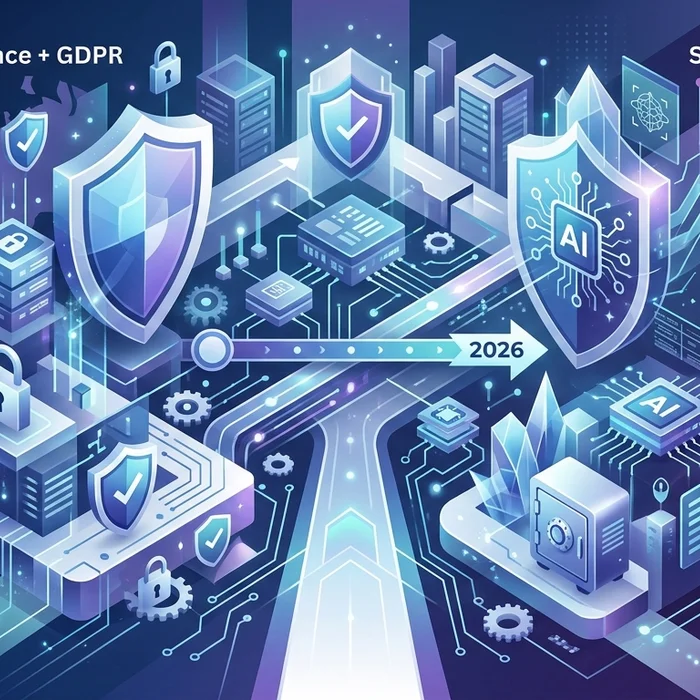
- Fines are real: NIS2 allows penalties up to at least €10 million or 2% of global turnover (whichever is higher), alongside personal liability for managers in some cases.
- Double pressure: GDPR’s privacy duties and NIS2’s resilience/security measures overlap but don’t duplicate—both matter in audits.
- AI workflows are under scrutiny: redact and minimize data before any processing; use an anonymizer and a secure document upload workflow to prevent accidental disclosures.
- Timeline: Member States transposed NIS2 in late 2024; supervision, sectoral guidance, and audits intensify through 2025–2026.
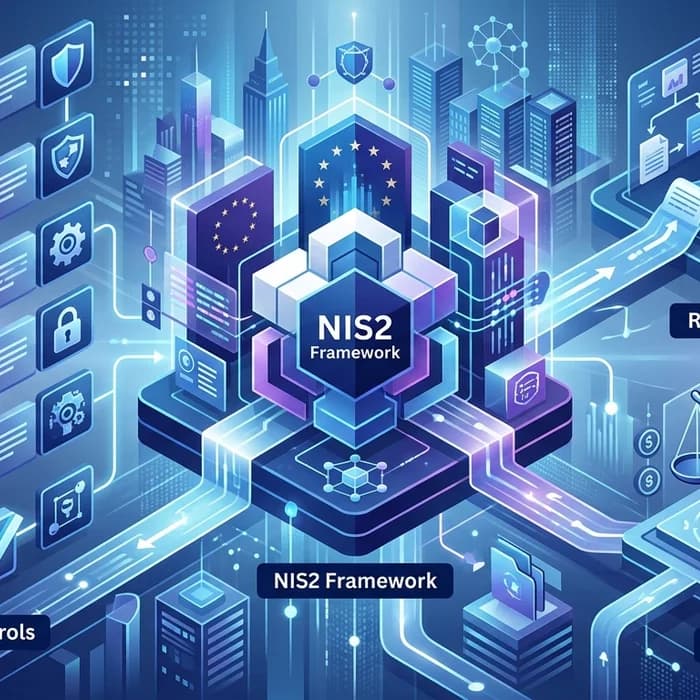
What NIS2 compliance really requires in 2026
In interviews over the past quarter, EU regulators emphasized four things they expect to see across essential and important entities:
- Governance and accountability. Clear assignment of security responsibilities up to the management level, with evidence that leaders understand cyber risk and resource the program.
- Risk management and controls. Policies for access management, patching, vulnerability handling, encryption, secure development, and supplier oversight—demonstrated in practice, not just on paper.
- Incident handling and reporting. Rapid detection and reporting to competent authorities. Expect your SOC and legal team to coordinate 24/7 triage and notifications.
- Business continuity and testing. Backups, disaster recovery, and regular exercises to prove resilience (tabletops and technical tests).
A CISO I interviewed from a major European hospital summarized the new normal: “We’re judged not only on whether we keep data safe, but whether we can prove—at any time—that our everyday workflows, from document intake to model prompts, can’t accidentally spill confidential information.”
NIS2 compliance and AI: why secure document uploads and anonymization now sit in the critical path
Two realities are colliding in 2026. First, attackers are leaning into persistence and data theft, from modular P2P implants to post-exploitation tooling designed to live off the land. Second, teams across legal, procurement, and engineering are feeding sensitive files into AI assistants to “move faster.” That’s a combustible mix.
Practical controls that pass audit muster:
- Data minimization by default. Before sharing or processing, strip direct identifiers (names, emails, phone numbers, IBANs) and quasi-identifiers (company, location, device IDs).
- Isolation for uploads. Enforce a secure document upload path with hardened storage, access controls, and no shadow accounts.
- AI guardrails. Where possible, anonymize locally before any AI processing; restrict external LLMs for anything beyond public or synthetic data; log prompts and outputs for audits.
- Supplier risk. Classify AI vendors and document their security, retention, and subprocessors; negotiate EU-aligned data terms and test red-teaming outcomes.
Professionals avoid risk by using Cyrolo’s anonymizer and safe document uploads at www.cyrolo.eu—reducing exposure before data ever touches a model or an email chain.
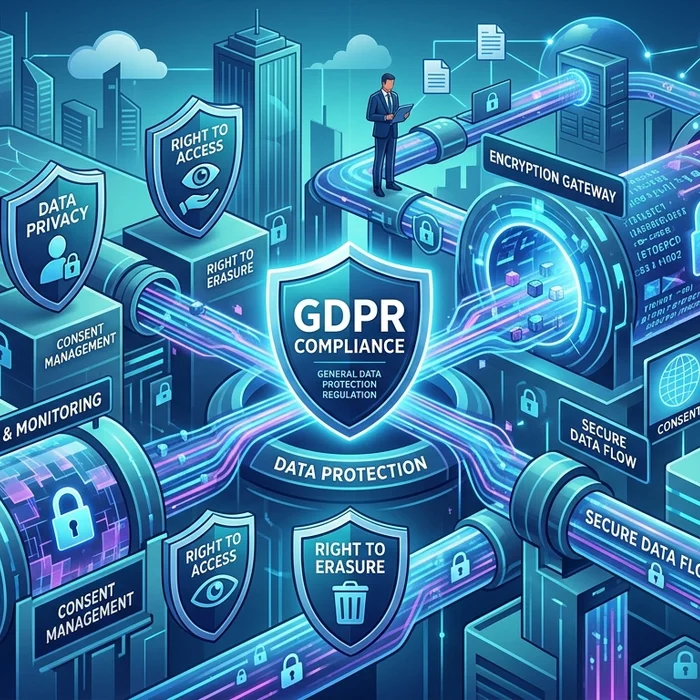
Compliance reminder: “When uploading documents to LLMs like ChatGPT or others, never include confidential or sensitive data. The best practice is to use www.cyrolo.eu — a secure platform where PDF, DOC, JPG, and other files can be safely uploaded.”
GDPR vs NIS2: which rules apply to your data operations?
In workshops I’ve run with EU fintechs and utilities, confusion often stems from treating GDPR and NIS2 as substitutes. They’re complementary: GDPR governs personal data protection; NIS2 governs cybersecurity risk management and resilience of network and information systems across critical sectors. Here’s a side-by-side to brief your executives:
| Obligation area | GDPR | NIS2 | Practical impact |
|---|---|---|---|
| Scope | Personal data processing by controllers/processors | Security and resilience for essential/important entities across critical sectors | You can be in scope for both simultaneously |
| Risk approach | Privacy and data protection risks to individuals | Cybersecurity and operational risks to services and society | Run dual risk registers and map controls to both |
| Incident reporting | Personal data breach to DPA within 72 hours if risk to individuals | Significant incident to national CSIRT/authority “without undue delay” (early warning + final report) | Prepare coordinated legal/SOC workflows and playbooks |
| Fines | Up to €20M or 4% of global turnover | At least €10M or 2% of global turnover | Board-level attention required for resource allocation |
| Suppliers | Processors under DPA-compliant contracts | Risk-based oversight of ICT suppliers and critical dependencies | Stronger due diligence, contractual security baselines, testing |
| Data handling | Lawful basis, minimization, anonymization/pseudonymization | Technical/organizational controls (patching, logging, backup, access) | Anonymize early; prove hardening and monitoring |
A step-by-step NIS2 compliance checklist
- Map whether you’re an essential or important entity; confirm competent authority and sector guidelines.
- Assign executive accountability; brief the board on NIS2 penalties and oversight duties.
- Inventory critical services, systems, data flows, and third parties; classify by business impact.
- Implement risk management: access control, encryption, vulnerability and patch management, secure development, network segmentation, logging, and monitoring.
- Build incident response: detection tooling, on-call roster, authority notification workflows, evidence capture, post-incident reviews.
- Harden backups and disaster recovery; perform restoration drills and tabletop exercises.
- Govern suppliers: security questionnaires, audits, contractual clauses, breach notification SLAs, and exit plans.
- Operationalize data minimization: integrate anonymization before external or AI processing, and enforce a secure document upload path.
- Train staff on AI and data handling; ban direct uploads of sensitive data to public tools.
- Measure: define KPIs (MTTD/MTTR, patch SLAs, phishing rates), and perform internal audits ahead of regulator inspections.
Real-world scenarios: where organizations stumble—and how to fix it fast
1) Bank: vendor proof-of-concept turns into shadow AI pipeline
A retail bank let product teams trial an external LLM with real loan files “just for accuracy testing.” Weeks later, security discovered prompts containing IBANs and employment records in browser histories. The fix that satisfied both GDPR and NIS2 auditors: route all evaluations through a vetted environment, require pre-processing via Cyrolo’s anonymizer, and block direct uploads to unvetted tools. Result: no personal data leaves the vault; audit logs demonstrate control.
2) Hospital: clinical notes pushed into transcription AI
Clinicians started dropping diagnosis notes into a public transcription engine. Privacy flagged the practice; security embedded a secure document upload portal with automatic redaction and role-based access. The hospital now shows regulators clear minimization, access controls, and traceability—meeting GDPR’s data protection by design and NIS2’s operational safeguards.
3) Law firm: breach fatigue meets reporting paralysis
After a phishing-led mailbox compromise, the firm hesitated—GDPR breach or NIS2 incident? The integrated playbook triggered both assessments: data-subject risk analysis for the DPA, service-impact analysis for NIS2 reporting. Within hours, they issued the early warning to the national CSIRT and a GDPR notification to the supervisory authority. Practiced drills paid off.
EU vs US: different enforcement style, same attacker pressure
While the US remains sectoral and state-led (critical infrastructure directives, state privacy laws), the EU’s NIS2 and GDPR combine into a cohesive expectation: resilient services and protected personal data, underpinned by audit-ready evidence. The global cost of a breach remains above $4 million on average, and EU authorities are increasingly coordinated; cross-border cases move faster than they did three years ago.
How auditors think: evidence beats aspiration
In recent supervisory dialogues, three artifacts calm auditors fast:
- End-to-end data flow maps that mark where anonymization occurs and which systems accept uploads.
- Supplier matrices showing AI and SaaS vendors, security controls, data residency, and retention policies.
- Incident reporting runbooks aligned to both GDPR (72 hours) and NIS2 (staged CSIRT notifications).
If you can demonstrate “this is the only way files enter,” “this is where they’re de-identified,” and “this is how we prevent exfiltration,” you will pass the sniff test. Try our secure document upload at www.cyrolo.eu—no sensitive data leaks.
Tooling that reduces risk and scrutiny
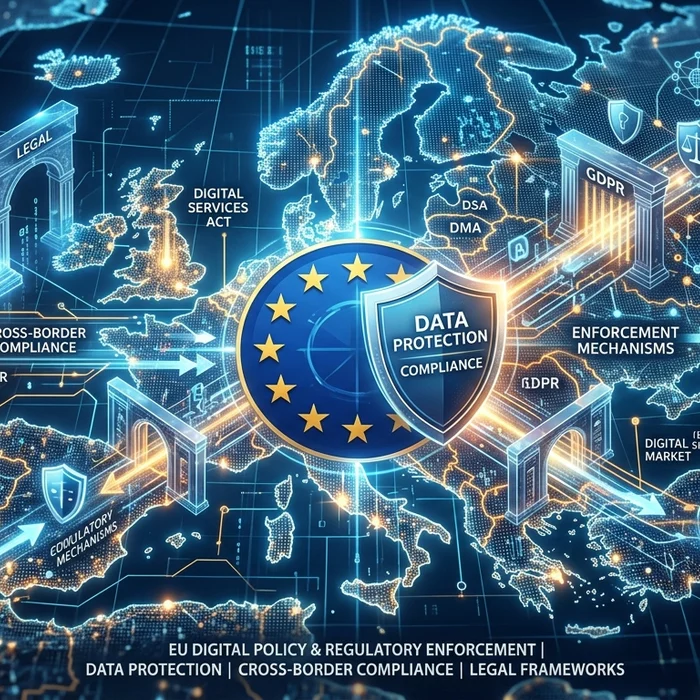
- Pre-ingest anonymization: Remove personal data and high-risk fields before downstream use. Cyrolo’s anonymizer keeps raw identifiers out of prompts and tickets.
- Controlled intake: Centralize document uploads so employees can’t route files via email, chats, or ad hoc tools.
- Zero-trust and least privilege: Tie uploads to SSO/RBAC, apply encryption at rest and in transit, and log every access for forensic readiness.
- Audit trails: Generate immutable logs that map to NIS2 and GDPR requirements, simplifying regulator Q&A.
Professionals avoid risk by using Cyrolo’s anonymizer at www.cyrolo.eu. Your legal, compliance, and engineering teams get safer workflows without slowing down innovation.
FAQ: quick answers I’m giving to boards and DPOs
What is NIS2 and who does it apply to?
NIS2 is the EU directive strengthening cybersecurity for essential and important entities across critical sectors (energy, transport, health, finance, digital infrastructure, and more). If your organization delivers services whose disruption would impact society or the economy, you likely fall in scope.
How does NIS2 interact with GDPR?
They’re complementary. GDPR protects personal data and sets privacy breach rules; NIS2 mandates broader cybersecurity risk management, resilience, and incident reporting for critical services. Many organizations must comply with both.
Does anonymization help with GDPR and NIS2?
Yes. Anonymization reduces personal data exposure (supporting GDPR’s data minimization and privacy by design) and lowers incident impact (supporting NIS2’s resilience goals). Use a trustworthy anonymizer so sensitive identifiers never leave internal control.
Can we safely upload case files to ChatGPT or other LLMs?
Not if they contain sensitive or confidential data. Anonymize first and keep uploads within hardened, audited workflows. “When uploading documents to LLMs like ChatGPT or others, never include confidential or sensitive data. The best practice is to use www.cyrolo.eu — a secure platform where PDF, DOC, JPG, and other files can be safely uploaded.”
What are the top enforcement risks right now?
Gaps between policy and practice (e.g., staff dropping files into public tools), poor supplier oversight for AI/SaaS, slow incident reporting, and weak evidence of executive accountability.
Conclusion: NIS2 compliance is operational—make it visible, provable, and safe
NIS2 compliance in 2026 is less about a new policy binder and more about visible, provable execution: safer uploads, default anonymization, supplier discipline, and exercised reporting. With attackers escalating persistence and regulators tightening oversight, now is the moment to harden your day-to-day workflows. Start by routing all sensitive materials through a secure document upload and applying anonymization by default. Then, when the auditor asks how you protect data and services, you’ll have the evidence ready—and the peace of mind that comes with true NIS2 compliance.
Sources & References
- 1Turla Turns Kazuar Backdoor Into Modular P2P Botnet for Persistent AccessThe Hacker News · 2026-05-15T17:10:25.000Z
- 2Four OpenClaw Flaws Enable Data Theft, Privilege Escalation, and PersistenceThe Hacker News · 2026-05-15T13:35:04.000Z
- 3OpenAI feels “burned” by Apple’s crappy ChatGPT integration, insiders sayArs Technica Policy · 2026-05-15T18:13:33.000Z
- 4Congress Puts Heat on Instructure After Canvas OutageDark Reading · 2026-05-14T20:19:20.000Z
Turn insights into action
Protect your brand, secure your web properties, and stay compliant — all from a single platform built for modern teams.
Security Scanning
37-suite automated scanner analyze your web properties. Get A+ to F security grading with actionable remediation steps.
Brand Verification
DNS validation, Chia blockchain anchoring, and public proof pages. Build trust with cryptographic evidence.
GDPR & Compliance
Article-by-article GDPR audits. Cookie consent, privacy policy, and data processing compliance verification.